A comprehensive examination of one of the most infamous abduction stories in UFO history.
Background of the Event
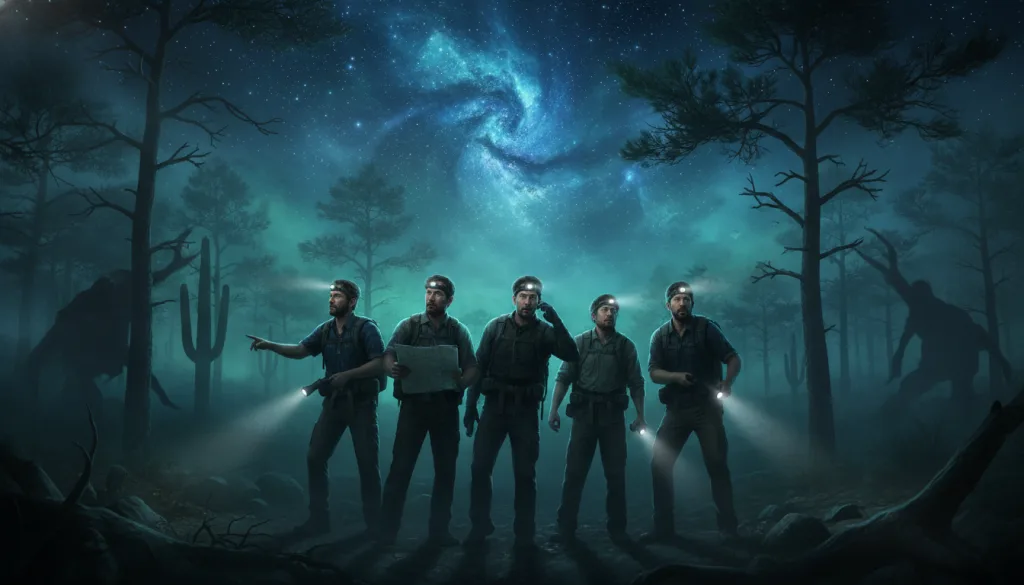
The event that would come to be known as the Travis Walton abduction case began on the evening of November 5, 1975, in the Apache-Sitgreaves National Forest in Arizona. Walton, a 22-year-old logger, was working with a crew that included Mike Rogers, Ken Peterson, and Allen Dalis. They had just completed a long day of work and were driving home when they encountered a strange light in the forest. The crew initially thought it might be a fire or an aircraft, but as they approached, they realized it was emanating from a disc-shaped object hovering above the ground.
The Encounter
According to Walton, as he approached the craft, a beam of light shot down from it, enveloping him and lifting him off the ground. His colleagues, paralyzed by shock and fear, witnessed this and sped away, leaving Walton behind. Five days would pass before he reappeared, disoriented and confused, in a nearby town.
The Aftermath of Five Days
When Walton was found on November 10, 1975, he was reportedly in a state of shock, unable to recall the events of his five-day absence. His re-emergence sparked a media frenzy, quickly becoming one of the most controversial and scrutinized alien abduction cases in history. Walton's descriptions of the interior of the spacecraft and the entities he encountered would both captivate and horrify the public.
Walton’s Experience Inside the Craft
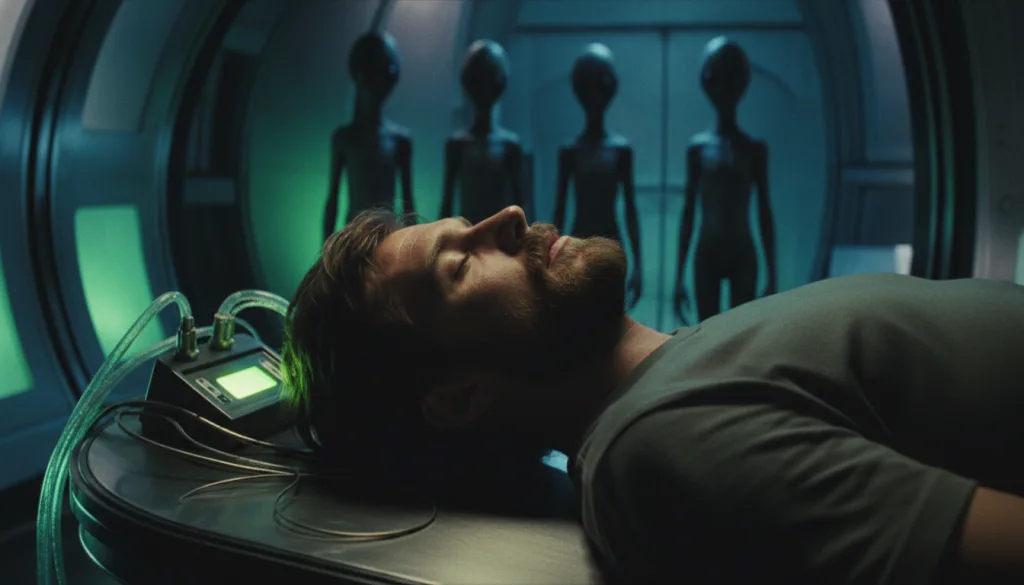
In interviews, Walton recounted being in a sterile, clinical environment where he encountered humanoid entities. He described them as having large eyes and slender bodies, resembling the archetypical “Grey” aliens that would become synonymous with abduction lore. Walton claimed that these beings communicated with him telepathically, conveying a sense of urgency and fear. This narrative fits neatly into the broader context of alien abduction reports, which often include similar descriptions of entities and experiences.
Researcher Dr. David Jacobs, a prominent figure in the field of abduction studies, noted in his book, “The Threat” (1998), that many abductees report similar features and experiences. He states, “The overwhelming number of abduction accounts share a common structure that cannot be easily dismissed. The consistency is both alarming and compelling.” This consistency is evident in Walton's case, where the details of his encounter align closely with those reported by others.
Witness Testimonies and Investigations
The credibility of Walton's story was bolstered by the testimonies of his fellow loggers, who reported seeing him abducted by the beam of light. They underwent polygraph tests, which they passed, affirming their accounts of events. However, skepticism was rampant; many dismissed the incident as a hoax or a fabrication born out of a combination of fear and the influence of popular culture. In fact, Walton's story was closely analyzed in various settings, including a 1978 book titled “The Walton Experience” authored by Walton himself, which later inspired the film "Fire in the Sky."
Scientific Scrutiny
Despite the attention and media coverage, the scientific community maintained a critical stance. Psychologist Dr. Susan Clancy, in her book “Abducted: How People Come to Believe They Were Kidnapped by Aliens” (2005), argued that many abduction experiences can be attributed to psychological phenomena, such as sleep paralysis or false memories. Clancy's work suggests that the human mind is capable of constructing vivid experiences that can feel real, particularly under stress.
This psychological perspective raises critical questions about Walton's experience. Was he indeed abducted by extraterrestrial beings, or was this an elaborate fabrication stemming from a combination of misperceptions and psychological distress? The debate continues to fuel discussions among skeptics and believers alike.

Public Reaction and Cultural Impact
The cultural impact of the Walton case cannot be overstated. It played a significant role in shaping public perceptions of UFOs and abductions. In the wake of his disappearance and return, UFO groups surged in membership, and public interest in extraterrestrial life intensified. The case became a launching point for many, merging folklore with a growing fascination with the unknown.
Media Representation
The 1993 film “Fire in the Sky,” based on Walton's account, brought the story to a wider audience. The film's dramatic portrayal of his abduction and subsequent experiences inside the craft became iconic, though it took creative liberties that some critics argue misrepresented Walton's actual experience. This adaptation reflects a broader trend in media where alien abduction stories are sensationalized, often overshadowing the complexities of such experiences.
Moreover, the case has inspired countless documentaries, interviews, and discussions within UFO communities, becoming a staple narrative for enthusiasts and skeptics alike. It has encouraged a wave of similar accounts, where ordinary people have shared their own experiences with UFOs and potential abductions, thus contributing to the growing body of literature on the subject.
The Ongoing Legacy of the Walton Case
The Walton case stands as a pivotal moment in the history of alien abduction narratives. It serves as a lens through which we can examine society's evolving relationship with the concept of extraterrestrial life. The story continues to resonate, as evidenced by the continued interest and inquiry surrounding it. In 2017, the Pentagon's Advanced Aerospace Threat Identification Program (AATIP) was revealed, further validating the notion that the government is investigating unidentified aerial phenomena, thus reigniting interest in cases like Walton's.
Conclusions Drawn from Ongoing Research
Recent developments, such as the 2021 report by the Office of the Director of National Intelligence on UAPs, demonstrate that the conversation around unidentified aerial phenomena has moved into the realm of official inquiry and scientific investigation. While the report did not make definitive conclusions, it acknowledged that many sightings remain unexplained. This acknowledgment creates an intriguing parallel to Walton’s experience, as it suggests that there is more to explore in the realm of UFOs and their potential implications.
As we reflect on the implications of the Walton case, we encounter the intersection of belief, skepticism, and the search for truth concerning extraterrestrial encounters. As Dr. John Mack, a Harvard psychiatrist known for his work on alien abductions, stated, “The phenomenon of alien abduction raises profound questions about the nature of consciousness and reality” (Mack, 1994). This sentiment resonates deeply within the narrative of Travis Walton and the broader conversation surrounding alien abductions.
Our Analysis:
The evidence strongly indicates that the Travis Walton case is emblematic of a significant cultural phenomenon. It is not merely an isolated incident but a thread woven into the larger fabric of human experience with the unknown. While skepticism is essential in evaluating such claims, the overwhelming consistency in abduction accounts and the psychological dimensions at play cannot be ignored. Walton's story serves as an important touchstone for understanding the complexity surrounding UFO phenomena and the human psyche's response to these encounters.
Sources & References
Jacobs, David M., The Threat, 1998, New York: Touchstone.
Clancy, Susan, Abducted: How People Come to Believe They Were Kidnapped by Aliens, 2005, Cambridge: Harvard University Press.
Mack, John E., Abduction: Human Encounters with Aliens, 1994, New York: Scribner.
Walton, Travis, The Walton Experience, 1978, Illinois: Morrow.
Office of the Director of National Intelligence, Preliminary Assessment: Unidentified Aerial Phenomena, 2021, Washington D.C.: Government Printing Office.






Comments 0
Be the first to comment!