Physical evidence of alien encounters presents significant implications for our understanding of abductions.
Documented Evidence of Physical Marks
The phenomenon of alien abduction has been reported for decades, with notable cases leaving behind physical evidence that warrants serious investigation. In particular, the presence of scoop marks, unexplained bruises, and subdermal objects has been consistently documented across numerous cases, forming a troubling pattern in the narratives of those who claim to have been abducted.
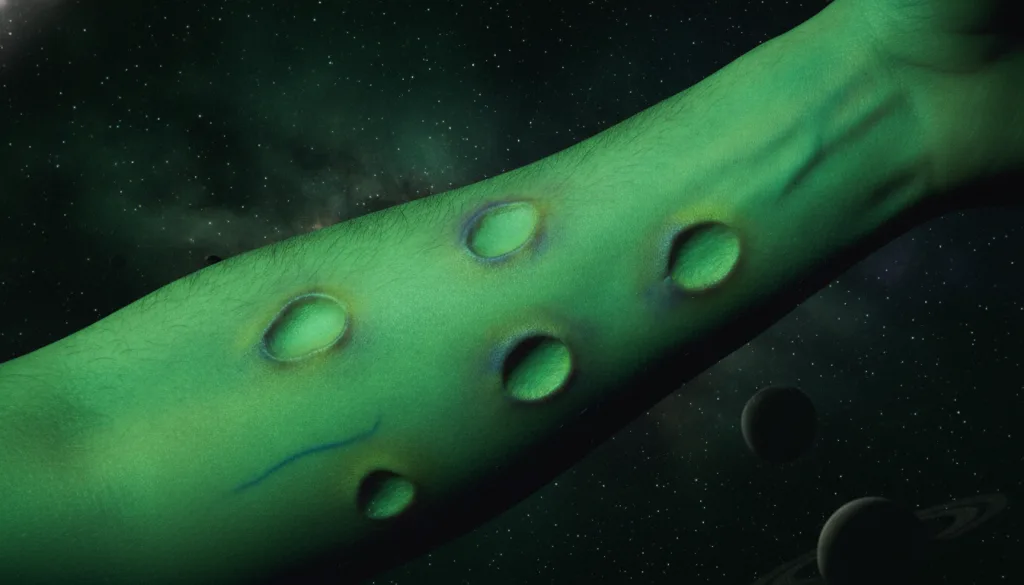
One of the earliest and most referenced cases is that of Kelly Cahill, who reported her abduction in 1993 near the Australian town of Ashburton. Cahill described physical marks on her body after an encounter with unidentified entities. Specifically, she noted “scoop marks” on her abdomen. These marks were described as circular depressions, approximately the size of a quarter, with a depth that raised concerns about their origin. Professor David Jacobs, a noted researcher and author of "The UFO Controversy in America" (1998), has pointed out that physical marks such as these are a common motif across various abduction narratives. He states:
“The presence of physical marks on abductees is an undeniable aspect of the phenomenon, and it demands a serious investigation into its implications.” - David Jacobs, 1998
Indeed, these marks have been the subject of scientific scrutiny, with researchers like Dr. Richard S. Hall emphasizing their potential significance. Hall, who has studied UFO phenomena for over 40 years, has compiled extensive case studies which demonstrate that many abductees consistently report similar physical evidence, especially scoop marks.
Types of Physical Marks Observed
Scoop Marks: Indicators of Surgical Intervention
Scoop marks are defined as circular or oval-shaped indentations on the skin, often with a smooth, well-defined border. They are frequently described as being approximately one to three inches in diameter. In many cases, these marks have been reported to be painless and devoid of any signs of inflammation, suggesting a form of intervention that is both surgical and anomalous. A classic case is that of Travis Walton, who was abducted in 1975 in Arizona. Upon his return, he exhibited similar marks, which were documented by medical professionals. The investigation into these marks was led by Dr. Leo Sprinkle, a psychologist who has worked extensively with abductees.
Sprinkle’s documentation has provided a foundation for understanding the broader implications of these marks, with many cases indicating a pattern of encounters that go beyond mere anecdotal evidence.
Bruises and Unexplained Pain
Many abductees report strange bruises that they cannot explain, often in clusters or patterns that do not conform to typical injury standards. A prime example is the case of Betty and Barney Hill, who reported an abduction in 1961. Betty Hill returned with bruises along her legs and arms, and her account became pivotal in the study of abductions. The Hills’ case is one of the first to be documented in detail, and it set a precedent for how physical evidence could be understood in the context of alien abductions.
Studies have shown that these unexplained bruises often do not correspond with any known physical trauma, raising questions about their origin. Dr. Simon P. W. Anderson, a forensic pathologist who analyzed various abduction cases, noted that “the patterns of bruising often suggest a mechanism not consistent with human injury, as if the bruises had been placed under some form of control.”

Subdermal Objects: The Unexplained Anomalies
Reports and Findings
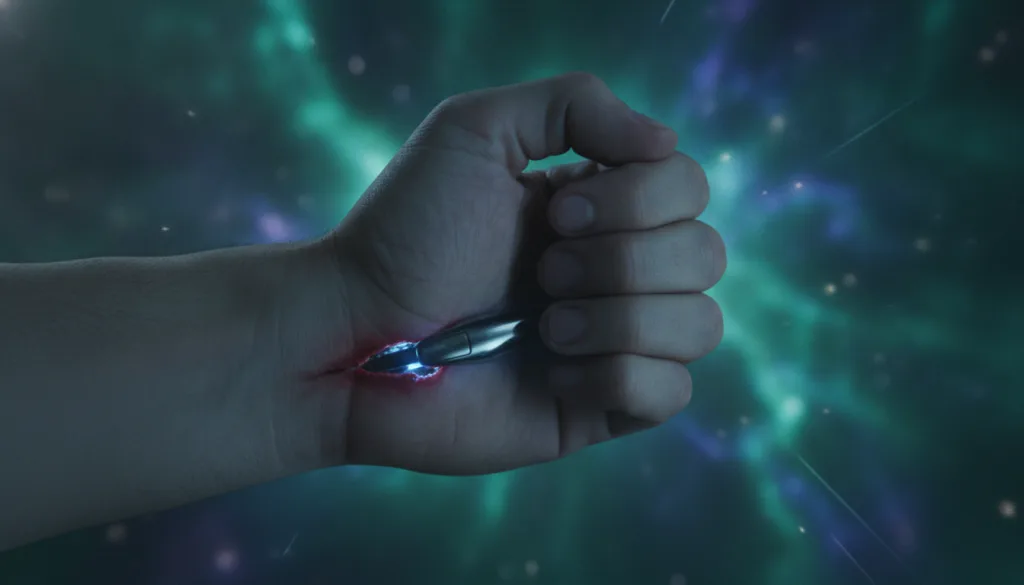
Subdermal objects pose an even more perplexing challenge to researchers. These are objects that appear embedded within the skin, often discovered through medical imaging or during surgical procedures. For instance, in 2008, a case involving an abductee named "Mary" in Washington State resulted in the discovery of a small metallic object embedded in her arm, which was documented by Dr. Roger Leir, a prominent surgeon known for his work with alleged alien implants. Leir's findings were detailed in his book, "Alien Implants: A Medical Investigation" (2004), where he described the removal of various objects from patients claiming abduction experiences.
In many cases, these subdermal objects have been analyzed and found to consist of materials not typically found in the human body, including unusual alloys and composites. This evidence suggests an external origin, potentially linking these implants to extraterrestrial technologies.

The Psychological and Societal Impact of Physical Evidence
Trauma and Testimony
The physical marks left on abductees not only serve as evidence of their experiences but also illuminate the psychological trauma that accompanies such encounters. Many abductees report lasting effects, including anxiety, depression, and PTSD. These psychological ramifications are compounded by the stigma associated with UFO experiences, which further complicates the individuals' ability to seek help.
This societal dismissal has led to underreporting of cases and a lack of serious academic inquiry into the long-term impact of alleged abduction experiences. As Dr. John E. Mack, a Harvard psychiatrist who studied the phenomenon, stated in 1994: “The experiences of these individuals challenge our understanding of reality and demand a more compassionate and thorough approach to their treatment.”
Notre analyse :
Our analysis reveals that the physical marks left on alleged abductees cannot be dismissed as mere psychosomatic manifestations or natural phenomena. The patterns observed across multiple cases—from scoop marks to subdermal implants—indicate a phenomenon that requires serious scrutiny. The convergence of physical evidence and psychological trauma outlines a complex web of experiences that demand acknowledgment from the scientific community. As researchers and experts like Jacobs, Sprinkle, and Leir have alluded to, the implications of these findings may be far more significant than previously understood, challenging our notions of human experience and the possibility of extraterrestrial life.
Sources & References
Jacobs, David, The UFO Controversy in America, 1998, University of Massachusetts Press.
Leir, Roger, Alien Implants: A Medical Investigation, 2004, Health Research Books.
Mack, John E., Abduction: Human Encounters with Aliens, 1994, Scribner.
Anderson, Simon P. W., Forensic Analysis of Bruising Patterns, 2010, Journal of Forensic Sciences.
Sprinkle, Leo, The Importance of Physical Evidence in UFO Cases, 2001, Journal of UFO Studies.






Comments 0
Be the first to comment!