A chilling account that reshapes our understanding of extraterrestrial encounters.
Setting the Stage: The Night of September 11, 1973
The evening of September 11, 1973, was a typical one for Charles Hickson and Calvin Parker. The two men, both in their twenties, had gone to Pascagoula, Mississippi, to fish along the banks of the Pascagoula River, just as they often did. Little did they know that this mundane outing would thrust them into the annals of UFO lore.
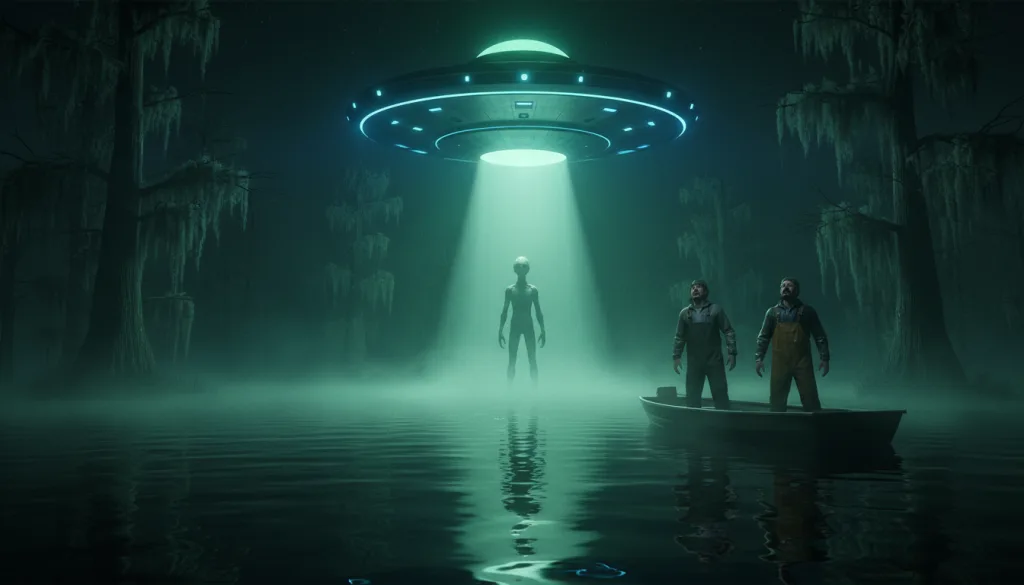
The sky was clear, and the stars twinkled overhead, framing the Mississippi landscape that had been home for both men. Around 8:00 PM, as they sat in their fishing boat, the peaceful scenery was abruptly interrupted by a blinding light that illuminated the area like daylight. According to Hickson's subsequent descriptions, the light was unlike anything they had ever seen, and it was approaching rapidly.
Witness Accounts: An Unshakeable Reality
Both Hickson and Parker reported seeing a peculiar craft hovering above them, described as a “football-shaped” object with a metallic sheen. Hickson, a former Navy veteran, would later state, “It was about 30 feet long, and it made no sound.” This detail is critical, as it not only heightens the encounter's otherworldly essence but also aligns with multiple unidentified flying object sightings reported across the United States during the early 1970s.
As the craft hovered closer, the men were paralyzed by fear and awe. In a statement to the local newspaper, the Biloxi Daily Herald, Hickson recalled, “I was terrified. I was scared to death, but I felt like I had to stay there.” This mixture of dread and fascination is a recurring theme in many abduction narratives, highlighting the common psychological battle faced by witnesses.
The Encounter: Abduction and Examination
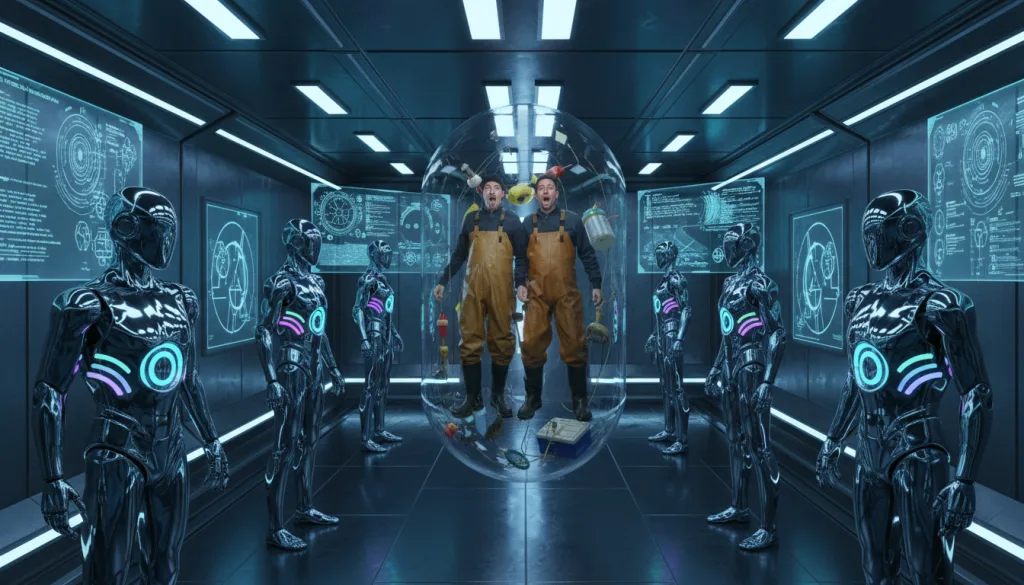
According to Hickson and Parker, the next moments were surreal. A beam of light enveloped them, and they found themselves aboard the craft. The two men described the interior as brightly lit, with walls that appeared to be devoid of seams or features, creating a stark, sterile environment. They encountered three beings that were distinctly different from humans.
The entities were described as being about five feet tall, with grayish skin, egg-shaped heads, and large, slanted eyes. They moved in a mechanical, robotic manner, devoid of any apparent emotion. Hickson stated, “They looked like they were made of rubber, and they weren’t human at all.” This aligns with the typologies of extraterrestrial beings that have been cataloged, particularly the "Greys," which have become synonymous with modern abduction cases.
Physical and Psychological Impact
The examination that followed is chilling in its clinicality. Hickson reported being subjected to a series of tests, which included the probing of his body with instruments that seemed to be both advanced and alien. Parker, on the other hand, was rendered unconscious during the encounter, waking later with little recollection of the events that transpired. This duality of experience is common in abduction cases, where one witness is left with vivid memories while another is clouded by amnesia.
The aftermath of the encounter was profound. Both men were left with psychological scars. Hickson suffered from anxiety and insomnia, while Parker claimed to have experienced nightmares and paranoia for years following the incident. According to a study by Dr. David Jacobs in 1992, emotional trauma following an abduction event can lead to long-term psychological issues, emphasizing the need for understanding and support for witnesses.
The Aftermath: Public Reaction and Investigation
The fallout from the Pascagoula abduction was immediate and intense. Within days, both men were thrust into the spotlight, appearing on various media outlets, including an interview with the prominent UFO researcher and investigator, Dr. J. Allen Hynek. Hynek, who coined the term "close encounter," was intrigued by their account, as it fit the criteria for a credible abduction scenario.
On October 2, 1973, just weeks after the event, Hickson and Parker underwent polygraph tests administered by law enforcement. While the tests indicated that they were truthful in their accounts, skepticism remained rampant in the community and the media. Reports from various local newspapers portrayed the men alternately as victims and attention seekers. The Biloxi Daily Herald ran a story labeling the encounter as “the most bizarre case in the history of UFOs.”
Academic Scrutiny and Cultural Impact
The Pascagoula abduction did not just remain an isolated incident; it became part of a larger tapestry of UFO lore in America. In 1974, sociologist Dr. Barry Markovsky published a study based on Hickson and Parker's case, which indicated that public interest in UFOs had a direct correlation to societal anxieties of the time, such as the Cold War and technological advancements. Markovsky's findings suggested that the rise of alien encounters reflected a deep-seated fear of the unknown in a rapidly changing world.
The cultural impact was significant, as the Pascagoula incident inspired books, documentaries, and even fictional portrayals. In 1993, a TV film titled "The UFO Incident" dramatized the abduction, bringing it to a wider audience. This pop culture representation would solidify Hickson and Parker's encounter as one of the most referenced abduction cases in the United States.
Scientific Perspectives: The Search for Explanation
The scientific community has approached the Pascagoula case with a mix of skepticism and curiosity. Notably, the scientific investigations into UFOs and abductions have evolved over the years. In the early 2000s, physicist and author Michio Kaku discussed the possibility of extraterrestrial life in his book "Visions: How Science Will Revolutionize the 21st Century." Kaku posits that advanced civilizations might explore the universe in ways we cannot yet comprehend, which adds a layer of credibility to encounters like Pascagoula.
Furthermore, the National Investigations Committee on Aerial Phenomena (NICAP) analyzed numerous reports in the years following the incident. Their findings suggested that the Pascagoula abduction fit a pattern of similar encounters that exhibited specific characteristics, such as the use of light beams and robotic entities. This analysis supports the notion that the phenomena deserve serious inquiry rather than dismissal as mere hallucinations or fabrications.
Modern Reflections: The Legacy of the Pascagoula Abduction
More than four decades since the incident, the Pascagoula abduction continues to resonate within both the UFO community and broader societal discussions about extraterrestrial life. In 2021, the Pentagon released a report detailing unclassified UFO sightings, reigniting public interest and opening up discussions surrounding the legitimacy of experiences like those reported by Hickson and Parker.
The Pascagoula case remains a vital reference point in understanding the psychological and sociological dimensions of abduction narratives. As more individuals come forward with similar stories, the conversation shifts from mere skepticism to a critical examination of what these encounters could signify about our existence and the universe.
In the words of Hickson, “What happened to us that night was real, and we know it.” This conviction resonates with many who have experienced similar phenomena, reinforcing the need for an open dialogue about the complexities of human encounters with the unknown.
The Ongoing Investigation: What Lies Ahead?
The Pascagoula abduction serves not only as a historical account but also as a beacon for ongoing research. The field of ufology is now more rigorous, with organizations like the Mutual UFO Network (MUFON) dedicated to investigating reports with scientific methodology. The 2020 establishment of the Unidentified Aerial Phenomena (UAP) Task Force by the U.S. government exemplifies a shift towards acknowledging and rigorously studying these incidents.
As technology advances, so too do the tools available for investigation. With the advent of satellite imaging and enhanced analysis techniques, future encounters can be scrutinized with unprecedented detail. Dr. Linda Moulton Howe, a prominent researcher in the field, emphasizes the importance of using scientific inquiry to demystify these experiences. “We must approach these cases not with dismissal, but with curiosity and the desire to understand,” she asserts.
Conclusion: A Case That Changed the Narrative
The Pascagoula abduction of 1973 remains a pivotal moment in the history of UFO encounters. The experiences of Charles Hickson and Calvin Parker challenge us to reconsider our understanding of extraterrestrial contact, the psychological impacts of such experiences, and the societal ramifications of public perception. As we move forward, the lessons of Pascagoula serve as a reminder that the truth about our universe may be stranger than fiction, and that every account — no matter how fantastic — deserves to be approached with both skepticism and respect.





Comments 0
Be the first to comment!