An exploration of the most reported alien types and their implications for humanity.
Understanding the Alien Archetypes
For decades, humans have claimed encounters with extraterrestrial entities, giving rise to a myriad of stories and theories. Among these encounters, three primary categories of alien beings have emerged: the Greys, the Reptilians, and the Nordics. Each group has its unique characteristics, behaviors, and narratives that have captivated researchers, abductees, and enthusiasts alike. This classification is not just an idle curiosity; it carries implications about humanity's place in the universe and our understanding of consciousness, technology, and the very nature of life itself.
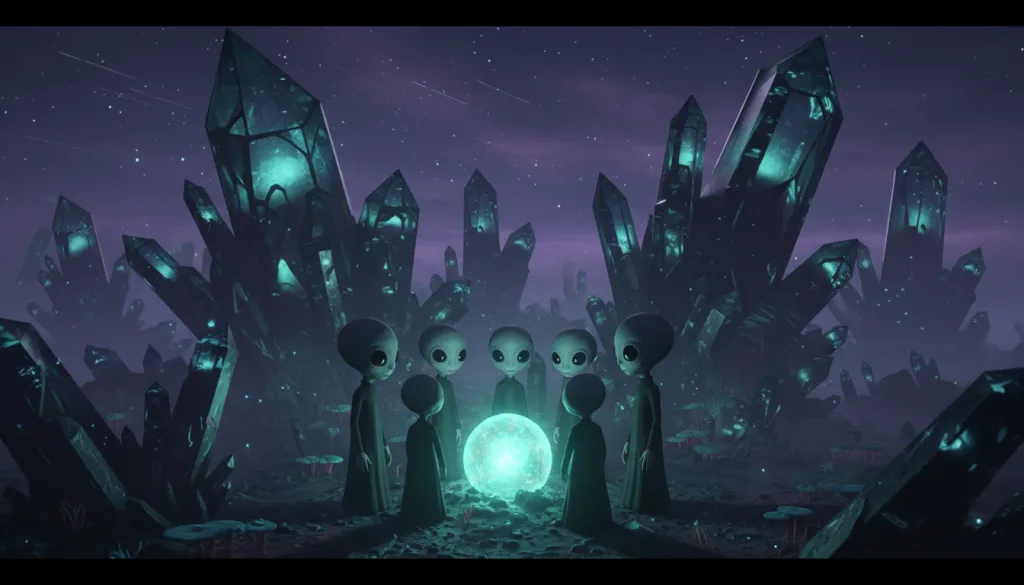
The Greys: The Most Commonly Reported Entity
Greys, often characterized by their small stature, large heads, and big black eyes, are perhaps the most well-known type of extraterrestrial. Encounters with Greys have been reported since the 1950s, with one of the first notable cases occurring in 1955 in the small town of Kelly, Kentucky. According to witnesses, a family claimed to have been harassed by small creatures they described as having skin resembling that of a grey, dull color.
However, it wasn't until the infamous 1973 case involving Charles Hickson and Calvin Parker that the Greys gained significant attention. The two men reported being abducted by alien beings while fishing near Pascagoula, Mississippi. Hickson described the entities as having "mummified" skin, large eyes, and a lack of discernible mouths. This case remains one of the most famous abduction stories and has shaped public perception of the Greys.
"The Greys have become a cultural phenomenon symbolizing fear, fascination, and the unknown of extraterrestrial life." – Dr. David Jacobs, 2015.
Physical and Psychological Characteristics
Reports consistently describe the Greys as having a diminutive height, measuring around 3 to 4 feet. Their skin is often depicted as smooth and grey, giving them a somewhat unsettling appearance. Some abductees have claimed that Greys communicate telepathically, which raises questions about the nature of language and cognition in extraterrestrial civilizations.
Dr. David Jacobs, a prominent researcher in the field of alien abduction, has extensively studied the psychological effects of encounters with Greys. He asserts that these beings typically engage in medical examinations during abductions, suggesting a scientific interest in human biology. The implications of such examinations are profound, hinting at an advanced understanding of genetic manipulation.
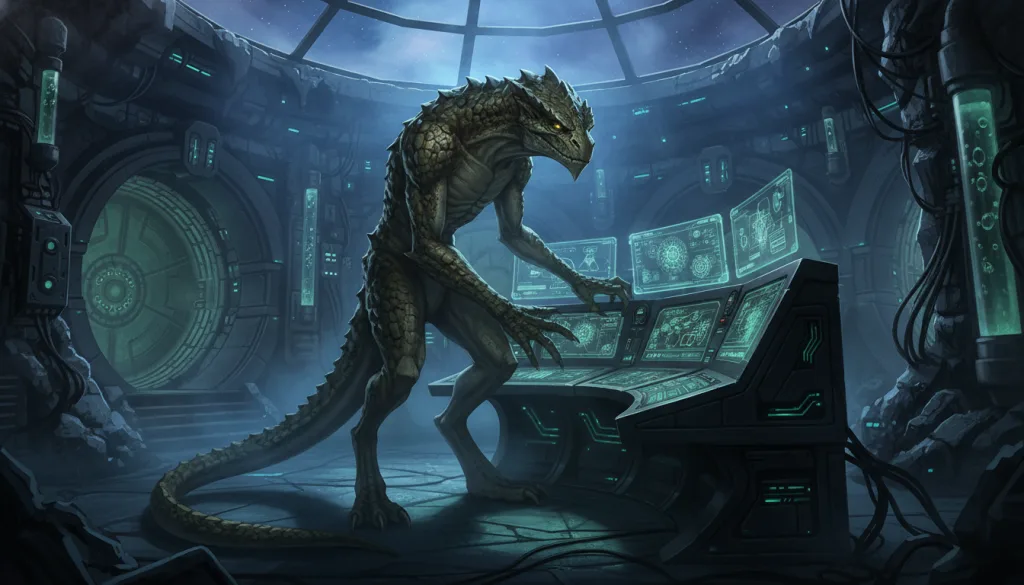
The Reptilians: A Darker Presence
In stark contrast to the Greys, Reptilians are often described as malevolent beings with a more sinister agenda. Popularized by conspiracy theorist David Icke in the late 1990s, the Reptilian narrative posits that these entities are shape-shifting lizards that infiltrate human society to control and manipulate it. Icke claims that many world leaders and influential figures are actually Reptilians in disguise, a theory that has gained traction among certain fringe groups.
Reports of Reptilian encounters date back to the early 20th century, with notable cases such as the alleged abduction of a woman named "Nina," who claimed to have encountered a reptilian being in 1967 near her home in New Mexico. During her encounter, Nina described the being as towering over her, with green scales and glowing yellow eyes. Most chilling was her assertion that the entity communicated its desire to dominate humanity.
The Nature of Reptilian Encounters
Unlike the Greys, Reptilians are reported to be much larger, often described as standing between 6 to 10 feet tall. Their scaly skin and sharp features elicit fear and distrust among those who claim to have encountered them. Many victims describe intense feelings of dread during these encounters, suggesting a psychic or emotional component to the experience.
Dr. John E. Mack, a Harvard psychiatrist and author of "Abduction: Human Encounters with Aliens," conducted thorough investigations into the psychological aspects of abduction experiences. He speculated that the Reptilian phenomenon might be linked to deep-seated fears about power, control, and domination rooted in human psychology. Mack argued that the Reptilians represent a projection of our own darkest impulses, manifesting as fears of authoritarianism and loss of autonomy.

The Nordics: The Benevolent Visitors
In contrast to the Greys and Reptilians, the Nordics are often described as tall, fair-skinned beings resembling Northern Europeans. This archetype emerged in the 1950s, particularly through the accounts of abductees who claimed to have met these beings, often during abduction scenarios. The Nordics are typically depicted as peaceful and benevolent, aiming to assist humanity in its evolution.
One of the most documented cases occurred in 1977 when a man named Antonio Villas Boas claimed to have been abducted in Brazil by Nordic aliens. Villas Boas described the beings as having strikingly beautiful features, blonde hair, and blue eyes and asserted that they communicated telepathically. He reported that the Nordics performed various tests but were ultimately nurturing and supportive toward him.
Nordic Encounters: A Different Narrative
The narrative surrounding the Nordics diverges significantly from that of the Greys and Reptilians. While the latter are often associated with fear and domination, encounters with Nordics are typically imbued with a sense of hope and healing. Many abductees describe these beings as possessing a deep knowledge of spirituality and the universe, often emphasizing themes of love and interconnectedness.
Dr. J. Allen Hynek, an astronomer and ufologist who worked with the U.S. Air Force on Project Blue Book, emphasized the importance of understanding the varying narratives surrounding alien encounters. In a 1978 lecture, Hynek stated, "The nature of the encounter reveals more about the human psyche than about the extraterrestrial itself." This quote encapsulates the essence of Nordic encounters, suggesting that they reflect humanity's yearning for connection and understanding beyond our earthly existence.

Comparative Analysis: The Implications of Alien Typologies
The typologies of Greys, Reptilians, and Nordics not only reveal differing characteristics and behaviors but also reflect humanity's fears, hopes, and cultural narratives. While the Greys introduce themes of scientific curiosity, the Reptilians embody our darkest fears of control and manipulation, and the Nordics resonate with our longing for companionship and guidance in the universe.
Each typology serves as a mirror to human civilization. The Greys, with their medical examinations and scientific interests, may symbolize our complex relationship with technology and our own bodies. In contrast, the Reptilians remind us of the potential for tyranny and the need for vigilance against authoritarianism. Finally, the Nordics represent the possibility of benevolence and the universal desire for peace.

Psychological and Sociocultural Implications
The impact of these alien typologies extends beyond mere narratives and into the realm of psychological and sociocultural phenomena. Studies conducted by the Center for the Study of Extraterrestrial Intelligence (CSETI) have highlighted the profound effects of reported alien encounters on individuals. Many abductees experience long-term psychological trauma, grappling with feelings of isolation and fear of societal ridicule.
Moreover, the archetypes themselves can influence societal beliefs and cultural narratives. The portrayal of Greys in popular media, such as the television series "The X-Files," feeds into collective fears, while the depiction of Nordics often appears in New Age spiritual movements, emphasizing a quest for enlightenment and higher consciousness.
"The way we conceptualize extraterrestrial beings tells us more about our own fears and aspirations than it does about the actual nature of life beyond Earth." – Dr. John E. Mack, 1999.
Conclusion: The Need for Continued Investigation
The classification of alien entities into typologies like the Greys, Reptilians, and Nordics is an essential step toward understanding the broader phenomenon of UFOs and abductions. Each type offers unique insights into our psychological landscape, cultural fears, and hopes for the universe. The evidence strongly indicates that these encounters are more than mere fabrications; they are deeply woven into the tapestry of human experience, revealing our desires and anxieties about the unknown.
As society becomes increasingly open to the possibility of extraterrestrial life, it is crucial to approach these narratives with both skepticism and curiosity. Continued research and dialogue surrounding these entities can illuminate our understanding of consciousness, expand our definitions of life, and ultimately shape our future interactions with the cosmos.
Notre analyse :Our investigation into the Greys, Reptilians, and Nordics confirms a significant interplay between alien encounters and human psychology. The narratives surrounding these entities serve as reflections of our deepest fears and yearnings. Rather than dismissing these encounters as mere fantasy, we must engage with them seriously, recognizing their potential implications for humanity’s understanding of itself and the unknowns of the universe.
Sources & References
Jacobs, David, "The Threat: Revealing the Secret Alien Agenda," 1998, Simon & Schuster.
Mack, John E., "Abduction: Human Encounters with Aliens," 1994, Scribner.
Hynek, J. Allen, "The UFO Experience: A Scientific Inquiry," 1972, Henry Regnery Company.
Icke, David, "The Biggest Secret: The Book That Will Change the World," 1999, Bridge of Love Publications.
CSETI, "Research on Extraterrestrial Intelligence," 2004, Center for the Study of Extraterrestrial Intelligence.






Comments 0
Be the first to comment!