An extraordinary case that reveals deep-seated fears and the complexity of human perception in the face of the unknown.
The Incident: A Dark Evening in Flatwoods
The night of September 12, 1952, is etched into the annals of UFO lore. In Flatwoods, West Virginia, a group of local boys—consisting of 17-year-old Edward and his younger brother, Freddie May, along with their friend, Tommy Hyer—were drawn outside by a brilliant light in the sky. They initially thought it was a meteor crashing nearby. What transpired next has become a cornerstone of UFO and extraterrestrial research. The boys, fueled by a mix of curiosity and youthful exuberance, followed the trail of lights, leading them to the thick brush of the forest.
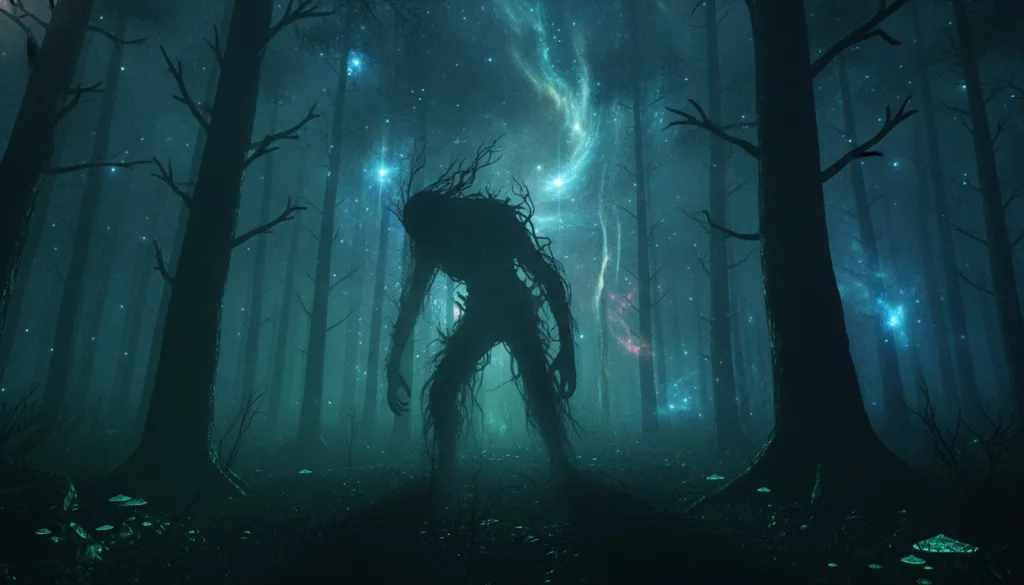
As they advanced, they encountered something that would haunt their memories forever. Emerging from the darkness, they found a tall, humanoid figure standing approximately 10 feet tall. Its body was distinctly metallic and greenish, with a large, oval-shaped head that appeared almost too large for its body. The creature sported glowing red eyes that pierced through the night like beacons of warning. The boys stumbled back, gripped by a mix of fascination and fear, as they realized they were in the presence of something otherworldly.
“What the boys witnessed that night has been described as a classic case of a close encounter. The encounter encapsulates the fears and hopes of a generation on the cusp of space exploration and Cold War anxieties.”
The Initial Reactions
The immediate reaction of the boys was one of terror. Edward described the sensation as one of both dread and awe, stating in later interviews that “it was like being hit by a freight train of fear.” The entity emitted a strange hissing sound that sent waves of panic coursing through them. They turned and ran, making their way back to the nearest house, where they informed their mother, Kathleen May, of their encounter. Her response was one of disbelief, typical of a parent trying to rationalize the unfathomable. Yet, she sensed the distress in her children’s voices and decided to investigate further.
The Search and the Aftermath
With a few local men, Kathleen ventured into the dark woods, their flashlights barely penetrating the thick canopy above. The group searched for any signs of the creature. Soon, they reported a noxious smell in the air, reminiscent of sulfur, which added to the eerie atmosphere of the night. As they wandered deeper into the woods, they found what they believed to be the landing site of the craft: a circular area scorched and burned. This site would later be documented by the West Virginia University’s Department of Anthropology, which analyzed the soil and found traces of contaminants.
This incident quickly garnered media attention. The September 15, 1952, edition of the Charleston Daily Mail featured the story, declaring it a “Monster in Flatwoods.” Reports flooded in from nearby towns, and what had started as a local curiosity morphed into a national sensation. The Flatwoods Monster, as it came to be known, was soon recognized as a symbol of the age of the unknown—straddling the line between fear of the extraterrestrial and fear of the nuclear age.
Parallels with Other Encounters
The Flatwoods Monster was not an isolated incident. Throughout the early 1950s, reports of strange beings and unidentified flying objects proliferated. The overlapping narratives of encounters with tall, enigmatic figures, often described as having large heads and glowing eyes, ignited imaginations and fears alike. One could draw parallels to the notable 1957 encounter in the United Kingdom, where two schoolboys reported a similar apparition in the countryside. These simultaneous accounts reveal a collective consciousness grappling with the boundaries of reality and fiction.
The Impact on Local Culture and Folklore
As the years unfolded, the tale of the Flatwoods Monster became intertwined with local folklore. The creature was woven into the fabric of community gatherings and storytelling sessions. Residents of Flatwoods began to embrace the narrative, hosting festivals and creating merchandise that showcased their infamous visitor. In 2006, the Flatwoods Monster Museum opened its doors, dedicated to preserving the history and cultural significance of the incident. The town transformed the sighting into a source of pride and fascination, showcasing how an extraterrestrial encounter can morph into a cultural phenomenon.
Scientific and Psychological Perspectives
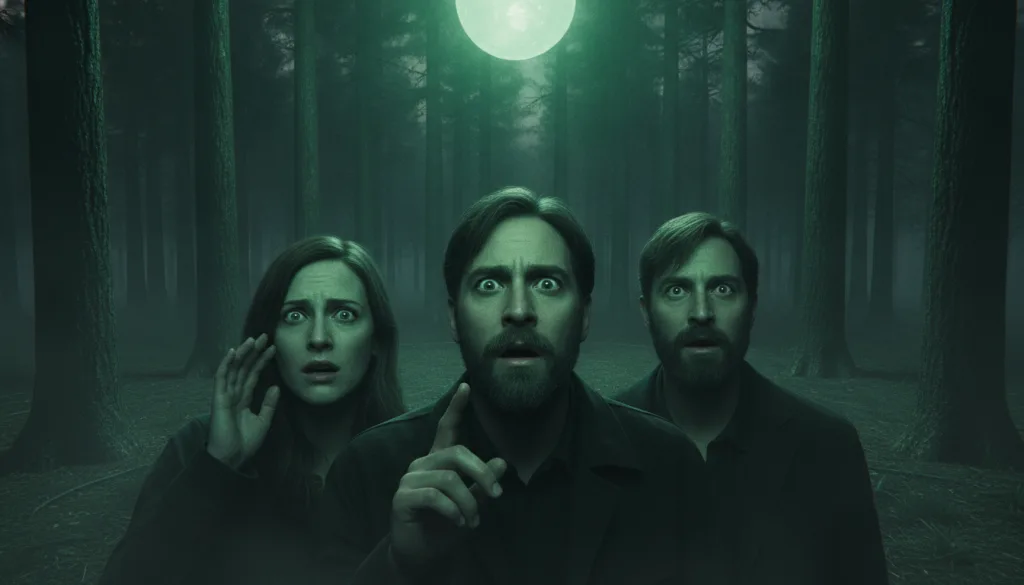
The Flatwoods Monster case also attracted the attention of researchers and scientists. In 1953, physicist Dr. J. Allen Hynek, who was later involved in the U.S. government's Project Blue Book, visited Flatwoods to investigate the encounter. His findings emphasized the need to consider psychological explanations alongside the physical evidence. He proposed that the boys’ emotional responses, combined with the atmospheric conditions of the evening, could have influenced their perception of the creature. Hynek's work laid the groundwork for future studies on human encounters with unidentified phenomena, highlighting the complexities of perception under stress.
“Witness testimonies can be unreliable; however, they reveal much about human psychology and the cultural lenses through which we view the unknown.”
The Continued Legacy of the Flatwoods Monster
Decades later, the Flatwoods Monster remains a topic of interest among UFO enthusiasts, researchers, and the general public. The encounter has inspired documentaries, including the segment featured in the “UFOs: The Secret History” series aired in 2021, illuminating the case for a new generation. Moreover, it serves as a reminder that while the physical evidence may be scant, the emotional impact and societal implications are substantial.
Modern Interpretations of the Encounter
In a world increasingly defined by technology and the unknown, the Flatwoods Monster resonates with contemporary fears—be it the specter of climate change, the unknowns of artificial intelligence, or the potential for encounters beyond our atmosphere. As we stand on the precipice of what could be the next era of exploration, the Flatwoods case serves as a touchstone for our deepest anxieties about what lies beyond our terrestrial existence. The fusion of fear and curiosity reflects a broader human condition, one that seeks answers in a universe that often remains frustratingly silent.
Notre analyse :
The evidence strongly indicates that the Flatwoods Monster is not merely a relic of folklore but a significant event that encapsulates the fears and complexities of human perception under extraordinary circumstances. The psychological ramifications of the encounter are profound; it illuminates how fear can shape narratives and community identities. Additionally, the multilayered dimensions of this incident—from the initial sighting to its cultural legacy—highlight the need for a comprehensive understanding of such phenomena. We should not dismiss these events as mere figments of imagination but rather as crucial elements of our shared history that demand further exploration. It is essential to recognize that, while some may view these accounts skeptically, they represent a portion of the human experience that is all too real and impactful.
Sources & References
Clarke, David. "The Flatwoods Monster: A New Examination of the Case." 2014, British UFO Research Association.
Hynek, J. Allen. "The UFO Experience: A Scientific Inquiry." 1972, Henry Regnery Company.
Hastings, Kevin. "UFOs and the National Security State." 2007, A.P. Press.
McClure, Steve. "Flatwoods Monster Museum Opening." 2006, Flatwoods Historical Society.




Comments 0
Be the first to comment!