Exploring the enigma of extraterrestrial life and the silence of the cosmos
Introduction to the Fermi Paradox
The universe, vast and largely unexplored, presents a question that has piqued human curiosity for decades: if extraterrestrial civilizations exist, why have we not yet encountered them? This conundrum is known as the Fermi Paradox, named after physicist Enrico Fermi, who famously asked during a conversation in the early 1950s, "Where is everybody?" The paradox arises from the apparent contradiction between the high probability of extraterrestrial life in the universe, given the vast number of stars and potentially habitable planets, and the lack of evidence for or contact with such civilizations.
The Expansive Universe and Probability of Life
To understand the Fermi Paradox, we need to consider the enormity of the universe. Estimates suggest there are over 100 billion galaxies in the observable universe, each containing millions or even billions of stars. Many of these stars are believed to host planets, with recent data from NASA's Kepler Space Telescope indicating that there may be billions of Earth-like planets in the habitable zones of their respective stars.
If we accept that the conditions for life are not unique to Earth, it follows that many of these planets could harbor intelligent civilizations. The Drake Equation, proposed by astronomer Frank Drake in 1961, seeks to estimate the number of active, communicative extraterrestrial civilizations in our galaxy. The equation considers factors such as the rate of star formation, the fraction of those stars that have planets, and the likelihood of life developing on those planets. While the exact values for these variables remain uncertain, the equation suggests that the existence of extraterrestrial life is statistically probable.
Possible Explanations for the Paradox
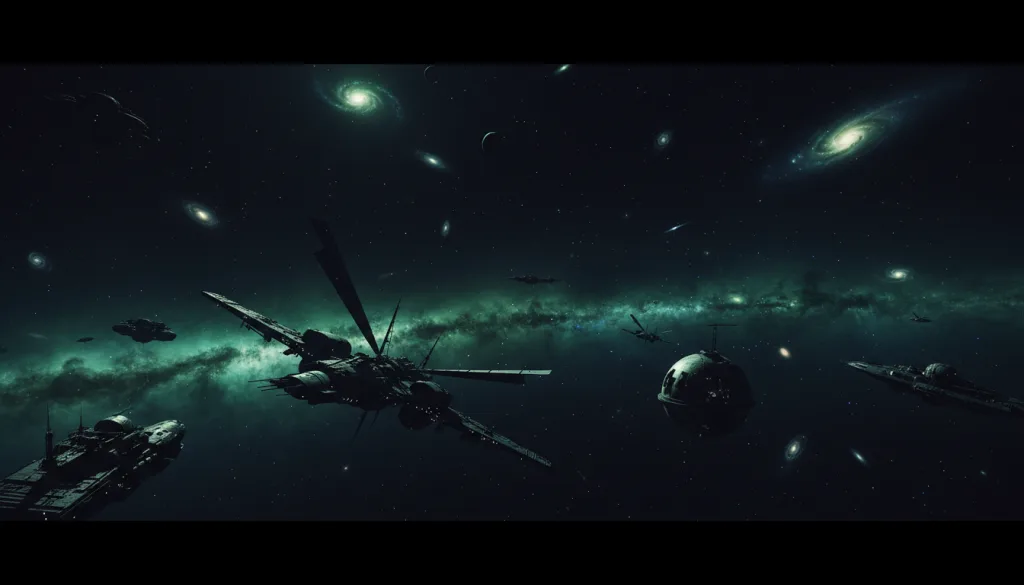
Given the statistical likelihood of extraterrestrial life, the Fermi Paradox begs the question: where are these civilizations? Numerous theories have been proposed to explain this silence, ranging from the limitations of our current technology to more profound implications about the nature of intelligent life itself.
1. The Great Filter Hypothesis
One of the most discussed theories is the Great Filter hypothesis, which posits that at some stage in the evolutionary process, there is a barrier that prevents civilizations from advancing to the point of interstellar communication or travel. This Great Filter could be behind us, suggesting that the emergence of intelligent life is exceedingly rare, or it could be ahead of us, implying that self-destruction or catastrophic events are inevitable for advanced civilizations.
If the Great Filter is behind us, the implication is that we are among the very few intelligent species to have arisen in the universe, making our existence all the more precious and unique. However, if it lies ahead, this presents a more daunting scenario where the self-destructive tendencies of advanced civilizations eventually lead to their extinction before they can communicate with others.
2. Technological Limitations
Another angle to consider is our current technological limitations. Despite significant advancements, our methods for detecting extraterrestrial life are still in their infancy. The electromagnetic signals we search for may not be the primary mode of communication for advanced civilizations. It's also possible that extraterrestrial technologies are so advanced that we cannot yet comprehend or detect their methods of communication.
Moreover, the vast distances between stars complicate the situation further. Even if an extraterrestrial civilization is attempting to communicate, the signals may take thousands or millions of years to reach us, and we might not be listening at the right time or frequency to detect them.
3. The Zoo Hypothesis
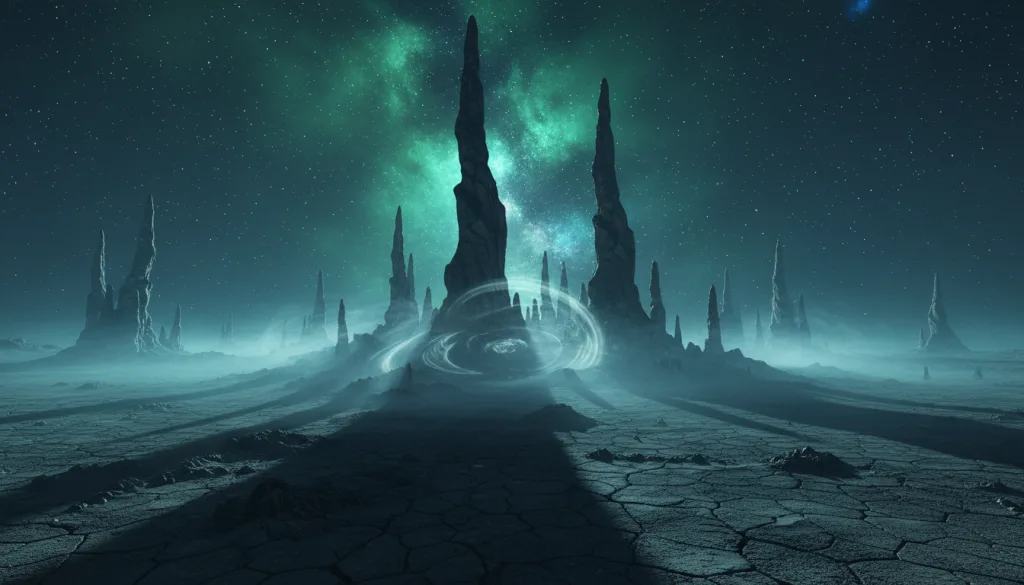
Another intriguing explanation is the Zoo Hypothesis, which suggests that extraterrestrial civilizations are aware of us but intentionally avoid contact, akin to zookeepers observing animals in a zoo without interfering. This theory posits that they may be allowing us to develop independently, possibly to avoid disrupting our natural progression or to study our civilization in its natural state. However, this theory raises ethical questions about the moral implications of non-intervention.
4. The Transcendence Hypothesis
Another possibility is that advanced civilizations may transcend their physical existence. Some theories propose that intelligent life might evolve into non-material forms or achieve a state of consciousness that is beyond our current understanding. In this scenario, they may have reached a level of existence where communication with us is irrelevant or meaningless.
5. Self-Destruction and Extinction Events
The history of Earth is marked by mass extinction events, leading to the reflection on whether advanced civilizations inevitably succumb to similar fates. Nuclear war, climate change, pandemics, and other forms of self-destruction could spell the end of intelligent life before they have the chance to explore or communicate with the universe. The potential for technological self-destruction may act as a Great Filter, preventing civilizations from reaching a stage where they can venture beyond their home planets.

Evidence of Extraterrestrial Life
Despite the silence of the cosmos, there are numerous accounts and pieces of evidence that suggest the possibility of extraterrestrial encounters. Reports of unidentified flying objects (UFOs) and abduction stories have captivated public attention and sparked debates about the existence of alien life. While anecdotal, these accounts often reflect a shared human experience of the unknown.
Moreover, scientific endeavors, such as the Search for Extraterrestrial Intelligence (SETI), continue to scan the skies for signals that could indicate intelligent life. The discovery of extremophiles on Earth—organisms that thrive in extreme conditions previously thought to be uninhabitable—further expands the parameters of where life might exist in the universe.
Conclusion: Embracing the Unknown
The Fermi Paradox serves as a reminder of our place in the cosmos and the complexities of existence. As we continue to explore the universe through scientific inquiry and technological advancement, the questions surrounding extraterrestrial life remain open. Are we truly alone, or are there civilizations hiding just beyond our reach? While we may not have definitive answers, the pursuit of understanding offers insights not only into the universe but also into the nature of our own existence.
Ultimately, the exploration of the Fermi Paradox compels us to confront our beliefs, aspirations, and fears regarding life beyond Earth. It challenges us to look beyond ourselves and consider the broader implications of life in the cosmos, reminding us that in the pursuit of knowledge, we may discover not just the answers we seek but also the mysteries that continue to fascinate humanity.





Comments 0
Be the first to comment!