Antonio Villas Boas's experience set a precedent in the field of abduction accounts.
The Encounter in Brazil
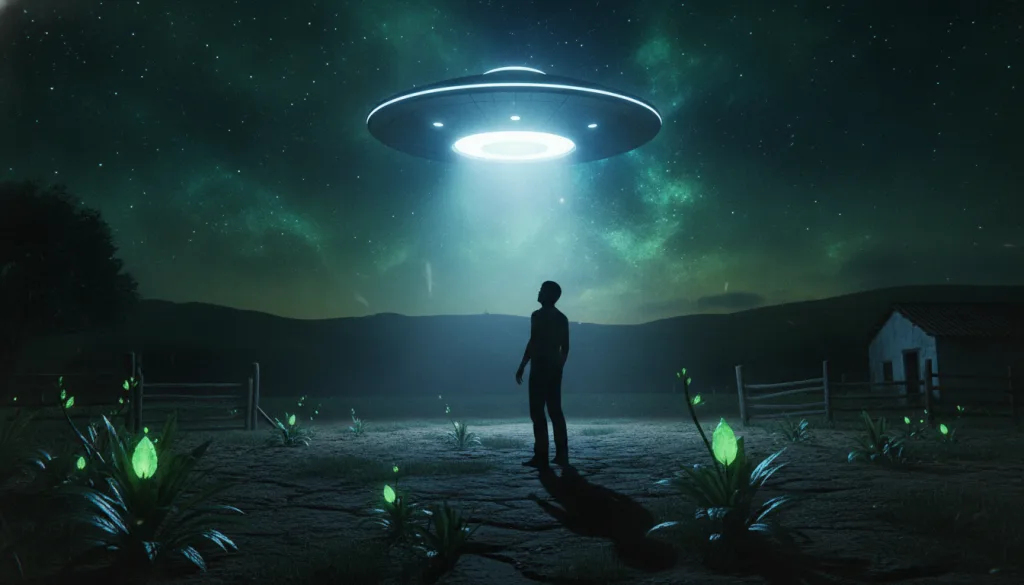
On the night of October 4, 1957, 23-year-old Brazilian farmer Antonio Villas Boas was harvesting his crops in the remote area of São Francisco de Sales when his life took an extraordinary turn. According to Villas Boas, he was suddenly confronted by a bright light in the sky, which landed nearby. This event would mark one of the earliest and most detailed alien abduction accounts in history.
Initial Abduction Experience
Villas Boas described the moment the craft landed, stating that he was approached by three figures. These beings were approximately 1.5 meters tall, with slender bodies, large heads, and strikingly red eyes. They communicated with him telepathically, which is a common element in many abduction narratives. After being captured, he was taken aboard the spacecraft, where he claimed to have undergone a series of medical examinations.
The significance of this case lies not only in its details but also in its timing. The incident occurred just a month after the Soviet Union launched Sputnik, the first artificial satellite, igniting global fascination with space. The context of the Cold War also played a role in shaping public perception of unidentified flying objects (UFOs) and alleged extraterrestrial encounters.
Medical Examination and Sexual Encounter
During his time aboard the craft, Villas Boas recounted a particularly bizarre episode that has been scrutinized for decades. He claimed that a female entity, described as having a humanoid appearance but with distinctly alien features, engaged him in a sexual encounter. This detail is crucial, as it introduces themes of reproduction and hybridization that have persisted in other abduction stories.
The Aftermath and Psychological Evaluation
Upon his return, Villas Boas was understandably traumatized. He underwent a psychological evaluation conducted by Dr. Olavo Fontes, a psychiatrist who specialized in UFO-related cases. Dr. Fontes documented Antonio's experience meticulously, and his findings were published in a 1959 article in the Brazilian journal "Revista Brasileira de Ufologia." This evaluation lent credence to Villas Boas's account, allowing it to be taken seriously in both the scientific community and the public sphere.

"The Villas Boas case stands as a definitive moment, illustrating the psychological ramifications of abduction experiences that individuals face long after their encounters." - Dr. Olavo Fontes, 1959
Despite skepticism from some quarters, the factual details reported by Villas Boas have been largely consistent over the years. His account was published in the book "The UFO Experience" by Dr. J. Allen Hynek, a notable astronomer and ufologist, further cementing its place in the annals of UFO history.
Impact on Ufology and Society
The Antonio Villas Boas incident had ramifications that extended beyond the individual. It set a precedent for how alien abduction cases would be documented, analyzed, and discussed. The case provided a template for subsequent encounters, influencing how abductees would describe their experiences in the years that followed.
Similarities with Other Cases
The details of Villas Boas's encounter bear striking similarities to other abduction accounts, notably the well-documented Betty and Barney Hill case in 1961, which also included medical examinations and telepathic communication. This pattern raises questions about whether these experiences are genuinely extraterrestrial or manifestations of psychological phenomena influenced by popular culture and societal fears regarding the unknown.
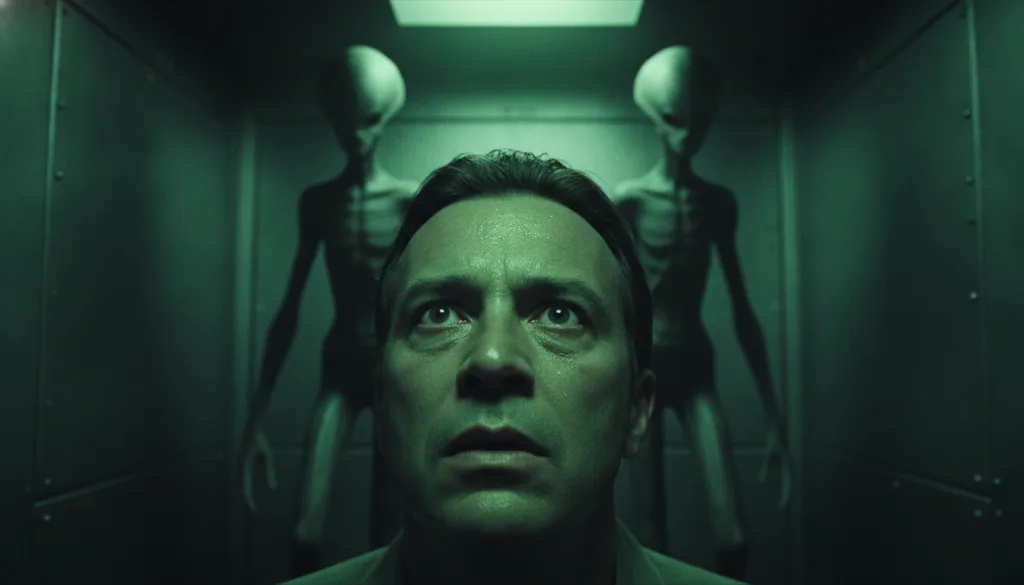
Moreover, the increasing visibility of the UFO phenomenon in the 1960s, with the advent of social movements and the counterculture era, led to a proliferation of literature and media surrounding alien abductions. The Villas Boas case was pivotal in this shift, giving credence to claims that were often dismissed as mere fantasy or delusion.
Scientific Scrutiny and Debunking Efforts
While many researchers have taken Villas Boas's account seriously, skeptics have argued that the experience can be explained through psychological frameworks like sleep paralysis or even cultural conditioning. The late psychologist Dr. Susan Clancy published her findings in her book "Abducted: How People Come to Believe They Were Kidnapped by Aliens" (2005), suggesting that societal influences play a significant role in shaping abduction narratives.
The Role of Media and Public Perception
The media has played a considerable role in shaping the public’s perception of alien encounters. Following the Villas Boas case, sensationalist reporting often skewed the narrative, leading to a cycle of disbelief among skeptics and fervent belief among enthusiasts. The response to the case illustrates the dichotomy between the scientific community and popular culture, which can sometimes diminish the seriousness of individual experiences.

Furthermore, the emergence of conspiracy theories surrounding government cover-ups and secret projects, like the infamous Project Blue Book (1952-1969), has kept the conversation alive. While Project Blue Book examined reports of UFO sightings, many believe it was a mechanism for discrediting genuine encounters rather than an avenue for thorough investigation.
Conclusion: The Enduring Significance of the Villas Boas Case
Decades later, the Antonio Villas Boas case remains a cornerstone of UFO research and abduction narratives. It invites us to consider the boundaries of human experience and the potential implications of contact with extraterrestrial beings. While skepticism about such claims is natural, it is crucial to approach these stories with an open mind and a willingness to investigate the complexities behind them.

Villas Boas's account has not just influenced academic discourse but has also sparked a cultural exploration into human beliefs, fears, and the unknown. The psychological impact of such experiences has yet to be fully understood, but the evidence strongly indicates that the phenomenon of alien abduction is rooted in a complex interplay of psychological, cultural, and perhaps even ontological elements.
Notre analyse : Les détails de l'incident d'Antonio Villas Boas sont à la fois fascinants et troublants. Au-delà de la simple expérience d'enlèvement, son récit éclaire les dynamiques humaines face à l'inconnu. Les implications de tels témoignages, tant sur le plan psychologique que culturel, ne peuvent être ignorées dans notre quête de compréhension de ce phénomène mystérieux qu'est l'ufologie.
Sources & References
Hynek, J. Allen, The UFO Experience, 1972, Henry Regnery Company.
Fontes, Olavo, "O Caso Villas Boas e a Ufologia Brasileira," 1959, Revista Brasileira de Ufologia.
Clancy, Susan, Abducted: How People Come to Believe They Were Kidnapped by Aliens, 2005, Harvard University Press.
Vallee, Jacques, Passport to Magonia: From Folklore to Flying Saucers, 1969, Harcourt Brace Jovanovich.
Rosen, David, "UFOs and the U.S. Government: A Historical Overview," 2014, University of California Press.





Comments 0
Be the first to comment!