Reports of telepathic interactions during alien abduction experiences raise significant questions about the nature of these encounters.
Understanding the Phenomenon of Telepathic Communication
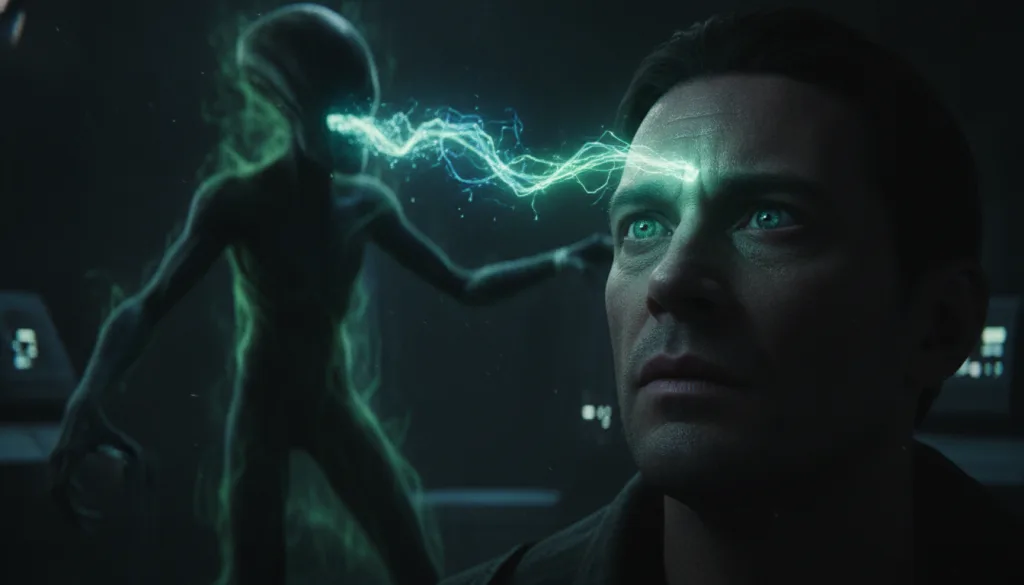
The phenomenon of telepathic communication in alien abduction narratives has emerged as a recurring theme across numerous accounts. Despite the skepticism surrounding the validity of these experiences, a substantial body of anecdotal evidence suggests a pattern worth examining. Reports from individuals who claim to have undergone abduction experiences frequently detail interactions characterized by telepathic communication, often described as instantaneous understanding or mental dialogue with extraterrestrial entities.
Key Characteristics of Telepathic Communication
Experiencers often describe a profound sense of connectedness to their abductors, marked by an absence of spoken words. Instead, communication occurs through thoughts or emotions transmitted directly between the entity and the abductee. For instance, in a comprehensive analysis of abduction cases, Dr. David Jacobs, a prominent researcher in the field, highlights that "the telepathic communication reported by abductees often conveys complex ideas and emotions instantaneously and without language" (Jacobs, 1992). This suggests an advanced form of interaction that transcends our conventional understanding of communication.
A Historical Perspective on Telepathic Experiences
The notion of telepathy is not limited to contemporary abduction reports. Historical accounts of contact with non-human entities, including folklore and mythology, frequently include elements of telepathic communication. For example, the 1957 case of Antonio Villas Boas in Brazil is often cited. Villas Boas claimed to have been abducted by aliens, during which he communicated with them telepathically, a detail that aligns with later accounts from experiencers in the 1980s and beyond.
Comparative Analysis of Abduction Reports
In the late 20th century, particularly during the 1980s, the prevalence of abduction reports surged, coinciding with the popularization of the term "abduction" in the public lexicon. Notable cases, such as that of Betty and Barney Hill in 1961, involved descriptions of telepathic communication. Their story has become foundational in ufology, with Betty Hill detailing how she received instructions telepathically during her encounter. Subsequent interviews reveal a commonality in how individuals recount their experiences, often using similar descriptors for the perceived communication process.
Researchers like Dr. Budd Hopkins have cataloged numerous cases affirming these characteristics. In his 1981 work, "Missing Time," he argues that the similarity in accounts across different individuals indicates a shared experience, rather than isolated incidents. Such consistency challenges the narrative that these experiences are purely the result of psychological phenomena or sleep paralysis.

Scientific Perspectives and Skeptical Analysis
While the consistency of these reports provides a rich ground for investigation, it is essential to scrutinize the scientific underpinnings of telepathic claims. The scientific community has historically been reluctant to accept telepathy as a valid explanation for communication between humans and extraterrestrial beings. Skeptics often attribute these experiences to psychological factors, such as the influence of sleep disorders or cultural conditioning. Dr. Susan Clancy, a psychologist at Harvard University, has conducted extensive research on the psychological aspects of abduction experiences, concluding that "the brain is a powerful story-teller, creating narratives that make sense of bizarre experiences" (Clancy, 2005). This view emphasizes a natural psychological basis for the reported phenomena, rather than an actual telepathic exchange.
Alternative Explanations for Telepathic Experiences
Numerous alternative explanations exist for the phenomenon of perceived telepathy in abduction scenarios. A leading theory involves the phenomenon of "false memory," where suggestive questioning or media influence shapes an individual's recollection of events. Dr. Elizabeth Loftus, a cognitive psychologist, has demonstrated how memories can be altered or fabricated, particularly under duress or trauma. Her research indicates that many abduction narratives may result from a combination of stress-induced memory distortions and societal influences, casting doubt on the reliability of such accounts.
Another consideration is the potential role of neurological factors in the reporting of telepathic communication. Research on brain function, particularly in high-stress situations, shows that individuals may experience altered states of consciousness, leading to unusual perceptions. The phenomenon of "highway hypnosis," where a driver may lose track of time or space, exemplifies how mental states can distort reality. As noted by Dr. Michael Persinger in his 2001 study on the neurological basis of paranormal experiences, "the brain's temporal lobe is extensively involved in the perception of reality, and unusual stimulation can lead to vivid hallucinations" (Persinger, 2001). This neurological perspective suggests that the experiences labeled as telepathic might be a product of brain activity rather than an actual exchange of thoughts with extraterrestrial beings.

Case Studies Illustrating Telepathic Communication
Several high-profile abduction cases provide valuable insights into the reported phenomenon of telepathic communication. The case of Kelly Cahill in 1993 is particularly noteworthy. Cahill recounted a harrowing encounter with an unidentified craft and its occupants in Australia. During the experience, she claimed to have received messages in her mind, which included complex ideas about her life and the universe. Cahill's detailed account and the consistency of her narrative over the years lend credence to the possibility of a shared experience among abductees.
Community and Cultural Impacts on Telepathic Accounts
The cultural context surrounding abduction experiences plays a significant role in shaping the narratives of telepathic communication. As societal interest in extraterrestrial life and UFO phenomena has grown, so too have the number of reported abduction cases. The influence of popular media, such as the 1990 film "Fire in the Sky," which dramatizes an abduction experience, has undoubtedly shaped public perception and individual reporting. The blend of cultural cues, media influence, and personal psychology often results in a complex web of explanations for the telepathic communication claims made by experiencers.
In a 2017 survey conducted by the Mutual UFO Network (MUFON), over 30% of respondents reported experiences that included telepathic communication with non-human entities. This statistic underscores the prevalence of such claims within the community of those who have reported abduction experiences. It raises questions about the ways in which these experiences might be informed by cultural narratives about aliens and telepathy. Dr. John E. Mack, an esteemed psychiatrist and researcher of abduction experiences, posited that "the cultural matrix in which an abduction experience occurs can powerfully shape the nature of the experience itself" (Mack, 1994). Thus, the environment surrounding abduction cases cannot be ignored when analyzing reported telepathic communication.
Ethical Considerations in Abduction Research
Investigating the claims of telepathic communication in abduction reports necessitates a careful ethical approach. Many individuals who report these experiences do so in vulnerable states, often grappling with trauma or confusion regarding their encounters. Researchers have a responsibility to approach these subjects with sensitivity, recognizing the potential psychological repercussions of labeling their experiences as "delusions" or "fantasies."
The Role of Support Networks for Experiencers
An essential component of responsible research involves establishing support networks for individuals who have experienced abductions. Organizations such as the Edgar Mitchell Foundation for Research into Extraterrestrial Encounters (FREE) aim to provide a platform for experiencers to share their stories and seek help in understanding their experiences. These initiatives emphasize the importance of validating personal narratives while also encouraging critical analysis of the claims surrounding telepathic communication.
"The challenges of understanding abduction experiences require both scientific rigor and compassionate engagement with those who claim to have had them." – Dr. John E. Mack, 1994
Our Analysis:
Our examination of the role of telepathic communication in abduction reports raises significant questions about the nature of these experiences. While the consistency of reports among experiencers suggests a deeper phenomenon at play, the explanations offered by skeptics regarding psychological factors cannot be dismissed. The evidence strongly indicates that many claims of telepathy may arise from cultural and psychological influences. However, the phenomenon remains complex, requiring ongoing investigation and thoughtful engagement with those who report such experiences.
Sources & References
Jacobs, David, "Secret Life: Firsthand Accounts of UFO Abductions," 1992, Simon & Schuster.
Clancy, Susan, "Abducted: How People Come to Believe They Were Kidnapped by Aliens," 2005, Harvard University Press.
Persinger, Michael A., "Neuropsychological Bases of God Beliefs," 2001, Praeger Publishers.
Mack, John E., "Abduction: Human Encounters with Aliens," 1994, Scribner.
Hopkins, Budd, "Missing Time," 1981, Random House.






Comments 0
Be the first to comment!