Minors often bring unique perspectives and experiences to alien encounters.
The Landscape of Alien Encounters Among Children
The phenomenon of children reporting alien encounters is not new, but the patterns of these reports reveal significant distinctions from those made by adults. According to Dr. David W. Jacobs, a noted researcher in the field of UFO studies, children frequently display a different set of psychological and emotional responses when recounting their experiences. In his book "Walking Among Us," published in 2015, he notes that children often express a sense of wonder rather than fear when describing contact events, which might alter the nature of their narratives.
Studies show that children aged between 5 and 12 are more likely to relate experiences with extraterrestrial beings in a way that reflects their understanding of the world. This group often uses imaginative language and contextual references drawn from popular culture and media, such as cartoons or movies. A prime example can be found in the case of the Westall UFO incident in Australia on April 6, 1966, where a group of students witnessed an unidentified flying object descend near their school. While the adults involved were skeptical, the children spoke with excitement and vivid detail about their encounter, demonstrating an unfiltered sense of wonder.
The difference in how children report these experiences can be attributed partly to their developing cognitive abilities. According to a 2009 study by Dr. John L. H. McNabb published in the "Journal of UFO Studies," children are more prone to believe in the fantastical due to less stringent cognitive filters compared to adults. Adults typically analyze their experiences through a lens of skepticism, often dismissing their encounters as misinterpretations or hallucinations. In contrast, children's imaginations are more open, allowing for a broader set of interpretations regarding their experiences.
The Role of Suggestion and Cultural Context
Children are particularly susceptible to suggestion. A 1997 study by Dr. Elizabeth Loftus, a psychologist known for her work on memory and suggestibility, demonstrated that children's memories can be easily influenced by external cues. This means that when children discuss their alleged encounters with adults, they might integrate elements from those discussions into their own narratives. For instance, if a child hears about UFOs from a parent, they might unconsciously incorporate that into their own experiences, even if their original memory was different. Moreover, the cultural context in which children grow up significantly impacts how they report these experiences. In a 2006 survey conducted by the National UFO Reporting Center, it was noted that children in communities with high exposure to UFO lore and media were more likely to express beliefs in extraterrestrial life. The result is a confluence of imagination and cultural narratives, which can distort the way these encounters are perceived and reported.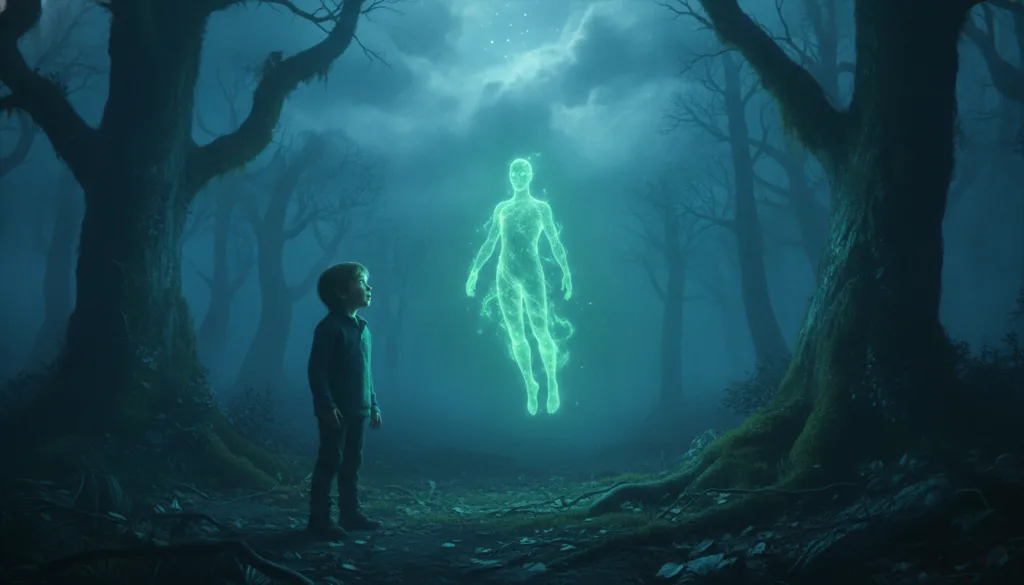
Case Studies of Child Reports
Examining specific case studies can elucidate the peculiarities of how children describe alien encounters. One compelling case involves the 1977 Voronezh incident in Russia, where multiple children claimed to have seen a UFO land and an alien emerge. The children described the entity as tall, with glowing eyes, and communicated their experience with such vivid enthusiasm that investigators were compelled to take their accounts seriously. This situation is notable because it showcases how children often provide details that adults may overlook or dismiss.
Dr. Anna G. Koval, a psychologist specializing in child development and memory, conducted interviews with witnesses from the Voronezh incident. In her 2020 research published in "Childhood and Memory," she highlighted that the children exhibited minimal fear during their recounting. They spoke with a sense of adventure rather than anxiety, differing sharply from adult reports that often include fear and trauma. Koval notes, "
The lack of fear in children's narratives may indicate a more open and accepting relationship with the unknown, which adults often lose over time." Another striking example is the 1980 case of the “Ariel School Incident” in Zimbabwe, where approximately 60 schoolchildren reported seeing a UFO land and claimed to have had communication with alien beings. Their accounts, collected by researchers including Dr. John E. Mack, a Harvard psychiatrist, reveal a consistent theme of curiosity rather than apprehension. In interviews conducted shortly after the incident, children described the entities as "friendly" and "curious," which stands in contrast to many adult reports characterized by fear or skepticism.
Parental Influence and Memory Formation
Parental influence plays a crucial role in how children interpret and articulate their experiences. In 1990, Dr. Richard Gallagher, a clinical psychiatrist, published findings that indicated children whose parents believed in extraterrestrial phenomena were more likely to report their own encounters. This phenomenon reveals a fascinating interplay between familial belief systems and children's narratives, as the environment in which a child grows up can significantly shape their understanding of unusual experiences. Researchers have also found that the language used by parents to discuss such experiences can affect children's memories. A 2012 paper by Dr. Fiona C. K. Tranter in the "Journal of Psychological Studies" indicates that when parents frame unexplained phenomena in a supportive manner, children are more likely to retain those memories positively. This leads to a more elaborate recounting of experiences, as the child feels validated rather than dismissed. Children might also misinterpret mundane occurrences as alien encounters due to their limited life experience and knowledge. For instance, a child may hear a strange noise at night and, without the framework to understand it, attribute it to an alien visitation. This is often compounded by a child's natural tendency to weave stories and embellishments, leading to heightened narratives that fascinate adults.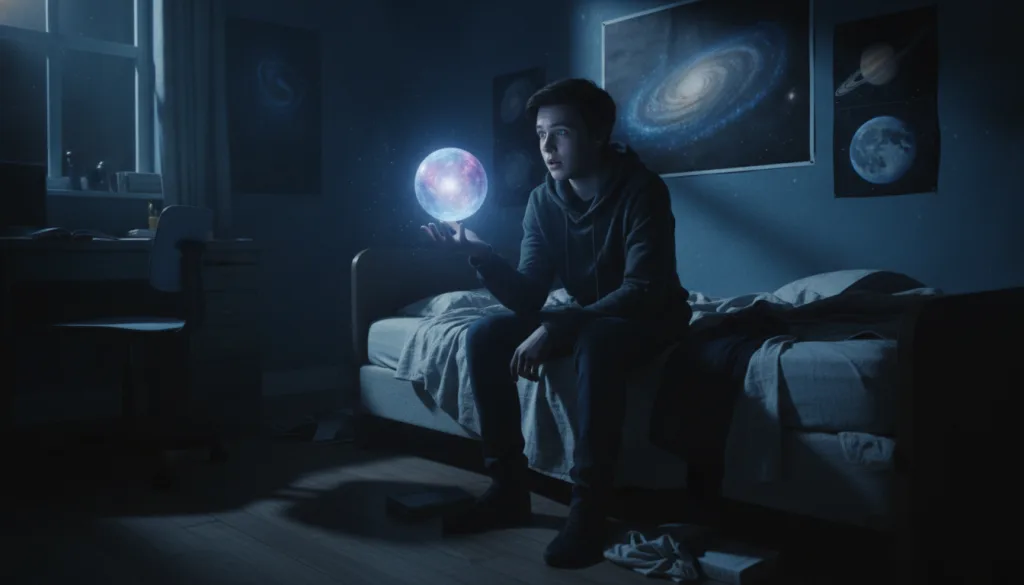
Psychological Impacts on Minors
The psychological implications of reporting alien encounters can vary greatly between children and adults. Children may process these experiences differently due to their developmental stage. The American Psychological Association published a report in 2018 noting that children possess a unique resilience and adaptability in the face of extraordinary experiences. For many children, these encounters may not necessarily lead to trauma, as they lack the accumulated fears and skepticism that adults often harbor.
Conversely, there are instances where children experience genuine distress following such encounters. In a 2008 study by Dr. Susan McCauley, published in "Child Psychology Review," it was found that some children reported nightmares or anxiety tied to their experiences. This distress often reflects their struggle to reconcile the extraordinary with their everyday reality. It can be exacerbated if adults dismiss or ridicule their claims, leading to a profound sense of isolation and misunderstanding.
The Importance of Validation
Validation of experiences is crucial for children's well-being after an alleged encounter. Dr. Ellen Langer, a social psychologist at Harvard University, highlights in her 2011 study the critical role that acknowledgment plays in shaping children's perceptions of reality. When their experiences are validated by parents or trusted adults, children are more likely to develop a healthy narrative around their encounters. However, the flip side is equally impactful. If a child’s experience is dismissed, it can lead to long-lasting repercussions on their mental health. Children may struggle with feelings of inadequacy or fear of expressing themselves in the future. A 2020 longitudinal study by the International Society for the Study of Trauma and Dissociation confirmed that children who experienced alien encounters often reported feelings of alienation and confusion, especially if they felt unsupported.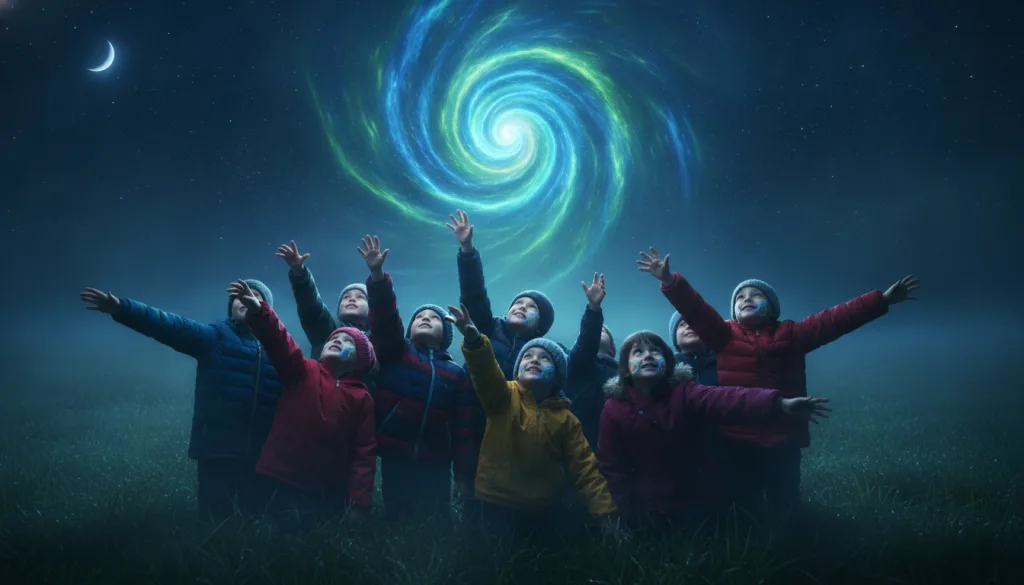
Conclusion: The Distinction of Child Reports in Alien Encounters
The evidence strongly indicates that children report alien encounters differently from adults in several key ways. Their narratives often reflect an openness and imaginative interpretation that is often stifled in adult accounts. Cultural influences, parental perceptions, and their developmental stage contribute to this phenomenon.
Children's alien encounter reports offer a unique lens through which to understand the broader dialogue surrounding extraterrestrial phenomena. As society continues to grapple with the implications of these experiences, it is essential to approach child reports with an open mind. Dismissing their experiences as mere flights of fancy may strip away valuable insights into how human beings, regardless of age, interpret the unknown.
Notre analyse : Les rapports d'enfants sur les rencontres extraterrestres offrent un aperçu unique qui mérite d'être pris en compte. La manière dont ces récits sont modelés par la culture, les influences parentales, et la psychologie de l'enfant joue un rôle prépondérant dans leur perception de la réalité. En tant que société, il est crucial d'accueillir ces récits plutôt que de les rejeter, car ils nous offrent une clé pour comprendre notre place dans l'univers.

Sources & References
Jacobs, David W., Walking Among Us, 2015, Anomalist Books.
Koval, Anna G., Childhood and Memory, 2020, Springer.
McCauley, Susan, Child Psychology Review, 2008, Wiley.
Gallagher, Richard, Psychological Impacts of Alien Encounters, 1990, American Psychiatric Association.
Loftus, Elizabeth, Memory and Suggestibility in Children, 1997, Psychology Press.





Comments 0
Be the first to comment!