Are Our Ancestors Trying to Tell Us Something About the Cosmos?
When we gaze up at the night sky, what do we see? Stars, planets, perhaps the occasional passing satellite? But what if our forebears saw something far more complex, something that has prompted countless stories, myths, and—dare we say—truths about 'beings from the sky'? Across various cultures and epochs, the evidence suggests that our ancestors were not merely staring at twinkling lights; they were witnessing something significant. But does the mainstream narrative of history match this perspective? We’re here to shake that tree and see what falls. Buckle up. It’s going to be a bumpy ride.
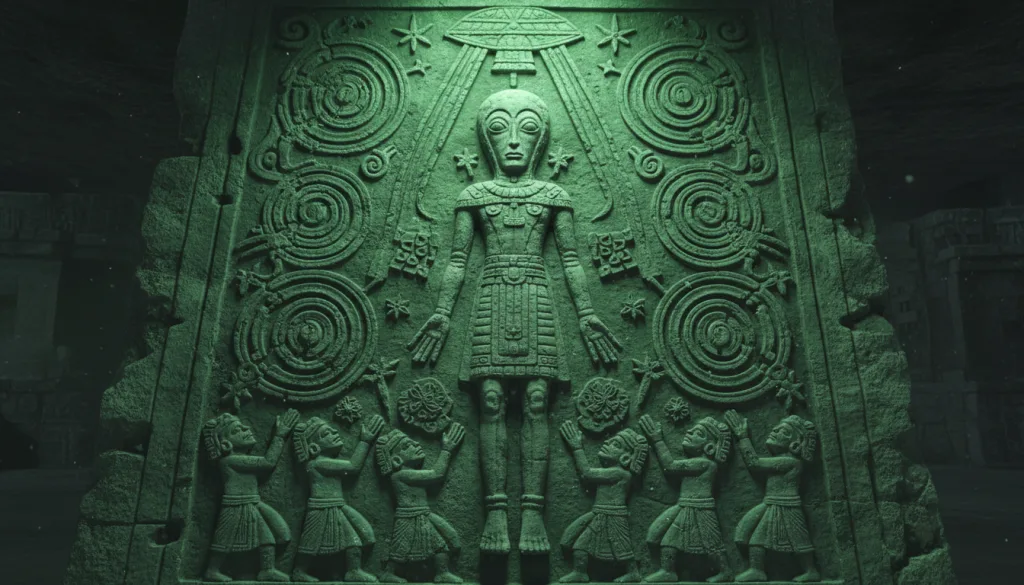
The Sumerians: The Anunnaki and Their Cosmic Influence
Let’s start our journey in ancient Mesopotamia, the cradle of civilization, where the Sumerians left behind intricate depictions of what they referred to as the Anunnaki. These beings were often envisioned as gods descending from the heavens. But why were they depicted so? Were they gods, or might they have been extraterrestrial visitors?
The Anunnaki are routinely depicted in human-like forms, adorned in elaborate clothing that suggests a reverence beyond mere mortals. Some artifacts show them with elongated skulls, a feature that raises eyebrows and questions about their true nature. Did they possess advanced technology that allowed them to traverse the stars, or do such interpretations veer too close to science fiction?
One must wonder: What sort of relationship did the Sumerians believe they had with these celestial visitors? Could it be that the Anunnaki were not just mythological figures but rather historical contacts who shaped human civilization? The notion that we’ve misunderstood these ancient narratives is too intriguing to dismiss. After all, the Sumerians wrote down their stories on clay tablets—hardly a casual pastime.
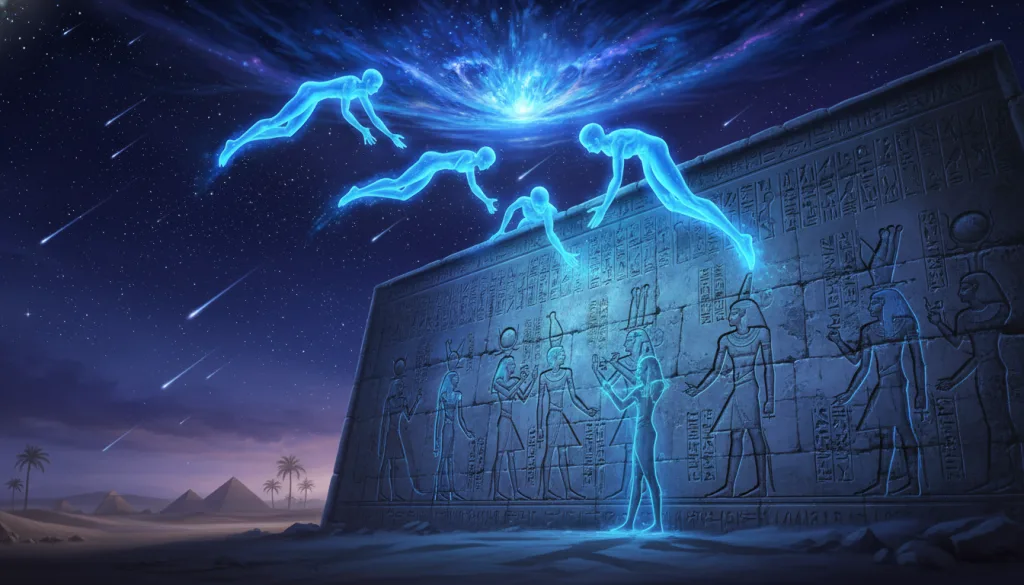
The Ancient Egyptians: Gods from the Sky or Advanced Beings?
Moving on to the land of the pyramids, ancient Egypt is rich with depictions of beings that seem to descend from the heavens. The gods, such as Ra and Osiris, are often illustrated with features that transcend earthly limitations. But let’s not get lost in the allure of mythology; instead, let's ask the tough questions.
Hieroglyphics tell a story of beings who interact with humanity in profound ways. Could these gods have been visitors from another world? The Great Pyramid of Giza features alignments that hint at an advanced understanding of astronomy. Some theorists argue that this knowledge could not have been achieved without extraterrestrial assistance. But is this just another case of us wanting to believe that our ancestors needed help from “the stars” instead of accepting their own genius?
Moreover, the Egyptian Book of the Dead speaks of journeys through the skies and encounters with celestial beings. Were these mere metaphorical flights of fancy, or are they documenting actual interactions? The Egyptians certainly believed in an afterlife, and they included the concept of star travel in their religious practices. Why do we ignore these clues? Are we so conditioned to view our past through the lens of terrestrial explanations that we fail to see the broader cosmic picture?
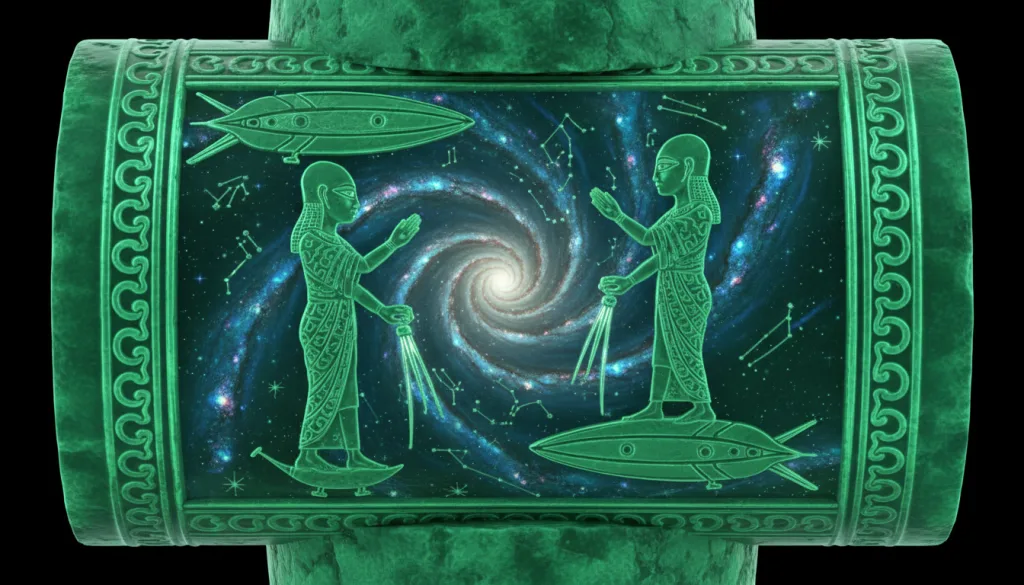
The Dogon Tribe: Knowledge of Sirius and Beyond
Let’s shift gears to Africa, where the Dogon tribe of Mali has garnered attention for their extraordinary knowledge of astronomy—specifically, the star system Sirius. What makes their understanding astonishing is that it predates the advent of modern astronomy. The Dogon describe Sirius B, an invisible companion star to Sirius A, which wasn’t discovered by Western astronomy until the 19th century. How could a tribal society, with no telescopes or advanced technology, possess this knowledge?
The Dogon tell stories of extraterrestrial beings called the Nommo, who descended from the sky and imparted their astronomical wisdom. This raises an uncomfortable question: Did these beings genuinely exist, or are we simply imposing our narratives onto an indigenous culture? The fact remains that the Dogon’s knowledge challenges conventional history. Are we to believe that such profound insights emerged without external influence?
As we delve deeper into the Dogon’s beliefs, we confront the uncomfortable reality that they may hold keys to understanding our place in the cosmos. If their narratives are rooted in experiences with extraterrestrials, what does that say about our own historical accounts? Are we missing vital pieces of the puzzle because they don’t fit neatly into our existing frameworks?
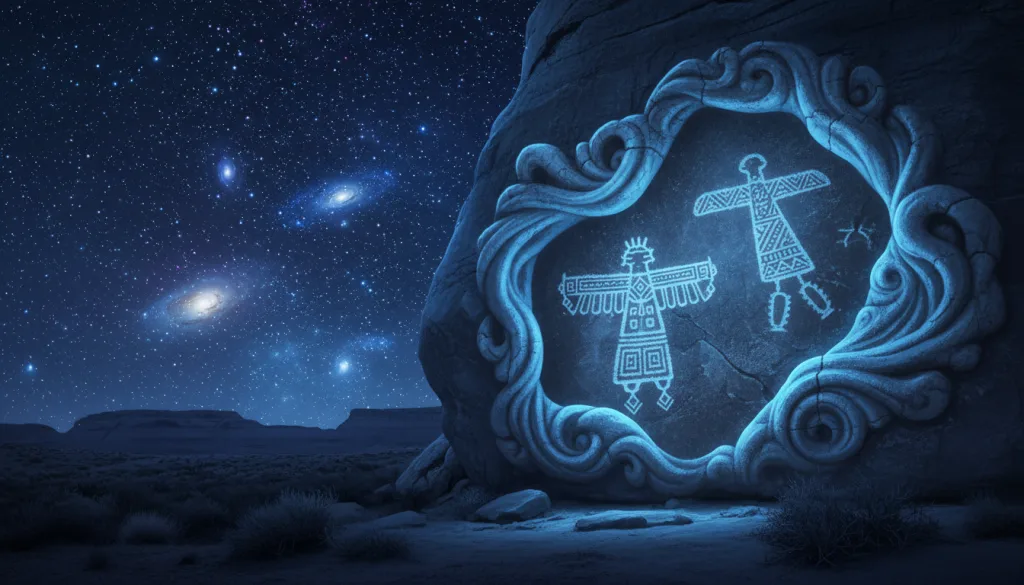
The Vedic Texts of Ancient India: Vimanas and Celestial Travel
Turning our gaze eastward, we find the Vedic texts of ancient India, which are filled with references to flying machines called vimanas. These ancient scriptures describe interactions between gods and humans, along with elaborate details about these aerial crafts. Are we really to believe that the ancient Indians were simply imagining flying chariots, or is there more to the story?
Vimanas are described as vehicles capable of traversing not just earthly skies, but also other realms of existence. Some interpretations suggest that these were not mere myths, but actual accounts of advanced technology. The details regarding the construction and operation of vimanas can be quite technical, leading some to speculate that ancient civilizations may have had access to knowledge that modern science is only beginning to grasp.
What’s particularly fascinating is how these ancient texts mirror modern UFO sightings. Are we simply repeating history? It’s baffling that we don’t have a more robust dialogue around this subject. The mainstream narrative would prefer to chalk up these accounts as folklore, but could it be that our dismissal of such narratives is a disservice to our understanding of human history?
The Mayans: Celestial Navigation and Prophecy
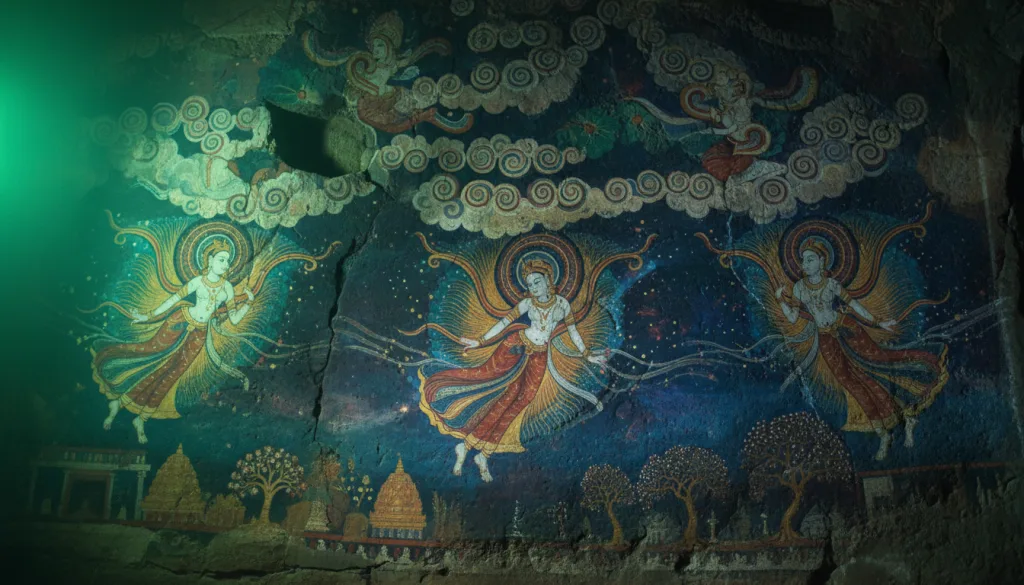
Finally, we arrive in Central America, among the ancient Mayans, whose astronomical achievements continue to astound. They built structures like pyramids that align perfectly with celestial events. One begins to wonder—did they receive guidance from beings that navigated the cosmos?
The Mayans had a sophisticated understanding of celestial cycles and incorporated that knowledge into their calendars and rituals. But what if some of that knowledge came from beyond our world? Their intricate depictions of gods with otherworldly features could be interpreted as encounters with extraterrestrial beings.
It's perplexing that the notion of a space-faring civilization would be relegated to the realm of fantasy while our ancestors celebrated similar beings as integral to their understanding of the universe. Are we so intent on discrediting their experiences that we ignore the possibility that they might have witnessed something profound? The Mayan prophecies speak of a time when the skies would reveal great truths. What if we are living in such a time? Are we ready to confront the implications of our choices?
Concluding Thoughts: Are We Ignoring the Signs?
As we traverse the rich tapestry of ancient cultures, a pattern emerges: beings from the sky have consistently played a role in human narratives. From the Anunnaki to the Nommo, from vimanas to celestial Mayan deities, the evidence of contact—be it historical, mythological, or prophetic—abounds. The question we must grapple with is simple yet profound: Why do we continue to dismiss these encounters?
It’s all too easy to label these stories as mere myths and folklore, but doing so is akin to ignoring the elephant in the room. Our ancestors were not simple folk; they were deeply observant and curious about their world—and perhaps beyond. Could it be that their experiences with celestial beings hold keys to understanding our own existence?
The uncomfortable truth is that we may be standing on the brink of a new understanding of history, one that includes the possibility of extraterrestrial influences. Will we cling to our established narratives, or will we dare to peer into the vast cosmos of possibilities that our ancestors may have encountered? The answers may lie in the stars, waiting for us to look up and ask the right questions. Are we prepared to confront what we find?





Comments 0
Be the first to comment!