Canada's Project Magnet reveals the depths of government inquiries into unidentified aerial phenomena.
A Pioneering Mind: Wilbert Smith's Vision
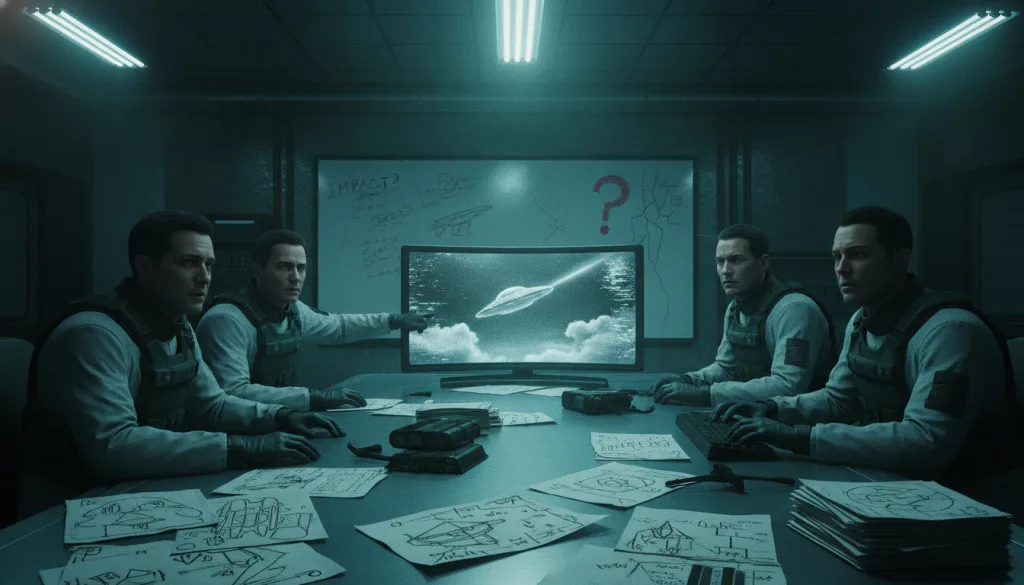
On a brisk autumn day in 1950, Dr. Wilbert B. Smith, a Canadian radio engineer, convened a meeting at the National Research Council of Canada in Ottawa. He was not merely a scientist; he was a man driven by an insatiable curiosity about the unknown. His steadfast belief in the existence of extraterrestrial vehicles led him to create "Project Magnet"—a classified research initiative designed to investigate unidentified flying objects (UFOs).
Smith's qualifications were impressive. He held a Master's degree in Electrical Engineering from the Massachusetts Institute of Technology and had a background working on radar technology during World War II. His intimate knowledge of electromagnetic theories laid the groundwork for his belief that UFOs employed advanced propulsion methods, potentially involving magnetic fields. Smith's work would eventually gain traction, leading to the establishment of a covert governmental project aimed at uncovering the truth behind these enigmatic sightings.
In 1952, Smith presented a report to the Canadian government that outlined his findings and offered recommendations for further research. His detailed analysis included data collected from various UFO sightings and suggested that these unidentified objects could be harnessing magnetic fields for propulsion.
Smith's bold claims and dedicated advocacy caught the attention of senior officials, culminating in the launch of Project Magnet, which would officially commence on May 15, 1952. The project's primary objective was to gather data on UFO sightings across Canada and establish a systematic approach to understanding their nature and origins.

The Foundation of Project Magnet
Canada, during the early 1950s, was experiencing a surge of UFO sightings. Witness reports flooded in, detailing objects that moved at incredible speeds, defied conventional aerodynamics, and displayed capabilities well beyond known human technology. The government needed to take these reports seriously and engage in systematic research. Under Smith's direction, Project Magnet would soon expand beyond mere sightings and into the realm of serious scientific inquiry. The project aimed to investigate the electromagnetic properties of UFOs, which Smith believed were responsible for their remarkable capabilities. He posited that understanding these properties could unlock the secrets behind advanced propulsion techniques, potentially revolutionizing human technology. By 1953, Project Magnet was in full swing. Smith and his team established a network of stations across Canada, equipped with sensitive instruments designed to detect and analyze atmospheric anomalies. The goal: to study the electromagnetic phenomenon associated with UFO sightings and ascertain whether these objects possessed unique properties that transcended conventional physics. However, the project faced skepticism. The Canadian government was cautious about public perceptions and national security implications. As Smith diligently gathered data, he encountered significant resistance from both military and civilian sectors. Despite these challenges, he pressed on, convinced of the project's significance.Unveiling the Signals: Data Collection and Interpretation
A critical turning point for Project Magnet occurred during the summer of 1953. The team collected a series of electromagnetic anomalies that coincided with reports of UFO sightings. A particularly compelling case emerged on August 10, 1953, when residents of St. Paul, Alberta, reported a bright object hovering silently above their town.
In the aftermath of the sighting, Project Magnet's instruments detected a spike in electromagnetic activity. Smith interpreted this as evidence that the UFO had some form of propulsion system that interacted with the Earth's magnetic field. His conclusions would later be documented in a memorandum presented to the Canadian government, laying out the potential implications of such technology.
Smith's work was pioneering in that it bridged scientific inquiry with the unexplained. The specter of potential government cover-ups loomed large; despite the intriguing data, Project Magnet was not immune to political machinations. As the Cold War intensified, the fear of revealing sensitive information about UFOs grew. The Canadian military took a more conservative stance, which diminished the scope of Smith's ambitious research.

The Convergence of Science and Secrecy
Smith's groundbreaking theories caught the attention of U.S. officials as well. In December 1953, during a meeting with American scientists, Smith claimed that UFOs represented a revolutionary leap in technology. He argued that their study could provide insights that would benefit humanity, but warned that political and military interests were likely to stifle open inquiry on the subject. His insights, however, were met with a mixed reception. Notably, Dr. James E. McDonald, an atmospheric physicist and vocal advocate for UFO research, expressed concern over the government’s reluctance to investigate these phenomena fully. In a 1968 paper, he stated, “The great majority of sightings are never adequately investigated; this is a monumental failure of our scientific community.” As we look back, McDonald’s assertion casts a long shadow over Project Magnet and highlights the broader reluctance of government bodies to engage with UFO phenomena openly. The juxtaposition of Smith's scientific inquiry against the backdrop of political machinations reveals the struggles inherent in reconciling the unprecedented with state interests.The Decline and Legacy of Project Magnet
As the 1950s wore on, enthusiasm for Project Magnet waned significantly. By 1954, the Canadian government began to distance itself from the project, largely due to external pressures and internal skepticism. The U.S. government had established its own UFO investigative project, Project Blue Book, which dominated public attention and overshadowed Canadian efforts.
In 1955, Project Magnet was effectively terminated, with Wilbert Smith's work fading into the annals of history. His efforts, however, would not be forgotten. Declassified documents, released in 1980, revealed Smith’s extensive reports and findings, reigniting interest in this long-neglected chapter of UFO research.
Among the documents released was a memo dated May 31, 1950, where Smith described an encounter with an unidentified object. He recounted, “I saw an object that was flat and metallic, reflecting sunlight. It moved silently and with incredible speed.” This firsthand account not only solidified Smith’s credibility but also illustrated the intensity of his investigative zeal.
In 1967, Dr. Smith passed away, but his legacy would flourish in the years to come. His work inspired a new generation of researchers and enthusiasts, leading to an increasing focus on the scientific inquiry of UFOs.

The Posthumous Rediscovery and Continued Inquiry
The late 20th century and early 21st century saw a resurgence of interest in Project Magnet, particularly as more documents and testimonies came to light. In 2007, the Canadian government released additional files under the Access to Information Act, revealing hundreds of previously classified reports. This resurgence inspired scholars and amateur investigators alike to reassess the significance of Smith's work.
One of the most influential figures in this reassessment is Dr. Chris Rutkowski, a prominent UFO researcher and author based in Winnipeg, Manitoba. In his 2010 book, “UFOs: The Canadian Experience,” Rutkowski emphasizes the importance of Project Magnet in laying the groundwork for serious scientific inquiry into UFO phenomena in Canada.
“If we are to take these reports seriously, we must apply rigorous scientific methodologies to investigate them,” Rutkowski states, reflecting a sentiment increasingly echoed among modern researchers. The continued declassification of government files has led to an explosion of interest in the UFO phenomenon, demonstrating a collective appetite for transparency.
In 2019, the Canadian government officially established the “UFO Study Group” within the Department of National Defence, signaling a renewed commitment to understanding unidentified aerial phenomena. This could be viewed as a vindication of Smith's early efforts; the stigma surrounding the study of UFOs is slowly dissipating, and governmental transparency is beginning to take root.
Our Analysis: The Enduring Impact of Project Magnet
Canada’s Project Magnet serves as a testament to the struggles of scientific inquiry in the face of governmental secrecy and societal skepticism. Dr. Wilbert B. Smith, through sheer determination and intellect, forged a path for future generations of researchers to follow. The evidence strongly indicates that the UFO phenomenon deserves rigorous academic study rather than dismissal.
Despite the politicization of the subject, Smith's legacy lives on, as contemporary researchers continue to examine the implications of UFO technology. Now, as we stand on the precipice of potential disclosure, it is crucial to reflect on the pioneering work of those like Wilbert Smith who dared to probe the unknown.
The path toward understanding unidentified aerial phenomena is fraught with challenges, yet the foundational work laid by Project Magnet has paved the way for more inquiry. As government secrecy begins to lift, the lessons learned from Smith’s experiences will undoubtedly guide future investigations into the baffling world of UFOs.
Sources & References
Smith, Wilbert B. “Report on the UFO (Unidentified Flying Object) Problem.” 1952. National Research Council of Canada.
McDonald, James E. “The UFO Phenomenon: A Scientific Inquiry.” 1968. University of Arizona.
Rutkowski, Chris. “UFOs: The Canadian Experience.” 2010. University of Manitoba Press.
Government of Canada. “UFOs: The Canadian Files.” 2007. Access to Information Act.
Smith, Wilbert B. “Magnetic Field Anomalies Associated with UFOs.” 1950. National Research Council of Canada.






Comments 0
Be the first to comment!