Canada's early encounters with UFO phenomena reveal a complex web of governmental secrecy and scientific inquiry.
The Birth of Project Magnet
In the early 1950s, the Cold War was in full swing, and the world was rife with fears of the unknown—both earthly and extraterrestrial. Canada, a nation still finding its footing in the realm of scientific exploration, found itself at the nexus of one of the most enigmatic phenomena of the time: unidentified flying objects (UFOs). Enter Wilbert Smith, an engineer and radio specialist for the Canadian government, who would spearhead an initiative that would become known as Project Magnet.
Smith's interest in UFOs was not born from mere curiosity. In 1950, he was engaged in the study of electromagnetic waves and their potential applications to communication. While working on government-funded projects, he encountered sightings that couldn't easily be dismissed. His insatiable quest for understanding led Smith to propose Project Magnet in 1952, a covert program aimed at investigating unidentified aerial phenomena from a scientific perspective. The project was largely spurred by the U.S. Air Force's Operation Blue Book, which was already under scrutiny for its vague conclusions and apparent dismissals of credible reports.
“UFOs are real and they are not going away. We need to take them seriously and conduct proper scientific investigations.” – Dr. Jacques Vallée, 2018Wilbert Smith's role as the program's primary investigator was critical. He established a network of observers and utilized existing radar systems to track anomalous objects in the sky. The Canadian government's support for Project Magnet marked a significant departure from the more dismissive attitudes towards UFOs observed in other countries, especially the United States.

The Scientific Approach: Methodology and Findings
Project Magnet was not just a simple collection of sightings or anecdotal accounts; it was a structured scientific endeavor. Smith’s methodology involved rigorous observation, data collection, and analysis. He enlisted the help of various scientific experts, including physicists and engineers, to scrutinize the physical properties of UFOs. The project aimed to answer essential questions: What are the physical characteristics of these unidentified objects? Are they capable of advanced propulsion systems?
One of the most notable findings from Project Magnet was the potential correlation between UFO sightings and electromagnetic activity. Smith theorized that UFOs were capable of manipulating electromagnetic fields, a hypothesis that would later resonate with various fringe scientific theories. However, the evidence was often circumstantial; the exact nature of the phenomena remained elusive.
One landmark report emerged in 1953, which detailed numerous sighting accounts from both civilians and military personnel. Among these were notable incidents like the Shag Harbour incident in 1967, where an unidentified object reportedly crashed into the waters of Nova Scotia—though it would take years for the government to officially acknowledge any extraterrestrial connection.
“Despite the lack of definitive proof, the sheer number of credible witnesses and scientific anomalies demands a serious investigation into the UFO phenomenon.” – Dr. Robert M. Wood, 2006Despite Smith's enthusiasm, Project Magnet faced obstacles, notably skepticism from higher government authorities. In a climate dominated by Cold War paranoia, funding and support for UFO research were often seen as impractical. Still, Smith persisted, believing that a scientific understanding of UFOs could yield revolutionary insights into advanced technologies and even interstellar travel.
Declassification and the Legacy of Project Magnet
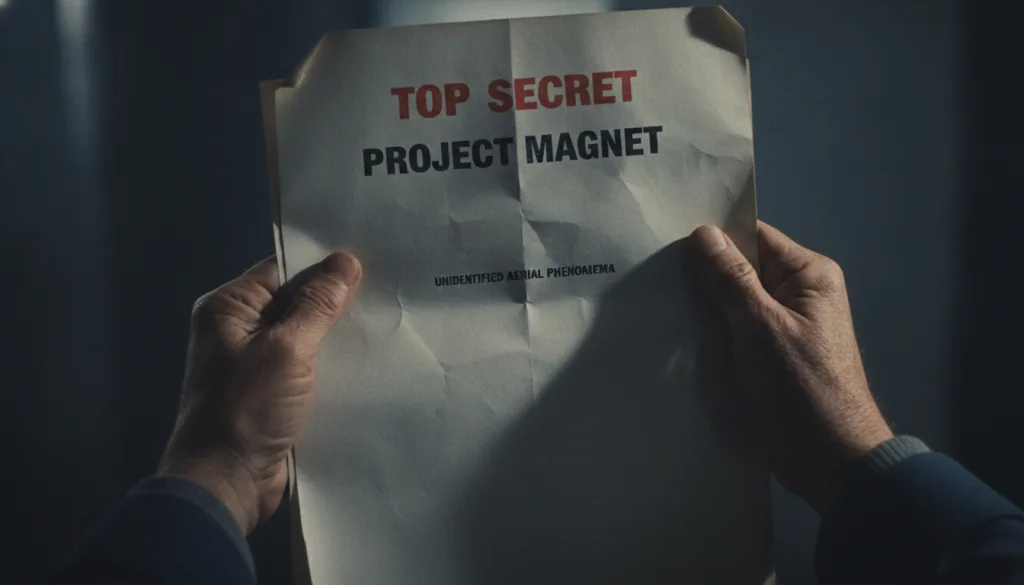
For years, Project Magnet operated under a veil of secrecy. The Canadian government maintained a controlled narrative regarding UFOs, often downplaying the significance of sightings or attributing them to misidentified aircraft or natural phenomena. However, as the years progressed, a wave of transparency began to wash over governmental agencies, pushed largely by public interest and advocacy from various groups seeking the truth.
In 1989, a significant moment occurred when the Canadian government began to declassify documents under the Access to Information Act. This opened a window into the previously clandestine world of Project Magnet. The documents revealed Smith's extensive correspondence with various scientists, military officials, and even international UFO researchers. The findings—from the attempted replication of alleged alien propulsion systems to the sheer volume of documented sightings—painted a picture of a rigorous inquiry that had been largely ignored by mainstream science and government.
The declassification process continued into the 2000s, allowing researchers and enthusiasts alike to sift through the archives. The files revealed an astonishing number of documented cases, providing researchers with a rich vein of material to work from. In a 2007 report, UFO researcher Chris Rutkowski analyzed the database of sightings and concluded that "the evidence suggests that there is something more to UFO sightings than mere misidentifications."

Wilbert Smith's Vision and Its Repercussions
Wilbert Smith's vision extended beyond just investigating UFOs. He believed the program could lay the groundwork for future Canadian advancements in aerospace technology. His notion that UFOs could be harnessed for their advanced technology was a radical thought for the time. In 1954, he stated, "We are not alone in this universe, and we should not shy away from exploring these phenomena." His insistence on gathering scientific data and corroborating eyewitness accounts positioned Project Magnet as a pioneering effort. However, this vision was at odds with the prevailing attitudes within both the government and military sectors. As interest waned and funding became scarce, the project eventually lost momentum, with the last reports surfacing in the late 1960s. The legacy of Project Magnet, however, is profound. It laid the groundwork for future Canadian UFO research and served as a catalyst for discussions around governmental transparency in the realm of unidentified aerial phenomena. The project underscored the urgent need for a scientific approach to investigate such claims, challenging both governmental and societal norms around UFOs.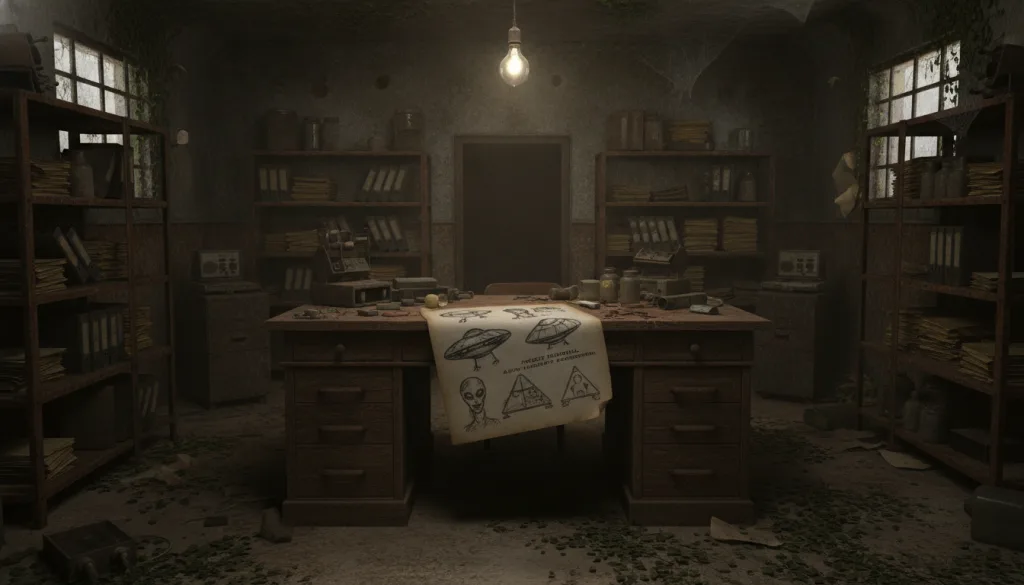
Modern Implications: The Ongoing UFO Debate
Today, the conversation around UFOs has transformed dramatically. The advent of the Internet has allowed for a resurgence in interest, and recent governmental disclosures in both the United States and Canada have emboldened the public to demand answers. The 2020 Pentagon report on unidentified aerial phenomena (UAPs) presented evidence that was once considered fringe. It acknowledged encounters by military personnel and called for more in-depth investigations—a testament to the unsolved mysteries that Project Magnet first sought to address.
Additionally, the work of researchers such as Dr. Chris Rutkowski and Dr. Paul Hellyer, the former Canadian Minister of Defence, has kept the dialogue alive. The release of previously classified documents continues to spark public interest and concern regarding the implications of UFO research.
Wilbert Smith’s legacy cannot be overstated. His efforts in Project Magnet were pioneering and opened the door for future inquiries into the UFO phenomena. The evidence strongly indicates that governmental entities worldwide have engaged in a long history of secrecy, misinformation, and, in some cases, outright denial.
The Government's Role in UFO Research
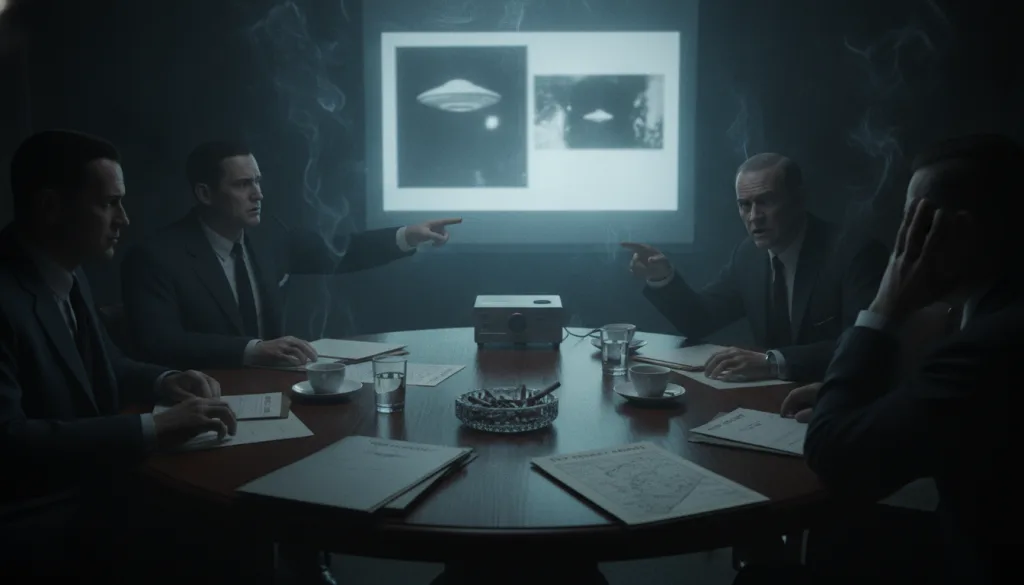
The role of the Canadian government in UFO research has often been a mixed bag. The declassification of Project Magnet's documents shows a willingness to confront the past but also reveals a lack of consistent support for ongoing research. The government's fluctuating stance on UFOs has often mirrored cultural attitudes, oscillating between fascination and ridicule. In an official statement from the Canadian government in 2021, Minister of National Defence Harjit Sajjan remarked, “We support our military in their pursuits of identifying and understanding any unidentified aerial phenomena while ensuring the safety of our airspace.” This suggests a shift toward a more open dialogue, yet it raises questions about the depth of commitment to studying these phenomena genuinely. As we continue to peel back layers of secrecy surrounding UFOs, the need for transparency becomes increasingly imperative. Wilbert Smith’s initial inquiries and methodologies serve as a guide for current researchers striving to separate fact from fiction in the tumultuous world of UFO sightings.
Notre analyse :
Les recherches menées par Wilbert Smith au sein de Project Magnet ont ouvert des voies importantes pour l'érudition et la compréhension des phénomènes aériens non identifiés. La nature multidisciplinaire de son approche et la volonté de s'appuyer sur des données scientifiques sont des aspects qui devraient inspirer les chercheurs contemporains. Nous voyons une tendance croissante à réévaluer le rôle gouvernemental dans la recherche sur les OVNIs. Alors que de nouveaux rapports émergent et que des documents précédemment classés deviennent accessibles, il est crucial que nous ne perdions pas de vue l’importance des enquêtes sérieuses sur ces phénomènes.
La question de la transparence demeure centrale. Les gouvernements doivent être tenus responsables de leur gestion des informations sur les OVNIs, car la divulgation complète pourrait non seulement apaiser les craintes publiques mais aussi encourager l'innovation scientifique. La persistance de l'intérêt pour les recherches de Smith et l'héritage de Project Magnet soulignent l'importance d'une enquête rigoureuse, fondée sur des preuves, dans la quête de la vérité concernant les OVNIs.
Sources & Références
Smith, Wilbert, Project Magnet Report, 1953, Canadian Government.
Rutkowski, Chris, “UFOs: A Canadian Perspective,” 2007, Manitoba UFO Research.
Vallée, Jacques, “Wonders in the Sky,” 2018, Anomalist Books.
Hellyer, Paul, “Light on the UFOs,” 2012, Canadian Government Archives.
Government of Canada, “Official Statement on Unidentified Aerial Phenomena,” 2021, National Defence.






Comments 0
Be the first to comment!