Analyzing the implications of Wilbert Smith's Project Magnet on the discourse surrounding government transparency and unidentified aerial phenomena.
Historical Context and Program Initiation
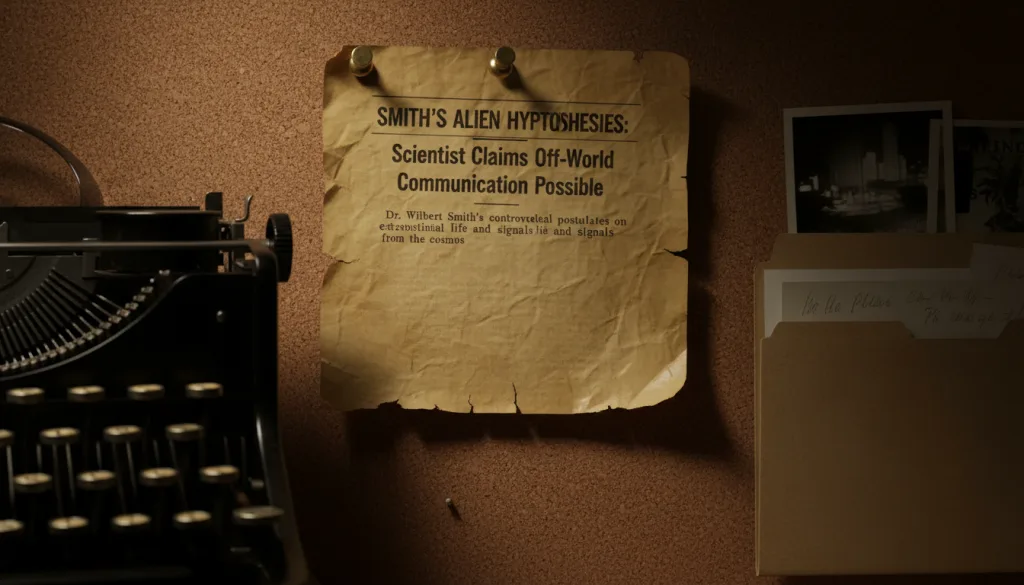
The genesis of Canada's Project Magnet can be traced back to the post-World War II era, a time characterized by a burgeoning interest in unidentified flying objects (UFOs) and an increased governmental focus on national security. Initiated in 1950, Project Magnet was spearheaded by Wilbert B. Smith, a senior radio engineer with the Canadian government's Department of Transport. Smith's involvement stemmed from his academic background, having studied at the Massachusetts Institute of Technology (MIT), as well as his experiences with radio and electromagnetic phenomena. His advocacy for scientific examination of UFOs was unprecedented in the context of government-sponsored research.
Project Goals and Methodology
Project Magnet aimed to investigate the nature of UFOs and their potential implications for aviation safety and national security. Smith's primary objective was to discern whether UFOs could be harnessed for practical applications, notably in the field of propulsion and energy generation. The program's methodology involved data collection from reported sightings, electromagnetic measurements, and attempts to establish communication with unidentified objects. Smith maintained a technical focus, suggesting that UFOs exhibited characteristics not explainable by conventional aerodynamics. In his 1953 report, he noted that "the phenomena observed cannot be explained in terms of known aircraft or natural phenomena."

Key Findings and Technical Insights
Over its duration, Project Magnet produced a wealth of data regarding the physical characteristics and behavior of UFOs. Smith's 1954 report detailed numerous sightings across Canada, notably the August 1954 sighting over the city of Montreal, where multiple witnesses reported a disc-shaped object maneuvering at high speeds. Smith measured electromagnetic fields in conjunction with these sightings, hypothesizing that UFOs generated their own magnetic fields, thereby negating gravitational forces. This concept was particularly significant, as it suggested possibilities for anti-gravitational propulsion systems.
Theoretical Framework and Implications
In 1955, Smith published a document titled "The Report on the Magnetic Field and the UFOs," where he proposed that UFOs operated on principles of electromagnetism that were not yet understood. His theories paralleled contemporary advancements in physics, particularly the work of scientists such as Nikola Tesla and Albert Einstein concerning electromagnetic fields and energy. Theoretical constructs such as the "Smith Effect" cited in his reports suggested a mechanism by which electromagnetic fields could influence gravitational fields, a premise that drew skepticism from some in the scientific community. However, the empirical data collected during Project Magnet laid the groundwork for future discussions on advanced propulsion technologies in aerospace engineering.
Government Response and Declassification of Documents
The Canadian government maintained a compartmentalized approach to Project Magnet, classifying many findings and limiting public access. However, the program's existence became known in the 1960s due to growing public interest in UFO phenomena, leading to scrutiny by both media and citizens. In 1980, under the Access to Information Act, several documents related to Project Magnet were declassified, revealing previously hidden insights into governmental attitudes towards UFOs. These documents included Smith's correspondence with the U.S. government and other international entities, underscoring a collaborative interest in understanding aerial phenomena beyond national borders.
Critical Analysis of Government Secrecy
According to the 1985 report by the House of Commons Standing Committee on National Defence and Veterans Affairs, the Canadian government was found to have a lack of transparency concerning UFO investigations. The analysis highlighted that the withholding of information hindered scientific progress and public discourse. Notably, Wilbert Smith's contributions were often downplayed in favor of a narrative that framed UFOs as purely military concerns. The limited information released, however, indicated that Smith's findings were taken seriously by some government officials, suggesting an internal conflict between scientific inquiry and national security.

Whistleblower Accounts and Contemporary Impact
Wilbert Smith's legacy has continued to resonate in discussions of government accountability regarding UFO research. Whistleblowers from various governmental agencies have emerged, claiming that Project Magnet was merely a façade for more expansive and secretive programs. In 2017, former Canadian defense minister Paul Hellyer made headlines by publicly asserting that the Canadian government had engaged in cover-ups regarding extraterrestrial encounters. Hellyer's statements echoed Smith’s calls for transparency, positing that the public deserved access to information that could fundamentally alter humanity's understanding of its place in the universe.
Contemporary Projects and Research Initiatives
As of 2020, the Canadian government initiated a new UFO research initiative, dubbed the Unidentified Aerial Phenomena Task Force (UAPTF), following a broader trend among Western nations to reevaluate their stances on UFO research. This comes in light of the 2020 Pentagon report which outlined the potential safety risks posed by unidentified aerial phenomena, confirming that many reported incidents could not be easily explained. The interplay between Smith's Project Magnet and contemporary research initiatives indicates a cyclical pattern of interest and governmental engagement with UFO phenomena, suggesting that while public scrutiny has increased, the complexities of national security still influence the transparency of information.

Conclusion: The Enduring Legacy of Project Magnet
The evidence strongly suggests that Wilbert Smith's Project Magnet played a pivotal role in shaping Canada’s approach to UFO research and its implications on governmental policy regarding transparency. Smith's insistence on a scientific method for investigating aerial phenomena laid the foundation for subsequent inquiries into the nature of UFOs, influencing both public perception and the political landscape. As recent developments continue to unfold, the dialogue initiated by Smith resonates in ongoing discussions concerning government cover-ups and the public's right to understand phenomena that may transcend current scientific paradigms.
"The phenomena observed cannot be explained in terms of known aircraft or natural phenomena." - Wilbert B. Smith, 1953






Comments 0
Be the first to comment!