Decades of alleged revelations have consistently failed to produce verifiable evidence of extraterrestrial craft or government concealment.
The Enduring Allure of the Secret Keeper
The narrative of the whistleblower, the brave individual risking everything to expose a profound truth, holds an undeniable grip on the public imagination. In the realm of Unidentified Aerial Phenomena (UAP) and alleged alien technology, this archetype becomes particularly potent. These figures promise to peel back layers of government secrecy, revealing forbidden knowledge about crashed saucers and non-human entities. Yet, as seasoned investigators of classified affairs, we approach such claims with a heavy dose of skepticism, demanding verifiable facts over compelling anecdotes. The history of UFO whistleblowers is replete with dramatic pronouncements that, under rigorous scrutiny, often dissolve into speculation, misinterpretation, or outright fabrication. The very act of conveying secret information, shrouded in clandestine meetings and whispers, amplifies its perceived significance, regardless of its actual veracity.
The Psychological Weight of Classified Information
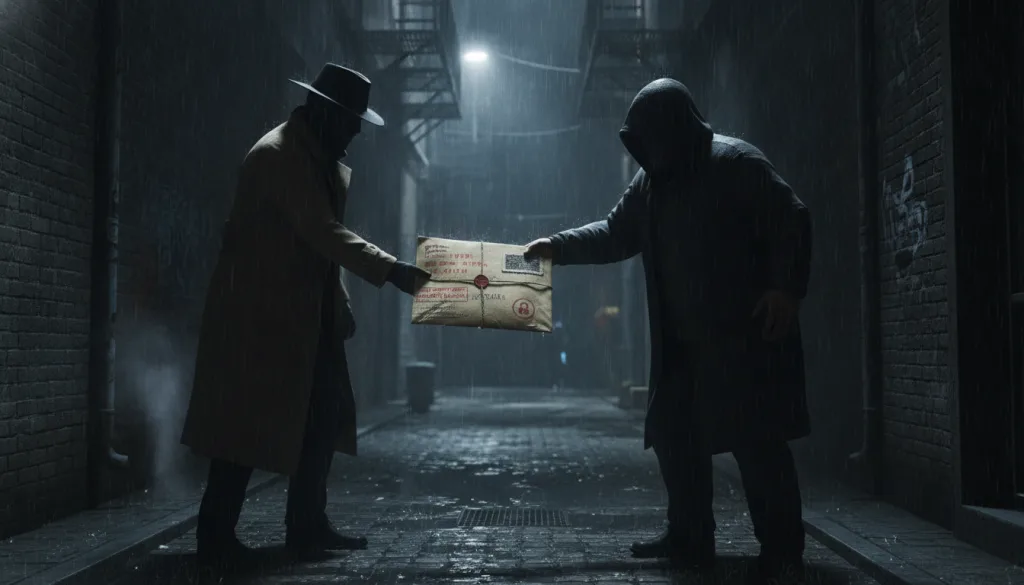
The human mind is inherently drawn to secrets. This psychological bias, often exploited in intelligence operations and counter-intelligence, lends immense credibility to anyone claiming privileged access. When an individual steps forward, ostensibly jeopardizing their career or even their safety, to speak of "non-human technology" or "secret reverse-engineering programs," the natural inclination is to believe them. This trust is further cemented by the perceived sacrifice. However, the gravity of the claim does not equate to its truth. The act of receiving classified information, perhaps in a dimly lit, rain-slicked alleyway, as depicted in popular culture, imbues the exchange with an almost sacred significance. This romanticized view often overshadows the crucial need for independent corroboration and the meticulous examination of the whistleblower's background and motivations. Our focus remains fixed on the evidence, or the lack thereof, not on the drama of the disclosure.
Bob Lazar: The Ground Zero of Alleged Reverse Engineering
In 1989, a figure named Bob Lazar burst onto the UFO scene, claiming to have worked on reverse-engineering extraterrestrial spacecraft at a secret facility known as S-4, near Area 51 in Nevada. Lazar's allegations were specific and sensational: he described nine alien saucers, propelled by Element 115, a superheavy element that supposedly generated gravity waves. He claimed to have personally witnessed alien technology and understood its propulsion mechanisms. These claims quickly became foundational texts for modern UFO conspiracy theories, offering a detailed, if unverifiable, blueprint for how the government allegedly concealed alien technology.
Deconstructing Lazar's Academic and Professional Credentials
Our investigation into Lazar's background, however, reveals significant discrepancies that undermine his credibility. Lazar consistently claimed to hold degrees from the Massachusetts Institute of Technology (MIT) and the California Institute of Technology (Caltech). Meticulous record searches by journalists and researchers, including George Knapp who initially popularized Lazar's story, and later independent investigators, failed to find any evidence of his enrollment or graduation from either institution. Instead, public records indicate Lazar attended Pierce Junior College in Los Angeles and received a certificate from a technical trade school. His actual employment history, while including a stint at Los Alamos Meson Physics Facility, was not at the high-level scientific capacity he later described for reverse-engineering alien technology. Scientists who worked there, such as nuclear physicist Dr. James McGaha, confirmed that Lazar was a low-level technician, not a physicist involved in classified propulsion research.
Furthermore, Lazar's scientific claims regarding Element 115 have been widely debunked. He asserted that Element 115, which at the time was only theoretically predicted, served as a stable fuel source for gravity wave generation. While Element 115 (Moscovium) was officially synthesized in 2003 at the Joint Institute for Nuclear Research in Dubna, Russia, it is highly unstable, with isotopes decaying in fractions of a second. The idea of using it as a stable fuel source for advanced propulsion, as described by Lazar, remains scientifically implausible and contradicts known nuclear physics. The detailed technical explanations Lazar offered, while sounding convincing to a lay audience, did not withstand expert scrutiny. The persistent pattern of whistleblowers, like Lazar, operating in isolation, their claims often untethered from verifiable facts, is a recurring theme. The image of a lone figure, perhaps nervously peering out into a dark night, perfectly captures the paranoia and isolation that often accompany such uncorroborated narratives.
The Fading Echoes of Project Blue Book and Beyond
Before the modern era of dramatic whistleblower revelations, the U.S. government actively investigated UAP sightings through projects like Project Blue Book, which ran from 1952 to 1969. Based at Wright-Patterson Air Force Base, this initiative compiled 12,618 reports, concluding that the vast majority were misidentifications of conventional objects, natural phenomena, or hoaxes. Only 701 cases, roughly 5.5%, remained "unexplained." However, "unexplained" did not equate to "extraterrestrial" or "advanced enemy technology." The project's scientific advisor, astronomer Dr. J. Allen Hynek, initially a skeptic hired to debunk reports, later developed a more nuanced view, criticizing the Air Force's dismissive approach but never definitively endorsing the alien hypothesis based on Blue Book's findings.
The Condon Report and Official Skepticism
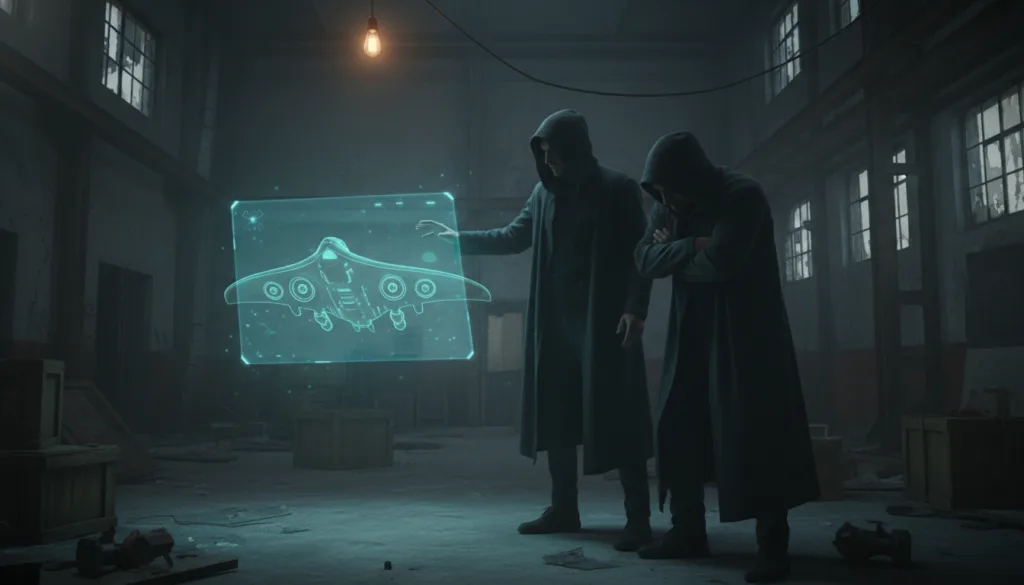
The definitive government stance on UFOs came with the 1969 Condon Report, a scientific study commissioned by the Air Force and conducted by the University of Colorado. Led by physicist Edward U. Condon, the report concluded, after two years of investigation, that "no evidence has been found indicating that UFOs are a direct physical threat to national security" and that "no evidence has been found that UAPs represented technological developments or principles beyond the range of modern scientific knowledge." This report effectively terminated Project Blue Book and solidified the official position that there was no compelling evidence for an extraterrestrial presence or a government cover-up of alien technology. Despite this official conclusion, the public appetite for secret knowledge persisted, fueled by anecdotal accounts and the occasional high-ranking official hinting at more. Figures like Major Donald Keyhoe, a retired Marine Corps aviator, spent decades campaigning for government disclosure, often relying on secondhand accounts and interpretations that aligned with his belief in an ongoing cover-up. His efforts, while significant in shaping public perception, ultimately lacked the concrete evidence needed to overturn official findings. The ongoing debate, often featuring individuals pointing to ambiguous data and speculative craft, resonates with the image of two figures earnestly discussing a holographic projection of an unusual aerial vehicle, attempting to discern truth from shadows.
David Grusch and the Modern Wave of Unsubstantiated Claims
The latest and perhaps most high-profile "whistleblower" to emerge in the UAP discourse is David Grusch, a former intelligence officer. In June 2023, Grusch made extraordinary claims, alleging that the U.S. government possesses "intact and partially intact" non-human aircraft and "non-human biologics" from crash retrieval programs stretching back decades. He stated under oath before the House Oversight Committee that he was privy to classified information regarding these programs, which he claimed were operating illegally outside congressional oversight.
The Critical Distinction: Hearsay vs. Direct Evidence
However, a crucial detail often overlooked in the sensational headlines is the nature of Grusch's testimony. When pressed for specifics, Grusch admitted that his knowledge was largely based on "indirect" evidence and "hearsay" from "multiple current and former high-level intelligence officials." He explicitly stated, "I didn't personally witness a UFO crash, nor did I personally see a dead alien." This distinction is paramount. While Grusch's claims were deemed "credible and urgent" by the Inspector General of the Intelligence Community (ICIG) in July 2022, prompting a lawful disclosure path, this assessment merely indicates that his allegations warranted investigation, not that they were factually true. The ICIG found Grusch's complaints to be "credible and urgent," meaning they believed he was genuinely reporting information he *believed* to be true and that it related to a matter of national security, not that the underlying claims about alien craft or biologics were substantiated. This is a critical nuance often lost in public discourse.
The Pentagon, through spokesperson Sue Gough, issued a statement in 2023:
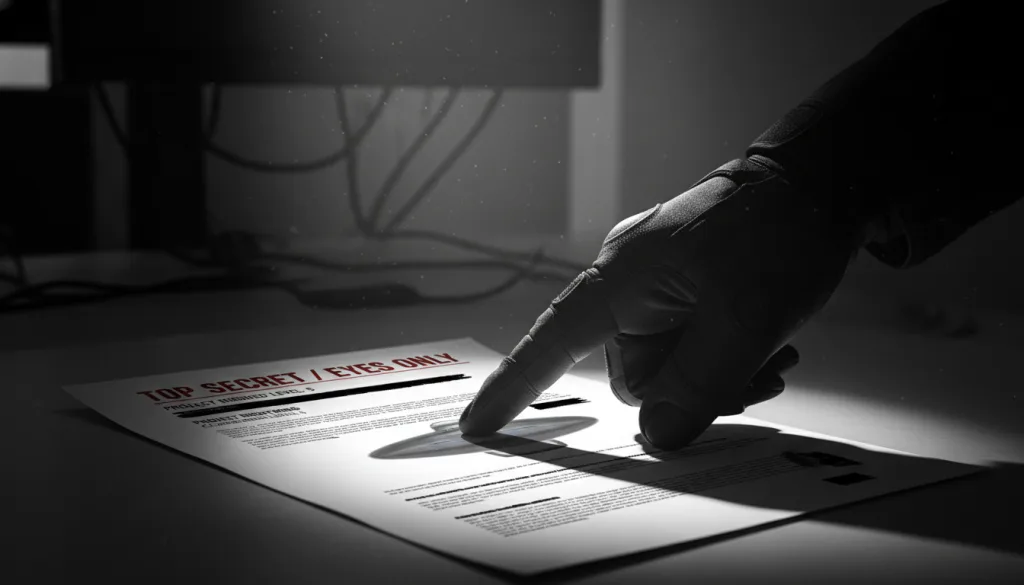
"To date, the Department of Defense has not discovered any verifiable information to substantiate claims that any programs regarding the possession or reverse-engineering of extraterrestrial materials have existed in the past or exist currently."This official denial, while expected by some, highlights the persistent lack of tangible, verifiable evidence from Grusch or his unnamed sources. His testimony, while compelling, rests on a chain of unverified accounts, making it impossible for independent investigators to corroborate. Without direct, auditable evidence—a verifiable piece of material, an unredacted document, or a credible witness with first-hand knowledge—Grusch's claims remain precisely that: claims. The image of a gloved hand pointing to a heavily redacted document, showing only a blurred schematic, perfectly encapsulates the tantalizing but ultimately unproven nature of such alleged disclosures. The dramatic presentation often overshadows the substance, or lack thereof, in these "revelations."
Notre Analyse / Our Analysis
Notre analyse : The history of UFO whistleblowers, from Bob Lazar to David Grusch, presents a consistent pattern: dramatic claims of government cover-ups and alien technology, invariably followed by a conspicuous absence of verifiable, direct evidence. While these narratives are compelling and tap into a deep-seated public desire for hidden truths, they consistently fail to meet the rigorous standards of proof required for such extraordinary assertions. Lazar's academic and scientific claims were systematically debunked; Grusch's testimony, while legally protected, relies entirely on secondhand accounts that the Pentagon itself states it cannot corroborate. The U.S. Navy's UAP Task Force and subsequent ODNI reports, while acknowledging unexplained phenomena, have offered no evidence of extraterrestrial craft or reverse-engineering programs. Until a whistleblower emerges with tangible, independently verifiable material—a piece of non-terrestrial alloy, an unredacted blueprint, or direct, auditable testimony from someone with first-hand knowledge of a crashed extraterrestrial vehicle—these stories will remain within the realm of speculation. The real "secret" is not a vast government cover-up of alien technology, but rather the enduring human propensity to believe compelling narratives, even when they lack any substantial factual anchor.
Sources & Références / Sources & References
U.S. Air Force. Project Blue Book Special Report No. 14. 1955, Battelle Memorial Institute.
Condon, E. U. Scientific Study of Unidentified Flying Objects (The Condon Report). 1969, University of Colorado, U.S. Government Printing Office.
Office of the Director of National Intelligence. Preliminary Assessment: Unidentified Aerial Phenomena. 2021, Office of the Director of National Intelligence.
Knapp, George. "UFOs and the Government: The Bob Lazar Story." 1989, KLAS-TV (Las Vegas), Broadcast Archive.
McGaha, James and Nickell, Joe. "UFOs, PSI, and Science." 2017, University Press of Kentucky.





Comments 0
Be the first to comment!