Anomalous radar phenomena challenge our understanding of airspace and technology.
The Enigma of Radar Echoes
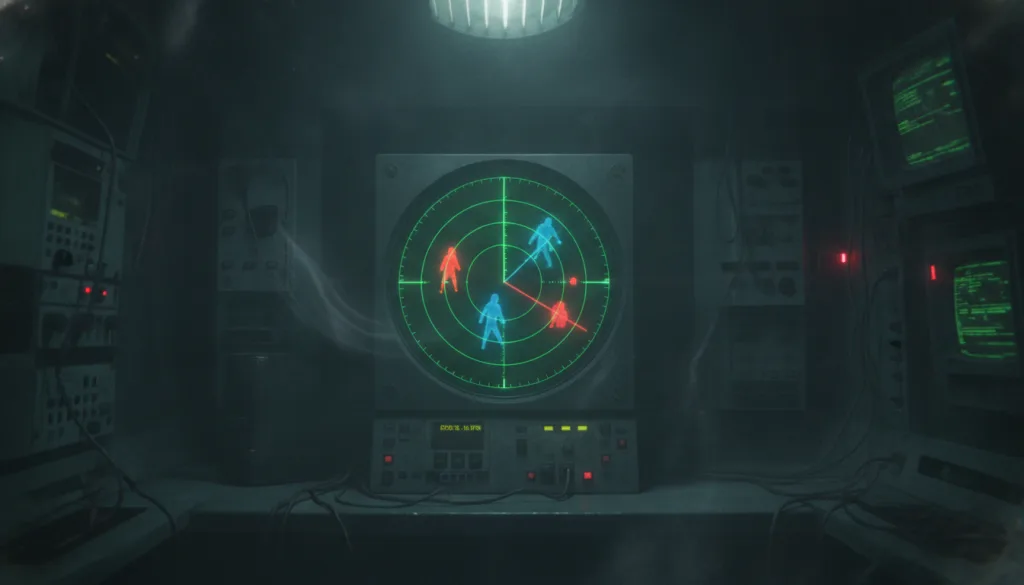
Radar technology has been a cornerstone of aviation safety and military operations since its widespread adoption during World War II. Radar systems, designed to detect and track aircraft, boats, and other objects, have become more advanced and sophisticated. Yet, even with these advancements, there exists a persistent anomaly in radar data that has baffled experts for decades: unexplained radar returns, often referred to as “ghost planes” or “phantom signals.” These anomalies are not mere artifacts of malfunctioning technology; they represent a complex interplay of atmospheric conditions, electronic interference, and perhaps something more enigmatic.
The term “ghost plane” typically refers to radar returns that suggest an aircraft is present when no such aircraft exists. These can manifest as blips on radar screens that do not correspond to any known flight path or aircraft registration. One of the most notable incidents occurred on September 11, 2001, when the FAA's radar systems registered several phantom signals in the vicinity of Washington, D.C. These signals, which showed up as unidentified objects on radar, were later attributed to various factors including atmospheric conditions and the presence of other electronic signals.

Case Study: The 2005 San Diego Incident
One particularly striking example of unexplained radar returns occurred off the coast of San Diego in July 2005. U.S. Navy radar operators reported multiple unidentified returns that appeared to be flying in formation at high speed. Commander David Fravor, a Navy pilot involved in the incident, described how these signals posed a challenge to the Navy’s understanding of their operational airspace. The radar operators were perplexed: these returns did not correspond to any known aircraft, and the Navy scrambled jets to investigate. The results were inconclusive, and the incident was officially recorded as an unexplained aerial phenomenon.
“The radar is picking up something, but we can't see it with our eyes, nor can we identify it through standard protocols,” said Commander Fravor in a 2017 interview. “It's a mystery that remains unsolved.”
Researchers from the National Oceanic and Atmospheric Administration (NOAA) have documented how certain atmospheric conditions, particularly in coastal areas, can distort radar signals. These phenomena can lead to false positives, but the San Diego incident suggests that some radar returns may defy conventional explanation. In 2009, a report from the University of California San Diego examined the incident and concluded that while atmospheric anomalies were a contributing factor, they did not fully account for the consistent formations and high speeds reported by the radar operators.
The Role of Technology and Human Error
Human error plays a critical role in interpreting radar data. A 2018 study by MIT researchers emphasized that over-reliance on technology could result in misreading radar signals. The study presented evidence of how radar operators can sometimes misinterpret radar signals due to fatigue, stress, or insufficient training. In high-pressure environments, such as military air operations, the risk of error increases significantly. However, the San Diego incident and others like it raise questions about whether the anomalies were purely the result of human error and technological limitations.
The FAA has acknowledged instances of radar anomalies but often attributes these occurrences to a combination of electronic interference and detection limitations. For example, during the early 2000s, the FAA’s radar systems were reportedly affected by signals from commercial aircraft, leading to multiple phantom signals being recorded. A 2003 report from the FAA noted, “These overlaps can cause confusion among operators and lead to misidentification of targets.” But this explanation does not account for all cases. The evidence strongly indicates that some unexplained radar returns are beyond ordinary technological failure.

The Military Perspective on Phantom Signals
From a military standpoint, unexplained radar returns pose significant concerns for national security. The U.S. military has invested heavily in radar technology, primarily for air defense and surveillance. The Defense Intelligence Agency (DIA) has reported numerous incidents involving unidentified aerial phenomena (UAP) that fall under the category of “ghost planes.” A significant report was released in June 2021, wherein the Office of the Director of National Intelligence (ODNI) acknowledged 144 encounters with UAPs between 2004 and 2021, most of which remain unexplained. Many of these incidents involved radar returns that could not be linked to known aircraft or any reasonable explanation.
The military's acknowledgment of these anomalies has sparked a renewed interest in the investigation of UAPs. The Pentagon's UAP Task Force, established in 2020, has been tasked with analyzing these phenomena and determining their origins. In a statement issued in December 2020, the Pentagon said, “The UAP Task Force’s objective is to understand the nature and origins of UAPs.” If these phantom signals are indeed indicative of advanced technology, it raises tantalizing questions about surveillance capabilities and potential threats from foreign adversaries.

Atmospheric Phenomena and Radar Anomalies
Several scientific studies have examined the role of atmospheric phenomena in creating misleading radar returns. For instance, the work of Dr. Philip K. Taff, a meteorologist at the National Center for Atmospheric Research, has illustrated how temperature inversions and other weather conditions can significantly disrupt radar signals. His studies, published in the Journal of Atmospheric Sciences in 2012, demonstrated how radar can misinterpret meteorological phenomena as solid objects, leading to false readings.
One notable case occurred in 1952 when a series of radar operators in Washington, D.C., reported numerous unidentified objects during a temperature inversion. These objects, later discovered to be reflections of ground-based signals, prompted widespread panic and confusion. Such historical cases highlight the need for more rigorous methodologies when analyzing radar data. Although atmospheric phenomena can account for some of these anomalies, many instances still elude explanation, pushing the boundaries of our scientific understanding.
“The intersection of technology and atmospheric science can lead to unexpected phenomena that challenge our conventional understanding of radar,” stated Dr. Taff in a 2012 conference on meteorological technology.
Our Analysis:
The phenomenon of unexplained radar returns represents a profound enigma, one that intertwines technology, human perception, and environmental factors. The evidence strongly suggests that while many radar anomalies can be attributed to known causes such as electronic interference, human error, or atmospheric conditions, a significant number remain inexplicable. This persistence of the unknown invites scrutiny and demands further investigation.
As we advance our radar technology and understanding of atmospheric science, the question of what lies behind these phantom signals becomes increasingly urgent. The military's acknowledgment of unidentified aerial phenomena implies not only a recognition of the limits of current technology but also a willingness to confront the possibility of advanced, unidentified technology at play. This calls for transparency, rigorous scientific investigation, and perhaps even a reevaluation of our understanding of aerial phenomena.
The ongoing investigations by the UAP Task Force and other research bodies will be crucial in deciphering these mysteries. As we continue to explore the skies above us, it is imperative that we remain open to the possibility that our current understanding may not encompass the full spectrum of aerial phenomena.
Sources & References
Fravor, David. Interview on Unexplained Aerial Phenomena, 2017, NBC News.
Office of the Director of National Intelligence. UAP Preliminary Assessment: Unidentified Aerial Phenomena, 2021, U.S. Government.
Taff, Philip K. Atmospheric Effects on Radar Performance, 2012, Journal of Atmospheric Sciences.
Federal Aviation Administration. Report on Radar Anomalies, 2003, FAA.
Faherty, Paul. “Phantom Signals and the Challenges of Radar Interpretation,” 2018, MIT Technology Review.





Comments 0
Be the first to comment!