Diving deep into the mysteries of unidentified submerged objects and their historical significance.
The Origins and Early Sightings of USOs
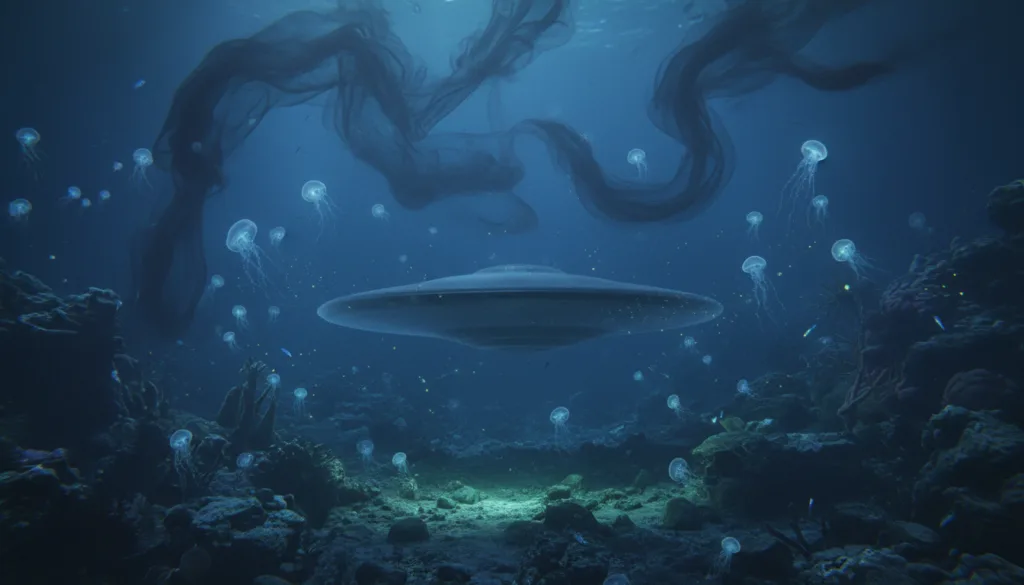
The phenomenon of unidentified submerged objects (USOs) has long been overshadowed by its aerial counterpart, UFOs. The narrative surrounding USOs stretches back to the early 20th century. One of the earliest documented sightings occurred in 1965 off the coast of New Jersey. A Navy officer, Lieutenant Commander Howard W. Hanger, reported witnessing a brilliant light diving into the ocean at incredible speed. The event was initially dismissed, but it laid the groundwork for future investigations into underwater anomalies.
By the late 1960s, USOs began to attract attention from researchers and military personnel alike. In January 1966, the Australian newspaper “The Age” reported a series of sightings near the coast of Port Phillip Bay, where witnesses claimed to see a large, cigar-shaped object descend into the waters. The sightings sparked public interest and prompted further investigations, leading to the establishment of a framework for examining these enigmatic occurrences.
Notable Cases and Military Encounters
One of the most compelling cases involving USOs surfaced during the Cold War. On August 4, 1971, the USS Trepang, a nuclear submarine, encountered an unidentified object off the coast of the Aleutian Islands. According to the sub's crew members, sonar detected a swift underwater object with extraordinary speed, moving against ocean currents. The object performed maneuvers that defied the capabilities of known submarines or marine vehicles, prompting the crew to record the incident in the ship's logs.
Another remarkable incident occurred on March 15, 2000, when the USS Princeton, part of the USS Nimitz Carrier Strike Group, detected an unidentified object off the coast of Southern California. The vessel's radar systems picked up an object moving at speeds exceeding 300 knots, well beyond the capabilities of any known aircraft. The radar readings indicated that this object transitioned from air to water, disappearing beneath the waves. The Navy subsequently initiated an investigation, but no definitive conclusions were reached.
Scientific Perspectives on USOs
The scientific community has largely overlooked USOs, but a handful of researchers have dedicated their efforts to studying these phenomena. In 1972, Dr. Jacques Vallée, a prominent ufologist, published “The Invisible College,” where he posited that underwater UFOs may be a significant aspect of the broader UFO phenomenon. Vallée cited the recurring themes of USO sightings, such as their apparent ability to manipulate water pressure and their connection to underwater geological formations.
More recently, in 2017, a report by the U.S. Department of Defense highlighted the existence of UAPs (unidentified aerial phenomena), creating a renewed interest in various forms of unidentified objects, including USOs. According to the report, some of these UAPs exhibited capabilities that defied conventional understanding of physics. The findings have invigorated discussions about potential underwater technologies or extraterrestrial origins of these objects.
Implications of USOs on Our Understanding of the Ocean
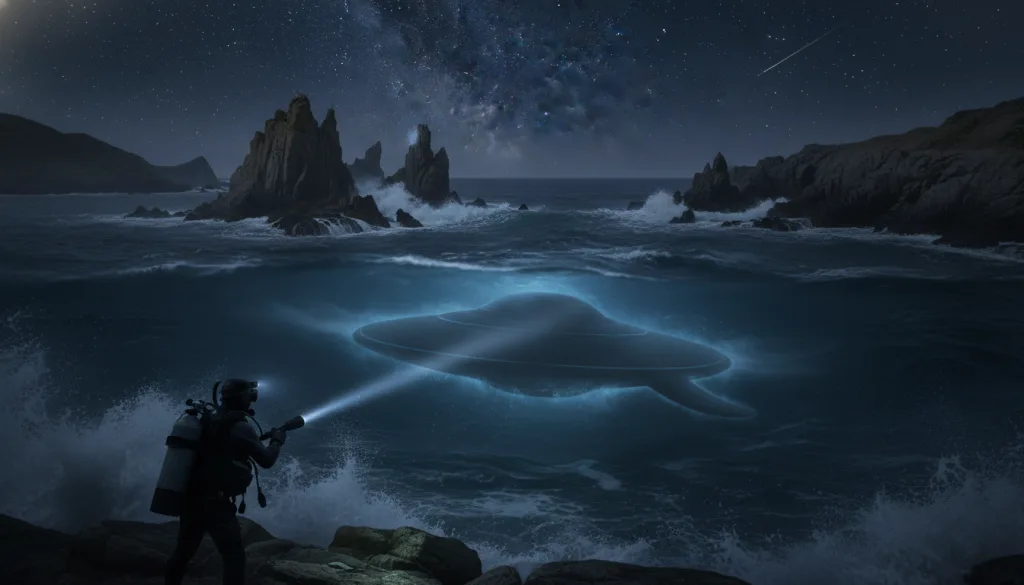
The ocean remains one of the least understood frontiers on Earth. According to the National Oceanic and Atmospheric Administration (NOAA), over 80% of the ocean is unexplored and unmapped. This presents a unique backdrop for the existence of USOs. The evidence strongly suggests that USOs could represent advanced technologies hidden within the depths of the ocean. This possibility raises significant questions about what else might exist in the unexplored expanses of our oceans.
In 1960, Dr. Don Walsh and Jacques Piccard made history by descending to the bottom of the Mariana Trench in the bathyscaphe Trieste. Their expedition unveiled a world previously thought unreachable, characterized by unimaginable pressure and darkness. The success of this mission set the stage for future oceanic explorations. Today, with advancements in submersible technology, the potential for uncovering both natural and unnatural phenomena in the ocean depths has never been greater.
The Cultural Impact and the Future of USO Research
The cultural narrative surrounding USOs has been shaped by films, television shows, and literary works. The 1977 film “Close Encounters of the Third Kind” depicted extraterrestrial beings communicating through oceanic phenomena, tying the mystery of USOs to the broader theme of human contact with the unknown. This connection between USOs and extraterrestrial life has fueled public fascination and speculation.
Prominent figures in ufology, such as Dr. Steven Greer and Linda Moulton Howe, have advocated for more rigorous research into USOs. Their calls for scientific inquiry into these sightings have found some support within the academic community. Institutions like the Institute for Advanced Studies at Princeton University have considered the implications of unexplained phenomena on both environmental and extraterrestrial research, as highlighted in a 2021 discussion led by physicist Michio Kaku.
Conclusion: The Need for Ongoing Investigation
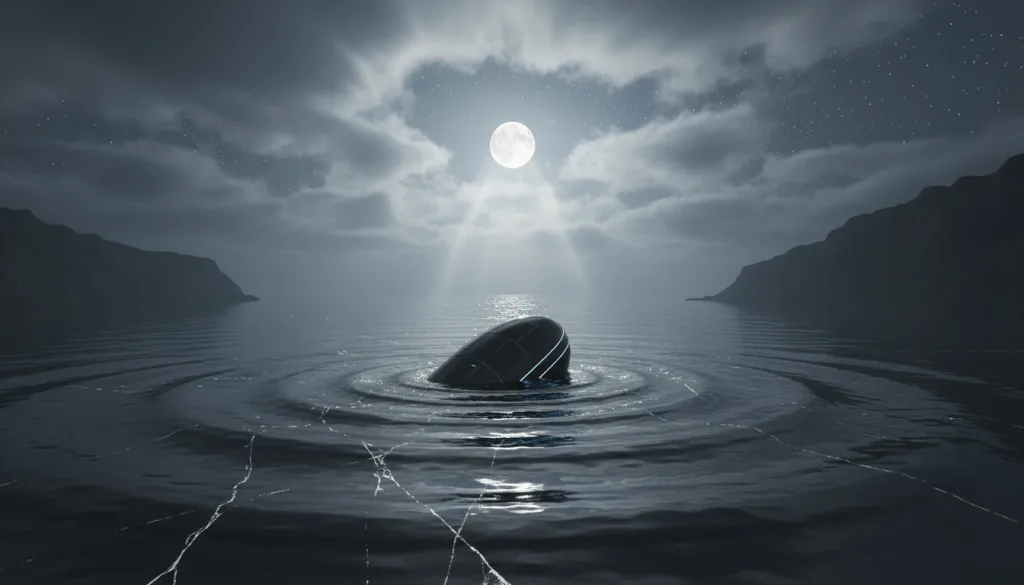
The phenomenon of USOs challenges our understanding of both the ocean and the potential existence of advanced technologies or extraterrestrial life. The historical cases and military encounters outlined in this article emphasize the importance of a nuanced approach to this mysterious realm. As technology evolves, the pursuit of knowledge about USOs becomes ever more critical.
Future studies should prioritize transdisciplinary collaboration, integrating insights from oceanography, physics, and aerospace research to decode the mysteries lurking beneath the waves. The potential for discovery remains vast, promising not only to expand our understanding of the universe but also to redefine our place within it. The ocean, teeming with life and unsolved enigmas, continues to beckon researchers and enthusiasts alike toward its depths.


Comments 0
Be the first to comment!