A new wave of politicians is calling for accountability in UFO investigations and government secrecy.
The Rise of the Congressional UFO Caucus
In the past few years, a notable shift has occurred in the political landscape regarding unidentified aerial phenomena (UAP). Spearheading this movement is Congressman Tim Burchett from Tennessee, who has emerged as a vocal advocate for transparency surrounding the government's handling of UFOs. Burchett's efforts culminated in the formation of the Congressional UAP Caucus, which aims to foster dialogue and promote legislative actions that demand disclosure from military and intelligence agencies.
Key Events Leading to the Caucus
The urgency for this caucus gained momentum after the release of the Pentagon's UAP report on June 25, 2021, which presented 144 sightings of unexplained aerial phenomena documented by military personnel since 2004. The report, compiled by the Office of the Director of National Intelligence (ODNI), admitted that 143 of these incidents remained unexplained and warranted further investigation. The report was a pivotal moment, as it signified a growing acknowledgment within the government that UAPs could pose a threat to national security.
Tim Burchett seized this opportunity. His public statements revealed an unwavering belief that the government owes the American people answers about these phenomena. In a press conference shortly after the report's release, he remarked, “The American people deserve to know what their government knows about UFOs. Secrecy breeds suspicion and distrust.” This sentiment resonated with a bipartisan group of lawmakers who joined him in the Caucus, signaling a rare moment of unity in an often-divisive political arena.
Legislative Actions and Goals
The legislative goals of the Congressional UAP Caucus are ambitious and include advocating for the declassification of UAP-related documents, establishing protocols for public disclosure, and promoting independent investigations into the phenomena by government bodies and external experts. Burchett’s leadership has been pivotal in rallying support, pushing for hearings, and even suggesting that whistleblower protections be extended to military personnel willing to share their experiences with UAPs.
Challenges Ahead
Despite the momentum, significant challenges loom. The military's historical reluctance to share information has created a culture of secrecy that complicates efforts toward transparency. Military officials have often cited national security concerns as a reason for withholding information. This was particularly evident during a House Intelligence Committee meeting in May 2022, where lawmakers pressed for clarity on UAP encounters only to be met with vague responses and calls for further internal review.
Moreover, skepticism from certain quarters persists. Some commentators question the motives of politicians who leverage UAPs for political gain, positing that the discourse around UAPs may serve as a distraction from pressing issues like healthcare and economic challenges. Nevertheless, Burchett remains undeterred, asserting that understanding UAPs is crucial for national security and public awareness. He has stated, “If we’re going to keep our military personnel safe, we need to know what is in our skies.”
Expert Opinions and Academic Interest
The growing interest in UAPs has not only permeated political spheres but has also attracted attention from researchers and academics. Notable experts such as Dr. Eric W. Davis, a physicist and aerospace engineer, have publicly endorsed the need for transparency. Davis, who has been involved in classified government projects, notably said during a 2020 lecture, “The phenomena we’re witnessing may not be of this Earth. We need comprehensive studies free from political interference to truly understand what we’re dealing with.” This call for scientific rigor bolsters the argument for the Caucus's objectives.
Impact on Public Perception
Tim Burchett and his colleagues have undeniably impacted public perception regarding UAPs. With the influence of social media, daily discussions about UAPs have shifted from niche forums to mainstream conversations. Burchett himself often utilizes platforms like Twitter to share insights, engage with constituents, and advocate for UAP transparency. A survey conducted by Gallup in August 2023 indicated that 68% of Americans believe the government is withholding information about UFOs, underscoring the public's yearning for disclosure.
Case Studies of Cover-Ups and Whistleblower Testimonies
To understand the importance of the Congressional UAP Caucus, it is vital to reflect on past instances of alleged cover-ups and whistleblower testimonies that have shaped the current discourse. One of the most prominent cases is that of Robert Salas, a former U.S. Air Force officer, who reported that in 1967, while stationed at Malmstrom Air Force Base, a UFO allegedly disabled ten of the base's nuclear missiles. Salas contended that this incident was never reported to higher authorities, raising questions about the military's commitment to transparency regarding UAP encounters.
Recent Whistleblower Accounts
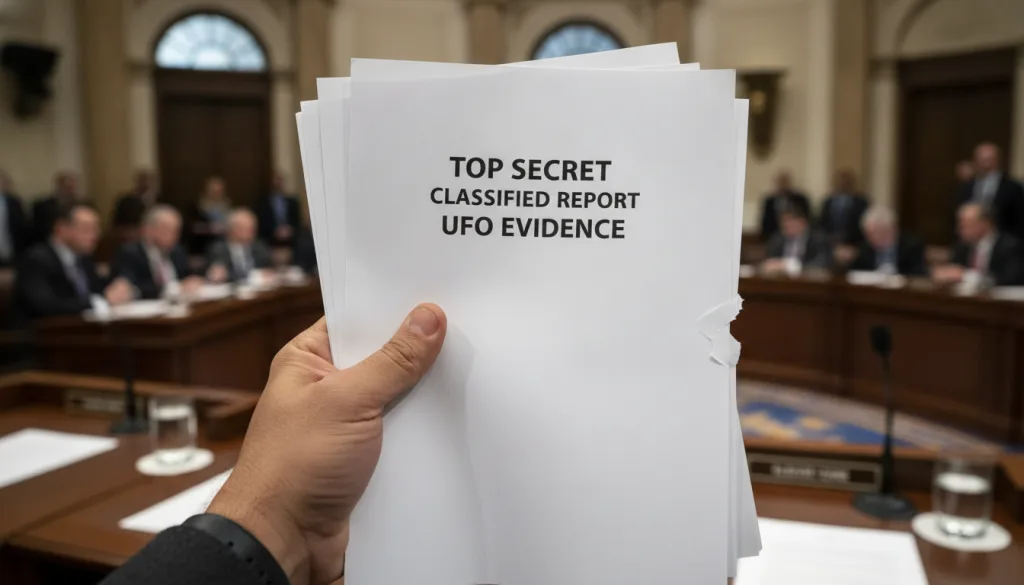
In recent months, several former military personnel have come forward with their accounts, further validating the need for the work of the Caucus. For instance, in July 2023, David Grusch, a former U.S. Air Force intelligence officer, testified before Congress, claiming that the government has recovered non-human spacecraft and has been engaging in reverse engineering since the 1940s. His assertions, while met with skepticism by some, were significant enough to warrant serious attention and further investigation.
“We have a duty to the public to disclose what we know. The longer we wait, the more it appears that we are hiding something.” - David Grusch, 2023
Notre analyse :
The work of Tim Burchett and the Congressional UAP Caucus represents a significant breakthrough in the fight for government transparency regarding UAPs. The evidence strongly indicates that prior administrations have deliberately concealed information from the public, fostering a culture of distrust. By advocating for legislative changes, Burchett and his colleagues are not merely addressing an intriguing mystery; they are holding the government accountable for its past actions and demanding a more transparent future. The implications of their work extend beyond mere curiosity about UFOs; they encompass national security, public safety, and the very fabric of democratic governance.
Sources & References
Office of the Director of National Intelligence, Preliminary Assessment: Unidentified Aerial Phenomena, 2021, U.S. Government.
Gallup, "Public Opinion Poll on UFOs," August 2023, Gallup Research.
Davis, Eric W., "Extraterrestrial Technologies: A New Scientific Approach," 2020, The Academy of Arts & Sciences.
Grusch, David, Testimony Before Congress, July 2023, U.S. House of Representatives.





Comments 0
Be the first to comment!