The Zoo Hypothesis presents a compelling explanation for the silence of advanced extraterrestrial civilizations.
The Premise of the Zoo Hypothesis
The Zoo Hypothesis, originally articulated by British astrophysicist John A. Ball in 1973, posits that extraterrestrial civilizations intentionally avoid contact with Earth to allow for natural evolution and sociocultural development. Instead of encountering an advanced civilization, we are treated as inhabitants of a cosmic zoo, carefully observed without interference. This theory is both unsettling and profoundly intriguing, addressing the broader question of why we have yet to find definitive evidence of intelligent extraterrestrial life.
Understanding the Theory
Ball suggested that these hypothetical alien civilizations possess such advanced technology that they can monitor us without revealing their presence. They observe our cultural and technological evolution from a distance, akin to how zookeepers might watch animals in their habitat without intervening. In a cosmos that spans an incomprehensible 93 billion light-years, this theory offers a plausible explanation for the Fermi Paradox, which questions why we have not detected any signs of extraterrestrial life despite the vastness of the universe.
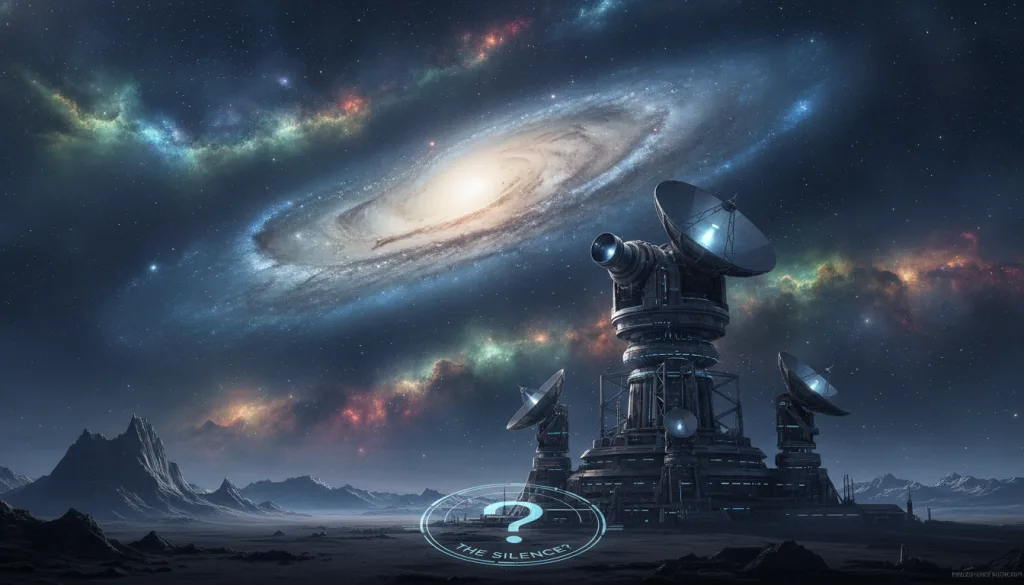
The Fermi Paradox and Its Implications
The Fermi Paradox, named after physicist Enrico Fermi, emerges from the contradiction between the high probability of extraterrestrial life and the lack of evidence or contact with such civilizations. In 1950, Fermi famously asked, “Where is everybody?” This paradox has plagued scientists and researchers for decades. The Zoo Hypothesis provides a potential answer by suggesting that aliens are deliberately ignoring us. This perspective forces us to consider the ethical implications of advanced civilizations choosing not to engage with us.
Alternatives to the Zoo Hypothesis
Several other theories have surfaced to explain our isolated status in the universe. The Great Filter hypothesis posits that there are insurmountable barriers to the development of intelligent life, whether due to self-destruction, natural disasters, or an inability to reach technological maturity. Another theory, the Transcension Hypothesis, suggests that advanced civilizations evolve beyond physical existence, operating in dimensions beyond our comprehension. However, these alternatives often fail to account for the observation aspect that the Zoo Hypothesis emphasizes.
Evidence Supporting the Zoo Hypothesis
While concrete evidence for the Zoo Hypothesis remains elusive, there are intriguing points of consideration. The Drake Equation, formulated by astronomer Frank Drake in 1961, attempts to estimate the number of communicating civilizations in the Milky Way galaxy. Factors include the rate of star formation, the fraction of stars that have planetary systems, and the number of planets that could potentially support life. If we assume that intelligent civilizations are indeed out there, yet remain silent, the Zoo Hypothesis becomes increasingly plausible.
Scientific Studies and Theoretical Support
In 2015, researchers from the University of California, Berkeley, conducted a study analyzing the potential for habitable zones around stars similar to our Sun. Their findings indicated that within the Milky Way alone, there are likely billions of planets that could support life. If life is so prevalent, why is the signal so faint? The very existence of SETI (Search for Extraterrestrial Intelligence) since its inception in 1960 highlights humanity's desperate quest for contact. Yet the silence is deafening.
“The absence of evidence is not evidence of absence. It is essential that we continue our search; however, the Zoo Hypothesis suggests we may be looking in the wrong direction.” — Dr. Seth Shostak, 2017
Technological Implications and Ethical Considerations
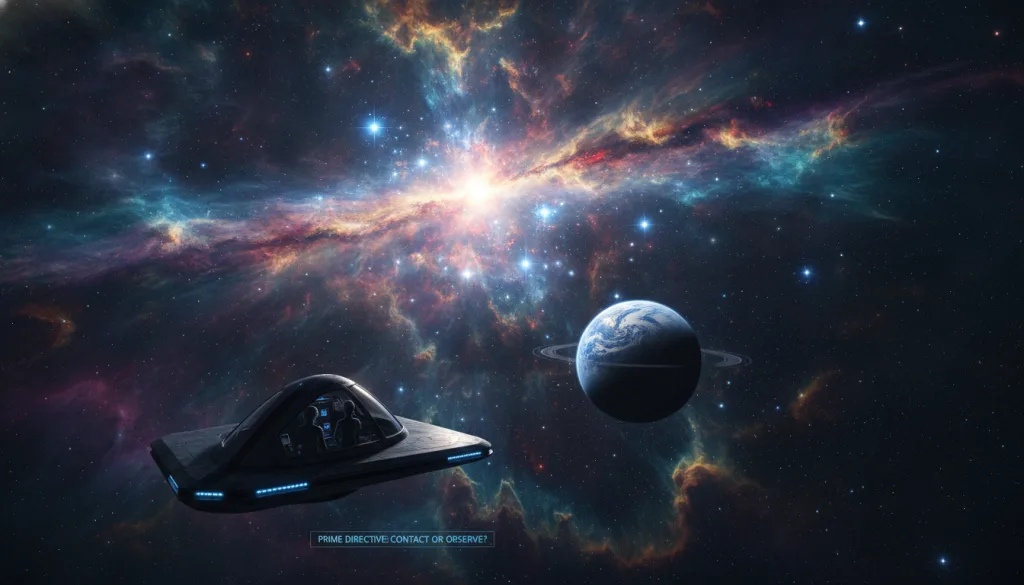
If extraterrestrial civilizations are indeed observing us, what does that mean for our pursuit of knowledge and understanding? The thought of being monitored raises profound ethical questions. Would it be right for them to interfere? Could the act of contact potentially disrupt our natural evolution? Furthermore, how would we respond if we were to discover definitive evidence of such watchful aliens? The ramifications could be catastrophic or enlightening, depending on the nature of the contact.
The Role of Humanity in the Cosmic Context
Humanity's self-perception plays a critical role in this narrative. We often assume we are the pinnacle of evolution, misunderstanding the vastness of time and space. The Zoo Hypothesis encourages a humbling perspective. It challenges us to consider our position in the universe and the possibility that we are not the primary focus. The stark reality is that we may be mere spectators in a much grander cosmic play.
Future Directions in Research
The implications of the Zoo Hypothesis call for a re-evaluation of how we approach the search for extraterrestrial life. Continued investment in space exploration, such as NASA's Perseverance rover on Mars and the James Webb Space Telescope, is essential. These missions may yield clues to intelligent life elsewhere, but they also serve as a reminder of our current limitations.
Exploring New Frontiers
Research into advanced communication technologies and understanding the physics of the cosmos can illuminate paths that may lead to contact. Collaboration between scientists across disciplines—astrophysics, biology, and ethics—may foster a deeper understanding of life beyond Earth. As we probe deeper into the universe, we must remain open to the possibilities the Zoo Hypothesis presents.
Notre analyse : The Zoo Hypothesis presents a compelling framework for interpreting our silence amidst the cosmic void. As we stand on the precipice of discovery, it is crucial to consider that our assumptions may blind us to the possibilities of existence beyond our world. The silence of the cosmos could very well be a deliberate act, challenging us to grow and evolve before we can engage with the broader universe.Sources & References
Ball, John A., "The Zoo Hypothesis," 1973, Journal of the British Interplanetary Society.
Drake, Frank, "The Drake Equation: Estimating the Number of Active Extraterrestrial Civilizations," 1961, Proceedings of the American Philosophical Society.
Shostak, Seth, "Confessions of an Alien Hunter: A Scientist's Search for Extraterrestrial Intelligence," 2017, National Geographic Society.
Cohen, O., and Heller, R., "The Astrobiology of the Galactic Habitable Zone," 2015, Astrobiology Journal.


Comments 0
Be the first to comment!