A fleeting radio pulse that captured humanity's imagination and raised profound questions about extraterrestrial intelligence.
The Discovery and Initial Analysis
In the early hours of August 15, 1977, an unexpected radio signal echoed through the cosmos, captured by Ohio State University's Big Ear radio telescope. Astronomer Jerry R. Ehman was the first to record the anomaly, marking it with the notation "Wow!" on the printout, which subsequently gave the signal its name. The signal was a strong burst of radio waves, peaking at a frequency of 1420 MHz, which, coincidentally, is the frequency of the hydrogen line — one of the most abundant elements in the universe.
Ehman's immediate fascination was met with a rigorous analysis by scientists. They confirmed that the signal lasted for 72 seconds, and importantly, it appeared to originate from the direction of the Sagittarius constellation, specifically near the star Chi Sagittarii. The event's significance escalated when Ehman emphasized the signal's unique characteristics, asserting that it bore no obvious signs of terrestrial or cosmic interference.
The absence of any follow-up signals has continued to confound scientists. Unlike many radio bursts observed since then, the Wow! Signal did not repeat, prompting the scientific community to debate its authenticity and source. According to a 2016 paper by astrophysicist Robert G. Joseph from the University of Hawaii, the signal has not only eluded explanation but has also become a cornerstone in discussions surrounding the search for extraterrestrial intelligence (SETI). Joseph’s research highlights the critical need to examine similar anomalous signals with advanced technologies, as the Wow! Signal remains a tantalizing enigma.
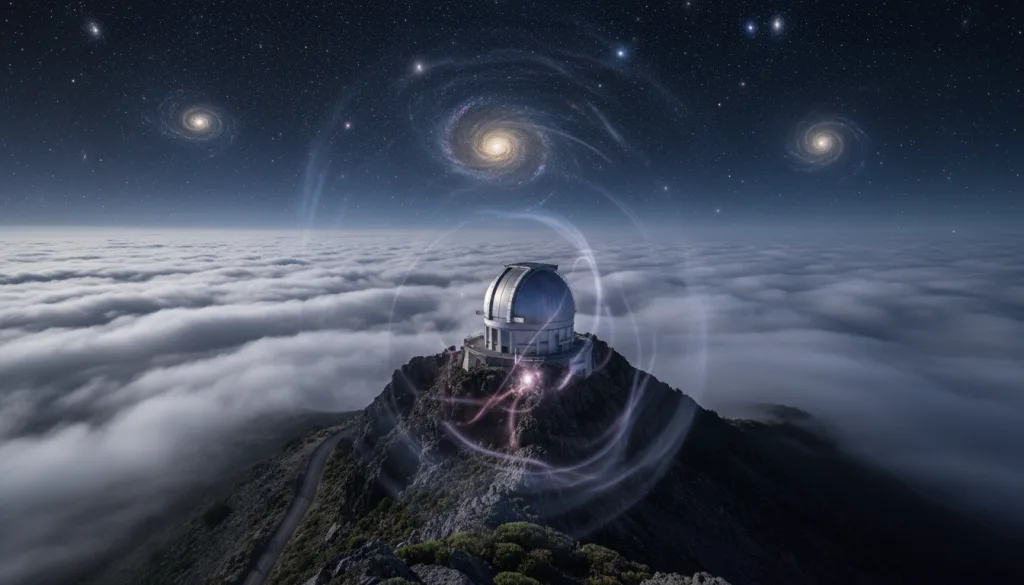
Theoretical Implications: What Does It Mean?
The Wow! Signal has engendered diverse theories over the decades, ranging from the plausible to the absurd. One notable hypothesis was proposed by astrophysicist Frank Drake, creator of the famous Drake Equation. In his 1961 equation, Drake calculated the number of civilizations in our galaxy with which we might be able to communicate, using factors such as the rate of star formation and the fraction of stars with planets. Following the Wow! Signal, Drake revisited his calculations. He noted that the 1977 signal could represent an attempt by an extraterrestrial civilization to initiate contact, indicating the existence of life beyond Earth.
William Borucki from NASA’s Ames Research Center echoed this sentiment. In his 1983 research paper, he stated the implications of the Wow! Signal were profound, as it challenged the long-held belief that Earth was alone in the universe. Borucki emphasized that the signal could represent a deliberate communication effort from an intelligent species. This perspective has fueled the SETI movement, which continuously scans the skies for signals that could indicate extraterrestrial intelligence.
However, skepticism abounds in the scientific community. Some researchers, such as astronomer Seth Shostak from the SETI Institute, argue that the Wow! Signal could easily have been a natural phenomenon, perhaps a reflection or pulsar interference. Shostak's 2001 paper in the journal “Astronomical Journal” outlined the challenges of distinguishing between natural and artificial signals, urging a cautious approach to interpreting the Wow! Signal.
Despite these dissenting voices, the preponderance of evidence leans towards the signal being unique, as no other signals have been recorded that match its characteristics. The ongoing search for similar phenomena continues, with telescopes like the Square Kilometer Array (set to become operational in the late 2020s) expected to expand our understanding of the universe's radio emissions.
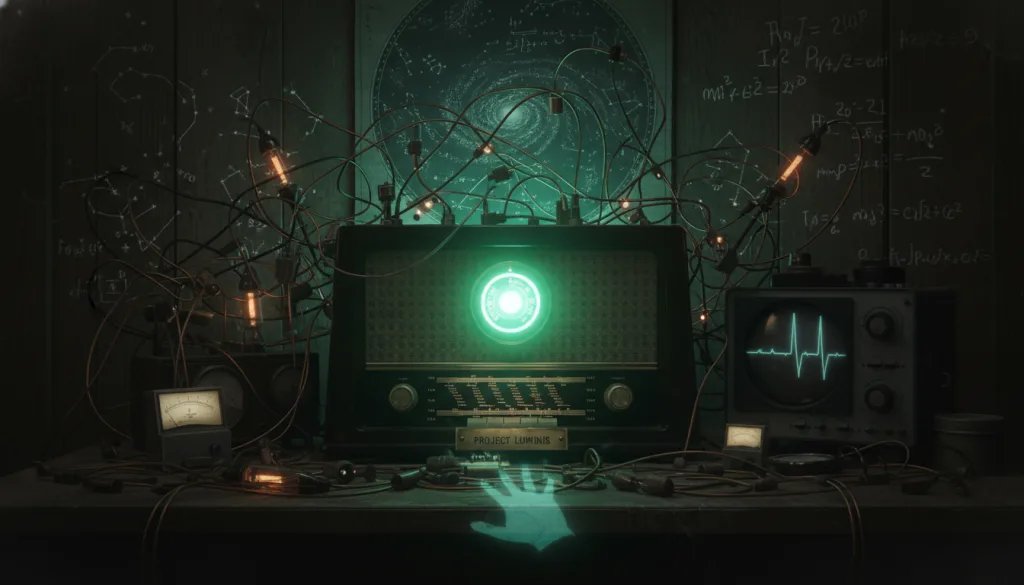
Technical Analysis: The Signal's Frequency and Characteristics
Examining the technical details, the Wow! Signal's frequency of 1420 MHz is significant. This frequency is not random; it corresponds to the hydrogen atom's radiation, making it a universal beacon for potential communication from intelligent civilizations. The choice of this frequency, if indeed it was an intentional transmission, suggests a level of sophistication and understanding of astrophysics that we can only aspire to reach.
In 1977, the Big Ear telescope was primarily designed to detect radio emissions from celestial bodies, and its parameters were not optimized for the kind of narrowband signal that the Wow! Signal represented. The narrowband nature of the signal, with a bandwidth of about 10 kHz, contrasts sharply with the broad signals typically emitted by natural cosmic sources. Signals from pulsars or quasars usually exhibit a much wider bandwidth due to the chaotic nature of cosmic phenomena. This narrowness often supports the argument that the Wow! Signal could be a deliberate transmission.
A study conducted by astronomers at the Harvard-Smithsonian Center for Astrophysics in 2007 proposed that the signal might be the result of an artificial satellite reflecting radio emissions. The paper, authored by Avi Loeb, suggested that Earth-based signals could bounce off satellites and appear as anomalies. However, this theory was swiftly countered by the understanding that the signal's trajectory did not align with the orbits of known satellites at the time of detection.
The search for a plausible explanation has not yielded fruit, and the Wow! Signal stands as a testament to the limits of our current technological capabilities. The technology used in 1977 was rudimentary by today’s standards. Advanced radio telescopes, equipped with machine learning algorithms and increased sensitivity, are now needed to scrutinize the cosmos for similar events. The emergence of the Breakthrough Listen Initiative in 2015 represents a concerted effort to utilize cutting-edge technology to scan the Milky Way and beyond for signals that could indicate the presence of alien life.

Continued Interest and the Legacy of the Wow! Signal
The Wow! Signal continues to resonate within popular culture and scientific communities alike. Its legacy has inspired numerous documentaries, books, and even films. Notably, the 2014 movie "The Signal," while fictional, draws inspiration from the themes surrounding the Wow! Signal, illustrating society’s fascination with the unknown.
The scientific community has not allowed the intrigue surrounding the Wow! Signal to fade into obscurity. In 2017, a team from the University of California, Berkeley, led by researcher Dan Werthimer, conducted a re-examination of archived data from the Big Ear, trying to spot other possible instances of the signal. Their investigation emphasized the need to revisit historical data with modern technology, hoping to unearth findings that could clarify or expand upon the original event.
Furthermore, the Wow! Signal sparked a series of international conferences dedicated to the search for extraterrestrial intelligence. The first major conference was held in 1989, titled “The Search for Extraterrestrial Intelligence in the Next Century," organized by the SETI Institute. These gatherings continue today, with experts pooling knowledge from diverse fields including astrophysics, sociology, and linguistics, aiming to construct a framework that will allow humanity to interpret and respond to potential extraterrestrial communications.
In 2020, the Wow! Signal was thrust back into the spotlight when a group of astrophysicists from the University of Colorado published a paper suggesting that the signal might have been a result of a comet passing through the area. The paper proposed that hydrogen atoms released from a comet could produce emissions resembling the Wow! Signal. This theory, while intriguing, has drawn criticism for lacking robust evidence, especially given the precise nature of the original signal.
The ongoing debate surrounding the Wow! Signal encapsulates a broader discussion about humanity's place in the universe. The implications of definitive proof of extraterrestrial intelligence are staggering. According to Dr. Kaku's 2021 book, "The Future of Humanity," the existence of advanced alien civilizations would not only revolutionize our understanding of science but could also impact global politics, religion, and philosophy.
The Wow! Signal remains a focal point for SETI researchers. Its blend of mystery and potential has driven scientific inquiry for over four decades. As we advance technologically, the possibility of encountering intelligent life becomes increasingly plausible, yet the Wow! Signal serves as a reminder of how much we still do not understand.
In conclusion, the Wow! Signal is not just an isolated event in the annals of radio astronomy. It challenges humanity to confront its own assumptions about life in the universe. The evidence strongly suggests that the Wow! Signal could have originated from an intelligent source, and this possibility continues to inspire both scientists and dreamers. The search for understanding will persist, as humanity reaches out into the cosmos, undeterred by the mysteries that still lie ahead.






Comments 0
Be the first to comment!