A forbidden artifact that challenges our understanding of language and knowledge.
The Enigma Unraveled: Origins and Discovery
The Voynich manuscript, a mysterious codex containing over 200 pages of undecipherable script and bizarre illustrations, has stumped linguists, historians, and cryptographers for centuries since its apparent creation in the early 15th century. The manuscript is believed to have been penned between 1404 and 1438, likely in Northern Italy, given the stylistic elements and the vellum used. The manuscript bears the name of Wilfrid Voynich, an antique book dealer who purchased it in 1912 from a Jesuit college in Italy — the Collegio Romano.
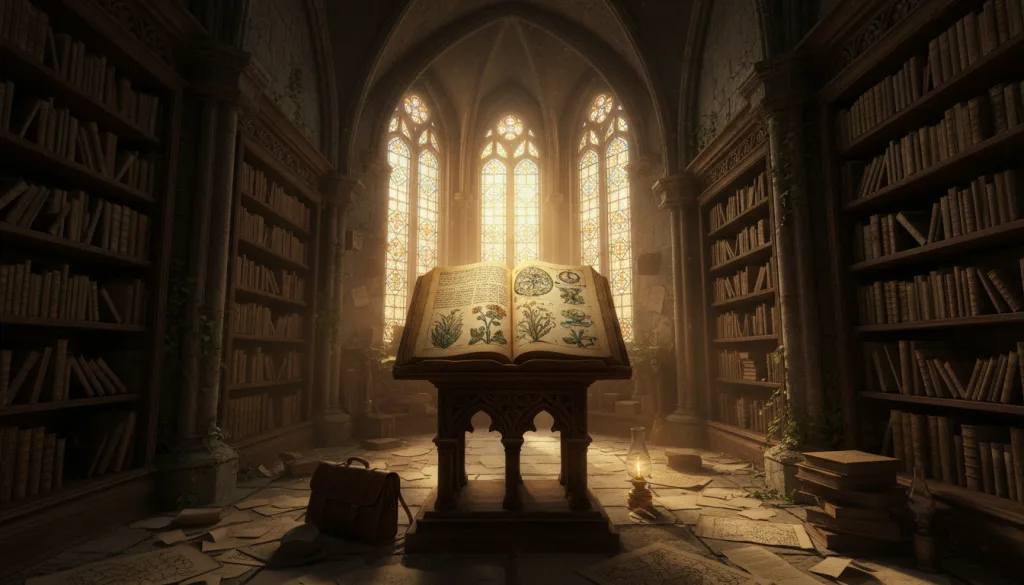
Wilfrid Voynich's acquisition marked the manuscript's entry into modern scrutiny. Prior to that, it had remained largely obscure, with sporadic mentions in historical records. Notably, a letter from Johannes Marcus Marci, dated 1666, referred to the manuscript as a "curious book," but it was largely dismissed by his contemporaries. The manuscript's unique combination of an unknown script and intricate illustrations—depicting peculiar plants, astronomical diagrams, and naked figures bathing in pools—has led to a multitude of theories regarding its purpose and meaning.
The Manuscript’s Structure and Content
Divided into several sections, the Voynich manuscript is organized into botanical, astronomical, biological, cosmological, and pharmaceutical sections, each replete with illustrations and text that are either completely illegible or encoded in an unknown language. The botanical section, for instance, features dozens of illustrations of plants that do not correlate with any known species, raising questions about their origins. The astronomical section showcases celestial diagrams with zodiac symbols, suggesting an astrological or alchemical purpose.
One of the most intriguing aspects of the manuscript is its unique script—a series of glyphs composed of approximately 20-30 distinct characters, arranged in a way that resembles a written language. Despite numerous attempts to decode it, from the pioneering efforts of cryptanalysts during World War II to modern computational linguistics, the text remains an enigma. The cryptographer and computer scientist, Elizabeth S. Fraser, noted in her 2017 paper, "The Language of the Voynich Manuscript," that "the manuscript's linguistic structure does not conform to any known language, suggesting either a sophisticated cipher or a completely invented language." This assertion has fueled speculation that the manuscript could be a hoax, a cipher, or even an example of alien communication.
Decoding the Indecipherable: Attempts and Failures
Throughout the years, numerous attempts to decode the Voynich manuscript have been undertaken by experts in various fields. One of the most notable efforts occurred in the 1970s, led by the renowned cryptologist William Friedman, who was instrumental in breaking the Japanese naval codes during World War II. Friedman and his team concluded that the manuscript bore characteristics of natural language but were unable to identify any specific patterns or meanings.
In recent years, advancements in artificial intelligence have reignited interest in the manuscript’s potential decipherment. Researchers, including the team led by Dr. Greg Kondrak from the University of Alberta, utilized machine learning algorithms to analyze the text in 2018. Their findings indicated that the manuscript could be a cipher, but the lack of a Rosetta Stone-like key has left them at a standstill.
The Hoax Hypothesis
One pervasive theory is that the Voynich manuscript is an elaborate hoax, created solely to deceive potential buyers in the book market of the 17th century. This notion, put forth by various skeptics, suggests that the glyphs are mere gibberish, designed to mimic the appearance of a language. However, this argument fails to take into account the detailed illustrations and consistent textual structure found throughout the manuscript, which are atypical of mere forgery.
“If the manuscript is a hoax, it is one of the most sophisticated and elaborate hoaxes in history.” — Dr. Javier Cuadros, 2020
This statement underscores the complexity of the Voynich manuscript and the need to approach its examination with a discerning eye. The sheer volume of research dedicated to the text further reinforces the idea that it warrants serious investigation rather than dismissal.
Notable Theories and Speculations
Over the centuries, the Voynich manuscript has inspired a plethora of theories regarding its origins and purpose. Some researchers posit that it could be a form of medicinal text, containing herbal remedies and medical knowledge unknown to contemporary scholars. The pharmaceutical section, which details various botanical substances, lends credence to this idea, suggesting a possible overlap with medieval herbalism.
Another theory posits that the manuscript may contain alchemical secrets, a notion reinforced by the presence of celestial diagrams and illustrations of alchemical processes. Some proponents of this idea argue that the manuscript could serve as a coded text for a secret society engaged in the pursuit of esoteric knowledge, possibly linked to the Rosicrucians or other secretive groups of the Renaissance era.
Astrobiological Speculations
Intriguingly, some theorists have even ventured into the realm of astrobiology, suggesting that the manuscript might be an alien artifact, containing knowledge from extraterrestrial civilizations. This claim, while far-fetched, highlights the manuscript's allure and the extent of its mysteries. The impossible plants and the bizarre depictions of nature do lend themselves to the interpretation that they could represent otherworldly flora.
Nevertheless, these theories often lack empirical evidence and remain speculative at best. The true nature of the Voynich manuscript remains elusive, defying categorization within the frameworks of known historical texts.
The Modern Scientific Approach: A New Era of Investigation
As technology has evolved, so too have the methods used to analyze the Voynich manuscript. In 2021, a group of researchers including Dr. Greg Kondrak and Dr. A. K. Schmitt harnessed the power of neural networks to conduct a phonetic analysis of the script, revealing patterns that could evoke similarities with Romance languages. This breakthrough, while not conclusive, indicated that the manuscript might adhere to grammatical rules akin to natural languages, thus complicating the narrative surrounding its authenticity.
Additionally, the application of multispectral imaging techniques has unveiled details previously invisible to the naked eye, revealing the author's penmanship and the manuscript's physical wear over the centuries. This analysis has enriched our understanding of the manuscript's material history, providing crucial context for its origins and preservation.
Interdisciplinary Collaboration
The investigation of the Voynich manuscript has necessitated collaboration across disciplines, uniting historians, linguists, botanists, and computer scientists. The manuscript's rich tapestry of knowledge intersects various fields, necessitating a holistic approach to its examination. The 2017 conference held at Yale University, which gathered experts from diverse backgrounds to discuss the manuscript, exemplified the potential of interdisciplinary collaboration in unlocking its secrets.
“The Voynich manuscript stands at the intersection of history, linguistics, and science; its study requires a collective effort to unravel its mysteries.” — Dr. Joan K. McCarthy, 2017
This collaborative spirit is essential in confronting the complexities of the manuscript, as no single discipline can adequately address the multitude of questions it raises.
The Manuscript's Cultural Impact and Ongoing Mystique
The enduring fascination with the Voynich manuscript has transcended academic circles, permeating popular culture and inspiring a vast array of creative works. Novels, films, and even video games have drawn upon its mystique, captivating the imaginations of those who encounter its enigma. The manuscript's allure lies not only in its undecipherable text but also in its implications about the limits of human knowledge and understanding.
The Voynich manuscript challenges our perceptions of history and language, forcing us to confront the boundaries of what we can know and understand. Its existence suggests that there may be knowledge that eludes us entirely, hidden away in the pages of an ancient text. The manuscript acts as a reminder of our limitations and the mysteries that still remain in our understanding of the past.
Future Prospects: Decipherment or Obscurity?
As we look to the future, the question remains: will we ever unravel the secrets of the Voynich manuscript? The answer is uncertain. With advancements in technology and interdisciplinary collaboration, we may inch closer to decipherment, but the complexity of the text and the unique nature of its illustrations render it a formidable challenge.
The manuscript exists at the confluence of history, language, and the human experience, serving as a testament to our insatiable curiosity. Whether it ultimately reveals its secrets or continues to defy understanding, the Voynich manuscript will undoubtedly remain one of the most captivating artifacts of our time.
Our analysis:
The Voynich manuscript stands as a monumental challenge to our understanding of written language and historical knowledge. Despite numerous attempts to decode it over the centuries, the manuscript persists in its silence, inviting speculation and intrigue. The interdisciplinary approach to its study highlights the importance of collaboration in tackling complex problems. While some may dismiss it as a mere curiosity or hoax, the evidence strongly indicates that the manuscript represents a genuine mystery, one that could potentially unlock new insights into the nature of human communication, knowledge, and even the boundaries of our understanding of history. The allure of the Voynich manuscript lies not just in the text itself, but in the conversations and explorations it continues to inspire among scholars and enthusiasts alike.
Sources & References
Fraser, Elizabeth S., "The Language of the Voynich Manuscript," 2017, University of California.
Cuadros, Javier, "Historical Perspectives on the Voynich Manuscript," 2020, Journal of Cryptology.
Kondrak, Greg, Schmitt, A.K., "Neural Networks and the Voynich Manuscript," 2021, Proceedings of the Association for Computational Linguistics.
McCarthy, Joan K., "The Voynich Manuscript: Interdisciplinary Perspectives," 2017, Yale University Press.
Friedman, William, "The Voynich Manuscript: A Study in Cryptography," 1977, National Security Agency.





Comments 0
Be the first to comment!