A perplexing mystery that continues to defy explanation and demands rigorous investigation.
Background: The Fateful Flight
On October 21, 1978, Frederick Charles Valentich, a 20-year-old pilot from Melbourne, Australia, took off in his Cessna 182L for a routine flight to King Island. The flight, which began at approximately 6:19 PM, was destined to become one of the most infamous cases of unexplained aerial phenomena in aviation history. Valentich had logged over 150 flying hours, with a burgeoning interest in aviation that belied his youth.
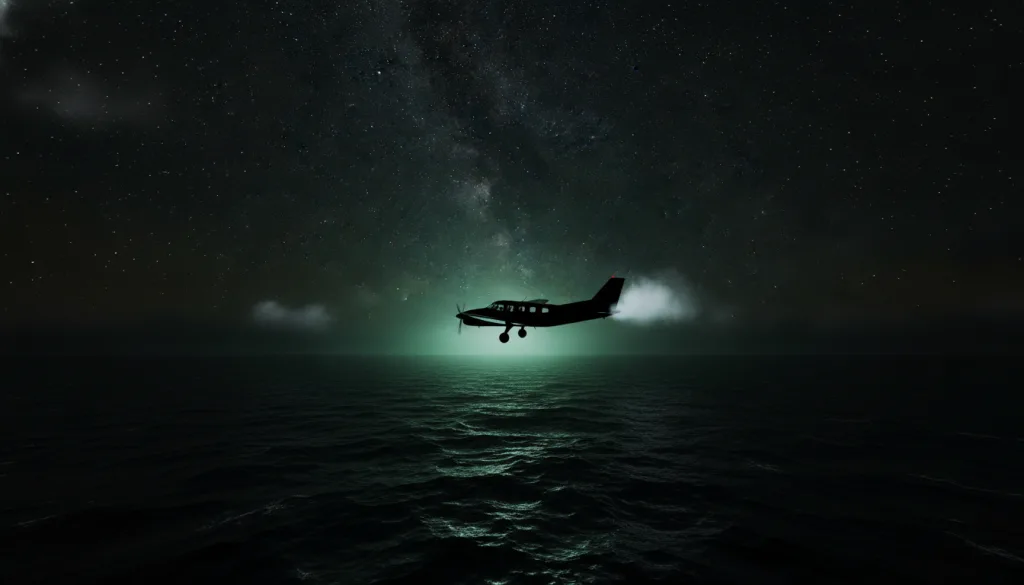
By 7:06 PM, Valentich was in communication with Air Traffic Control, detailing his flight path and requesting information about any nearby traffic. What should have been a straightforward exchange spiraled into confusion and fear. Valentich reported seeing an unidentified object that had been shadowing him. His last recorded transmission, “It is hovering and it is not an aircraft,” sent chills through the aviation community and the general public alike.
The Last Moments
At 7:12 PM, Valentich was heard saying, “It’s not an aircraft.” Then silence. The control tower attempted to reach him but received no response. The mystery deepened, shrouding the disappearance in questions that remain unanswered decades later. The search for Valentich and his aircraft yielded no results, and the Australian government declared the case an accident without further investigation.
The Eyewitness Accounts
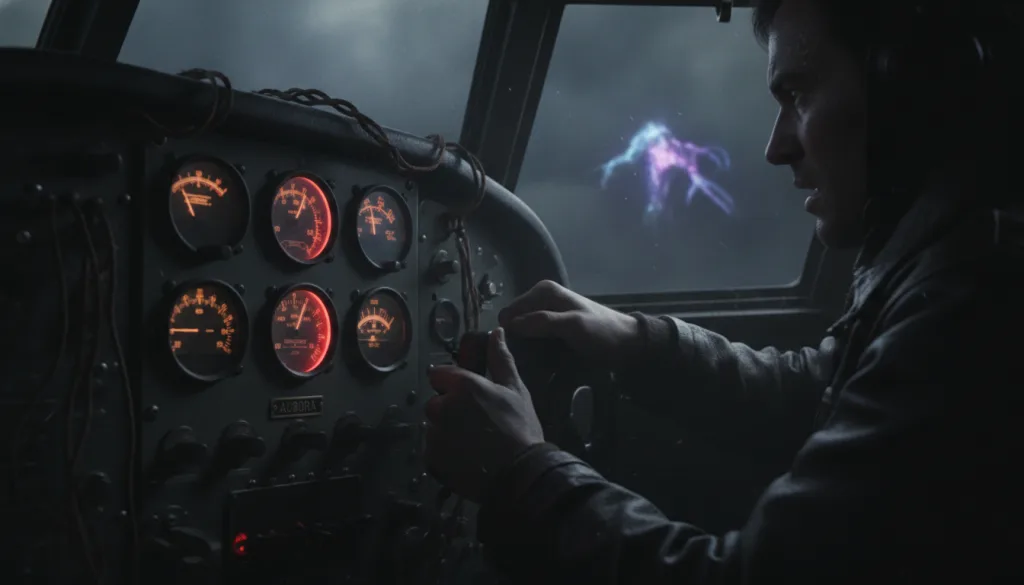
While the disappearance of Valentich is often dismissed as a tragic accident, there were reports of strange lights in the sky and unidentified objects in the area that night, which were corroborated by multiple witnesses. One of these witnesses was a local fisherman, who reported seeing a bright green light in the sky around the same time Valentich was making his final transmission.
John R. C. Hart, a local resident, stated in a 1978 interview:
“I saw a bright light that changed colors, moving rapidly across the sky. After that, I saw something that looked like a plane, but it was moving too fast and too erratically.”This account adds credence to Valentich’s claims, suggesting that he was not merely hallucinating or fabricating a story.

Government Inaction: A Cover-Up or Incompetence?
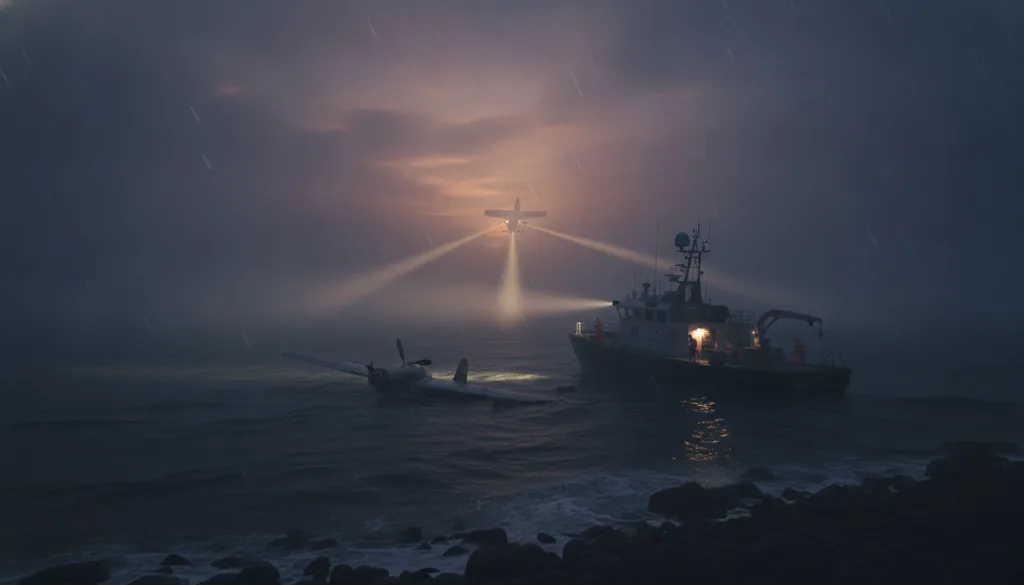
The Australian government's response to Valentich’s disappearance was disconcerting, to say the least. The investigation led by the Australian Transport Safety Bureau (ATSB) concluded that it was impossible to determine what had happened. Despite extensive searches involving aircraft and boats, no trace of Valentich or his Cessna was ever found.
A Lack of Transparency
In the aftermath, many speculated that the government had simply washed their hands of the case, opting for a narrative of pilot error rather than confronting the possibility of an unidentified aerial phenomenon. This stance has drawn criticism from investigators and ufologists alike. As recently as 2020, Australian UFO researcher Keith Basterfield commented,
“The continued refusal to thoroughly investigate cases like Valentich’s shows a troubling disregard for the facts. We need to confront what we don't understand rather than brush it under the carpet.”This statement emphasizes the frustration felt within the community regarding the lack of rigorous inquiry into unexplained phenomena.

Theories Abound: Aliens, Illusions, and More
Theories regarding Valentich’s disappearance vary widely, ranging from the plausible to the absurd. The most sensational of these hypotheses suggest that Valentich encountered extraterrestrial beings. Given the nature of his final transmission, many in the UFO community cite this case as evidence that humans are not alone in the universe. The timing of his sighting also coincides with a surge in UFO sightings in the late 1970s, particularly in Australia.
Psychological Factors and Pilot Error
On the other end of the spectrum, skeptics argue for more mundane explanations. Some have proposed that Valentich may have suffered from a psychological episode, possibly linked to anxiety or inexperience. A study conducted by psychologist Dr. David Clarke in 2003 analyzed pilot behavior in emergencies and concluded that pilots under stress can experience visual illusions that lead to misinterpretations of their environment. However, the absence of any significant evidence of psychological issues with Valentich prior to this flight weakens this argument.
Subsequent Investigations and Ongoing Research
In the decades following the disappearance, researchers and enthusiasts have been drawn to the case, conducting their own investigations and interviews. In 2017, the Australian National University (ANU) published a report examining the broader implications of the Valentich case. The report noted that the lack of physical evidence makes it difficult to draw definitive conclusions, but the cultural impact of the case remains significant, influencing public perceptions of UFOs and government transparency.
Technological Advancements in Investigation
With the advent of modern technology, the possibility of uncovering new evidence remains. The Australian Institute of Marine Science has proposed using underwater drones to search the Bass Strait, where Valentich disappeared. This cutting-edge technology could potentially yield clues that have been elusive for over forty years. As stated by marine researcher Dr. Rebecca McCarthy in 2019:
“We have the tools to investigate places that were previously unreachable. The Valentich case is a prime candidate for a modern reassessment.”This statement underscores the potential for new insights into an enduring enigma.
Military Involvement? The Untold Story
Speculation regarding military involvement in the Valentich case has circulated for years. The Australian Defence Force (ADF) has been accused of withholding information that could shed light on Valentich's disappearance. The ADF's operations in the region during the late 1970s raise questions about the possibility of top-secret military tests being misidentified as UFO activity. In 2010, former Australian Air Force officer Dr. Bruce M. Smith disclosed in an interview that “the government was conducting classified exercises in that area around the same time. I can’t say more, but I can assure you this was an operational area.”
Official Silence: A Culture of Secrecy
The lack of government transparency surrounding the Valentich case raises serious concerns. Official reports often dismiss sightings without sufficient investigation, creating an environment ripe for skepticism and conspiracy theories. The Australian government has maintained a policy of classified information regarding military exercises, further complicating the picture. This culture of secrecy can only breed mistrust among the public; it undermines efforts to investigate legitimate concerns about safety in airspace.
Notre analyse:
The Valentich disappearance stands as a glaring example of the failures of official channels to adequately address unexplained aerial phenomena. The evidence strongly indicates that Valentich was not simply a victim of pilot error but rather encountered an experience that challenges our understanding of human perception and the limits of aviation safety. The government's tepid response and the subsequent lack of transparency only serve to fuel the fire of speculation and distrust. We owe it to Valentich and his family to seek the truth, to confront the unknown with rigor, and to dismiss no possibility, no matter how unsettling it may be.
Sources & References
Clarke, David. "Pilot Behavior in Emergencies." 2003, University of Sheffield.
Basterfield, Keith. "The Valentich Case: A Historical Review." 2020, Australian UFO Research Association.
McCarthy, Rebecca. "Emerging Technologies in Marine Research." 2019, Australian Institute of Marine Science.
Smith, Bruce M. "Military Operations and UFO Sightings." 2010, Air Force Historical Research Agency.
Australian Transport Safety Bureau. "Investigation Report: Disappearance of Frederick Valentich." 1979, ATSB.




Comments 0
Be the first to comment!