A pivotal document in the history of UFO secrecy, underscoring government acknowledgment of unidentified aerial phenomena.
The Context of the Twining Memo
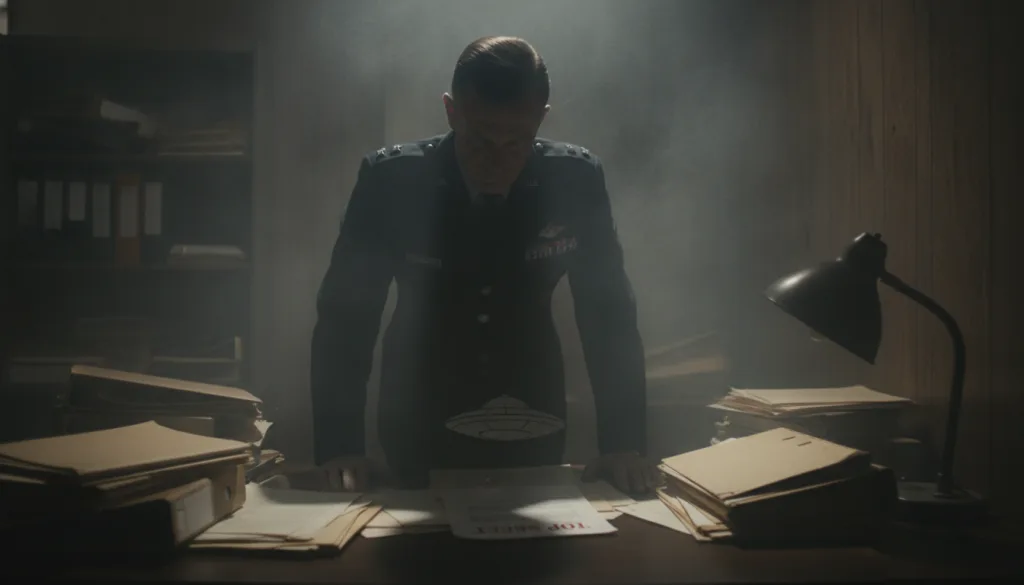
In the summer of 1947, a series of sightings of unidentified flying objects gripped the nation, culminating in what would become a cornerstone of UFO history. The Roswell incident, where a supposed "flying disc" was recovered by the U.S. military, ignited a frenzy of speculation, skepticism, and intrigue. Amid this backdrop, a critical document emerged—the Twining Memo, penned on September 23, 1947, by General Nathan Twining, then Commander of the Air Material Command at Wright Field in Dayton, Ohio.
The memo was prepared in response to an inquiry about unidentified aerial phenomena and outlined Twining's perspective on the sightings that were becoming increasingly prevalent. It stands as one of the earliest official acknowledgments by a high-ranking military officer regarding the existence of "flying discs." Twining classified these objects as having an "unusual aerodynamic shape," exhibiting performance characteristics that defied conventional aircraft capabilities.
Details and Implications of the Memo
The memo, addressed to General George C. McDonald, was a candid appraisal of the situation. Twining did not mince words when detailing the capabilities of these flying discs. He noted their speed, agility, and their ability to maneuver in ways that were unknown to contemporary aviation technology. A key excerpt from the memo stated, "The phenomenon reported is something real and not visionary or fictitious." This admission from a high-ranking officer irrevocably shifted the narrative around UFOs, suggesting that the government was aware of something beyond ordinary terrestrial aircraft.
Twining offered insights into the nature of these unidentified objects, mentioning that some reports indicated they could hover and execute sharp turns. These capabilities were categorized as "highly classified" and not attributable to any known technology of the time. The memo also called for an orderly program to collect and analyze data related to these sightings, signifying an urgent need for scientific investigation.
The Historical Repercussions of the Twining Memo
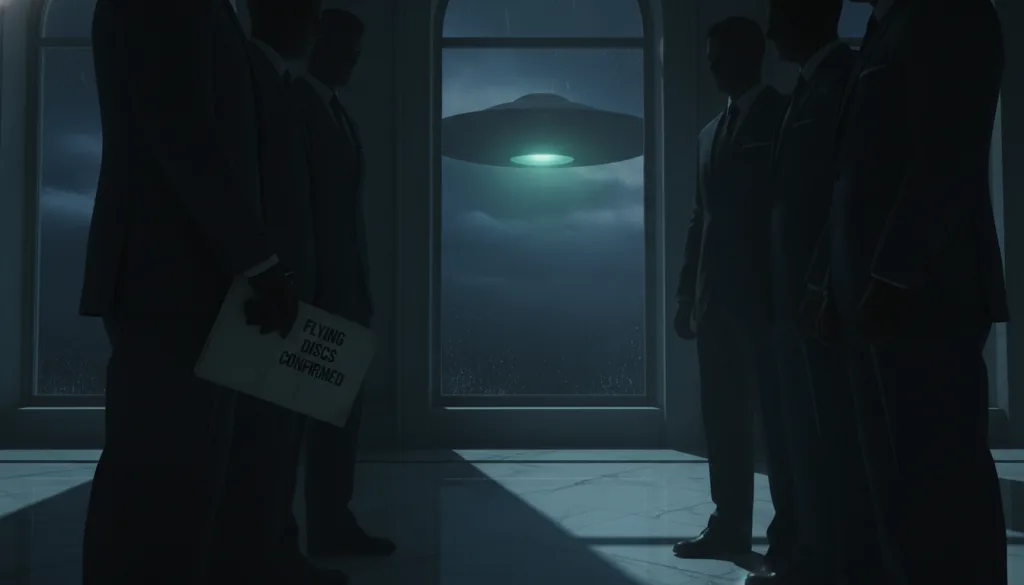
The implications of the Twining Memo were not limited to the realm of military intelligence. It set the stage for a series of developments that would intertwine the U.S. government with the field of ufology for decades. The memo's release contributed to the burgeoning folklore surrounding UFOs, influencing everything from pop culture to government policy.
In the years following the memo, various government agencies—including the Air Force and CIA—embarked on classified projects to investigate UFO sightings. Project Blue Book, established in 1952, emerged as one of the most comprehensive efforts to study and catalog these anomalies. Although initially intended to assess the potential threat of UFOs, many of its findings were shrouded in secrecy, often leading to public skepticism regarding the government's transparency on the subject.
“The Air Force's initial approach to UFOs was formulated based on the premise that a real threat may exist. They believed that this could be a national security issue, not just a scientific curiosity.” — Dr. Jacques Vallee, 1990
A Culture of Secrecy
The Twining Memo encapsulated a turning point in the military's approach to unidentified aerial phenomena. The acknowledgment of UFOs by a high-ranking officer fueled a culture of secrecy that persisted throughout the Cold War. The military's fixation on national security led to the classification of countless documents, leaving many questions unanswered for researchers and the public alike.
As the years progressed, the Air Force's handling of UFOs became increasingly enigmatic. The release of the Twining Memo inadvertently laid the groundwork for a series of cover-ups and disinformation campaigns, which have only recently begun to see the light of day. Researcher and author Richard Dolan highlights this aspect of the memo's legacy, noting that “it is a perfect illustration of the conflict between what the military knows and what it chooses to disclose.”
The Twining Memo in the Context of Modern UFO Discourse
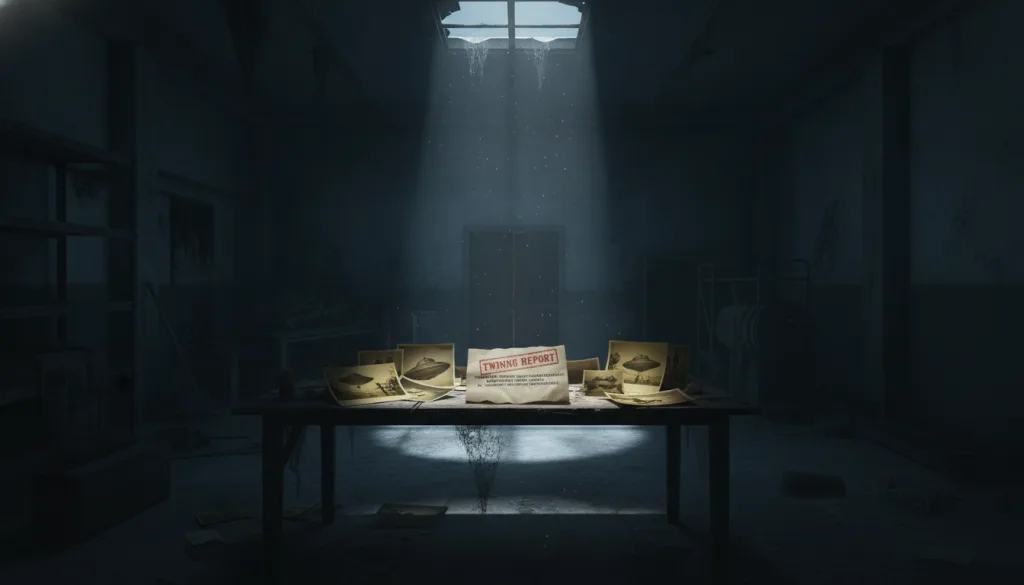
Fast forward to the 21st century, and the Twining Memo has been cited in various discussions around the U.S. government's transparency regarding UFOs. The resurgence of interest in this topic can be traced back to the memo’s implications—evidence that the military was not only aware of UFOs but was also engaged in a classified pursuit to understand them.
In December 2017, a New York Times article by Helene Cooper revealed the Pentagon's Advanced Aerospace Threat Identification Program (AATIP), which further validated the long-held suspicions that the U.S. government had been monitoring unidentified aerial phenomena for years. This program, coupled with the public acknowledgment by military personnel of encounters with unidentified flying objects, has rejuvenated interest in the Twining Memo as a historical document.
Public Reactions and Whistleblowers
The implications of the Twining Memo have inspired not only a wealth of public speculation but also a growing roster of whistleblowers who have come forward with their own experiences related to UFOs. Figures such as former military officers and Pentagon insiders have shed light on the culture of secrecy surrounding these phenomena. Their testimonies often reference the Twining Memo as a pivotal point in demonstrating that the government has been aware of the reality of UFOs for decades.
One significant whistleblower, former Air Force officer Robert Salas, has spoken openly about his experiences in 1967—two years after the Twining Memo's release—when he reported a UFO incident involving the deactivation of missile silos at a military base. Salas's testimony, among others, underscores a consistent theme: the government has often chosen to obfuscate its knowledge about unidentified objects rather than pursue transparency.
“The military and government’s dismissal of credible sightings only serves to sow distrust among the public. It’s essential to understand that we are dealing with something real.” — Robert Salas, 2013
Conclusion: The Enduring Legacy of the Twining Memo
The Twining Memo of 1947 remains a critical piece of documentation in the ongoing quest to understand unidentified aerial phenomena. Its unambiguous acknowledgment of the reality of flying discs—coupled with the subsequent culture of secrecy—has fueled speculation, research, and public interest for over seven decades.
As we continue to grapple with the implications of UFOs and their potential significance, the Twining Memo serves as both a historical marker and a call to action for greater transparency. The evidence strongly indicates that the military's awareness of UFOs is not a contemporary phenomenon but rather a longstanding issue that has been systematically managed through layers of secrecy and classification.
We stand at a pivotal moment in history, where the combination of public interest, whistleblower testimony, and newly declassified information may finally dismantle the veil of secrecy that has long surrounded the UFO phenomenon. As we push for accountability and transparency, the Twining Memo will undoubtedly remain a focal point in understanding not just what the military knows, but what it has chosen not to share with the public.
Notre analyse : Le mémo de Twining incarne l'essence même du conflit entre ce que la communauté militaire sait et ce qu'elle choisit de divulguer. Il est essentiel de continuer à réclamer des réponses sur les phénomènes aériens non identifiés, car la vérité derrière ce sujet pourrait avoir des implications profondes sur notre compréhension de l'univers.Sources & References
Twining, Nathan. Memorandum for the Commander, Air Force Material Command, 1947, U.S. Air Force.
Vallee, Jacques. Messengers of Deception: UFOs and the New Cults, 1990, 1988.
Dolan, Richard. UFOs and the National Security State, 2000, Keyhole Publishing.
Cooper, Helene. “Glowing Auras and ‘Black Money’: The Pentagon’s Mysterious U.F.O. Program,” 2017, New York Times.
Salas, Robert. “Faded Giant: The Secret of Minuteman Missile Base,” 2013, International UFO Reporter.






Comments 0
Be the first to comment!