Unearthing the mysteries behind one of the 20th century's most enigmatic events
On the morning of June 30, 1908, a powerful explosion rocked the remote Siberian taiga near the Tunguska River, flattening an estimated 2,000 square kilometers of forest. This incident, now famously known as the Tunguska Event, did not claim any known human lives, as the area was sparsely populated, but it certainly raised an array of questions that have persisted for over a century. What caused the devastation? Was it a natural phenomenon like a meteorite or comet? Or could it have been something far more extraordinary?
The Scene of Destruction
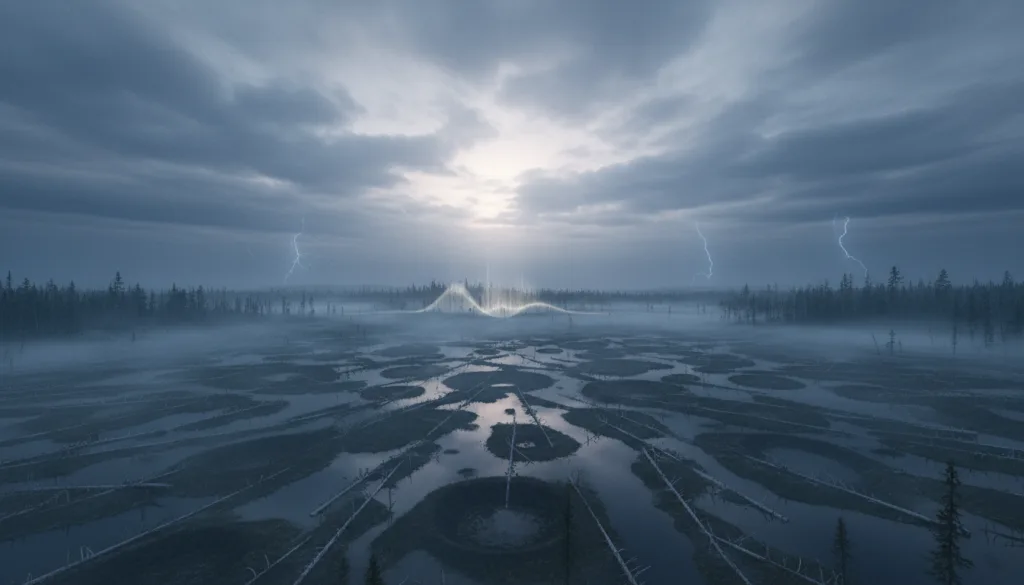
The first recorded accounts of the Tunguska Event came from a few local residents and later from Russian scientists who ventured into the area after the explosion. Witnesses reported seeing a bright flash in the sky, followed by a massive fireball that illuminated the landscape and then, an earth-shattering explosion. Trees were uprooted, some even scorched, while others were knocked over in a radial pattern emanating from the epicenter. The destruction was extensive, and the silence that followed the explosion was almost eerie.
Initial investigations were hampered by the remoteness of the region and the political climate of Russia at the time. It wasn't until 1927, nearly two decades after the event, that a scientific expedition led by the Soviet scientist Leonid Kulik finally reached the site. Kulik's team discovered a vast area of flattened trees and a peculiar lack of crater. The absence of a crater fueled speculation about the cause of the explosion, leading to a flurry of theories that still divide researchers today.
The Meteorite and Comet Hypotheses
For many years, the prevailing explanation for the Tunguska Event was that it was caused by a meteoroid or comet entering the Earth's atmosphere. According to this theory, a celestial body, measuring about 50-60 meters in diameter, exploded in the atmosphere at an altitude of 5 to 10 kilometers, releasing energy equivalent to 10-15 megatons of TNT. This explosion was strong enough to account for the widespread destruction observed in the region.
However, the hypothesis of a meteoric event has not been without its challenges. For one, the lack of a crater or significant meteorite fragments undermines the argument that a solid object impacted the Earth. In fact, many scientists have pointed out that typical meteor impacts leave behind both craters and debris, which were conspicuously absent at Tunguska. Additionally, analysis of tree rings in the affected area suggests that the explosion did not occur precisely at ground level, but rather in the air. This phenomenon aligns with the characteristics of a comet—specifically, a cometary fragment that exploded in the atmosphere.
Extraterrestrial Theories
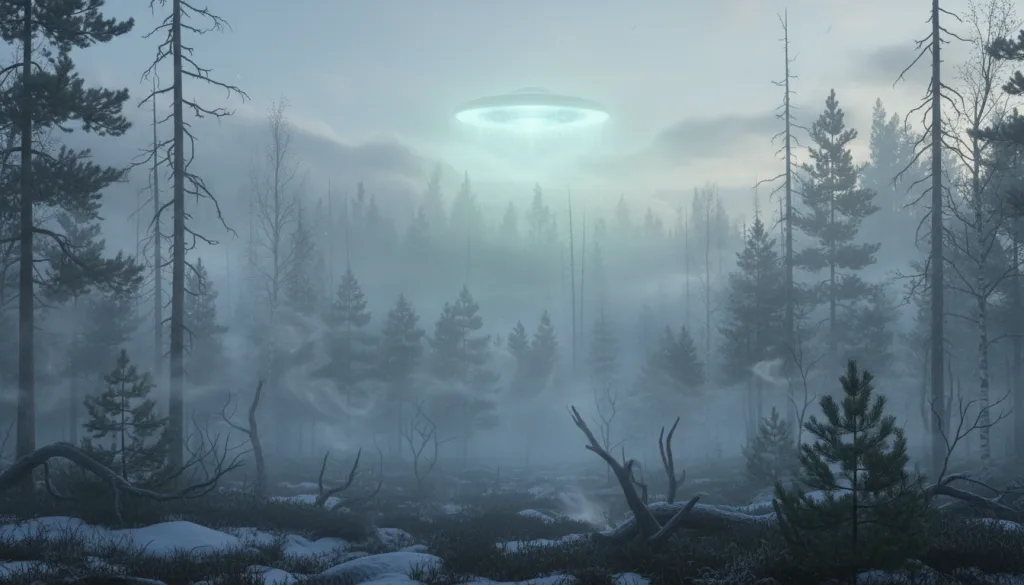
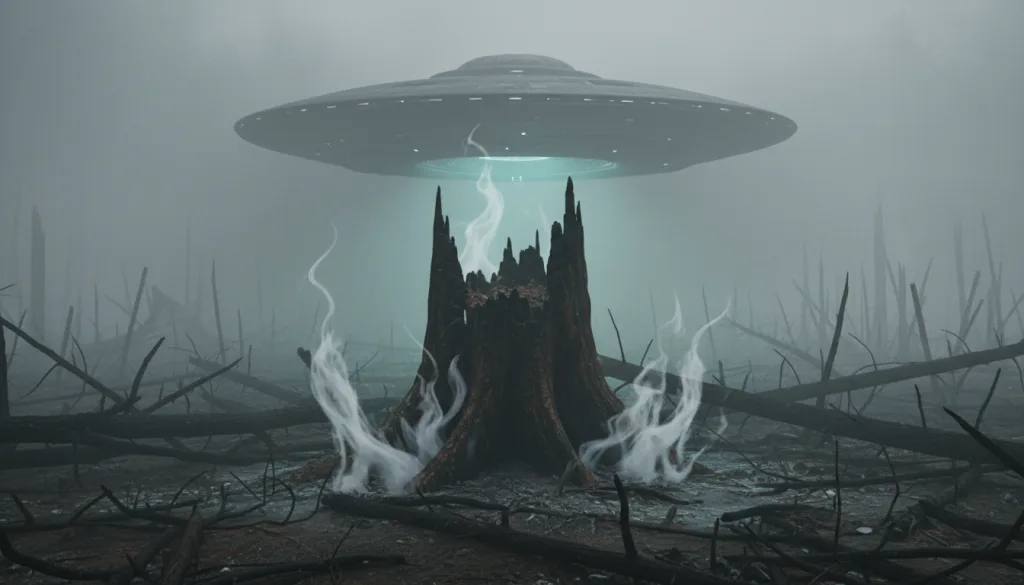
Amidst scientific discourse over the natural explanations, an alternative narrative emerged: the idea that the Tunguska Event was the result of an extraterrestrial craft. This theory, while far more sensational, has captivated the imaginations of UFO enthusiasts and conspiracy theorists alike. Proponents argue that an alien spacecraft either crashed or exploded over the Siberian landscape, resulting in the enormous blast.
Adding fuel to the fire, anecdotal accounts of witnessing strange objects in the sky around the time of the explosion have been cited as evidence of UFO involvement. Though these claims are often dismissed by the scientific community, they continue to capture the public's imagination, drawing attention to the possibility of non-human origins for the Tunguska Event.
Some researchers even speculate that if an alien craft did exist, it could have been a prototype or scout ship, perhaps testing advanced propulsion technology that led to its catastrophic failure. This perspective paints a picture of an advanced civilization observing Earth long before humanity became aware of its cosmic neighbors. While there is no concrete evidence to support this view, the notion of alien involvement in historical events often raises larger questions about humanity's place in the universe.
Modern Investigations and Continuing Mystery
In the years since Kulik's initial expedition, scientific interest in the Tunguska Event has remained strong. New technologies, including satellite imagery and advanced geological surveys, have provided fresh insights into the incident. In 2008, the centennial of the event led to renewed international attention, with numerous studies aimed at unraveling its mystery.
One particularly intriguing theory involves the possibility of a "dust cloud" from a comet that dispersed its material in the atmosphere, leading to an airburst explosion. This theory addresses some of the anomalies observed in the aftermath, including the characteristic lack of a crater. Research has shown that such explosions can cause severe devastation over large areas, consistent with what was observed at Tunguska.
Furthermore, ongoing studies of tree patterns and soil samples continue to yield data that challenge traditional explanations. Researchers have even suggested that the ecological impact of the explosion might have had longer-lasting effects on the local biosphere, further complicating our understanding of the event's implications.
Conclusion: A Cosmic Enigma
The Tunguska Event remains one of the most compelling mysteries of the 20th century. Whether it was the result of a meteoric impact, a cometary explosion, or something entirely otherworldly, it serves as a reminder of the vast and often unpredictable forces of nature. Each theory brings with it a different narrative of what transpired that fateful morning in Siberia, yet none can conclusively explain every detail of the event.
As our understanding of the universe evolves, so too does the allure of such mysteries. The Tunguska Event stands not just as a scientific puzzle but as a testament to humanity’s insatiable curiosity about the cosmos and our place within it. While we may not have definitive answers, the journey of exploration and inquiry continues to draw scholars, enthusiasts, and dreamers alike into the depths of the unknown.






Comments 0
Be the first to comment!