A documented history that raises profound questions about civilization's past.
The Historical Context of the Sumerian King List
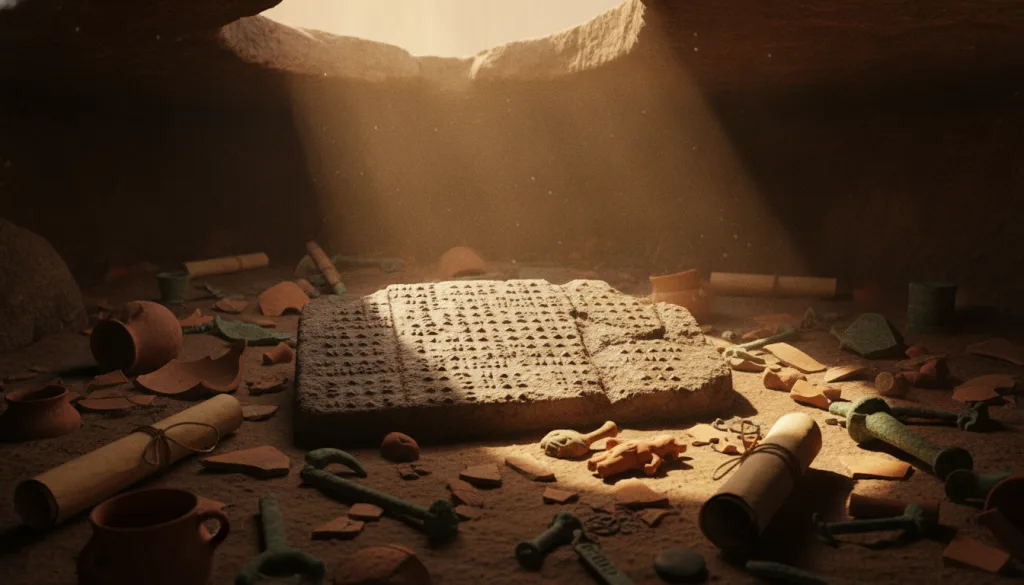
The Sumerian King List, a cuneiform text inscribed on clay tablets, presents a unique historical narrative that stands at the crossroads of mythology and recorded history. Dating back to approximately 2100 BCE, the King List enumerates the rulers of Sumer, detailing their reigns which astonishingly extend into thousands of years. This ancient document, discovered in the early 20th century in the ruins of Nippur (modern-day Iraq), has intrigued historians, archaeologists, and scholars alike. It lists eight kings who ruled for durations that seem almost unimaginable: Alulim, the first king, is said to have reigned for an epoch of 28,800 years.
The Kings and Their Reigns
The text outlines a succession of kings, starting with Alulim and ending with the rulers from the post-flood era, such as Gilgamesh. What is particularly striking is the stark contrast between the vast time spans attributed to the pre-flood kings and their successors. For instance, after the flood, the reigning times plummet dramatically, with kings like Gilgamesh ruling for a mere 126 years. This pattern raises fundamental questions regarding the nature of time, governance, and perhaps even the very fabric of reality as understood by the Sumerians.
According to the Sumerian King List, the first dynasty in the city of Eridu reportedly lasted for 241,200 years, a claim that seems hyperbolic at best and challenges the limits of archaeological scrutiny. The inclusion of these extraordinary reigns can be interpreted in various ways: as a reflection of the Sumerians' belief in the divine or as a possible historical record of a lost, advanced civilization.
The Relevance of Ancient Flood Myths
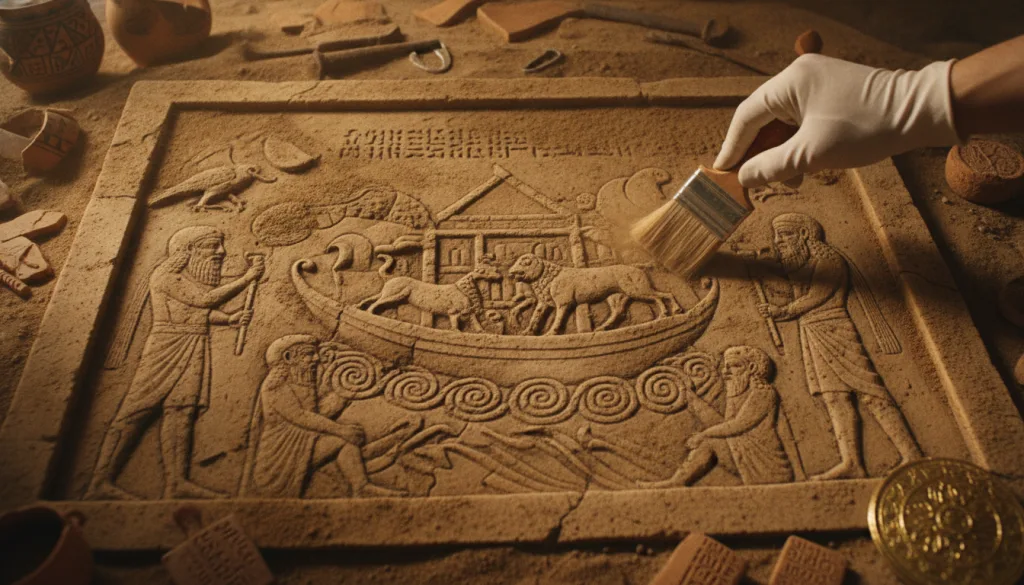
The Sumerian King List also connects to broader Near Eastern flood narratives, such as the Epic of Gilgamesh and the biblical account of Noah. The text mentions a great flood that led to the end of the pre-flood kings, suggesting a cataclysmic event that reshaped Sumerian civilization. Researchers like Dr. Andrew Robinson of University College London have pointed out that “the King List encapsulates a memory of a civilization that attempted to maintain a continuity of identity despite monumental change” (Robinson, 2006). This understanding indicates that the narrative served not only as a historical account but also as a cultural anchor for the Sumerian people.
The Interpretation of Time in Sumerian Culture
Time in Sumerian thought was not merely a linear progression but was intertwined with their mythology and spirituality. The extreme reigns listed could signify more than just the length of time; they might reflect the kings' divinely sanctioned status and their role as intermediaries between the gods and humanity. The scholars at the University of Pennsylvania have argued that these durations symbolize the kings' wisdom and cosmic legitimacy, making their rule nearly eternal in the eyes of their subjects.
However, the scientific community often challenges the idea of such long reigns. The evidence strongly indicates that the Sumerian King List is a document that blurs the line between myth and history, thereby raising essential questions about the nature of power and legitimacy in ancient civilizations.

The Debate Among Scholars
The Sumerian King List has sparked heated debates among historians, archaeologists, and linguists regarding its authenticity. Scholars like Dr. Samuel Noah Kramer, often regarded as the father of Sumerology, have suggested that the list serves as a political tool rather than a strict historical record. In his seminal work, “History Begins at Sumer,” published in 1956, he argues that the list was likely idealized, aiming to bolster the legitimacy of rulers by linking them to a golden age of extreme longevity.
"The Sumerian King List is a tapestry of mythological elements interwoven with historical realities, intended more to inspire than to inform." – Dr. Samuel Noah Kramer, 1956
This interpretation is corroborated by the findings of Dr. Jean-Jacques Glassner, who studied various ancient Near Eastern texts. In his book “The Invention of Cuneiform,” Glassner argues that “the exaggerated reigns serve as a reflection of the Sumerians' need to create a heroic narrative for their past.” This inclination to mythologize their history could indicate a society grappling with both its origins and future, blending fact and fiction in a manner that might serve social cohesion.
Geological Evidence of Cataclysm
The discussion of the great flood mentioned in the King List finds some support in geological research. In 1997, a team led by Dr. Allen West and Dr. William Ryan presented findings suggesting that a significant flooding event occurred in the Black Sea region around 5600 BCE, which some theorists correlate with the Sumerian narrative. Such geological insights could provide a historical basis for the flood myth that permeates various cultures, including the Sumerians.
Nonetheless, the evidence does not definitively validate the extreme claims made in the Sumerian King List, nor does it support the existence of kings who could rule for tens of thousands of years. The documents seem to rest on a narrative structure that reflects the culture's values and beliefs rather than concrete historical timelines.
Implications for Understanding Ancient Civilizations
The Sumerian King List compels us to rethink our understanding of ancient civilizations, their governance, and their myths. It presents a complex interplay between documented history and the rich tapestry of cultural identity. While the hyperbolic reigns of kings like Alulim may not stand up to modern historical scrutiny, their existence in the text indicates that the Sumerians were deeply invested in a particular worldview that prioritized spiritual and divine authority over empirical reality.
Moreover, the King List serves as a reminder that history is often written by the victors, in this case, the scribes of ancient Sumer. Their records, steeped in a belief system that intertwines the divine with the terrestrial, have left us with a lasting puzzle that continues to captivate and baffle scholars and enthusiasts alike.
Our Analysis:
The Sumerian King List is a fascinating artifact that calls into question the nature of time, memory, and identity in ancient civilizations. The extreme reign lengths may not correspond to factual histories but rather symbolize the Sumerians' worldview, a reflection of their understanding of power and divinity. The King List is not merely an ancient document; it embodies a complex social contract between rulers and the ruled, interwoven with myths that still reverberate through time. As researchers continue to scrutinize and debate its implications, one can only wonder what other layers of truth may remain hidden in the ancient texts of our past.
Sources & References
Kramer, Samuel Noah, History Begins at Sumer, 1956, University of Pennsylvania Press.
Robinson, Andrew, The Story of Writing, 2006, Thames & Hudson.
Glassner, Jean-Jacques, The Invention of Cuneiform, 2003, Johns Hopkins University Press.
Ryan, William, and Allen West, "Rapid Flooding of the Black Sea Coast," 1997, Geology Magazine.
Potts, Daniel, The Archaeology of Elam: Formation and Transformation of an Ancient Iranian State, 1999, Cambridge University Press.






Comments 0
Be the first to comment!