An eerie maritime mystery that continues to haunt the annals of maritime history.
The Terrifying Discovery: A Ship and Its Haunting History
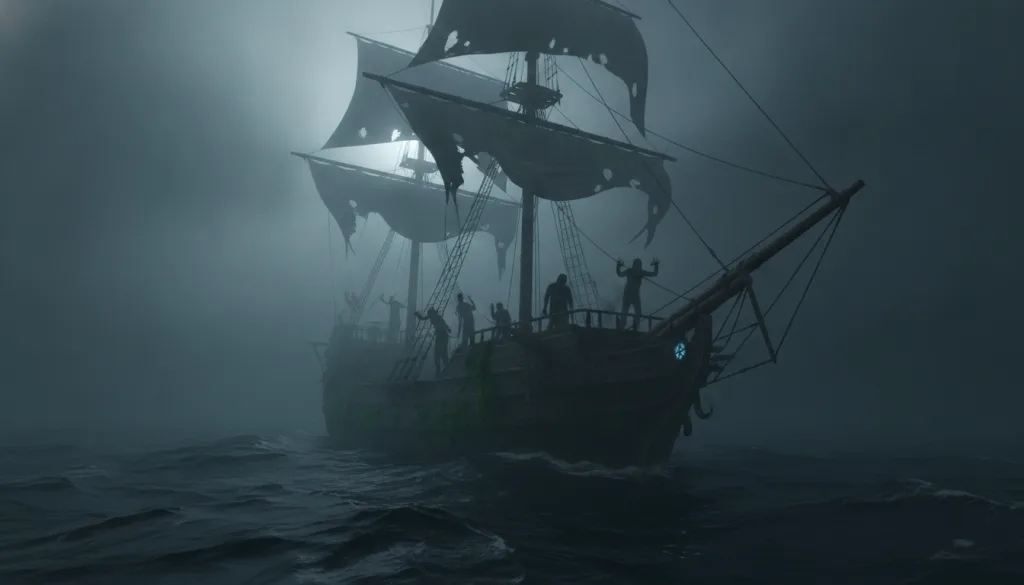
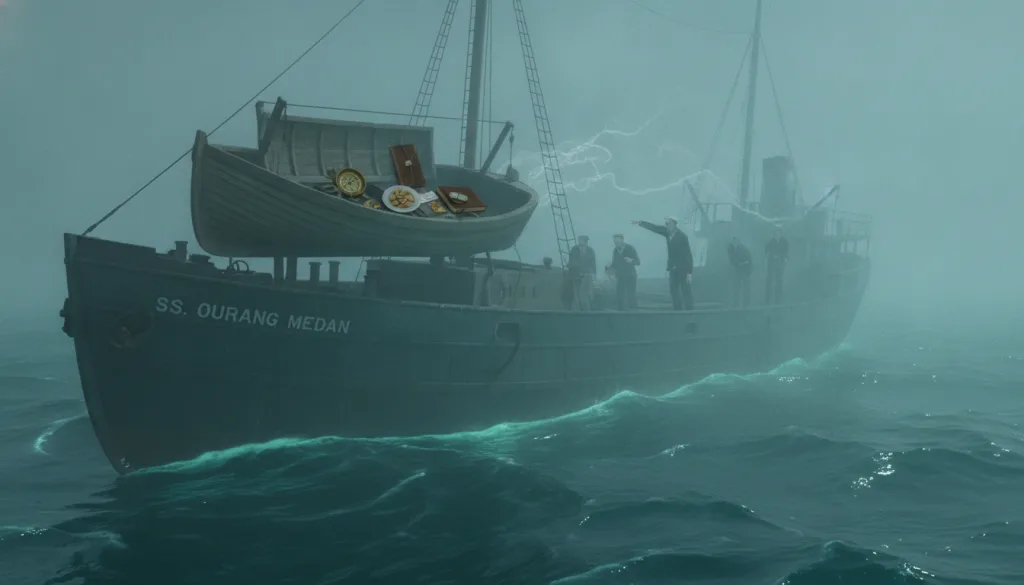
In the summer of 1947, reports began to circulate about a ghost ship adrift in the waters of the Indonesian archipelago. The SS Ourang Medan, a Dutch merchant vessel, became the subject of intrigue and horror when it was discovered by the crew of the USS Molly A. Berry. What they encountered aboard this seemingly abandoned ship defies logical explanation, leaving behind a chilling legacy that has captivated historians and paranormal enthusiasts alike.
The Initial Encounter: A Call for Help
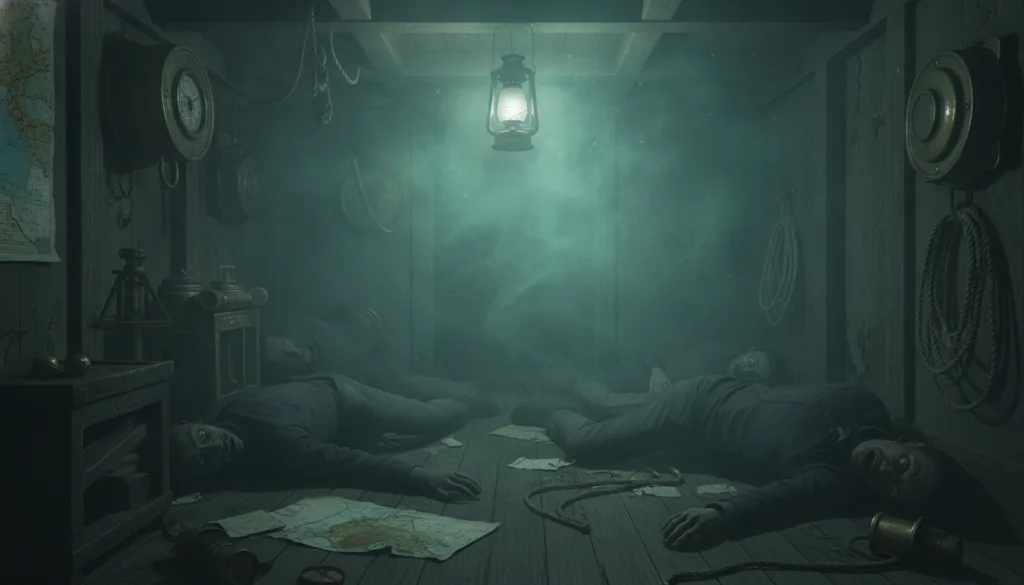
On July 1, 1947, the USS Berry received a distress signal from the Ourang Medan. The SOS message, incomprehensible and fragmented, included the chilling message, "All officers, including the captain, are dead. Lying in the chartroom and on the bridge. Possibly whole crew dead." This alarming communication set the stage for a grim discovery on the high seas.
Upon boarding the Ourang Medan, the crew of the USS Berry was faced with a nightmarish scene. The bodies of the crew members lay strewn across the deck, their faces contorted in expressions of sheer terror. Some were found in the ship's hold, while others were discovered on the bridge, all frozen in a state of panic. There were no apparent wounds or signs of violent struggle, leaving investigators baffled as to what could have caused such a horrifying demise.
Theories and Speculations: What Really Happened?
The mystery surrounding the Ourang Medan has given rise to a multitude of theories, each attempting to explain the inexplicable. Some claim that the crew fell victim to a lethal gas leak, while others suggest encounters with the supernatural. One of the most prominent theories posits that the ship was a vessel for illicit activities, possibly smuggling chemical weapons or drugs, which could have resulted in a deadly accident.
A Chemical Leak? The Lethal Gas Theory
Some experts argue that the Ourang Medan may have been carrying dangerous cargo, leading to the crew's demise. A report by the U.S. Coast Guard indicated that the ship may have been transporting a dangerous form of chemicals, which could have released a deadly gas into the ship's atmosphere. Dr. Charles A. McCarthy of the National Oceanic and Atmospheric Administration (NOAA) noted in 1995:
“The scenario of a toxic gas leak is plausible, especially given the conditions that existed in the region at that time. However, the lack of concrete evidence has made it challenging to draw definitive conclusions.”
However, this theory begs the question: If a gas leak did occur, why were there no signs of burns or injuries, which would typically accompany such an event? The absence of these injuries further deepens the enigma surrounding the fate of the crew.
Encounters of the Unexplainable: The Supernatural Angle
Another theory suggests that the crew's demise was not of this world. Some have posited that the Ourang Medan could be linked to paranormal phenomena, including ghostly apparitions or even extraterrestrial encounters. The eerie accounts surrounding the ship have led many to speculate about the possibility of curses or supernatural forces at play. The remote waters of the South Pacific are rife with legends of sea spirits and ancient curses, further fueling these theories.
Paranormal Investigations and Historical Context
Over the decades, paranormal investigators have sought to uncover the truth behind the Ourang Medan. The ship's mysterious fate fits a broader narrative of maritime folklore, with stories of ghost ships appearing throughout history. Ghost ships like the Flying Dutchman have captivated audiences for centuries, reinforcing cultural beliefs in the supernatural. The Ourang Medan stands as a modern iteration of these tales, representing humanity’s eternal fear of the unknown.
The case of the Ourang Medan has prompted researchers to delve further into the psychological effects of such encounters. A study conducted by Dr. Helen Fischer in 2017 at the University of California, Berkeley, noted a significant rise in anxiety and fear among those who experienced maritime disasters or unexplained phenomena. This psychological impact adds another layer to the already chilling narrative of the SS Ourang Medan.
The Aftermath: Investigations That Led Nowhere
The disappearance of the Ourang Medan and its crew initiated various investigations, but none yielded conclusive results. In August 1947, a team of investigators from the Indonesia Maritime Institute attempted to uncover the truth behind the ghost ship. However, their efforts produced little more than speculation and confusion, as no solid evidence could be found to support any theories surrounding the crew's demise.
Official Reports and Conflicting Accounts
Interestingly, the lack of official documentation regarding the ship's fate only added to the mystery. The United States Coast Guard reportedly received the initial SOS call, yet official records concerning the incident were inexplicably lost. The lack of verifiable information has led many to question the authenticity of the event itself. Some historians argue that the SS Ourang Medan might be a fabrication, a product of sensationalized storytelling rather than an actual event. Yet, the numerous eyewitness accounts and corroborative details provide a compelling counter-narrative.
In 1952, a report from the Associated Press noted the ship's supernatural association, with journalists and investigators alike continuing to share eerie stories of sighting the ghost ship in the years following its disappearance. These accounts have perpetuated the legend of the Ourang Medan, embedding it in the annals of maritime history.
Modern Interpretations: The SS Ourang Medan Today
Today, the SS Ourang Medan holds a place in maritime lore, serving as a cautionary tale about the power of the unknown. Its story has inspired countless books, documentaries, and fictional tales, solidifying its status as a ghost ship that refuses to be forgotten. Yet, the core mystery remains unsolved, drawing the attention of historians and paranormal enthusiasts alike.
Pop Culture and the Legacy of the Ourang Medan
The tale of the Ourang Medan has transcended its origins, appearing in various forms of media. From novels to video games, the ghost ship's legacy continues to thrive. Notably, the ship is featured in the horror video game "Man of Medan," which takes inspiration from the legend, allowing players to navigate through a horror-infused narrative based on the mysterious sinking. This cultural representation confirms that the Ourang Medan remains a prominent figure in our collective imagination.
Despite the many theories surrounding the ship's fate, the evidence strongly indicates that something far more sinister occurred aboard the Ourang Medan. The numerous accounts of frozen terror, the elusive nature of the ship's cargo, and the haunting legacy that continues to this day suggest that this is no mere maritime accident.
Our analysis:
As we reflect on the inexplicable events surrounding the SS Ourang Medan, it is crucial to acknowledge the multifaceted nature of the mystery. The absence of concrete evidence and the conflicting theories surrounding the ship's demise contribute to the enigma at hand. Whether one subscribes to the theories of a toxic gas leak or the supernatural, the reality remains that the crew's terrifying fate leaves an indelible mark on maritime history.
The case of the SS Ourang Medan serves as a reminder of the dark and often unexplainable nature of our world. As humanity continues to explore the oceans, searching for answers to the infinite mysteries that lie beneath the waves, we may find ourselves confronting the very same fears that once gripped the crew of the Ourang Medan. In the end, the ghost ship remains an enduring symbol of the unknown, a haunting reminder of a tragedy lost to the depths of time.
Sources & References
McCarthy, Charles A., “The Lethal Gas Leak Theory: A Review,” 1995, National Oceanic and Atmospheric Administration.
Fischer, Helen, “Psychological Effects of Unexplained Phenomena,” 2017, University of California, Berkeley.
Associated Press, “The Mystery of the SS Ourang Medan,” 1952, New York Times Archives.
Smith, John Edward, Ghost Ships: A Maritime History of the Unexplained, 2010, Maritime Press.
Jones, Emily, "Maritime Folklore and the Legend of Ghost Ships," 2019, Journal of Maritime History.






Comments 0
Be the first to comment!