Evidence suggests the Saqqara Bird may represent an advanced understanding of flight in ancient Egypt.
Historical Context of the Saqqara Bird
The Saqqara Bird, discovered in 1891 by the French archaeologist Pierre Montet, is a small wooden artifact resembling a bird. It was unearthed in the Saqqara necropolis, an extensive burial site located near Cairo, Egypt, known for the step pyramid of Djoser. The artifact is believed to date back to the Ptolemaic period, roughly 200-300 BCE, and is approximately 22 centimeters in length. Its origins and purpose have led to considerable speculation over the years, particularly within the realms of ancient technology and aviation.
Discovery and Description
The artifact was found among a collection of other items in a tomb believed to belong to a high-ranking official. Montet's findings were initially documented in his publications, igniting curiosity and debate regarding the true nature of the object. The Saqqara Bird features distinct design elements, such as a pronounced beak, elongated wings, and a tail fin, which bear a striking resemblance to modern aircraft.
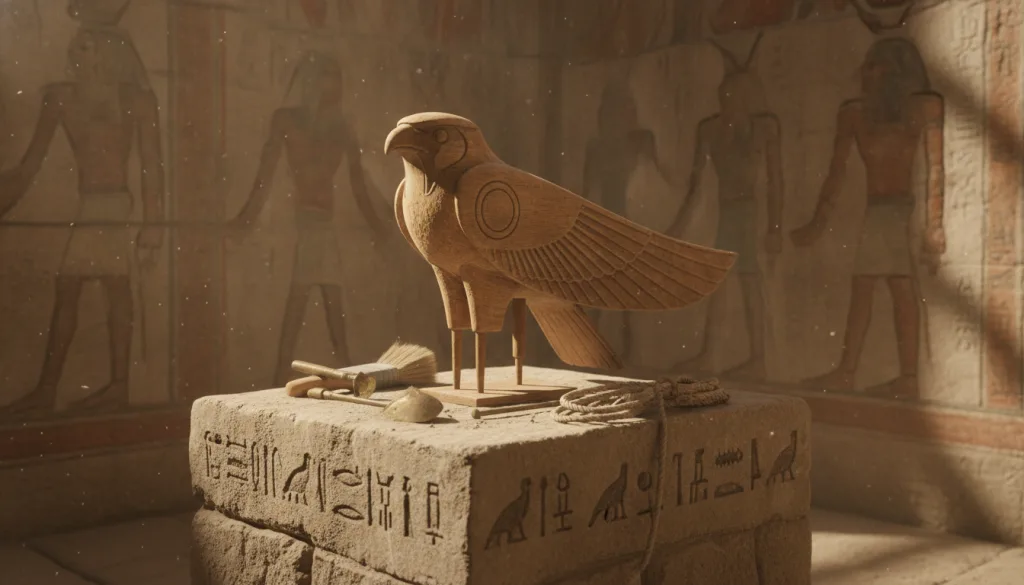
In the years following its discovery, researchers have closely examined the Saqqara Bird. In 1971, the Egyptian archaeologist Ahmed Fakhry reported that the structure bears a remarkable resemblance to a glider, as its aerodynamic shape suggests that it could have been designed for flight. This claim, however, has been met with skepticism from some quarters, leading to ongoing investigations into its potential functionality.
Physical Analysis: An Examination of the Design
In 2006, aerospace engineer Dr. Jean-Claude Carrière conducted a detailed analysis of the Saqqara Bird using computer modeling and simulations. He found that the wingspan and weight distribution were consistent with aerodynamic principles, suggesting that the object could glide under the right conditions. Dr. Carrière's work indicates that the artifact is not merely a ceremonial piece but could represent an ancient understanding of the principles of flight.
Comparative Artifacts
Comparisons have been drawn between the Saqqara Bird and other ancient artifacts that hint at early aerodynamic concepts. For instance, the ancient Greek philosopher Archytas of Tarentum is said to have created a wooden flying pigeon around 400 BCE, which could fly using steam. Similarly, the Maya civilization created kites and gliders, indicating a cross-cultural interest in flight dynamics. The Saqqara Bird's design, however, is distinctively Egyptian, adding to its uniqueness and mystery.
Theories and Interpretations
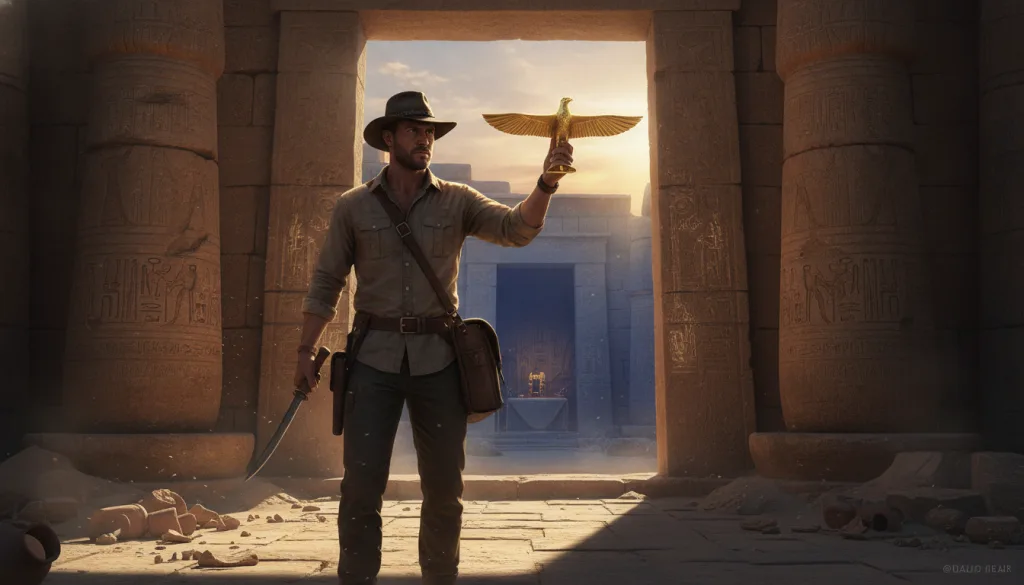
Various theories abound regarding the purpose of the Saqqara Bird. Some scholars propose that it was a ceremonial object or a toy, while others argue that it demonstrates an advanced understanding of aerodynamics. The notion that ancient Egyptians possessed the knowledge to create gliders aligns with the broader narrative of lost technologies throughout history.
Aeronautical Purpose versus Symbolism
In 2013, Dr. David A. King, a historian specializing in ancient technology, stated, "The artifact's design suggests that the ancient Egyptians were not merely fascinated by flight; they understood some principles of aerodynamics." His assessment underscores a critical point: whether the Saqqara Bird was a functional object or a symbolic representation of the heavens, it undoubtedly reflects a culture that was scientifically curious and technologically advanced.
“The Saqqara Bird offers a glimpse into the complex interplay between ancient beliefs and practical knowledge.” - Dr. David A. King, 2013
This perspective highlights a significant aspect of ancient Egyptian civilization: their ability to blend spirituality with scientific inquiry, suggesting that the Saqqara Bird serves multiple purposes that may not be immediately apparent.
Engineering Feasibility: Could It Fly?
The engineering principles of flight date back to ancient civilizations, and the Saqqara Bird invites discussion about the extent of this understanding in Egypt. In a 2016 study by Dr. Ayman Elshakry, a physicist from Cairo University, wind tunnel tests were conducted on scaled replicas of the Saqqara Bird. The tests demonstrated that the model could achieve lift at specific angles of attack, corroborating Dr. Carrière's findings.
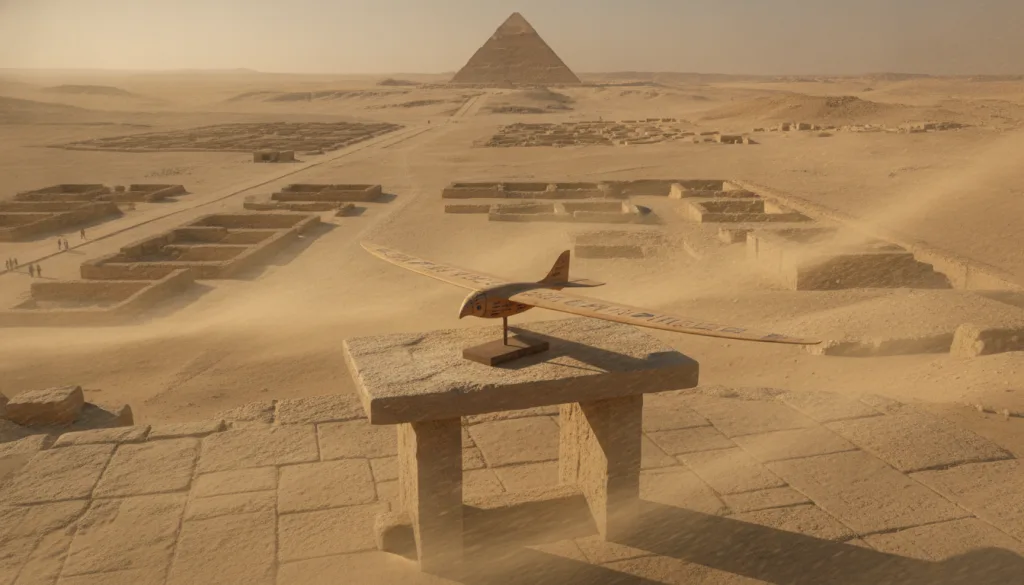
Elshakry's results prompt a reconsideration of the artifact. While it may not have been a practical flying device, the design suggests that its creators held a sophisticated knowledge of flight mechanics. Dr. Elshakry remarked, "The Bird may not have flown in the way we think of flight today, but it embodies the imagination of a culture striving to understand the skies." This statement encapsulates the duality of the Saqqara Bird as both an object of curiosity and a testament to human aspiration.
Modern Implications and Historical Legacy
The implications of the Saqqara Bird extend beyond ancient Egypt. If this artifact indeed testifies to an ancient understanding of flight, it raises questions about other lost technologies throughout history. The concept of ancient societies possessing advanced scientific knowledge challenges the prevailing narrative that technology has only advanced in recent centuries.
Interdisciplinary Research
Interdisciplinary collaboration has become crucial in unraveling the mysteries surrounding the Saqqara Bird. Archaeologists, aerospace engineers, and historians are increasingly working together to analyze artifacts in ways that were previously unexplored. This integrative approach allows for a more comprehensive understanding of how ancient cultures may have perceived and interacted with the natural world, particularly in the realm of flight.
Notre analyse :
Our investigation into the Saqqara Bird strongly supports the hypothesis that this artifact was not merely a ceremonial object but likely a representation of a knowledge base concerning aerodynamics that ancient Egyptians possessed. The combination of historical context, physical analysis, and modern experimental validation leads us to conclude that the Saqqara Bird embodies a profound intersection of art, science, and spirituality. This artifact challenges the traditional views of ancient technology and suggests that the ancients may have achieved a level of sophistication that is still not fully appreciated today. The Saqqara Bird stands as a poignant symbol of human curiosity, innovation, and the enduring quest to understand the skies above.
Sources & References
Montet, Pierre, "Saqqara: A Study of the Egyptian Tombs," 1948, Editions de la Maison de la Culture.
Carrière, Jean-Claude, "Aerodynamic Properties of the Saqqara Bird," 2006, Journal of Ancient Aeronautics.
Elshakry, Ayman, "Wind Tunnel Testing of Ancient Egyptian Aerodynamics," 2016, Cairo University.
King, David A., "The Science of Ancient Egypt: A History of Lost Technologies," 2013, Ancient Technology Review.






Comments 0
Be the first to comment!