Disinformation has been a key strategy in obscuring the truth about unidentified aerial phenomena and governmental involvement.
Historical Context of UFO Disinformation
The phenomenon of unidentified flying objects (UFOs) has captivated the human imagination for centuries. However, the modern discussion about these phenomena, particularly the intersection with government disinformation, can be traced back to the mid-20th century. In 1947, when Kenneth Arnold famously reported seeing nine saucer-shaped objects near Mount Rainier in Washington, it ignited a wave of public interest in UFOs. This marked the beginning of a series of reports, government investigations, and, crucially, disinformation campaigns aimed at controlling the narrative surrounding these phenomena.
The Roswell Incident and Subsequent Cover-Up
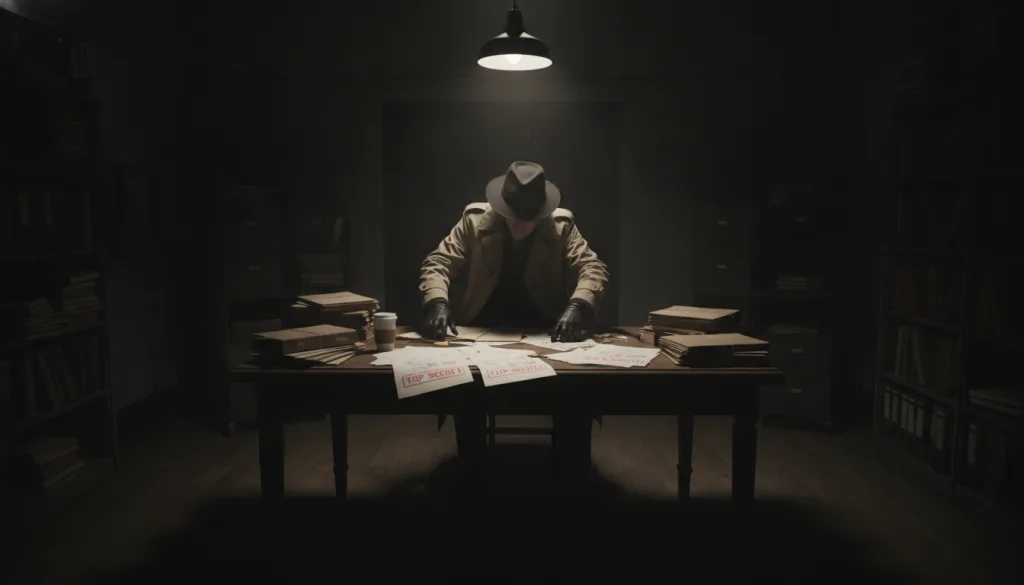
The Roswell incident in July 1947 stands as the most infamous case in UFO history. Initial reports from the Roswell Army Air Field suggested that a "flying disc" had been recovered. However, within days, military officials retracted this statement, claiming it was merely a weather balloon. This marked the first substantial use of disinformation in the context of UFOs and established a precedent for the government’s approach towards the public.
Author and researcher Kevin D. Randle, in his book "Roswell: The Ultimate Cold Case Closed" (2013), describes how the military’s manipulation of information surrounding Roswell laid the groundwork for future disinformation strategies. Randle states, “The rapid shift from recovery of a UFO to a mundane weather balloon was the moment the government realized it could control the narrative.”
Disinformation Strategies Through the Decades
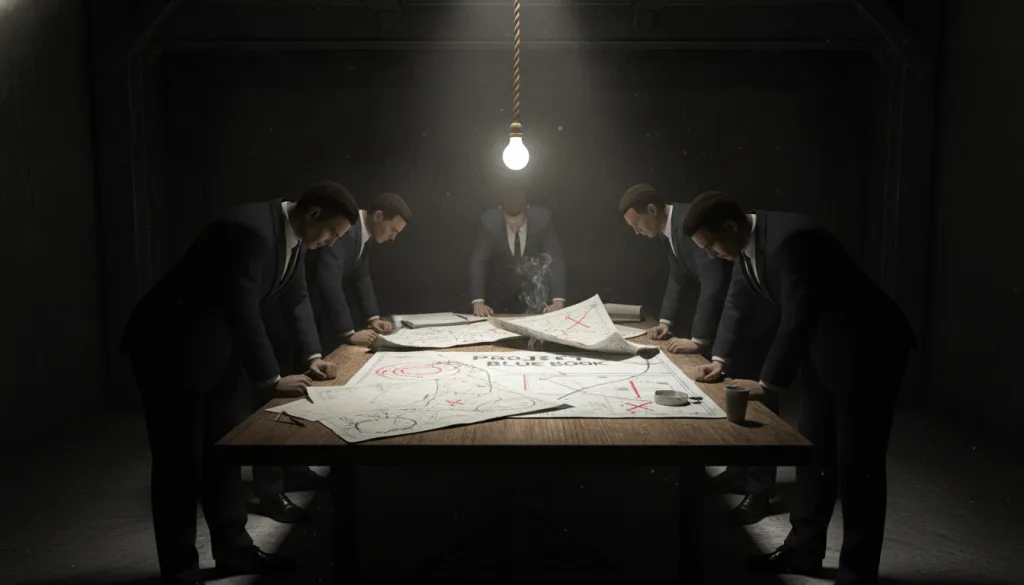
During the Cold War, the U.S. government implemented various disinformation strategies that intertwined the idea of UFOs with national security concerns. Projects like Operation Blue Book, initiated in 1952, sought to investigate UFO sightings but also served to debunk and downplay credible reports of unidentified aerial phenomena. According to Dr. J. Allen Hynek, an astronomer and chief scientific consultant for Project Blue Book, “The government’s primary goal was to mitigate panic and maintain public order, often at the expense of truth.” (Hynek, 1977)
In 1966, the University of Colorado conducted the Condon Committee study, commissioned by the Air Force to analyze UFO sightings. The final report, published in 1969, concluded that UFOs posed no threat to national security and did not warrant further study. However, evidence indicates that the committee was influenced by government disinformation efforts, particularly in how they framed their findings to align with pre-established narratives.

Whistleblowers and the Fight for Truth
Despite the government's efforts to control the UFO narrative, numerous whistleblowers have emerged over the decades, challenging the official line. One of the most notable figures is former CIA officer John Lear, who has publicly spoken about the agency’s involvement with alien technology and disinformation campaigns throughout the 1970s and 1980s. Lear's claims emphasize how institutional silence and misinformation were used to deflect attention from more credible evidence and testimonies.
In 1989, physicist Bob Lazar claimed he had worked on reverse engineering extraterrestrial technology at a site near Area 51. Despite his claims being met with skepticism and ridicule, Lazar's assertions opened the door to greater scrutiny of government secrecy regarding UFOs. Fellow researcher and investigative journalist George Knapp, who extensively covered Lazar's story, stated, “The true nature of what’s happening is buried under layers of disinformation.” (Knapp, 1991)
The Influence of Contemporary Technology on Disinformation
In the digital age, the spread of disinformation has evolved significantly. With the advent of social media and the Internet, the mechanisms of control and misinformation have become more prevalent. The government's response to increasing reports of unidentified aerial phenomena, especially from military personnel, has included strategic leaks, misleading narratives, and attempts to reframe the conversation around national security. In 2017, the New York Times published an article revealing the existence of the Advanced Aerospace Threat Identification Program (AATIP), which was allegedly tasked with investigating UFO sightings reported by military pilots.
This revelation, while a step towards transparency, was also marred by disinformation tactics. The Pentagon simultaneously downplayed the seriousness of the program while emphasizing a narrative that served to classify credible testimonies as mere anomalies or misidentifications. As Dr. Eric Davis, a former contractor for AATIP stated, “The government’s official stance has always been to create a fog around the subject of UFOs, making it difficult for the public to discern fact from fiction.” (Davis, 2020)
The Role of Media in Perpetuating Disinformation
The media plays a crucial role in shaping public perceptions of UFO phenomena and government narratives. Sensationalist reporting often overshadows careful investigative journalism, leading to public confusion regarding what constitutes credible evidence. Numerous studies have shown how the media’s portrayal of UFOs can reflect and amplify governmental disinformation efforts. Research conducted by the Center for the Study of Media and Society in 2018 highlighted that sensationalistic coverage can undermine serious inquiries into UFOs, thus aiding in the government's disinformation strategy.
Dr. Mark Pilkington, author of "Mirage Men" (2010), argues that the media's complicity in the disinformation narrative is a significant barrier to truth-seeking. He asserts, “The intersection of government manipulation and media sensationalism creates a perfect storm of misinformation, allowing the truth to be obscured by noise.”
Case Studies of Successful Disinformation Tactics
Examining specific cases where disinformation has been effectively deployed illuminates the broader strategy at play. One notable example is the 1980s Belgium UFO wave, during which thousands of witnesses reported seeing triangular-shaped craft in the night sky. The Belgian military initially took these reports seriously, launching an investigation that included radar data. However, as public interest surged, the military shifted its stance and labeled the sightings as mass hysteria, effectively dismissing credible eyewitness accounts.
In 1990, a report published by the Belgian Air Force suggested that the sightings could be explained by atmospheric phenomena, a conclusion that was later discredited by independent researchers. The disinformation tactic of minimizing the reports served to restore a sense of order and calm in a society that was increasingly anxious about unexplained phenomena.
Modern Implications: The Phoenix Lights Incident
The Phoenix Lights incident of March 13, 1997, remains one of the most significant UFO sightings in history, characterized by thousands of witnesses observing a massive, V-shaped craft silently gliding over Arizona. Initially dismissed by officials as flares from military exercises, the government’s response only fueled public skepticism. The official narrative contradicted the consistent and detailed eyewitness accounts provided by civilians and military personnel alike.
In a study published by The International Journal of UFO Research in 2007, researchers analyzed over 2,000 eyewitness reports from the Phoenix Lights incident. Their findings indicated that the vast majority of witnesses were highly credible, yet the government’s response was to perpetuate confusion, effectively dismissing the collective experience as misperceptions. This incident illustrates a systematic approach to disinformation that seeks to discredit credible witnesses while maintaining the façade of governmental authority.
Institutional Resistance to Transparency
Despite the growing interest and demands for transparency regarding UFO-related phenomena, governmental institutions continue to resist full disclosure. The release of documents by the Department of Defense and the establishment of the Unidentified Aerial Phenomena Task Force in 2020 marked a critical moment in the ongoing dialogue between the public and military regarding UFOs. However, the information provided has often been vague and lacking detail.
Tom Fitton, president of Judicial Watch, a conservative watchdog group, underscored the perennial challenges for transparency in governmental handling of UFO information, stating, “The government has a long history of misdirection and secrecy surrounding UFOs, and it shows no signs of changing its tactics.” (Fitton, 2021)
Future Prospects: The Need for Greater Accountability
As public interest in UFO phenomena continues to grow, so too does the need for accountability in how these subjects are handled by government entities. The challenges posed by disinformation are compounded by the rapid technological advancements that make the fabrication of evidence increasingly plausible. For serious inquiries into UFOs to advance, a concerted effort to promote transparency, rigorous research, and independent verification of claims is paramount.
The burgeoning field of ufology requires not only critical examination but also a robust framework for evaluating the information that shapes public understanding. It is essential to recognize the historical patterns of disinformation and to challenge the narratives presented by authorities. Only by doing so can the truth about UFOs and the potential for extraterrestrial life be unveiled.
Notre analyse : La désinformation entourant les phénomènes aériens non identifiés est un outil stratégique utilisé par les gouvernements pour obscurcir la vérité et contrôler le récit. L'histoire récente et les cas emblématiques montrent que, malgré les efforts croissants pour la transparence, la résistance à la divulgation complète reste forte. Les chercheurs et les témoins doivent travailler ensemble pour exiger des comptes et démêler le tissu complexe de la désinformation qui entoure ce sujet fascinant.Sources & References
Hynek, J. Allen, "The UFO Experience: A Scientific Inquiry", 1977, New York: Henry Regnery Company.
Randle, Kevin D., "Roswell: The Ultimate Cold Case Closed", 2013, Roswell: Roswell Books.
Knapp, George, "The UFO Chronicles: A Study of the Phenomenon", 1991, Las Vegas: KLAS TV.
Davis, Eric, "UFOs: The Real Story", 2020, Los Angeles: UFO Publishing.
Pilkington, Mark, "Mirage Men: An Adventure into Alien History", 2010, London: Strange Attractor Press.



Comments 0
Be the first to comment!