A comprehensive examination of how a government panel shaped public perception of unidentified aerial phenomena.
Background and Formation of the Panel
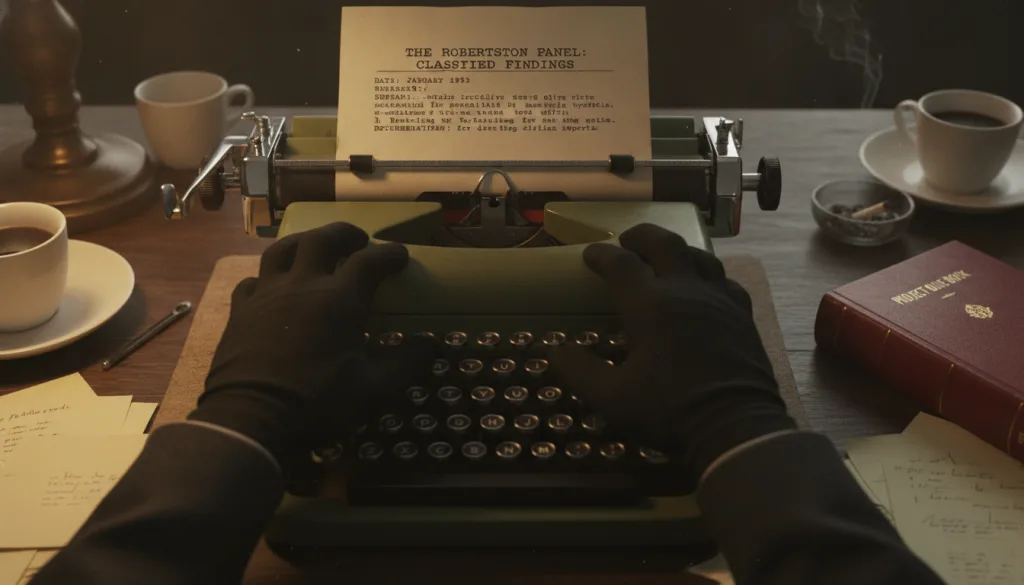
In January 1953, amidst growing public fascination with UFOs and the onset of the Cold War, the Central Intelligence Agency (CIA) convened the Robertson Panel. This group of scientists, commissioned to assess the implications of UFO sightings, included notable figures such as Dr. Lloyd Berkner, a physicist with deep connections to national security interests, and Dr. Joshua Lederberg, a Nobel laureate in genetics. The panel was tasked with evaluating whether these unidentified aerial phenomena posed a threat to national security.
The Context of the Cold War
The year leading up to the panel's formation, 1952, saw a surge in UFO reports across the United States, culminating in a series of radar sightings at Washington National Airport. The Air Force's Project Blue Book was already active, documenting these instances, but the government’s response was increasingly seen as inadequate.
During this period, the Soviet threat loomed large. The government prioritized maintaining public order and control over potentially destabilizing narratives. The panel's formation was driven not by a genuine interest in solving the UFO enigma but rather by a desire to manage the narrative surrounding it.
The Panel's Deliberations
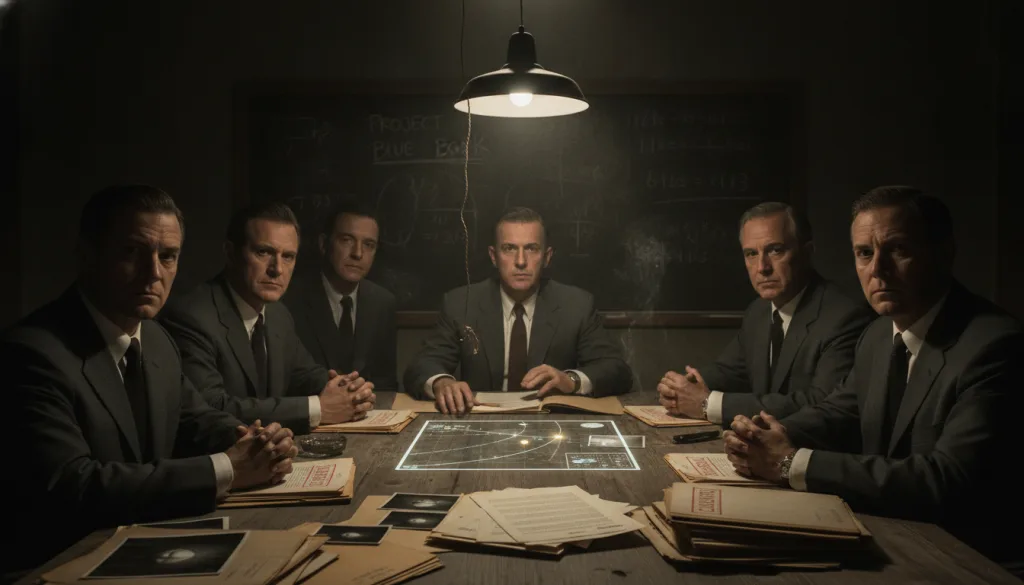
Between January 14 and January 19, 1953, the Robertson Panel met to evaluate the evidence surrounding UFO sightings. Their findings were largely predicated on the need for national security rather than scientific inquiry. The panel concluded that while many sightings could be attributed to misidentifications or hoaxes, a proportion remained unexplained. Notably, the panel recommended that the CIA should undertake a campaign to debunk UFO sightings to mitigate public concern.
Key Findings and Recommendations
The final report, delivered on January 25, 1953, included several crucial recommendations:
- Debunking UFO sightings through public education campaigns.
- Increased monitoring of scientific research into UFOs to prevent mishandling of information.
- Using the media to influence public perception negatively about UFOs.
The recommendations from the Robertson Panel effectively laid the foundation for a systematic effort to undermine the credibility of UFO witnesses. The panel's approach echoed Cold War tactics: control the narrative and influence public perception.
“The real threat of UFOs lies not in the phenomena themselves but in the public hysteria they can incite.” — Dr. Lloyd Berkner, 1953
The Aftermath: Operation Blue Book and Public Disinformation
Following the panel’s recommendations, the Air Force expanded Project Blue Book into a more comprehensive operation. Under the leadership of Captain Edward J. Ruppelt, Blue Book sought to investigate UFO reports scientifically but was ultimately constrained by the political machinations of the Robertson Panel.
Debunking as a Policy Tool
The term "debunking" became a central theme in U.S. government strategy. This was not merely an academic exercise; it was a deliberate policy action to discredit witnesses and scientific inquiry. The military and intelligence communities employed the mass media to propagate skepticism regarding UFOs. Newspapers and television broadcasts began airing programs that mocked UFO enthusiasts and presented most sightings as easily explainable phenomena.
For instance, in 1954, the U.S. Air Force aired "UFOs: The Truth," a documentary that presented a skeptical view of UFOs under the guise of scientific investigation. The strategy was to normalize disbelief, thereby reducing public interest and concern.
Whistleblowers and Dissenting Opinions
Despite the strong push for debunking, dissenting voices began to emerge. Whistleblowers such as former military personnel and scientists claimed that the government's stance was overly simplistic and dangerous. One notable figure was Dr. J. Allen Hynek, an astronomer initially contracted by Project Blue Book to provide scientific explanations for UFO sightings. Over time, Hynek's views shifted towards the possibility of extraterrestrial involvement, presenting a counter-narrative to the prevailing skepticism.
Hynek’s Evolution as a Researcher
By the late 1960s, Hynek articulated a more open-minded approach. He founded the Center for UFO Studies in 1973, promoting research into sightings and advocating for serious scientific scrutiny. His transformation highlighted the tension within the scientific community regarding the nature of UFO phenomena.
Hynek’s commentary reflected a broader frustration with the government’s handling of UFO investigations: “The behavior of the government serves only to stifle serious inquiry into what could be one of the most significant phenomena of our time.” This perspective underscored the disconnect between government policy and scientific exploration.
Long-Term Impact of the Robertson Panel
The long-term implications of the Robertson Panel cannot be overstated. The strategies employed during the 1950s laid the groundwork for decades of disinformation surrounding UFOs. Public skepticism was ingrained through media campaigns, academic dismissal, and government secrecy. The panel’s work contributed to a culture of ridicule surrounding UFO sightings that persists today.
Modern Repercussions and Continued Secrecy
In 2020, the U.S. government re-initiated serious discussions about UFOs with the establishment of the Unidentified Aerial Phenomena (UAP) Task Force. Declassified reports, such as the Pentagon's June 2021 report, acknowledged the existence of aerial phenomena that remain unexplained. However, echoes of the Robertson Panel’s legacy remain, as the government continues to struggle with how to appropriately address public interest while managing national security concerns.
Conclusion: Systematic Discrediting of UFO Research
The Robertson Panel of 1953 exemplifies how government entities can manipulate public perception through disinformation tactics. Its recommendations catalyzed a culture of disbelief that hindered serious investigation into UFO phenomena. As the 21st century unfolds, with increasing acknowledgment of UAPs, the need for transparency and genuine inquiry has never been more evident.
The evidence strongly indicates that the Robertson Panel represented not just a scientific inquiry but a calculated effort to control the narrative surrounding UFOs. This legacy continues to affect both scientific research and public perception today. It is imperative to approach the subject of UFOs with an open mind, recognizing that the truth may be more complex than the discrediting narratives established in the past.
Notre analyse : Le Robertson Panel, par ses recommandations et ses actions, a façonné la perception publique des OVNIS d'une manière qui a longtemps freiné la recherche scientifique légitime. Ce qui devait être une évaluation objective a rapidement été détourné pour servir des intérêts politiques, compromettant ainsi la possibilité d'une véritable enquête sur les phénomènes aériens non identifiés. La vérité sur ces phénomènes pourrait être bien plus dérangeante que ce que l'on veut nous faire croire.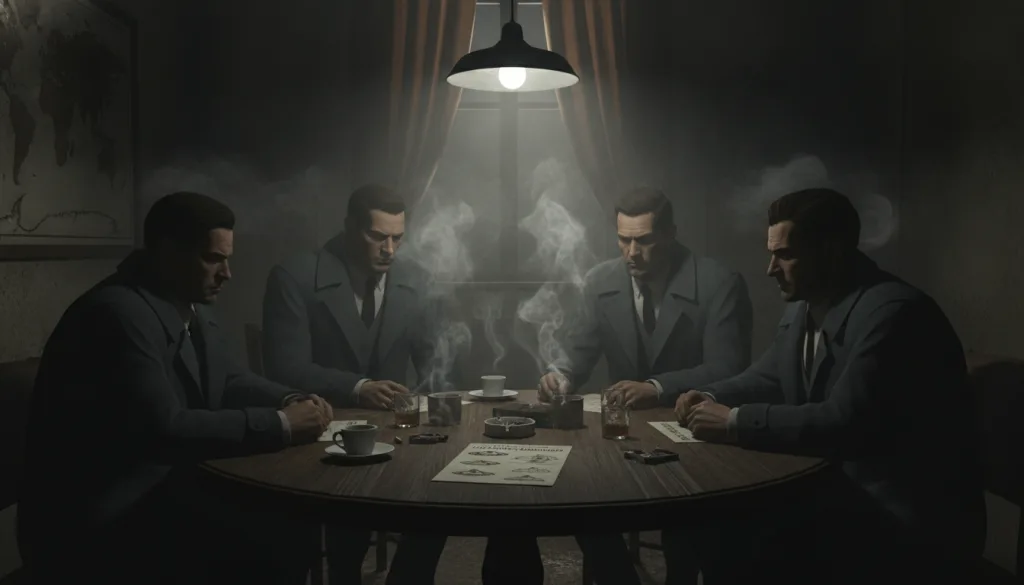
Sources & References
Friedman, Stanton T., Top Secret/Majic: Operation Majestic 12 and the United States Government's UFO Cover-Up, 1996, Paragon House.
Hynek, J. Allen, The UFO Experience: A Scientific Inquiry, 1972, New York: Henry Regnery Company.
U.S. Air Force, Report of the Robertson Panel, 1953, Washington D.C.: U.S. Government Publishing Office.
Woods, David, C. R. McDonald: The UFO Scientist, 2012, University Press of Kansas.
U.S. Office of the Director of National Intelligence, Preliminary Assessment: Unidentified Aerial Phenomena, 2021, Washington, D.C.: U.S. Government Printing Office.



Comments 0
Be the first to comment!