A landmark event in UFO history remains shrouded in mystery.
Background of the Phoenix Lights Incident
On March 13, 1997, a series of unidentified flying objects were reported over the states of Arizona and Nevada, particularly concentrated in the Phoenix metropolitan area. Eyewitness accounts indicate that up to 10,000 individuals observed the phenomenon, which has since been referred to as the "Phoenix Lights." The event consisted of two separate incidents; the first occurred in the early evening and involved a massive V-shaped craft, while the second involved a series of stationary orbs that appeared later that night.
The initial sighting began around 8:15 PM MST when witnesses reported seeing a large, triangular formation of lights moving silently across the sky. The Arizona Republic reported that numerous residents called the police and local news stations to report their experiences. Witnesses described the craft as being of immense size, with some estimates suggesting it was over a mile long. Eyewitness Steve Lantz stated, “It was enormous—bigger than anything I had ever seen before.”
Chain of Events
The timeline of the Phoenix Lights incident is crucial for understanding its complexity: - **March 13, 1997, 8:15 PM**: The first reports of a massive V-shaped craft began to emerge. - **8:30 PM**: More reports flooded in from various locations in Arizona. Witnesses included police officers, military personnel, and civilians alike. - **9:30 PM**: The second wave of sightings occurred, where several stationary orbs were seen. - **Late Night**: Local news stations began covering the phenomenon extensively, which led to a spike in eyewitness reports. A notable aspect of this incident is the variety of witnesses. Many were credible individuals, including retired military personnel, law enforcement officials, and even the then-Governor of Arizona, Fife Symington, who would later admit to having seen the lights himself. His initial dismissal of the event as a "prank" was later reversed when he publicly acknowledged the seriousness of the incident.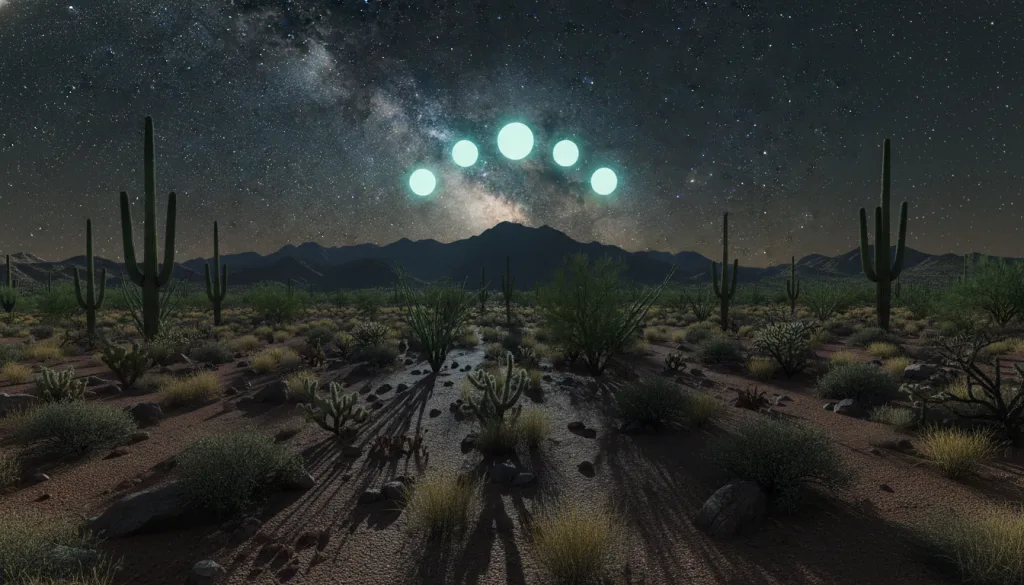
Eyewitness Testimonies: A Diverse Spectrum of Accounts
The vast array of eyewitness testimonies offers a compelling narrative of the Phoenix Lights. Among the most credible witnesses was Dr. Lynne Kitei, a physician and former Director of the Arizona Center for Integrative Medicine. Kitei reported seeing the lights firsthand and documented her experience in a documentary titled "The Phoenix Lights" (2007).
Dr. Kitei described the lights as "massive, silent, and totally unlike any aircraft I had ever seen." She collected hundreds of reports and photographs, which have served as critical evidence for researchers studying the phenomenon.
Another significant witness was police officer Randy Rhoades, who was part of the Glendale Police Department at the time. Rhoades stated, “I saw a large triangular craft, and it was moving incredibly slowly, without any sound. It was like nothing I had ever encountered in my 20 years on the force.”
The volume of testimonies significantly strengthens the credibility of the event. The sheer number of witnesses cannot be easily dismissed or explained away.
Physical Evidence and Analysis
The Phoenix Lights incident has garnered the attention of researchers and skeptics alike, with many attempting to analyze the physical evidence. Various photographs and videos were captured during the event, although the authenticity of these materials has been debated. Some of the most compelling footage includes images taken by local residents that show bright orbs moving across the night sky. In 2007, a comprehensive study led by Dr. Bruce Maccabee, a well-known optical physicist and UFO researcher, examined the photographic evidence, concluding that the lights exhibited characteristics inconsistent with conventional aircraft or known natural phenomena. Dr. Maccabee stated, “The evidence strongly indicates that the Phoenix Lights were not flares or conventional aircraft, which requires a thorough investigation beyond the local level.” The military's response to the incident also contributed to the ongoing confusion surrounding the Phoenix Lights. Initially, the U.S. Air Force denied any involvement, but later admitted that they had conducted aerial training exercises involving flares in the area. This admission has been met with skepticism, as many witnesses reported the lights moving in a coordinated and silent manner, suggesting that they could not simply be flares descending from the sky.
Official Investigations and Government Responses
The aftermath of the Phoenix Lights incident led to various investigations and an intense public inquiry. The most notable governmental response was from the Air Force, which issued a statement asserting that the lights reported were simply military flares. However, this explanation did little to quell public concern and curiosity.
The National UFO Reporting Center (NUFORC) received over 700 reports of the Phoenix Lights incident in the days following March 13. Peter Davenport, the director of NUFORC, stated in 2008, “The Phoenix Lights incident remains one of the most significant mass sightings in U.S. history. The volume of credible observations cannot be ignored.”
Despite the military’s insistence on the flare explanation, the presence of multiple witnesses and the physical evidence collected has led many researchers to call for further investigation into the incident. The apparent dismissal of the event by officials raises questions about transparency in addressing unidentified aerial phenomena (UAP).
Expert Opinions and Continuing Research
Numerous experts have weighed in on the Phoenix Lights incident over the years, contributing to a growing body of research. Among them, Dr. J. Allen Hynek, a former U.S. Air Force consultant and astronomer, played an influential role in shaping the study of UFOs. Although he passed away in 1986, his work has laid the groundwork for contemporary studies in this field. He famously stated, “The most important thing about UFOs is that they are a phenomenon that cannot be ignored.” In recent years, the increased interest in UAPs has led to renewed scrutiny of the Phoenix Lights incident. Research organizations, including the Mutual UFO Network (MUFON), have continued to investigate and document similar sightings, further validating the significance of the 1997 event. Dr. Kitei's ongoing advocacy for the recognition of the lights as a legitimate phenomenon underscores the importance of continued inquiry into UAPs. “The Phoenix Lights have become a symbol for transparency and truth in our search for understanding,” Kitei remarked in a 2019 interview.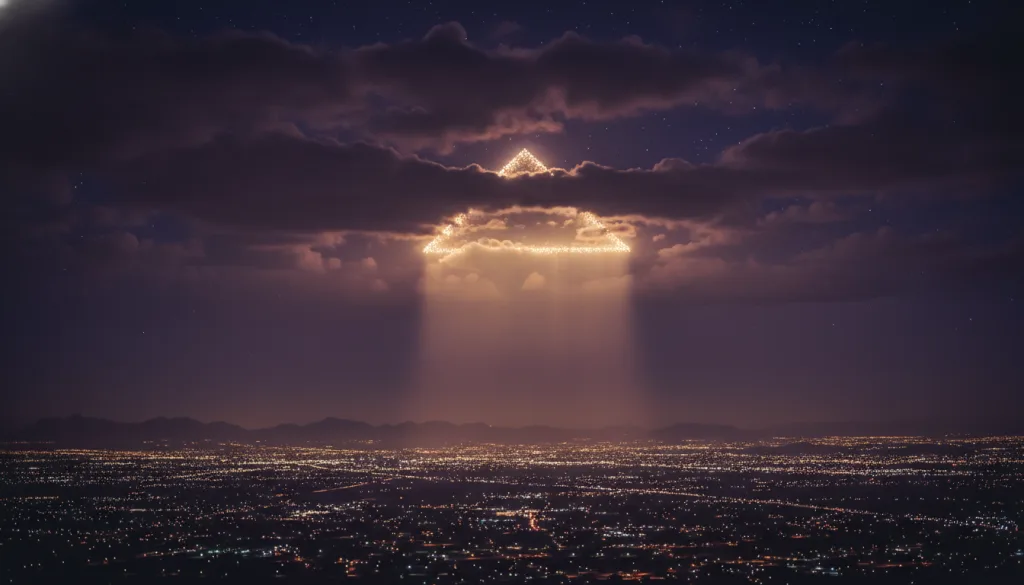
Media Impact and Cultural Relevance
The media response following the Phoenix Lights incident has shaped public perception and interest in UFO phenomena. Documentaries, books, and countless articles have documented the event, further embedding it in popular culture. The Phoenix Lights have become a reference point for discussions about aerial phenomena, government transparency, and the search for extraterrestrial life.
The incident has been cited not only in UFO literature but also in discussions about accountability within government organizations. The phenomenon has sparked debates about what constitutes credible evidence in the age of misinformation, especially in relation to advanced technologies that may be at play.
Various media outlets, including The Arizona Republic and local television stations, covered the event extensively, leading to a heightened awareness of UFO phenomena. This widespread reporting has encouraged public discourse and has motivated citizen researchers to document similar events globally.
Notre analyse: The evidence surrounding the Phoenix Lights incident remains one of the most compelling cases in UFO history. With a multitude of credible witnesses, physical evidence, and ongoing research, it challenges the status quo of government explanations. The insistence on military flares as the explanation does not align with the observations made by thousands of individuals. The case warrants further investigation and underscores the necessity for transparency from governmental agencies regarding UAP sightings.
Sources & References
Anderson, L., "The Phoenix Lights: A Historical Perspective," 2019, Arizona Historical Society.
Kitei, L., "The Phoenix Lights: A Skeptic's Guide," 2007, Self-Published.
Maccabee, B., "UFOs: Evidence and Analysis," 2008, Center for UFO Studies.
Davenport, P., "UFOs and the National Reporting Center," 2008, National UFO Reporting Center.
Hynek, J. A., "The UFO Experience: A Scientific Inquiry," 1972, Henry Regnery Company.


Comments 0
Be the first to comment!