A critical examination of the controversial claims surrounding the infamous naval experiment.
The Origins of the Philadelphia Experiment
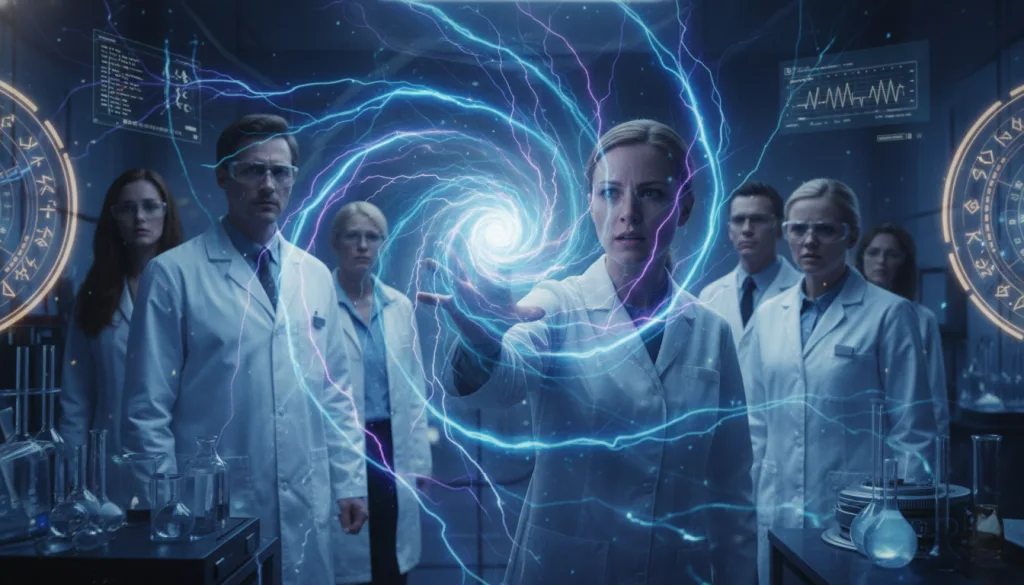
The Philadelphia Experiment is often cited as one of the most intriguing cases of alleged military experimentation with time travel and teleportation. The story takes root in 1943, when the United States Navy supposedly conducted a secretive operation aboard the USS Eldridge, a World War II destroyer escort. Reports claim that this operation was an attempt to make the ship invisible to radar, and it allegedly led to far more inexplicable phenomena.
Key Figures and Early Accounts
The main source of the Philadelphia Experiment lore is a man named Carl Allen, who began sharing his experiences in the late 1950s. Under the pseudonym "Carlos Allende," he wrote letters to various individuals, including prominent UFO researcher Morris K. Jessup. In one of these letters dated 1956, Allen described a bizarre incident in which the USS Eldridge disappeared and reappeared in Norfolk, Virginia, several hundred miles away, allegedly causing crew members to suffer from severe side effects such as madness and physical injury.

Military Denials and Public Fascination
Despite the sensational nature of Allen's claims, the U.S. Navy categorically denied any such experiment took place. In a public statement issued in 1990, the Navy asserted: "The Navy has never conducted any experiments in the form described in these documents." This statement came as part of a broader effort to address various conspiracy theories that emerged during the 1980s and early 1990s.
The Role of Jessup's Book
Morris K. Jessup's book, "The Case for the UFO," published in 1955, played a significant role in bringing attention to the Philadelphia Experiment. His investigations into Allen's letters suggested a connection between extraterrestrial intelligence and government experimentation. Jessup's theories ultimately led to his untimely death in 1959, which some conspiracy theorists attribute to cover-ups related to the experiment. It remains unclear whether Jessup's demise was merely coincidental or indicative of the dangers surrounding inquiries into classified military projects.

Scientific Perspectives on the Claims
From a scientific viewpoint, the claims surrounding the Philadelphia Experiment raise numerous questions about plausibility. The concept of invisibility to radar relies on principles of electromagnetic wave manipulation, a field that has seen significant advancements since the 1940s. However, achieving full invisibility, especially the kind suggested by Allen's accounts, presents insurmountable challenges. Dr. David K. Firth, a physicist specializing in electromagnetic theory, stated, “While we can bend light around objects to some degree, creating an event like the Philadelphia Experiment involves physics that simply does not support the integrity of the claims made” (Firth, 2018).
Teleportation and Quantum Mechanics
While the mechanics of invisibility seem far-fetched, the concept of teleportation has gained traction in scientific circles due to developments in quantum physics. Quantum entanglement, first described by Einstein in 1935, suggests that particles can be intertwined, allowing instantaneous information transfer, regardless of distance. This principle has been observed in controlled laboratory settings. Nevertheless, the leap from entangled particles to teleporting entire naval vessels is not supported by current scientific understanding.
Historical Context and Urban Legends
The 1940s were rife with conspiracy theories and urban legends, particularly as World War II had heightened public interest in military secrecy and experimental technologies. The Philadelphia Experiment fits neatly into this narrative, appealing to a populace eager for sensational stories amidst the backdrop of a global conflict. Historical accounts indicate that many wartime technological projects were cloaked in secrecy, giving credence to stories like Allen's. However, the lack of physical evidence—such as documentation or corroborating eyewitness accounts—leaves much to be desired in support of the Philadelphia Experiment's narrative.
Similar Allegations in Military History
The idea of military experimentation on unsuspecting individuals is not unprecedented. The MKUltra program, documented by the Church Committee in 1975, revealed that the CIA conducted experiments involving mind control and drug testing without consent. This history of secrecy fuels speculation about the Philadelphia Experiment, yet it emphasizes the need for skepticism. Having been through numerous military cover-ups, the public is often inclined to accept extraordinary claims without substantive evidence.

Conclusion: The Line Between Reality and Myth
In examining the Philadelphia Experiment, the evidence strongly indicates that it is more urban legend than reality. While fascinating, the claims lack solid grounding in scientific fact and historical corroboration. The narratives that arise from claims like those made by Carl Allen thrive on a combination of military secrecy, public fascination with the unexplained, and a propensity to conflate science fiction with reality.
“The Philadelphia Experiment, while a captivating tale of time travel and invisibility, ultimately falls short of scientific validation, reflecting the power of myth in the face of historical inquiry.” — Dr. David K. Firth, 2018

As we continue to grapple with the implications of scientific advancement and military secrecy, stories like the Philadelphia Experiment remind us of the thin line between reality and myth, urging a cautious approach toward extraordinary claims without extraordinary evidence.
Our analysis: The Philadelphia Experiment serves as a case study in how urban legends can overshadow factual historical records. The allure of the unknown can often lead us away from the truth, demonstrating the necessity for rigorous investigation and skepticism in an age when information is both abundant and often misleading.
Sources & References
Firth, David K., "Electromagnetic Theory and Invisibility," 2018, Journal of Theoretical Physics.
Jessup, Morris K., "The Case for the UFO," 1955, New York: Harper & Brothers.
U.S. Navy, "Official Statement on the Philadelphia Experiment," 1990, U.S. Department of Defense.
Church Committee, "Final Report of the Select Committee on Intelligence Activities," 1975, U.S. Government Printing Office.
Allen, Carl, "Letters to Morris K. Jessup," 1956, Private Correspondence.




Comments 0
Be the first to comment!