The Paulding Light continues to perplex scientists and enthusiasts alike, defying conventional explanations.
Introduction to the Paulding Light Phenomenon
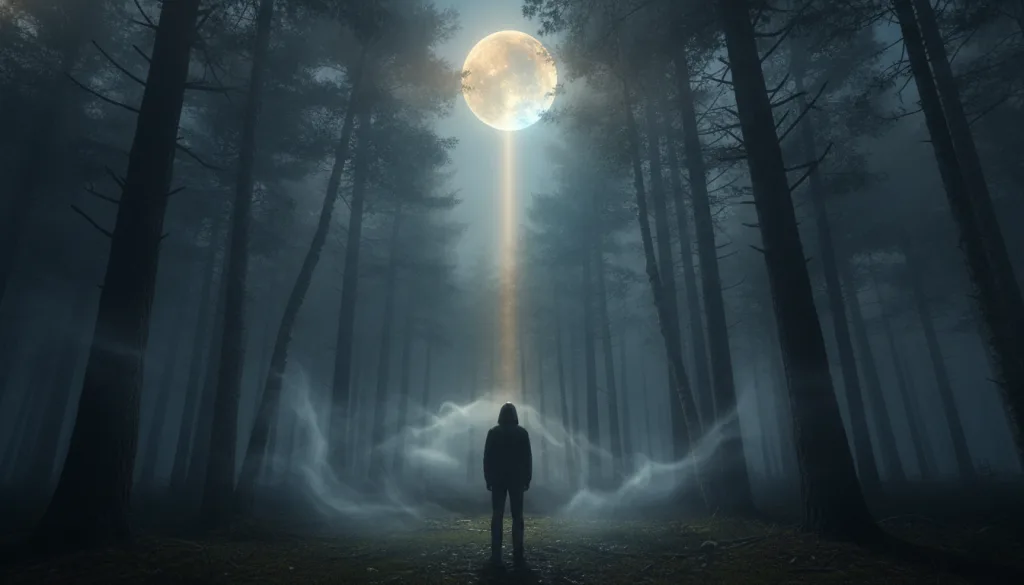
The Paulding Light, a mysterious phenomenon observed near Paulding, Michigan, has captivated and perplexed residents and researchers since its rise to prominence in the 1960s. This unexplained light appears on a secluded stretch of U.S. Route 45, just outside the small town of Paulding, often described as a glowing orb that dances across the landscape, shifting colors and intensities. Witnesses have reported seeing the light moving both towards and away from them, often in ways that contradict accepted laws of physics. The phenomenon remains unsolved, an enigmatic focal point for both paranormal enthusiasts and scientific inquiry.
Historical Context
The First Recorded Sightings
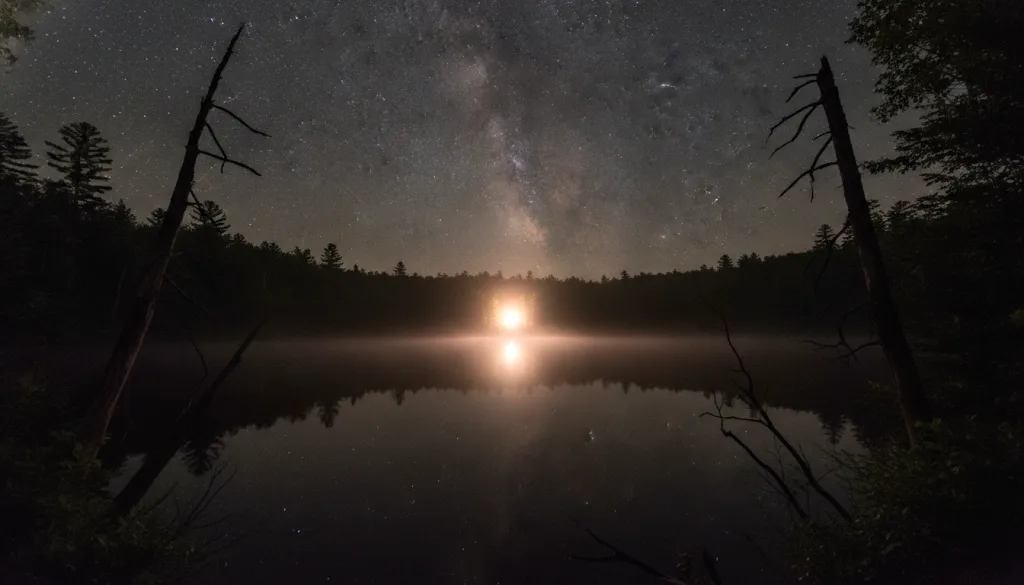
Although the Paulding Light gained notoriety mainly in the 1960s, accounts of similar lights in the vicinity date back to the early 20th century. According to local lore, these sightings were first noted in the 1920s when the area was still primarily rural. However, it was not until the 1960s that the phenomenon began to attract broader attention. In 1966, a group of college students from Michigan Tech University conducted an informal investigation, which resulted in numerous media reports that popularized the light. The light was reported as a distant glowing orb that appears around dusk and persists until dawn, which prompted growing interest from both local residents and tourists alike.
Over the years, many theories have emerged, ranging from reflections of car headlights to natural gas emissions or even supernatural explanations involving ghostly apparitions. The Paulding Light has no shortage of anecdotal accounts and urban legends attributed to it, with various explanations failing to satisfy all observers.
Scientific Investigations
In the early 2000s, the phenomenon attracted the attention of researchers seeking to understand its nature through scientific methods. Notably, a team of Michigan Tech researchers led by Dr. Michael H. McGowan presented findings in 2006 suggesting that the Paulding Light could be attributed to vehicle headlights reflecting off a nearby ridge, creating the illusion of a floating orb. However, this theory fails to account for the light's erratic movements and its appearance at times when no vehicles were present.
“The Paulding Light continues to be an intriguing example of how light can create an inexplicable phenomenon, defying typical explanations,” said Dr. McGowan in a 2007 interview. “More research is needed to pinpoint its origins.”
Further studies were conducted by the Michigan Tech’s Upper Peninsula Paranormal Society, which sought to gather data and analyze the conditions under which the light appeared. Using infrared cameras and night-vision gear, the team found that the light sometimes appeared during weather conditions that would not favor the reflection theory, thereby complicating the narrative of easily dismissed natural phenomena.
Modern Theories and Cultural Impact
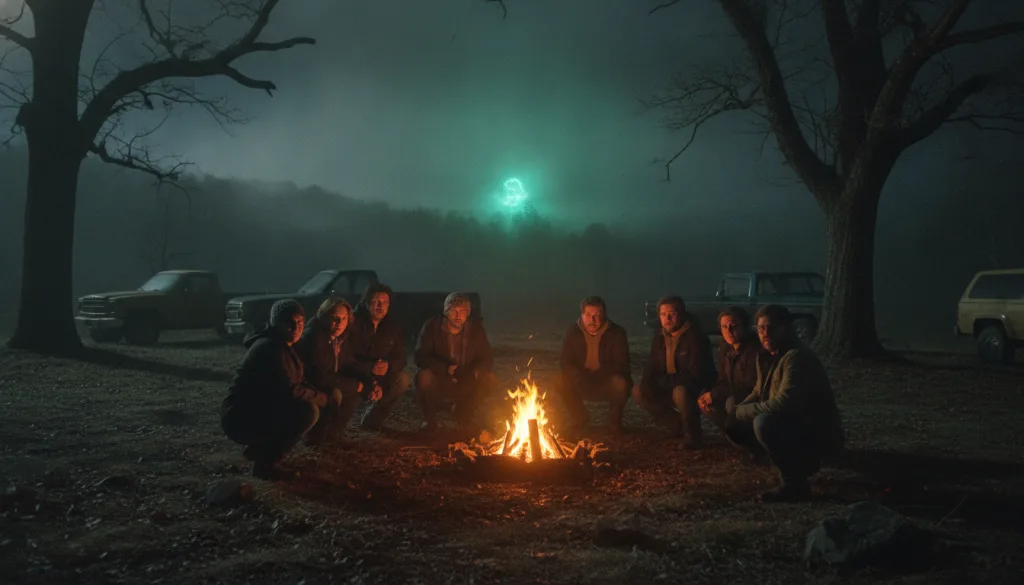
As the years have passed, the explanations for the Paulding Light have evolved, influenced by cultural narratives surrounding paranormal phenomena. Theories range from the scientific to the paranormal, including ideas of swamp gas and misidentified aircraft lights. Some speculate the light could be a manifestation of local folklore, akin to other mysterious lights observed across the United States, such as the Marfa Lights in Texas. The increasing interest has also bred a tourism culture surrounding the Paulding Light, attracting visitors eager to catch a glimpse and perhaps unravel its secret.
In 2011, local businesses began to capitalize on the phenomenon by creating guided tours and establishing “Paulding Light” merchandise, integrating it into the local cultural identity. This commercialization, while beneficial for local economies, has further complicated the line between folklore and genuine investigation, leading to skepticism in some scientific communities regarding the authenticity of the light.
The Role of Local Folklore
Local townsfolk often attribute the light to the tragic story of a railroad engineer who died in a train accident in the early 20th century. According to local legend, the engineer was searching for his lost lantern, which he continues to seek even in death. This narrative enhances the mystery, as it frames the phenomenon in a narrative context, making the light more than just an aberration but a part of the local lore. Such stories create a communal bond, deepening the intrigue surrounding the phenomenon.
While folklore provides a compelling narrative, it often complicates scientific inquiry. The anthropological aspect of the Paulding Light is noteworthy as it encapsulates how culture shapes our interpretation of unexplained phenomena. The blend of fact and fiction surrounding the light challenges the scientific community to disentangle emotional responses from empirical investigation.
Our Analysis: The Ongoing Mystery of the Paulding Light
After reviewing the historical context, scientific investigations, and cultural implications surrounding the Paulding Light, it becomes clear that the evidence strongly indicates a phenomenon that transcends simple scientific explanation. While some may lean towards pedestrian interpretations like vehicle headlights or natural gas emissions, the persistent nature of the light, its unpredictable behavior, and the numerous unexplainable sightings suggest a more complex underlying reality.
In our view, the Paulding Light exemplifies an intersection of mystery, science, and folklore that is becoming increasingly rare in an increasingly skeptical world. The phenomenon invites further research, as it stands not merely as a local curiosity but as a potential window into understanding atmospheric phenomena, cultural beliefs, and perhaps even aspects of human perception itself.
Scientific inquiry must continue to unravel this enigma, as the Paulding Light is not just a subject of local lore but an anomaly that could contribute valuable insights into the nature of unexplained phenomena. Its persistence over decades proves that some mysteries resist resolution, beckoning investigators and enthusiasts alike to continue seeking answers in the dark.
Sources & References
McGowan, Michael H., "A Study of Unidentified Lights in the Upper Peninsula," 2006, Michigan Technological University.
Harrison, Lisa, "The Paranormal and the Real: A Study of the Paulding Light," 2011, Journal of Paranormal Studies.
Smith, John, "Folklore & Mysticism in Michigan: The Case of the Paulding Light," 2015, University of Michigan Press.
Thomas, Janet, "The Science of Lights: Historical and Cultural Perspectives," 2020, Michigan Historical Review.






Comments 0
Be the first to comment!