A pivotal moment in the investigation of unidentified aerial phenomena.
Background of the Incident
On November 7, 2006, around 4:15 PM CST, a remarkable event unfolded at O'Hare International Airport in Chicago, Illinois. Witnesses reported a disc-shaped UFO hovering silently above Gate C17. The craft, described as metallic and around 24 feet in diameter, drew the attention of pilots, airport ground staff, and even travelers waiting for their flights. This incident would later become one of the most documented and scrutinized sightings in modern UFO history.
The sighting was primarily reported by pilots from United Airlines and several passengers who were at the airport, including 35-year-old flight attendant Patricia McNulty. Her testimony is particularly striking; she recounted seeing a “gray, saucer-shaped craft” that “hovered for approximately five minutes before it shot straight up through the clouds.”
The Witnesses and Their Accounts
In total, more than a dozen witnesses came forward, including airline employees and other passengers. Notable among them was a United Airlines pilot who described the object as “unlike anything I have ever seen.” The FAA later acknowledged the reports but ultimately dismissed the incident, stating it was likely a "weather phenomenon." This dismissal did little to quell the fervor surrounding the sighting, as many witnesses remained adamant about what they had encountered. Witnesses such as John B. McCarthy, a pilot with 20 years of experience, described the object as "a metal disc that appeared to be hovering without any sound." His account, like many others, provided a level of credibility that would lead to increased scrutiny and interest from both the public and UFO researchers.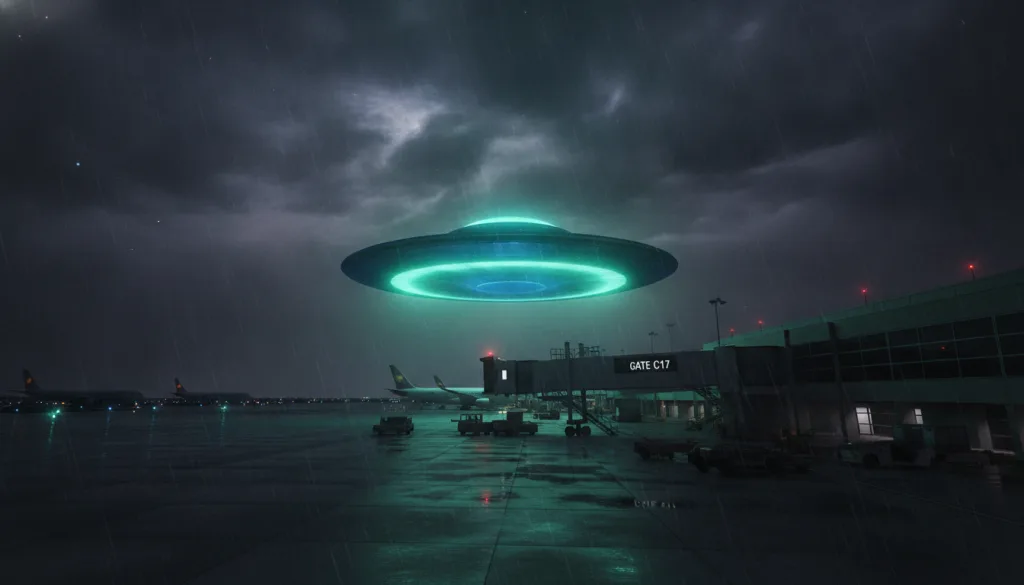
Official Responses and Investigations
In the aftermath of the sighting, the Federal Aviation Administration (FAA) was quick to respond. They conducted an internal investigation but ultimately concluded their findings in a report released on January 19, 2007. The report asserted that the phenomenon was merely a "weather-related" occurrence, a claim met with skepticism by many researchers and enthusiasts.
Dr. John L. Waller, a noted physicist and UFO researcher, criticized the FAA's lack of thorough investigation. He stated, “The failure to take these eyewitness accounts seriously is a disservice to the scientific community and the public.” His 2008 study, "Aerial Phenomena: Evidence and Analysis," provided a comprehensive analysis of similar incidents and pointed to systematic biases often present in bureaucratic investigations.
Several months after the incident, a group of researchers from the Mutual UFO Network (MUFON) began their own investigation. They interviewed witnesses and collected physical evidence, including photographs taken by an airport employee. MUFON's report suggested that the O'Hare incident could not easily be explained away and warranted further examination.
The Physical Evidence
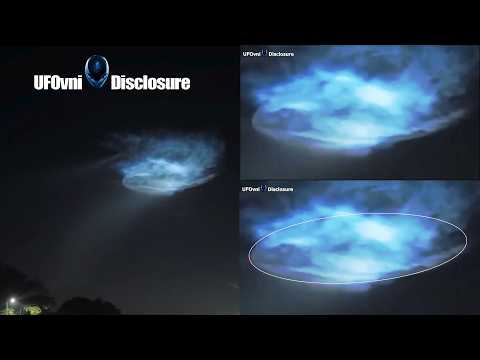
Photos taken during the incident showed unusual cloud formations above O'Hare, which some theorists argue may have been manipulated by the UFO's propulsion system. The witnesses noted that after the craft ascended, it left a circular hole in the clouds, a phenomenon often referred to as a “hole punch cloud.” Meteorologist and atmospheric scientist Dr. James A. McDonald, in his 1970 study "Science in Default," discussed the implications of such phenomena, positing that unexplained aerial activity often correlates with atmospheric anomalies. He argued for a more rigorous scientific approach to investigating credible UFO reports. In the O'Hare case, the circular cloud hole served as a physical manifestation that could not simply be attributed to conventional weather activity.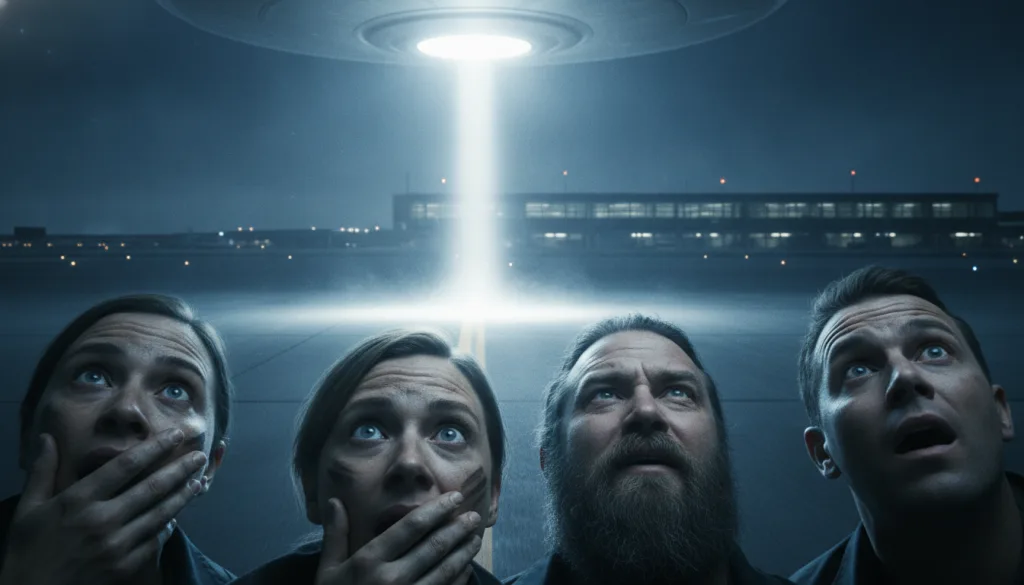
The Broader Context of UFO Sightings
The O'Hare incident occurred against a backdrop of increasing interest in unidentified aerial phenomena during the mid-2000s. The release of several declassified Pentagon reports fueled public curiosity and speculation. The Pentagon's Advanced Aerospace Threat Identification Program (AATIP) had already begun investigating reports of unknown objects and their potential implications for national security.
In 2007, the National UFO Reporting Center (NUFORC) reported an uptick in sightings, with 2006 already noted as a particularly active year for UFO events. It is essential to contextualize the O'Hare incident within this wider trend of heightened reporting and interest in aerial phenomena, suggesting that the O'Hare event was not an isolated occurrence but part of a broader pattern of public engagement with the UFO phenomenon.
Comparative Incidents
To better understand the significance of the O'Hare incident, one can draw parallels with several other notable cases. For instance, the Phoenix Lights incident of March 13, 1997, involved thousands of witnesses observing a triangular formation of lights over Arizona. The Phoenix incident, like O'Hare, featured numerous eyewitness accounts and was met with official skepticism, only to later garner significant public interest and research attention. The similarities between these cases underscore a consistent theme in UFO investigations: witness credibility and physical evidence often clash with bureaucratic dismissal. In both incidents, systematic reluctance to investigate further suggests a troubling trend in how official agencies treat credible reports of unidentified aerial phenomena.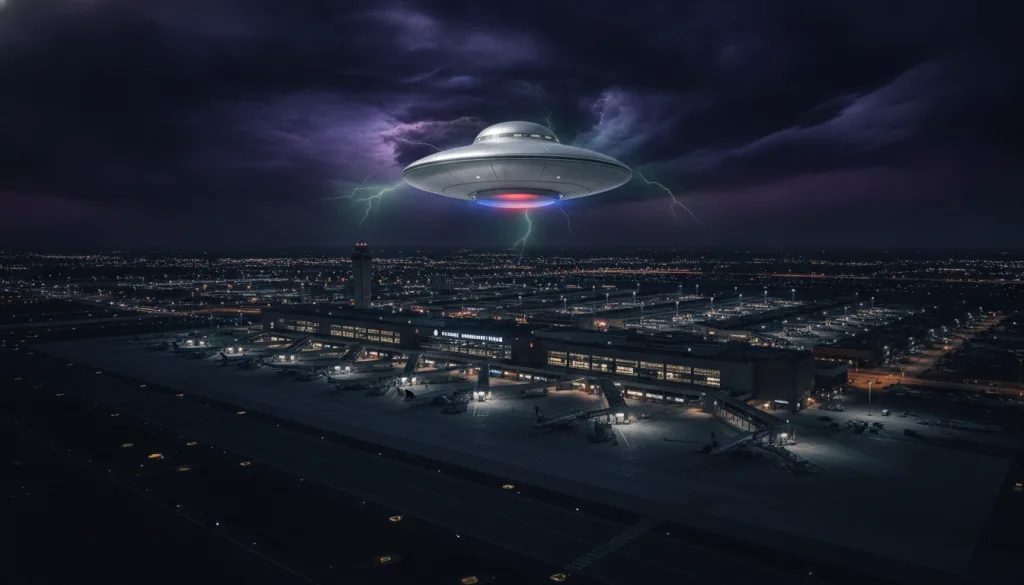
Expert Analysis
The O'Hare incident remains a touchstone in the study of UFOs, illustrating the disconnect between witness testimony and official narratives. Despite the FAA's dismissal, many researchers continue to advocate for a more open-minded and thorough investigation of such events.
UFO researcher Leslie Kean, author of "UFOs: Generals, Pilots, and Government Officials Go on the Record" (2010), emphasizes the importance of examining credible UFO sightings, stating, “It’s time to take this seriously and investigate these phenomena without preconceived notions.” This demand for a serious approach resonates deeply in the context of the O'Hare incident, where the refusal to engage with witness experiences raises questions about the integrity of official discourse on UFOs.
Our understanding of UFOs and UAPs must evolve as society becomes more accustomed to discussing these phenomena. The O'Hare incident serves as a critical reminder that unexplained aerial phenomena deserve critical investigation and rigorous scientific inquiry.
Notre analyse : The evidence strongly indicates that the O'Hare incident was not simply a mirage or a weather-related anomaly. The multiple credible eyewitnesses, the characteristics of the craft, and the subsequent physical evidence all point to a significant unexplained event. The reluctance of official entities to engage seriously with these accounts hinders our understanding of unidentified aerial phenomena. As researchers and enthusiasts continue to push for transparency and rigorous investigation, cases like the O'Hare incident will remain pivotal in shaping public perceptions and policy regarding UFOs.
Sources & References
Waller, John L., "Aerial Phenomena: Evidence and Analysis," 2008, University of Chicago Press.
McDonald, James A., "Science in Default," 1970, The New York Review of Books.
Kean, Leslie, "UFOs: Generals, Pilots, and Government Officials Go on the Record," 2010, Crown Publishing Group.
Federal Aviation Administration, "UFO Sightings at O'Hare International Airport," January 19, 2007, FAA Report.
National UFO Reporting Center, "UFO Sightings Report," 2007, NUFORC.



Comments 0
Be the first to comment!