Exploring the Boundless Realms of Existence Beyond Our Own
Introduction to the Multiverse
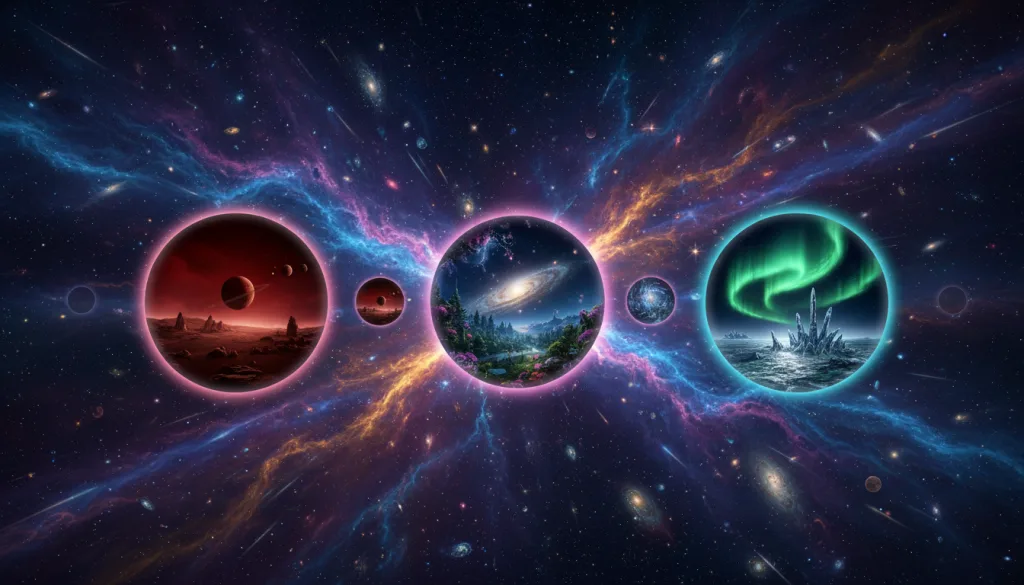
The notion of a multiverse is one of the most exhilarating concepts in modern astrophysics and cosmology. Far beyond our observable universe, the multiverse theory posits the existence of multiple, perhaps infinite, universes, each with its own unique set of physical laws, constants, and potentially even different dimensions of time and space. This idea not only sparks the imagination but also invites us to reconsider our understanding of reality and our place within it.
As we delve deeper into the intricacies of the multiverse, we find ourselves standing at the precipice of infinite possibilities. What if there were countless versions of ourselves leading different lives, making alternate choices, or existing in realities governed by different fundamental laws? The multiverse opens up new avenues for exploration in the realms of science, philosophy, and even spirituality.
Theoretical Foundations of the Multiverse
While the concept of multiple universes may sound like science fiction, it has its roots in serious scientific theory. The multiverse theory can be traced back to quantum mechanics and cosmology. One of the earliest forms of this idea appears in the many-worlds interpretation of quantum mechanics proposed by Hugh Everett III in the 1950s. According to this interpretation, all possible outcomes of quantum measurements occur, each in its own distinct universe. This means that every time a quantum event happens, the universe splits, creating a new branch of existence.
Additionally, the theory of cosmic inflation, first proposed by Alan Guth in the 1980s, provides a framework for understanding multiple universes. According to inflationary theory, our universe underwent rapid expansion after the Big Bang, leading to an uneven distribution of matter and energy. Some regions inflated more than others, possibly resulting in "pocket" or "bubble" universes, each evolving independently. This suggests that what we perceive as our universe is just one of many that arose from the same initial event.
Types of Multiverse Theories
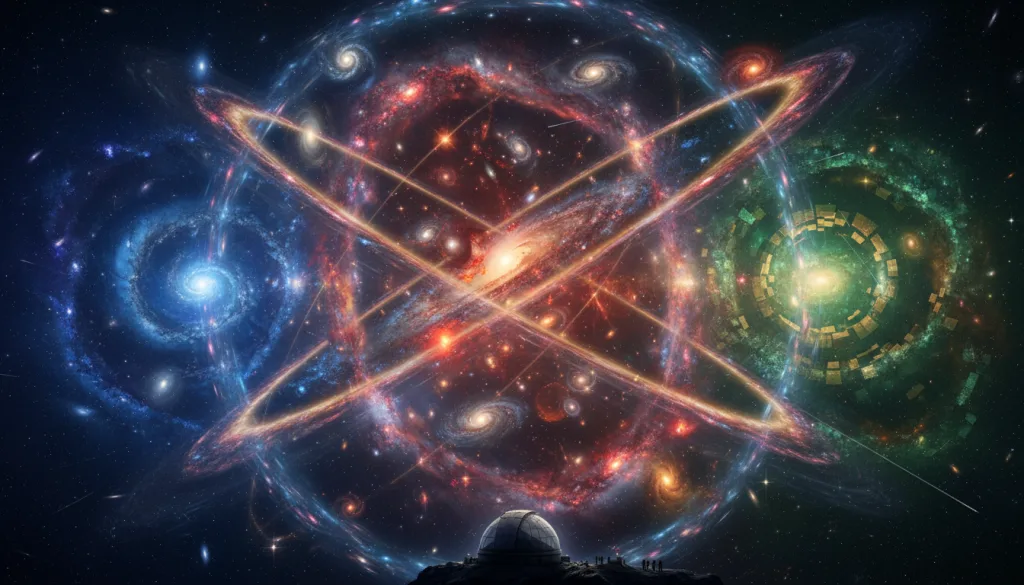
There are several interpretations of the multiverse theory, each with its unique implications and support from various branches of physics. One prominent model is the string theory landscape. String theory proposes that the fundamental building blocks of the universe are one-dimensional strings rather than point-like particles. These strings can vibrate in different ways, leading to a vast landscape of possible universes, each defined by different string configurations and physical constants.
Another fascinating interpretation is the "level" classification of multiverses proposed by cosmologist Max Tegmark. He categorizes the multiverse into four distinct levels:
- Level I: An infinite expanse of space where every possible arrangement of particles occurs. This means that every event, including our current one, is replicated infinitely.
- Level II: Different physical laws and constants emerge from bubble universes formed during cosmic inflation.
- Level III: The many-worlds interpretation of quantum mechanics, where every possible outcome of a quantum event creates a new universe.
- Level IV: All mathematical structures exist as their own universes, implying that any conceivable universe that can be described mathematically actually exists.
This classification not only illustrates the diversity within the multiverse concept but also highlights the profound implications for our understanding of reality.
The Implications for Humanity and Our Understanding of Existence
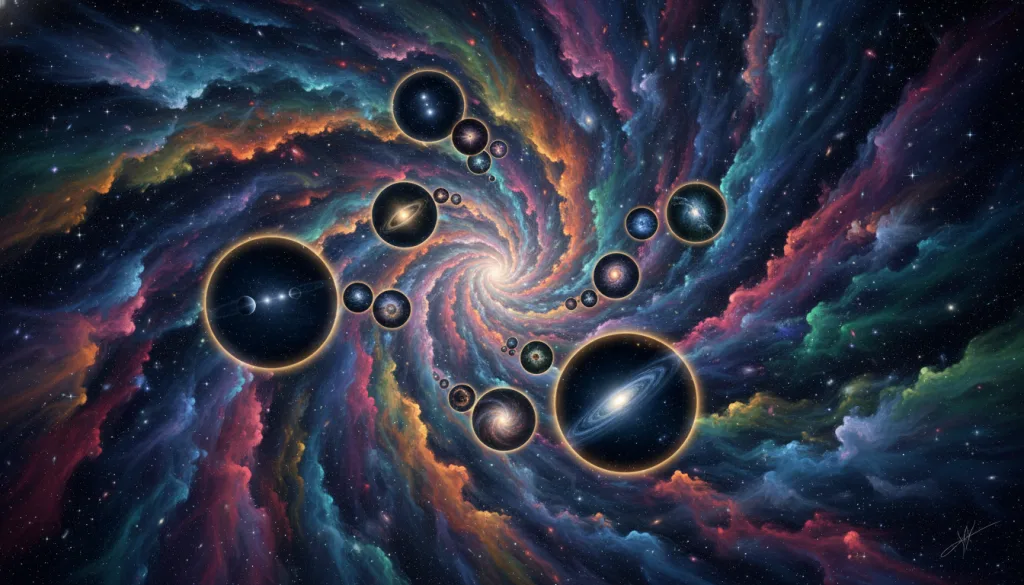
The multiverse theory challenges our perception of existence and raises profound philosophical and existential questions. If there are infinite versions of ourselves, what does this mean for concepts such as free will, destiny, and identity? It encourages us to reflect on the choices we make and the myriad of outcomes that could stem from them. In a multiverse, every decision may have given rise to another self, living a diverse array of experiences across countless realities.
Moreover, the multiverse theory has implications for our understanding of the universe's fate. What if the universe we inhabit is just one of many, each on a different trajectory? The end of our universe might not signify an ultimate conclusion but merely a transition into another state, allowing for the infinite continuity of existence.
Challenges and Critiques of the Multiverse Theory
While the multiverse theory is an exciting frontier in theoretical physics, it is not without its critics. One primary challenge is the lack of empirical evidence. Since other universes cannot be observed or measured with our current technology, some scientists argue that the multiverse remains a speculative hypothesis rather than a scientific theory. This raises important questions about falsifiability and the scientific method.
Additionally, the vastness of the multiverse can lead to philosophical implications that some scholars find unsettling. If every possible scenario exists, does that diminish the significance of our choices and experiences? This perspective can evoke feelings of nihilism, contradicting the notion that our lives hold intrinsic value and meaning.
Looking Ahead: The Future of Multiverse Research
Despite these challenges, the pursuit of understanding the multiverse continues to inspire scientists and thinkers alike. Advances in observational technology and theoretical models will hopefully shed light on this enigmatic concept. As our understanding of quantum mechanics, cosmology, and fundamental physics evolves, we may discover new ways to test the multiverse theory or refine our interpretations of it.
Furthermore, the exploration of exoplanets, astrobiology, and cosmic mysteries can offer insights into the conditions that might give rise to diverse universes. The search for extraterrestrial life, for example, may reveal forms of life and intelligence that exist under entirely different physical laws, further enriching our understanding of existence within a multiverse framework.
Conclusion: Embracing Infinite Possibilities
The multiverse theory is not merely a scientific hypothesis; it is a reflection of humanity's inherent curiosity and desire to explore the unknown. It beckons us to imagine a reality beyond our comprehension, one where possibilities are infinite and the boundaries of existence are ever expanding.
As we contemplate our place in this grand tapestry of universes, we are reminded that our choices and experiences matter. The multiverse invites us to embrace the complexity of existence, to foster a sense of wonder, and to remain optimistic about our future among the stars, whether in this universe or another.





Comments 0
Be the first to comment!