Behind the shroud of secrecy, the Montauk Project opens a portal to alternate realities.
The Origins of the Montauk Project
The Montauk Project, often shrouded in mystery and conspiracy, traces its roots back to the late 1970s in Montauk, New York. The project is widely believed to have stemmed from the earlier Philadelphia Experiment, which occurred in 1943. The Philadelphia Experiment aimed to make a naval destroyer, the USS Eldridge, invisible to radar. While the U.S. Navy has denied the veracity of such claims, many conspiracy theorists insist that the events of that summer in Philadelphia laid the groundwork for the more controversial Montauk Project.
Allegations began to surface prominently in the early 1980s, largely due to the work of Preston Nichols and Peter Moon. Their book, "The Montauk Project: Experiments in Time," published in 1992, documented a series of supposed experiments involving time travel, mind control, and extraterrestrial technology. Nichols, claiming to be a participant in these experiments, stated that the U.S. military conducted tests to manipulate time and space using advanced technology developed at the Montauk Air Force Station.
Key Figures and Their Claims
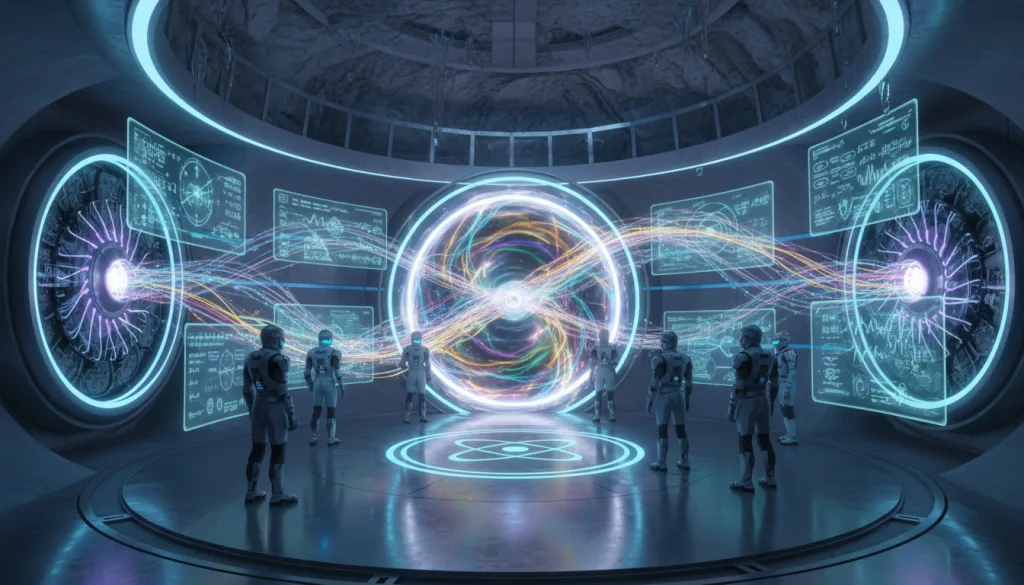
Preston Nichols is a central figure in the Montauk narrative. According to Nichols, the project began in 1971 when the U.S. Air Force took control of the abandoned Montauk Air Force Station, which had been closed in 1969. The facility was reportedly repurposed for experiments in psychological manipulation and time travel, drawing on technologies from the failed Philadelphia Experiment. Nichols claimed that the experiments involved the use of a powerful radar transmitter, capable of creating a "time tunnel" that allowed participants to travel through time.
Another prominent figure, Duncan Cameron, emerged as a key witness to these alleged experiments. Cameron, who also claimed to have been involved in the project, described experiences of time travel and interaction with extraterrestrial beings. His accounts include traveling to different time periods and dimensions, further fueling the fantastical narrative surrounding the Montauk Project. The project purportedly reached its peak during the summer of 1983, when an event known as "The Montauk Monster" supposedly took place, resulting in a catastrophic failure of their time travel experiments.
Scientific Underpinnings and Theories
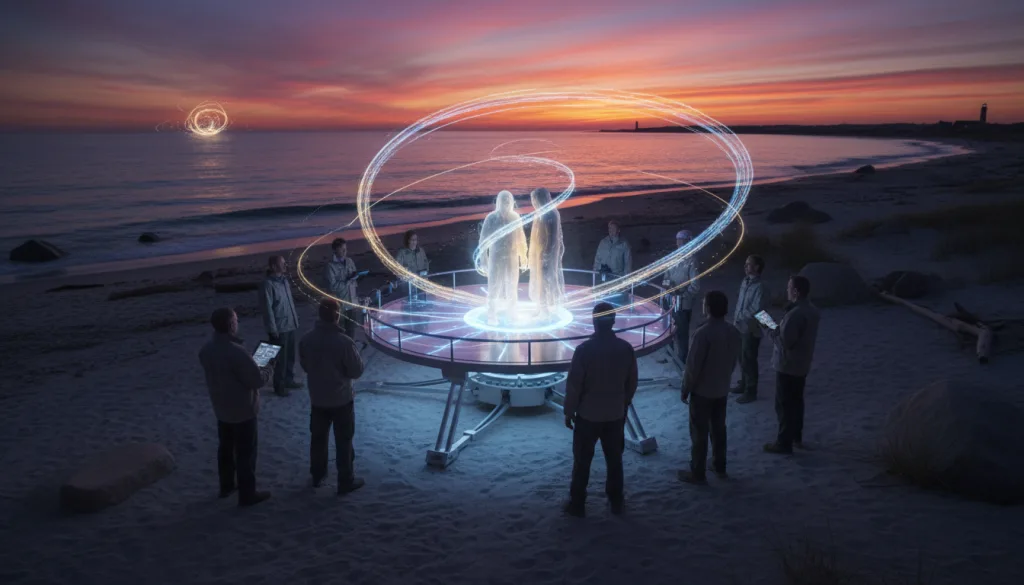
The Montauk Project's claims, though extraordinary, often intersect with actual scientific concepts, particularly within the realms of quantum physics and fringe science. Theoretical physicist Michio Kaku discusses in his 2021 book, "The God Equation," the potential for wormholes and time travel as permissible by the laws of physics under specific conditions. The theories of general relativity, proposed by Albert Einstein in 1915, allow for the possibility of warping space-time, which is central to discussions of time travel.
One of the most intriguing theories associated with time travel involves the concept of closed time-like curves (CTCs), which physicists like Kip Thorne have studied extensively. CTCs imply that an object could travel back in time and potentially interact with its past self. In this context, the Montauk Project's alleged experiments may seem less far-fetched to some, as they align with speculative ideas in the field of theoretical physics.
However, examining the scientific validity of the Montauk Project's claims reveals significant gaps. The project lacks empirical evidence to substantiate its ambitious assertions, and many of its proponents are not recognized experts in relevant scientific fields. The skepticism surrounding the project is echoed by notable researchers, as physicist Brian Greene highlighted in his 2011 book, "The Hidden Reality," where he emphasized the extensive challenges facing any practical application of time travel.
Cultural Impact and Legacy
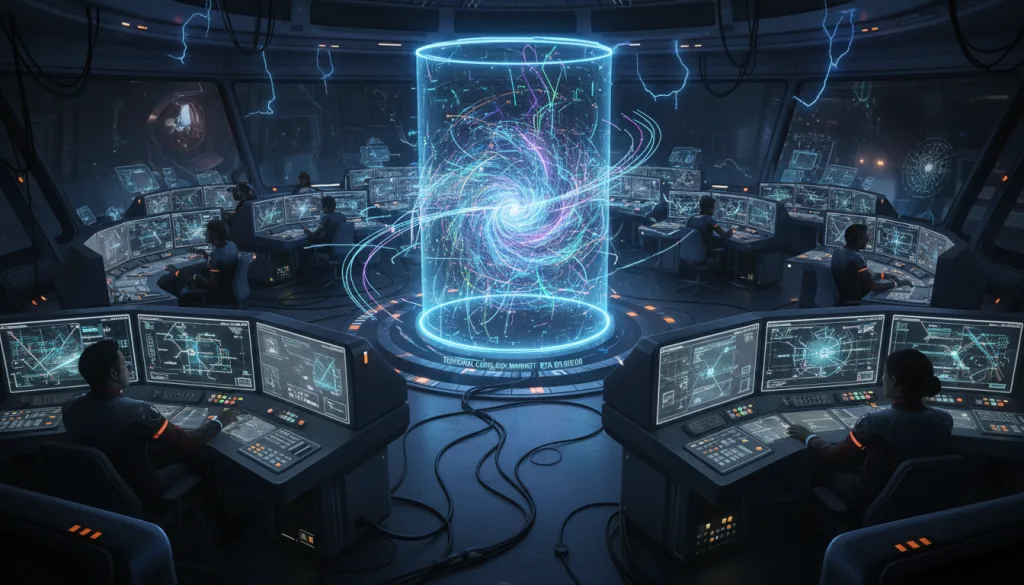
The Montauk Project has had a profound impact on popular culture, inspiring a myriad of books, documentaries, and television shows. Notably, the Netflix series "Stranger Things," which premiered in 2016, draws heavily on themes reminiscent of the Montauk narrative. The show's creators, the Duffer Brothers, originally conceived the series under the title "Montauk," reflecting the project's indelible mark on the collective imagination.
The legacy of the Montauk Project endures, often fusing elements of science fiction with the allure of governmental secrecy. It represents a collision of paranoia and the quest for knowledge. The cultural fascination surrounding the project speaks to the broader themes of exploration and the unknown. The 1980s were pivotal in establishing a new genre of inquiry, blending Cold War paranoia with the burgeoning interest in UFOs and fringe science.
In 1994, the U.S. government declassified numerous documents related to experimental military projects. Among these was a report on Operation Blue Book, which detailed investigations into UFO sightings. The Montauk Project fits within this larger narrative of military interest in esoteric technologies, pushing the boundaries of scientific exploration while raising ethical questions about the consequences of such pursuits.
Investigating the Myths and Realities
Despite the fantastical nature of the Montauk Project, it has not deterred researchers and enthusiasts from attempting to investigate the veracity of the claims. Numerous documentaries and exposés have attempted to flesh out the details surrounding the project. For instance, the 2017 documentary "The Montauk Chronicles" delves into the lives of those who claim to have been involved in the experiments, offering a glimpse into the personal narratives that have emerged around the project.
Conversely, critical analysis of these claims reveals a much more grounded reality. Investigative journalist David McGowan vividly detailed the fabrication of Montauk lore in his 2014 book "Weird Scenes Inside the Canyon." McGowan posits that the Montauk narrative is a byproduct of cultural myth-making, fueled by a collective desire to understand the inexplicable and redefine the boundaries of reality.
Additional skepticism is offered by researchers such as Dr. Susan Blackmore, who in her 2019 book "Consciousness: An Introduction," emphasizes the importance of rigorous scientific methodology in understanding consciousness and reality. Blackmore argues that time travel and alternate realities remain firmly planted in the realm of speculation without substantive experimental validation.
The Future of Montauk Research
The Montauk Project remains a focal point for those fascinated by the intersection of time travel, consciousness, and the unknown. While many claims surrounding the project lack credible scientific backing, the intrigue persists. Future investigation into the Montauk Project may benefit from a multidisciplinary approach, drawing from physics, psychology, and philosophy to further explore the boundaries of human understanding.
As the field of quantum physics advances, new discoveries may provide insights that either bolster or debunk the claims associated with the Montauk Project. Theoretical physicists continue to push the envelope, proposing ideas that may challenge traditional perceptions of time and reality. In this context, the Montauk Project stands as a case study—a cautionary tale of the thin line between scientific inquiry and speculative fiction.
The allure of the Montauk Project encapsulates the quintessential human desire to explore the unknown, to transcend the limitations of time and space. It reminds us that the pursuit of knowledge often leads down winding paths, where fact and fiction intertwine. The legacy of Montauk may not lie in proof of time travel or extraterrestrial encounters, but in the enduring spirit of inquiry that inspires generations to look beyond the visible horizon.





Comments 0
Be the first to comment!