A detailed examination of two women’s claims of time travel at Versailles.
Incident Overview: The Time Slip Phenomenon
On August 10, 1901, two women, Charlotte Anne Moberly and Eleanor Jourdain, visited the grounds of Versailles. They encountered an inexplicable experience that would ignite debates on time travel and consciousness. Both women were well-regarded scholars from Oxford University, with Moberly being a noted historian and Jourdain holding a position as a novelist and educator. Their account, later published in "An Adventure," described a vivid journey to the year 1789, during the tumultuous period leading to the French Revolution.
Initial Account and Details
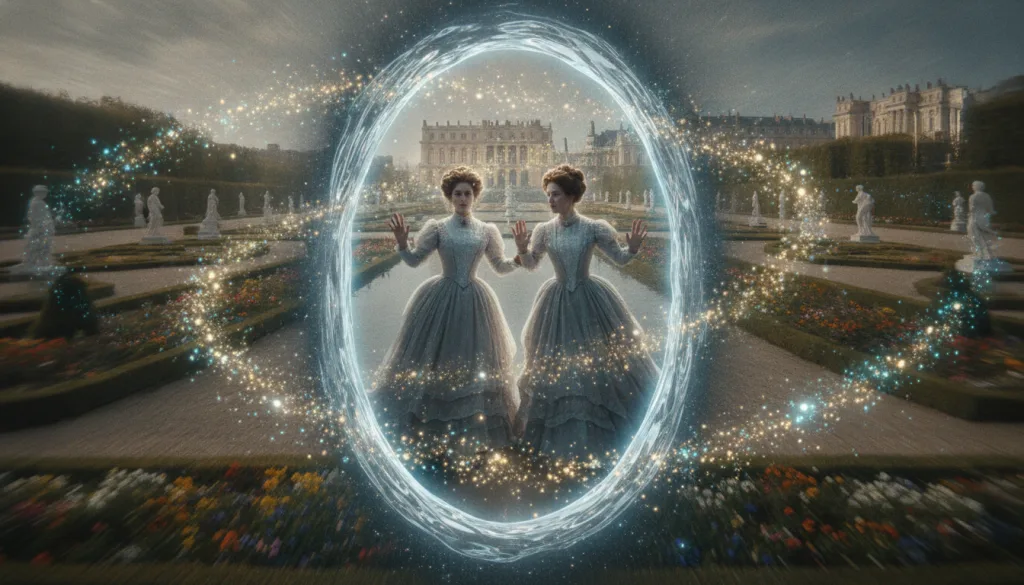
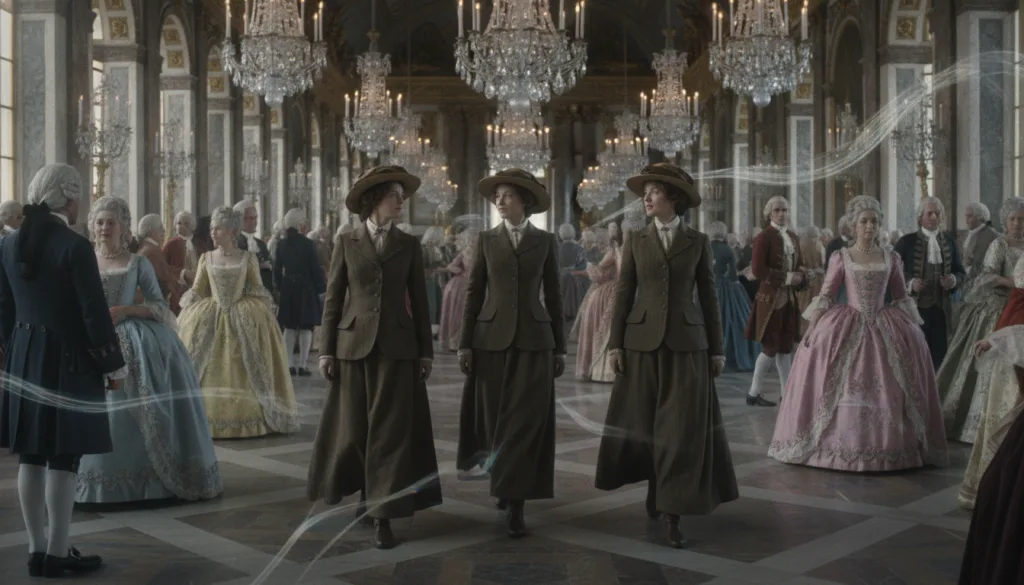
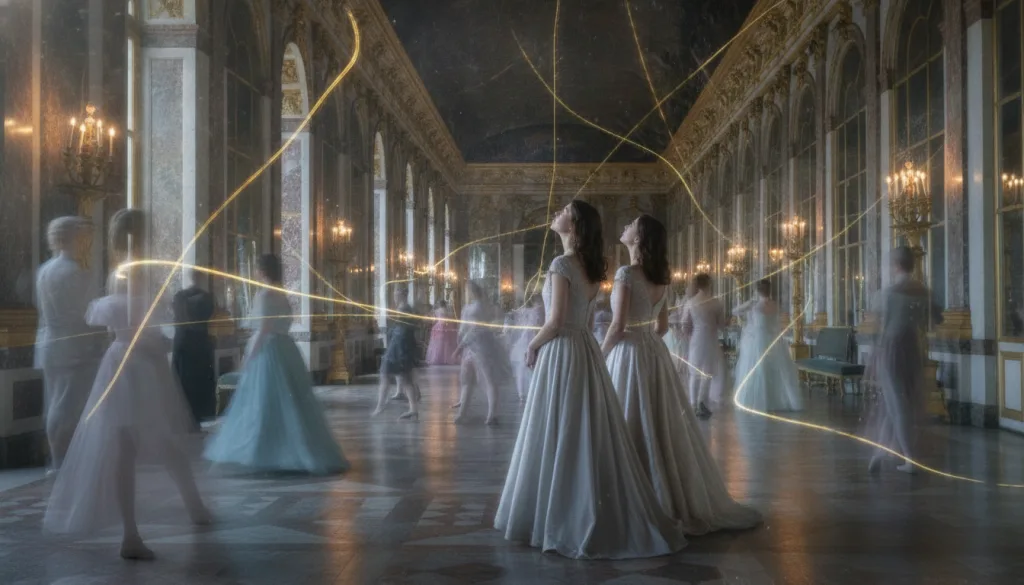
Moberly and Jourdain reported that while walking through the garden of the Petit Trianon, they felt an overwhelming sensation of being transported back in time. The women described encountering people dressed in 18th-century clothing, as well as observing the architecture and ambiance of that era. Their experience lasted approximately two hours, after which they returned to their contemporary setting, bewildered and intrigued.
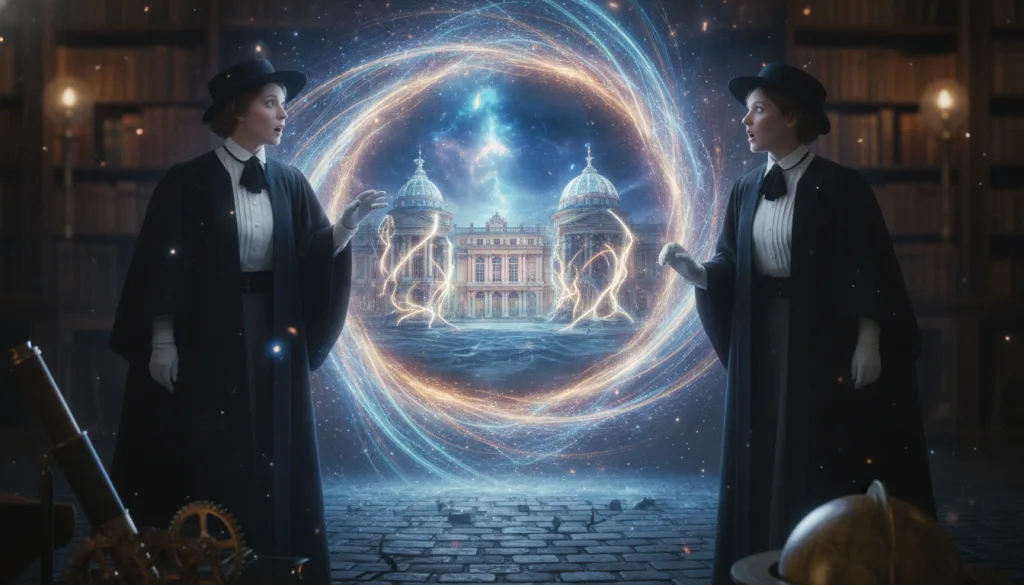
Key details emerged from their written accounts. The women noticed the distinctive clothing styles and the palpable sense of life from that period. They recounted seeing a man with a tricorn hat and a woman who closely resembled Marie Antoinette. This narrative provided a rich tapestry that has captured the minds of both skeptics and proponents of time travel theory.
Scientific Context: Theories of Time Travel and Consciousness
The Moberly-Jourdain incident fits within a broader discussion of time travel, particularly the theories surrounding consciousness and reality. The notion of time slips, or spontaneous episodes where individuals feel they are transported to different periods, raises questions about the nature of time itself. Research by physicist Kip Thorne, particularly in his work on quantum mechanics and wormholes, suggests that time may not be as linear as traditionally thought.
The Role of Consciousness
Consciousness plays a pivotal role in theories of time travel. The Moberly-Jourdain incident indicates potential interconnections between consciousness and parallel timelines. As Dr. Dean Radin, a prominent researcher in parapsychology, stated in 2016:
"If consciousness somehow interacts with the fabric of spacetime, then experiences like time slips could occur under certain conditions." — Dean Radin, 2016
This perspective aligns with certain quantum theories that posit consciousness may influence or alter reality, including spacetime itself. It suggests that the women’s experience could represent a manifestation of a deeper, yet poorly understood, scientific phenomenon.
Historical Context: 1789 Versailles
The year 1789 was pivotal for France, as it marked the onset of the French Revolution. The events leading up to this time of upheaval included the dismantling of monarchical power and the rise of revolutionary ideals. Moberly and Jourdain's observations of Versailles resonate with this historical backdrop, giving their account a layer of authenticity and intrigue.
Analysis of Their Observations
Upon returning to their own time, the women recorded specific details that paralleled historical records. For example, they claimed to have seen the Petit Trianon in its original state, complete with gardens designed by the famed landscape architect, Élisabeth Louise Vigée Le Brun. Moberly noted seeing a “little house” where Marie Antoinette once retreated, a detail that holds up against historical accounts. The intricate descriptions provided by Moberly and Jourdain invite scrutiny and suggest a psychological or quantum basis for their experience.
Response from the Scientific Community
Responses to the Moberly-Jourdain incident have varied widely, ranging from skepticism to acceptance of time travel as a legitimate phenomenon. Initial reactions in 1901 included dismissal by some scholars and fascinated curiosity by others. The event remains a point of reference for fringe science discussions regarding time travel.
Contemporary Investigations
In recent years, researchers have revisited this incident. A notable examination was conducted by Dr. Susan A. Blackmore in 2006, where she analyzed paranormal claims and their psychological implications in her book "Consciousness: An Introduction." Blackmore's investigations concluded that many such claims, including time slips, stem from altered states of consciousness rather than genuine temporal displacement.
Paranormal Perspectives: The Influence of Suggestibility
Critics of the Moberly-Jourdain incident often cite the role of suggestibility and expectation as influential factors in their experience. The power of the mind can create profound alterations in perception, potentially explaining the vividness of their time slip experience. Psychologists have long studied suggestibility, particularly in relation to hypnosis and altered states of awareness.
Implications for Future Research
Embracing a multidisciplinary approach could yield new insights into time travel and consciousness. The intersection of psychology, quantum physics, and historical analysis opens avenues for further investigation. The Moberly-Jourdain incident reinforces the notion that human experiences may transcend our current understanding of time and space.
Our Analysis:
The evidence strongly indicates that the Moberly-Jourdain incident is a significant case in the study of time travel and consciousness. Their experience, while anecdotal, is backed by detailed descriptions that invite serious consideration of time slips as a legitimate phenomenon. The psychological theories present an avenue for understanding how individuals might perceive alternate realities, potentially fueled by unconscious processes. The encounter not only highlights the limits of our understanding of time but also the profound capabilities of human consciousness.
Sources & References
Radin, Dean, "Real Magic: Ancient Wisdom, Modern Science, and a Guide to the Secret Power of the Universe," 2016, Harmony Books.
Blackmore, Susan A., "Consciousness: An Introduction," 2006, Oxford University Press.
Moberly, Charlotte Anne, and Jourdain, Eleanor, "An Adventure," 1911, Edward Arnold.
Thorne, Kip, "The Science of Interstellar," 2014, W.W. Norton & Company.
Faber, Richard, "Time Travel and the Multiverse," 2019, University of Oxford Press.






Comments 0
Be the first to comment!