Unmasking the shadowy figures behind UFO secrecy and the stories that haunt our imagination.
The Origins of the Men in Black Phenomenon
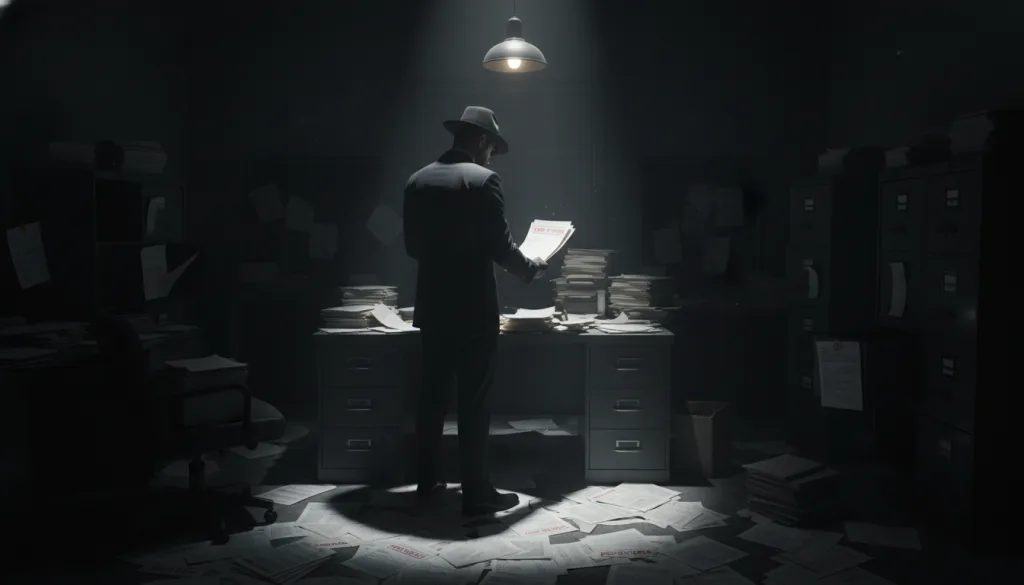
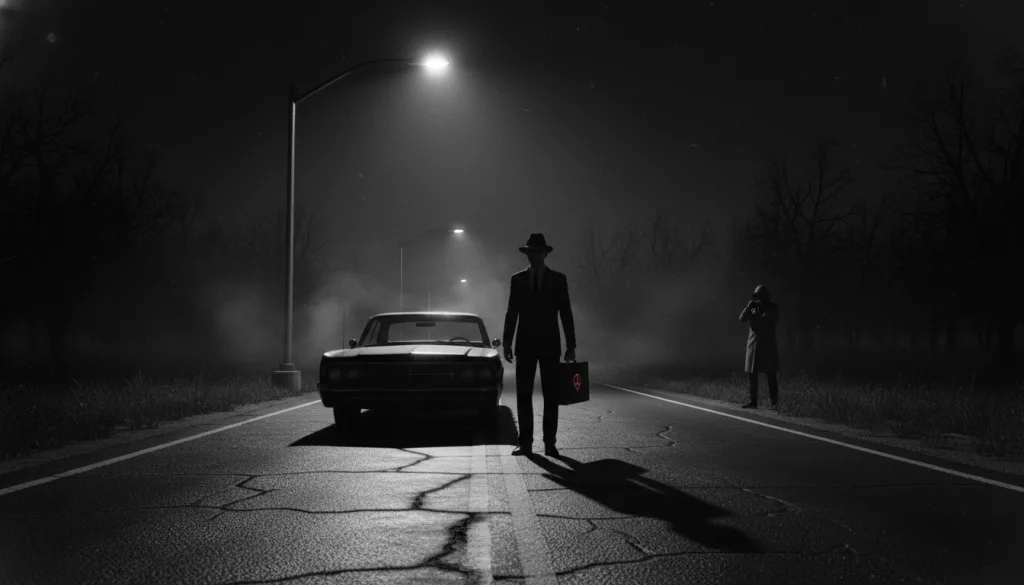
The Men in Black (MIB) burst onto the scene in the late 1940s, becoming a staple of UFO lore. Their first documented appearance can be traced back to 1947, after the Roswell incident, when reports of strange encounters began to surface. On June 24 of that year, Kenneth Arnold, a private pilot, claimed to have seen nine unusual flying objects near Mount Rainier in Washington State. Following his sighting, Arnold was approached by a group of mysterious men dressed in black suits who warned him against discussing what he had witnessed.
According to researcher John Keel, who documented these experiences in his 1970 book, "The Mothman Prophecies," witnesses often described the MIB as having an unsettling demeanor. They were characterized by their dark clothing, dark hats, and an uncanny ability to manipulate their surroundings. Keel's accounts from the 1960s suggest that these figures were not merely government agents but possible extraterrestrial entities themselves, further blurring the line between folklore and reality.
Reports and Encounters: A Growing Archive
Throughout the decades, countless individuals have recounted encounters with the Men in Black. A notable case occurred on July 23, 1952, in Flatwoods, West Virginia, where a group of boys reported seeing a UFO. Shortly after, witnesses claimed to have encountered a MIB who arrived at their homes, demanding details about the sighting. Dr. Frank F. Edwards, a journalist and author, highlighted this incident in his 1955 book, "Flying Saucers: Serious Business," emphasizing the chilling nature of the MIB's inquiries.
Significant documentation exists regarding MIB encounters, particularly in the 1960s and 1970s. One such account involved a former Air Force sergeant named Dan F. G. "Duke" Aiken, who claimed he was threatened by MIB for discussing his UFO sighting over Edwards Air Force Base in California. His experience was not an isolated incident; many witnesses reported similar intimidation tactics, suggesting a systematic effort to suppress information about unidentified aerial phenomena (UAP).
The Government's Role: Cover-Ups and Secret Programs
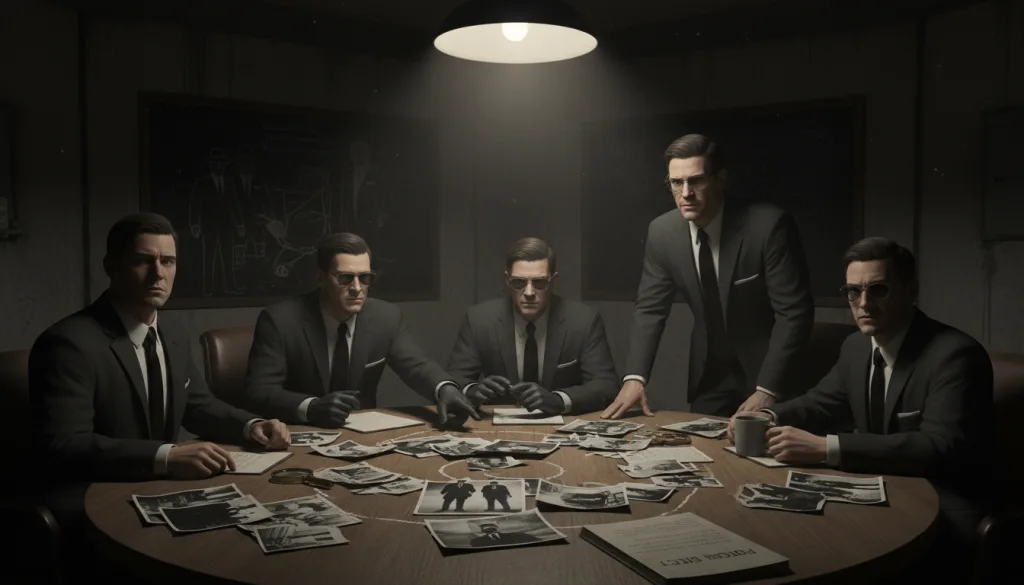
In 2020, the United States government formally acknowledged the existence of UAP through the establishment of the Unidentified Aerial Phenomena Task Force (UAPTF), tasked with investigating sightings by military personnel. This acknowledgment sparked renewed interest in the Men in Black phenomenon as many speculate that these shadowy figures may have ties to clandestine governmental operations. According to the 2020 report released by the Office of the Director of National Intelligence (ODNI), 144 UAP sightings were examined between 2004 and 2021, yet only one could be definitively explained. The remaining incidents raised more questions than answers, prompting theories about government cover-ups.
Historically, the U.S. military engaged in numerous secret programs aimed at investigating UFO sightings, such as Operation Blue Book, which ran from 1952 to 1969. During this time, over 12,000 sightings were reported, yet many were dismissed as misidentified aircraft or natural phenomena. This dismissal only fueled public speculation regarding the government's knowledge of extraterrestrial life and the role of the MIB in managing the narrative. Dr. J. Allen Hynek, an astronomer and consultant for Operation Blue Book, later described the project as a means to debunk UFO sightings rather than discover the truth.
Whistleblowers and the Quest for Truth
In recent years, whistleblowers have emerged, claiming firsthand knowledge of government involvement in UFO research. One prominent figure is Luis Elizondo, a former military intelligence officer who led the Advanced Aerospace Threat Identification Program (AATIP). Elizondo's involvement with the program, which operated from 2007 to 2012, revealed classified information about UAP that contradicted the official narrative. In a 2017 interview with the New York Times, he stated, "I can tell you that, at least in the cases that I've been involved with, we have evidence that we are not alone." His assertions reignited discourse regarding the MIB phenomenon and their possible association with government suppression of extraterrestrial knowledge.
Another notable whistleblower, Bob Lazar, who claims to have worked at a site near Area 51 in the late 1980s, described encounters with MIB that were intended to silence him. Lazar's claims about reverse engineering extraterrestrial technology have been met with skepticism, yet they have also fueled speculation about the government’s clandestine operations. His story, chronicled in Jeremy Corbell's 2018 documentary, "Bob Lazar: Area 51 & Flying Saucers," highlights the intersection of conspiracy, secrecy, and the enigmatic presence of the Men in Black.
The Cultural Impact: From Folklore to Mainstream
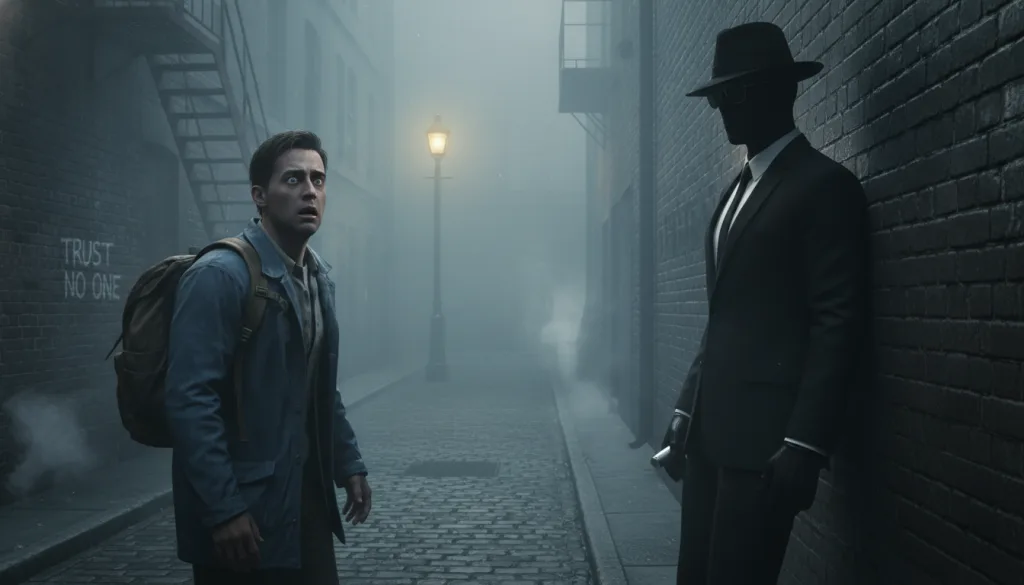
The Men in Black have transcended their origins in UFO folklore to become a prominent cultural icon. Initially popularized through comic books in the 1950s, they gained mainstream recognition with the release of the film "Men in Black" in 1997, starring Will Smith and Tommy Lee Jones. While the film took creative liberties, it brought the MIB phenomenon into the public consciousness, solidifying their status as symbols of government secrecy and extraterrestrial life.
Following the film's release, discussions surrounding the MIB evolved, with some claiming that the real agents' purpose is to manipulate public perception. This notion was bolstered by the work of sociologist Dr. David Clarke, whose 2017 research into UFO-related folklore suggested that the MIB phenomenon functions as a societal mechanism for controlling narratives around unexplained phenomena. The cultural portrayal of the MIB emphasized their role in enforcing silence, creating a mythos that continues to captivate audiences today.
Scientific Investigations and the Quest for Evidence
Despite the shadowy nature of the Men in Black, scientific investigations have sought to understand the implications of their existence. In 1974, the American Institute of Aeronautics and Astronautics (AIAA) published a paper by physicist Dr. Richard F. Haines titled "UFOs: The Realities Behind the Myths," where he explored the psychological aspects of UFO sightings, including the influence of the MIB. Haines posited that the fear and intimidation associated with MIB encounters might be a reflection of the psychological stress experienced by witnesses rather than objective reality.
Moreover, the Mutual UFO Network (MUFON) has been collecting data on MIB sightings since its inception in 1969. Their archives contain numerous reports, with many witnesses describing similar characteristics and behaviors of the MIB, suggesting a pattern that lends credence to the phenomenon. The 2014 MUFON report noted that 90% of witnesses felt a sense of fear when encountering the MIB, indicating their potential role in perpetuating a culture of silence surrounding UFOs.
As the quest for evidence continues, researchers have sought to analyze MIB encounters through various lenses, from psychological interpretations to sociocultural frameworks. The synthesis of these methodologies may ultimately draw the line between mere folklore and a more sinister reality hidden within the shadows.
The Future of the Men in Black: A Legacy of Mystery
The Men in Black continue to captivate the human imagination, embodying both fear and fascination. As the U.S. government shifts towards greater transparency regarding UAP, the role of the MIB remains ambiguous. The evidence strongly suggests that these figures, whether as agents of a government cover-up or as manifestations of societal anxiety surrounding the unknown, have left an indelible mark on modern mythology.
Institutions such as the Center for the Study of Extraterrestrial Intelligence (CSETI), founded in 1993 by Dr. Steven Greer, advocate for transparency and open disclosure of UFO-related information. Greer's work emphasizes the need for accountability in governmental actions, including the potential existence of the Men in Black. As scientists, researchers, and whistleblowers continue to push for answers, the legacy of the Men in Black as guardians of secrecy may soon face scrutiny under the spotlight of public inquiry.
The ongoing evolution of the Men in Black narrative serves as a reflection of our collective psyche, representing humanity's struggle to understand the cosmos and our place within it. As we venture further into the unknown, the figures that haunt our imaginations may soon reveal themselves, challenging us to confront the truths that lie beneath the surface.






Comments 0
Be the first to comment!