Exploring the enigmatic phenomenon of shared memories and the implications of alternate realities.
The Phenomenon of the Mandela Effect
The Mandela Effect, a term coined by Fiona Broome in 2009, describes a peculiar psychological phenomenon where a large group of people recall an event or detail differently from how it occurred. Broome named the effect after her own false memory of Nelson Mandela's death, believing he passed away while imprisoned in the 1980s. In reality, Mandela was released in 1990 and died in 2013. This collective misremembering raises questions about memory, perception, and possibly the nature of reality itself.
Origins and Popular Examples
Since Broome's revelation, the Mandela Effect has gained traction, with numerous examples surfacing. One prominent instance is the misremembering of the children's book series featuring the Berenstain Bears. Many individuals insist the name was spelled "Berenstein," a claim that highlights the discrepancies in collective memory. Another famous example is the line from the movie "Star Wars" where many recall Darth Vader saying, "Luke, I am your father." The actual line, however, is "No, I am your father," creating a shared yet inaccurate recollection among fans.
Psychological Underpinnings of False Memories
Memory is a complex cognitive process subject to distortion. According to Elizabeth Loftus, a key figure in cognitive psychology, memory can be easily manipulated and is often reconstructed rather than simply retrieved. In her groundbreaking 1974 study, Loftus demonstrated how misinformation could alter an individual’s recollection of an event. Her work highlights how confidence in a memory does not necessarily correlate with its accuracy.
Social and Cultural Influences
The Mandela Effect also underscores the influence of social and cultural factors on memory. In 2021, a survey conducted by the American Psychological Association found that 79% of respondents reported experiencing collective false memories, suggesting that cultural narratives and shared experiences play a significant role. The phenomenon might be exacerbated by the internet, where misinformation spreads rapidly, reinforcing erroneous memories across vast networks of individuals.
Alternate Realities and the Multiverse Theory
In contrast to the psychological explanations, some proponents of the Mandela Effect propose a more exotic explanation: the existence of parallel timelines or alternate realities. This theory aligns with the multiverse hypothesis, a concept in theoretical physics suggesting that multiple universes exist simultaneously, each with different outcomes and realities. Prominent physicists like Brian Greene and Michio Kaku have explored these ideas, suggesting that quantum mechanics could allow for the existence of alternate timelines.
Quantum Mechanics and Memory
In a 1957 paper, physicist Hugh Everett III introduced the "Many-Worlds" interpretation of quantum mechanics, proposing that all possible outcomes of quantum measurements are realized in some "branch" of the universe. This interpretation has gained some traction in modern physics, leading to speculation about the implications it holds for human perception and memory. If multiple realities coexist, individuals might subconsciously shift between them, leading to discrepancies in collective memory.
Scientific Scrutiny and Skepticism
Despite the allure of the multiverse explanation, scientific scrutiny reveals significant challenges. Memory researchers, such as Dr. Steven Lynn of the State University of New York at Binghamton, argue that attributing collective false memories to alternate realities diminishes the complex nature of human cognition. Lynn emphasizes that the brain is inherently prone to errors, particularly under social influence, making it crucial to explore cognitive biases rather than jump to conclusions about parallel universes.
Neuroscience and the Mechanisms of Memory
Recent developments in neuroscience lend credence to the idea that the brain is not a perfect recorder of events. A 2020 study published in the journal "Nature Neuroscience" by researchers at MIT examined how memory reconsolidation can alter memories during retrieval. The experiment demonstrated that memories could be updated with new information, suggesting that what individuals remember may not accurately reflect the original event but rather a reconstruction based on current context. This insight challenges the validity of alternative reality theories linked to the Mandela Effect.
Case Studies and Anecdotal Evidence
While the Mandela Effect has garnered attention through popular examples, more in-depth case studies can provide insight into its implications. The "Shazaam" phenomenon, where numerous individuals incorrectly recall a nonexistent movie featuring the comedian Sinbad as a genie, exemplifies how collective memories can proliferate through cultural discourse. In 2016, a YouTube video by user "MandelaEffect" discussing this phenomenon amassed millions of views, reflecting the growing public fascination with the topic.
Impact on Personal Identity and Reality Perception
The ramifications of the Mandela Effect extend beyond mere curiosity. Some individuals report feelings of disorientation and confusion upon realizing their memories do not align with established history. This sense of cognitive dissonance can provoke existential questions about the nature of reality and individual perception. A 2018 qualitative study by Dr. Karen M. McCaffrey from the University of Queensland explored the psychological effects of such discrepancies on identity, revealing that participants often grapple with feelings of alienation as they reconcile their memories with contradictory information.
Philosophical Implications and Future Exploration
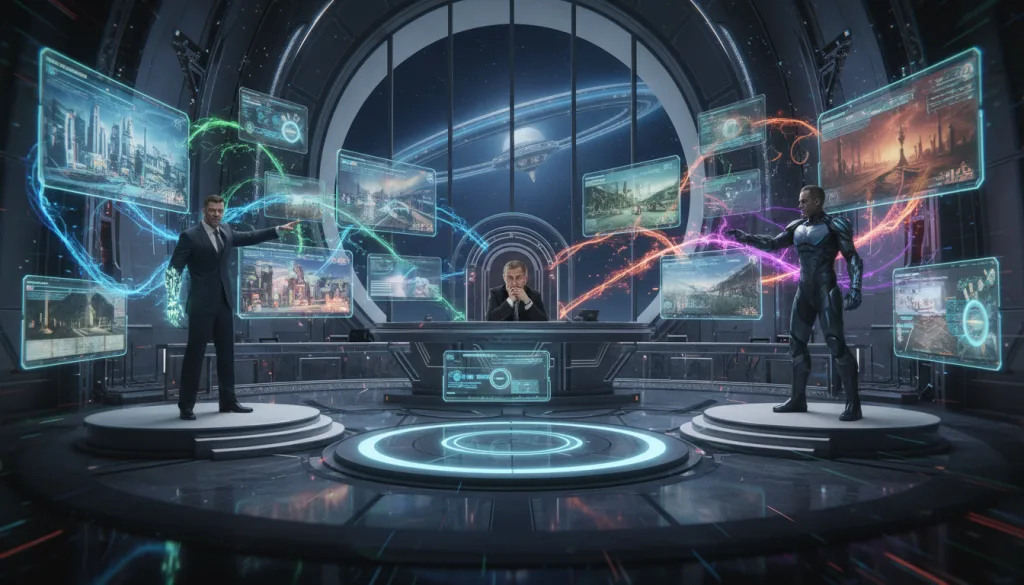
The philosophical implications of the Mandela Effect are profound. If memories are subject to distortion and the possibility of parallel timelines exists, what does this mean for our understanding of reality? Philosopher David Deutsch, in his 2011 book "The Beginning of Infinity," argues that knowledge and reality are not static; they evolve as we explore new ideas. This perspective aligns with the Mandela Effect, suggesting that our collective understanding of memory is a dynamic interplay of perception, culture, and possibly, alternate realities.
Future Research Directions
Moving forward, interdisciplinary research that combines psychology, neuroscience, and theoretical physics could yield deeper insights into the Mandela Effect. Collaborative studies investigating memory reconstruction, the influence of social media on memory, and the implications of quantum theories on consciousness may provide a more comprehensive understanding of this phenomenon. As scientific inquiry progresses, the lines between collective false memory and alternate realities may become increasingly blurred, demanding a reevaluation of our understanding of human cognition.



Comments 0
Be the first to comment!