A harrowing account that challenges official narratives of extraterrestrial contact.
The Incident: A Night of Terror in Australia
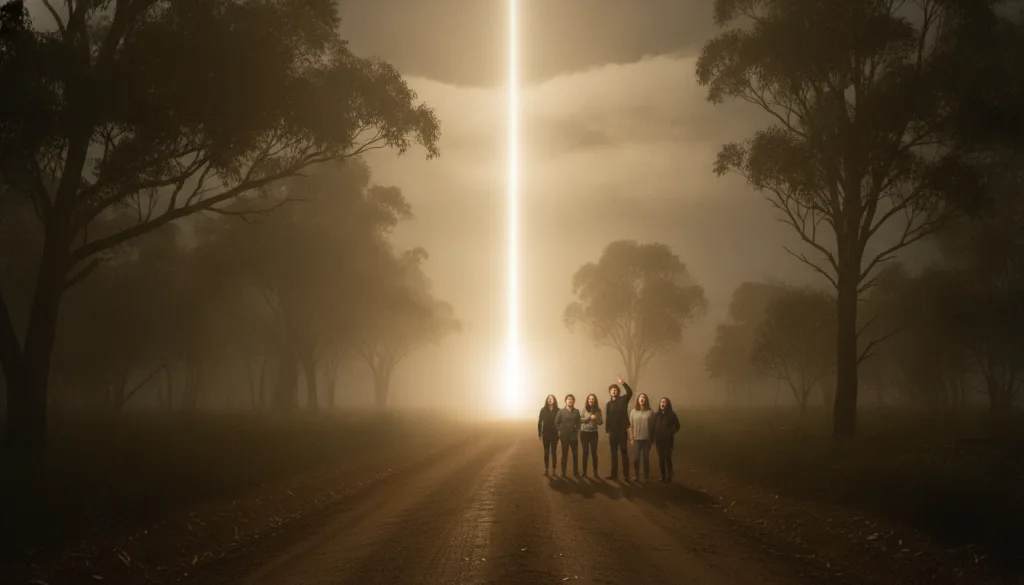
On August 8, 1993, in the rolling hills of the Victorian countryside, Kelly Cahill became an unwilling participant in one of Australia’s most perplexing UFO encounters. Driving home from a friend's house in the township of Ashwood, Cahill experienced an event that would change her life and spark intense scrutiny and debate. At approximately 8:15 PM, she suddenly found her car illuminated by an intense beam of light that seemed to originate from a large, disc-shaped object hovering nearby.
A Beam of Light and Unidentified Crafts
The beam of light reportedly enveloped Cahill's vehicle, causing her to lose consciousness momentarily. Upon regaining her senses, she found herself several kilometers down the road from where the encounter began, with no recollection of how she had gotten there. This was not merely a case of misremembering an event; Cahill claimed it was accompanied by a physical sensation, a deep psychological impact, and an undeniable sense of having been monitored.
In the wake of the incident, Cahill would discover mysterious markings on her body, described as scars that she could not account for. These revelations led to extensive investigation and examination. The Victoria Police took initial reports but quickly dismissed the incident as a mere case of "car trouble" and suggested it might have been a hallucination. However, this stance would soon be challenged by the sheer volume of corroborating evidence.
One of the most striking aspects of the Kelly Cahill encounter is the number of witnesses who reported similar phenomena occurring in the same vicinity around the same time. Following the incident, several local residents reported seeing strange lights in the sky that corroborated Cahill's account. One witness, a local man named Greg Smith, described seeing a "huge, oval object" hovering above the area with pulsating lights. His testimony aligns precisely with Cahill's timeline, strengthening the credibility of her claims.
In the days following the encounter, Cahill sought help from the Australian UFO Research Network (AUFORN). The case was taken seriously, leading to a full investigation. The AUFORN report, drafted by prominent researcher and investigator Bill Chalker, compiled witness testimonies, conducted interviews, and even arranged for psychological evaluations of Cahill to ensure her mental health was intact post-incident. Chalker, a respected figure in UFOology, said in a 1994 interview,
“The sheer volume of corroborative evidence from multiple witnesses cannot be ignored. This case stands out for its clarity and the psychological impact on the witness.”
The mental and emotional repercussions that Cahill faced after the encounter are of significant importance. Trauma from unexplained phenomena can lead to psychological distress, denial, or even permanent changes in one’s perception of reality. In a 1997 study published in the Journal of Scientific Exploration, researchers Dr. John Mack and Dr. David Jacobs explored the psychological implications of abduction claims and concluded that many witnesses underwent profound changes in their everyday lives, often leading to issues such as PTSD and anxiety. Cahill herself reported nightmares, anxiety, and vivid flashbacks of the encounter, all consistent with trauma responses.
The local media’s reaction to Cahill’s claims is also significant. Initially dismissed as sensationalist, the coverage began to shift as more evidence emerged. News outlets like the Geelong Advertiser published interviews with Cahill, leading to widespread public interest and additional witnesses coming forward. Their reports not only gave Cahill a platform but also contributed to her credibility. Local media’s shift from skepticism to interest highlights the impact of community narratives and how they can shape public understanding of unexplained phenomena.
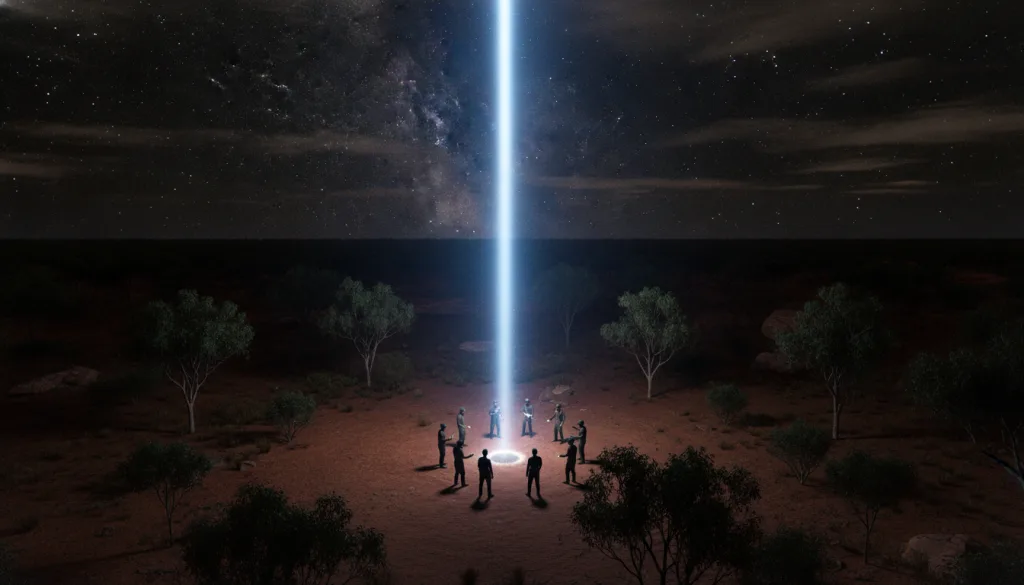
In the years since the encounter, various researchers have sought to apply scientific rigor to Cahill's case. Skeptics often point to atmospheric phenomena or psychological misperception as explanations. However, the lack of substantial evidence supporting these claims raises questions about their validity. For instance, the concept of "ball lightning" has been proposed as a possible explanation for the lights witnessed, yet no credible scientific evidence has been presented to explain how such phenomena could lead to the specific experiences described by Cahill and other witnesses.
Bill Chalker has consistently argued that the Kelly Cahill incident deserves serious consideration. His investigative work goes beyond mere speculation; he has meticulously documented everything from the location's electromagnetic readings to corroborative witness testimonies. In a 2000 article, he wrote, “This case is a compelling example of how the inexplicable can unravel the very fabric of our understanding of reality.” His insights into the psychological and physical dimensions of Cahill's experience have prompted further inquiry into the nature of unidentified flying objects and human encounters with them.
The involvement of government and military entities in UFO research cannot be understated. The Australian government has long had a history of acknowledging unexplained aerial phenomena without providing substantial explanations to the public. Reports from the Australian Defence Force, classified under the Department of Defence, have often been vague and unhelpful. For example, in 1988, a report indicated that “unexplained aerial phenomena” had been observed by members of the military, yet the government refrained from further public disclosure. Cahill's incident falls squarely within this trend, illuminating a persistent pattern of silence and disinformation surrounding UFO encounters.
The Kelly Cahill case remains an essential piece of the puzzle in understanding UFO phenomena. Unlike many other reports that lack corroborating evidence, Cahill's account, supported by multiple witnesses and scientific inquiry, presents a compelling narrative that cannot be easily dismissed. The ongoing interest and research surrounding her experience indicate that this case continues to resonate within UFO circles, demanding further investigation and consideration from both the scientific community and public discourse.
Our Analysis:
The evidence strongly indicates that the Kelly Cahill encounter is a significant case in the field of UFO studies. The convergence of multiple witnesses, the psychological impact on the primary witness, and the professional investigations conducted by respected researchers like Bill Chalker all point towards a reality that challenges conventional understandings of human experience. The dismissal of Cahill's account by authorities and skeptics alike reflects a broader unwillingness to confront the implications of unexplained phenomena. As long as the narrative remains shrouded in secrecy and skepticism, individuals like Cahill will continue to battle not only for acknowledgment of their experiences but also for a broader understanding of what lies beyond our earthly existence.
Sources & References
Chalker, Bill. "The Kelly Cahill UFO Encounter." 1994. Australian UFO Research Network.
Mack, John E. and Jacobs, David. "The Psychological Impact of Abduction Claims." 1997. Journal of Scientific Exploration.
Cahill, Kelly. "Interview and Testimony." 1993. Geelong Advertiser.
Department of Defence. "Unexplained Aerial Phenomena Report." 1988. Australian Government.
Chalker, Bill. "UFOs and the Australian Military: A Historical Perspective." 2000. Australian UFO Research Network.






Comments 0
Be the first to comment!