Understanding the frameworks for measuring advanced civilizations reveals the vast potential of humanity and its cosmic prospects.
A Framework for Cosmic Classification
The Kardashev Scale, conceptualized by the Russian astrophysicist Nikolai Kardashev in 1964, serves as a compelling framework for understanding the energy consumption capabilities of advanced civilizations. Kardashev proposed three primary types of civilizations based on their energy harnessing capabilities, which have profound implications for both our understanding of potential extraterrestrial life and the future trajectory of human civilization. His original classification includes Type I, Type II, and Type III civilizations, each defined by the energy they can control: planetary, stellar, and galactic, respectively.
Type I Civilization: Planetary Mastery
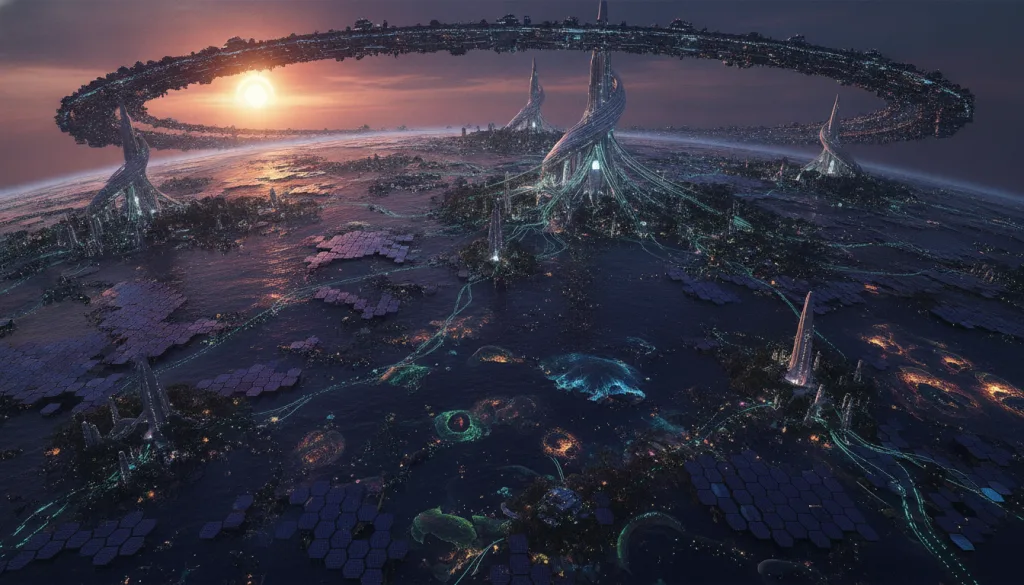
A Type I civilization is capable of harnessing all the available energy resources of its home planet. This encompasses not just fossil fuels, but also renewable energy sources such as solar, wind, and geothermal. The estimated energy consumption for a Type I civilization is approximately 10^16 watts. As of 2021, humanity consumed around 18 terawatts (or 18 x 10^12 watts), which indicates that we are not yet a Type I civilization, but we are progressing towards it. This classification is critical for evaluating our current energy infrastructure and future sustainability practices.
“If we want to truly understand our place in the universe, we must first become a Type I civilization. It is not merely a goal; it is a necessity for our survival.” - Michio Kaku, 2018
Type II Civilization: Stellar Engineering
Advancing to a Type II civilization involves harnessing the energy output of an entire star. This could manifest in the creation of megastructures, such as Dyson spheres, which are theoretical constructs designed to capture the energy radiated by stars. The energy requirement for a Type II civilization is approximately 10^26 watts. Notable theoretical works on Dyson spheres include Freeman Dyson's 1960 paper, "Search for Artificial Stellar Sources of Infrared Radiation," published in Science, which laid the groundwork for this idea. While we are far from this capability, the concept challenges us to think about the long-term future of energy consumption and the vast engineering feats that could be achieved.
The Implications of Stellar Engineering
Building a Dyson sphere, or any similar structure, would necessitate extraordinary advancements in materials science, engineering, and space exploration. Our understanding of materials is still rudimentary compared to the requirements of such projects. The feasibility of constructing a Dyson sphere is under scrutiny, yet it remains a tantalizing possibility. The prospect of Type II civilizations showcases the potential for interstellar resource management and the quest for energy in a universe that offers limitless possibilities.

Type III Civilization: Galactic Dominance
The final tier on the Kardashev Scale is the Type III civilization, which can harness the energy of an entire galaxy, estimated at around 10^36 watts. Such civilizations would possess technology and understanding far beyond our current capabilities. They would not only manipulate energy but also possibly alter the fabric of space-time itself. The concept of a Type III civilization challenges our understanding of intelligence and technological growth. In a paper published in 1979, "The Search for Extraterrestrial Intelligence," Carl Sagan emphasized the need for humanity to pursue the search for extraterrestrial life, as it could yield insights into the nature of advanced civilizations and their energy consumption practices.
Searching for Type III Civilizations
The ongoing efforts in the Search for Extraterrestrial Intelligence (SETI), initiated in the 1960s, aim to detect signals from potential Type III civilizations. The challenge lies in the vastness of the cosmos; the Milky Way galaxy alone contains an estimated 100 to 400 billion stars, each potentially hosting planets that might harbor life. The search for technosignatures—evidence of advanced technological activity—remains a driving force among scientists and researchers worldwide.

Current Status of Human Civilization: A Type 0 Civilization
Currently, humanity is classified as a Type 0 civilization, as our energy consumption does not reach the capacity of a Type I civilization. The transition from Type 0 to Type I necessitates not only technological advancements but also a paradigm shift in our relationship with energy and the environment. Understanding and embracing renewable energy sources, developing new technologies, and fostering international cooperation are vital steps toward achieving this goal. The potential collapse of ecosystems and resource depletion due to our current energy practices reveals the urgency of this transition.
Sustainable Energy and Future Prospects
Efforts to achieve Type I status are underway, with global initiatives aimed at sustainable energy solutions, such as the Paris Agreement of 2016, which aims to limit global warming and promote sustainable practices. Innovations in solar technology, like the development of solar cells that are more efficient and less costly, are critical. Research institutions such as the Massachusetts Institute of Technology (MIT) have been at the forefront of energy technology development, pushing the boundaries of what is possible in our quest for sustainability.

Challenges in Energy Transition
While the Kardashev Scale offers a captivating perspective on the potential of civilizations, it also highlights the significant challenges we face. The transition to Type I status will require overcoming political, economic, and social barriers. The reliance on fossil fuels, economic interests, and geopolitical conflicts all hinder progress. The ongoing climate crisis exemplifies the urgent need for a shift in paradigms. The scientific community, led by figures such as Dr. Jane Goodall and Dr. Neil deGrasse Tyson, emphasizes that our ability to adapt and innovate will determine our future.
“We are at a critical juncture. Humanity must unite and forge a sustainable path forward, or we risk becoming extinct. Achieving a Type I civilization is not just an aspiration; it is a necessity.” - Dr. Jane Goodall, 2020
Notre analyse :
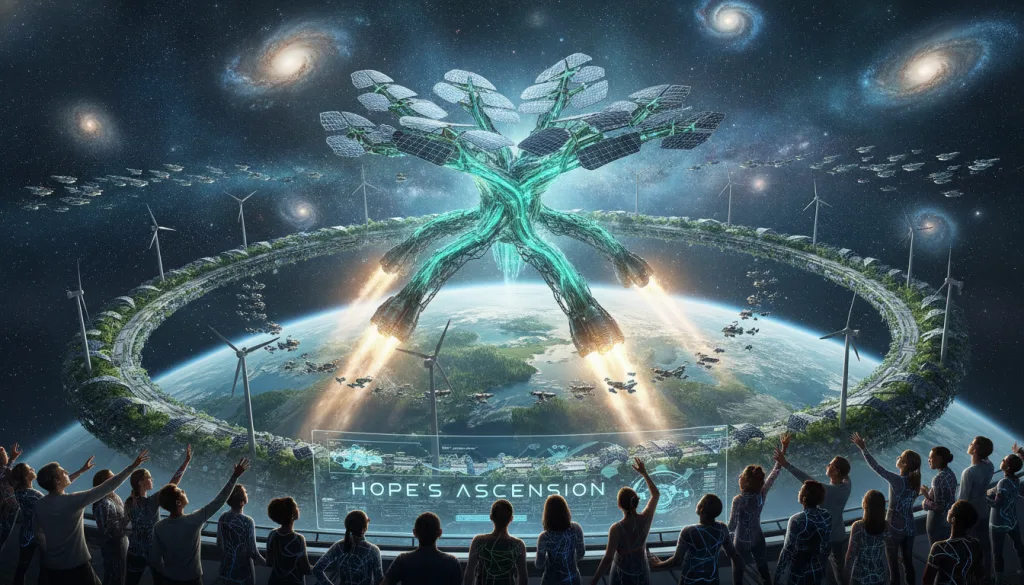
The Kardashev Scale serves not only as a scientific framework but also as a mirror reflecting humanity's ambitions and failures. The evidence strongly indicates that our trajectory towards a Type I civilization is possible but fraught with challenges. The interplay between technological advancement and environmental stewardship will define our success. Humanity's evolution towards higher levels of energy consumption is not merely a technical challenge; it is an existential one. As we reflect on Kardashev's insights, we must recognize the need for collective action towards sustainability to ensure that we do not merely classify ourselves as a civilization but rather as a thriving, responsible species capable of taking our place in the cosmos.
Sources & References
Kardashev, N. S., "Transmission of Information by Extraterrestrial Civilizations," 1964, Soviet Astronomy.
Dyson, F., "Search for Artificial Stellar Sources of Infrared Radiation," 1960, Science.
Sagan, C., "The Search for Extraterrestrial Intelligence," 1979, Scientific American.
Goodall, J., "Reason for Hope," 2020, National Geographic.
Kaku, M., "The Future of Humanity," 2018, Doubleday.






Comments 0
Be the first to comment!