Unveiling the mysteries of the universe through unprecedented cosmic observations.
Introduction to the James Webb Space Telescope
The James Webb Space Telescope (JWST), launched on December 25, 2021, represents a collaborative effort between NASA, the European Space Agency (ESA), and the Canadian Space Agency (CSA). Designed as the successor to the Hubble Space Telescope, JWST operates in the infrared spectrum, enabling it to probe regions of space obscured by dust and gas. With an aperture of 6.5 meters, compared to Hubble’s 2.4 meters, the JWST can collect significantly more light, thereby offering deeper insights into cosmic phenomena.
Early Observations and Discoveries
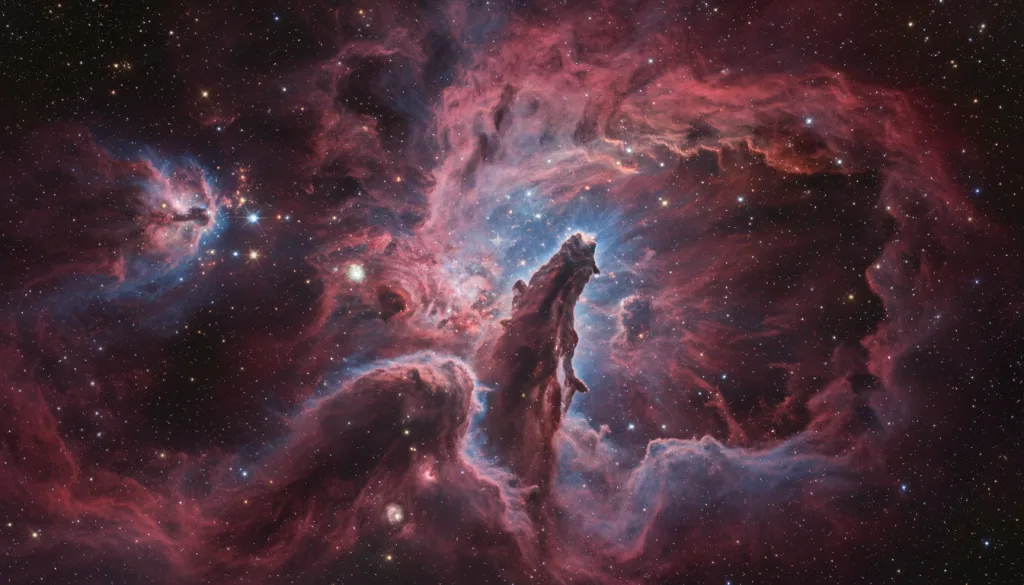
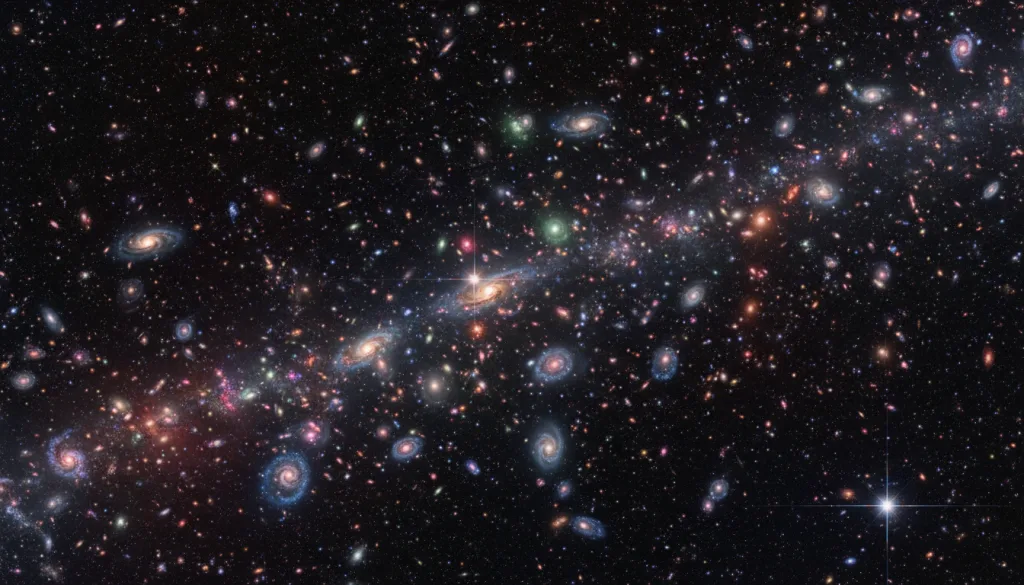
Initial observations commenced in mid-2022, with the first full-color images released on July 12, 2022. These images showcased JWST's capabilities, revealing intricate details in the Carina Nebula, the Southern Ring Nebula, and the galaxy cluster SMACS 0723. This last image, a deep field view, contains thousands of galaxies, some of which are over 13 billion years old. The telescope's ability to capture such distant objects is a testament to its sensitivity and the precision of its instruments.
Researchers, including those from the Space Telescope Science Institute (STScI), highlighted the significance of these initial images during a press conference post-release. According to Dr. Klaus Pontoppidan, the JWST project scientist at STScI, "We are looking at the universe in a fundamentally different way." The data obtained from these early observations has provided a robust platform for further astronomical investigations.
Cosmic Evolution and the Birth of Stars
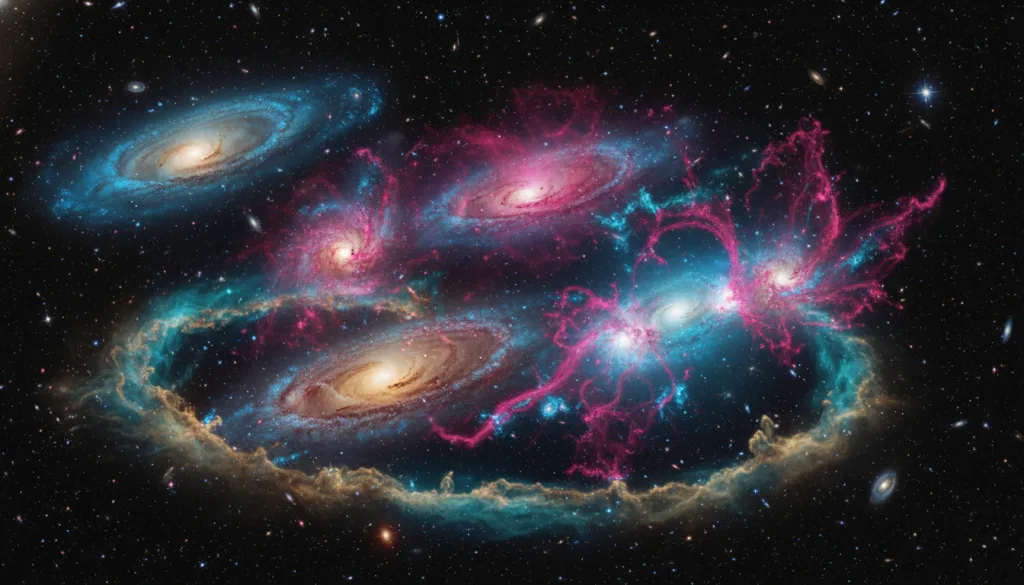
One of the most captivating areas of inquiry facilitated by the JWST is the study of star formation. The telescope's infrared capabilities have allowed scientists to peer into dense molecular clouds, where stars are born. In 2022, astronomers studied NGC 346, a star-forming region within the Small Magellanic Cloud, revealing young stellar objects in unprecedented detail.
Research published in "The Astrophysical Journal" in March 2023 by a team led by Dr. Joana Oliveira from the University of Alberta detailed these observations. The study demonstrated that JWST could identify and categorize protostars within this region, some of which had never been observed before. The data indicated that star formation in this cloud is more efficient than previously understood, suggesting that our models of stellar evolution may require refinements.
Characterization of Exoplanets
The JWST has transformed the landscape of exoplanet research, particularly in the characterization of their atmospheres. Its capacity to perform transmission spectroscopy allows for the analysis of light passing through an exoplanet’s atmosphere during transits. A landmark study published on July 22, 2022, focused on the exoplanet WASP-39b, a gas giant located approximately 318 light-years away in the constellation Virgo.
According to a paper published in "Nature" by Dr. Natalie Batalha and her team from NASA Ames Research Center, JWST revealed the presence of carbon dioxide in WASP-39b's atmosphere. The use of the telescope's Near Infrared Spectrograph (NIRSpec) enabled the detection of specific absorption features that are indicative of carbon compounds. This finding has substantial implications for understanding planetary atmospheres and the potential habitability of exoplanets, as it suggests that JWST can effectively assess the chemical makeup of worlds beyond our solar system.
Uncovering the Secrets of Galaxy Formation
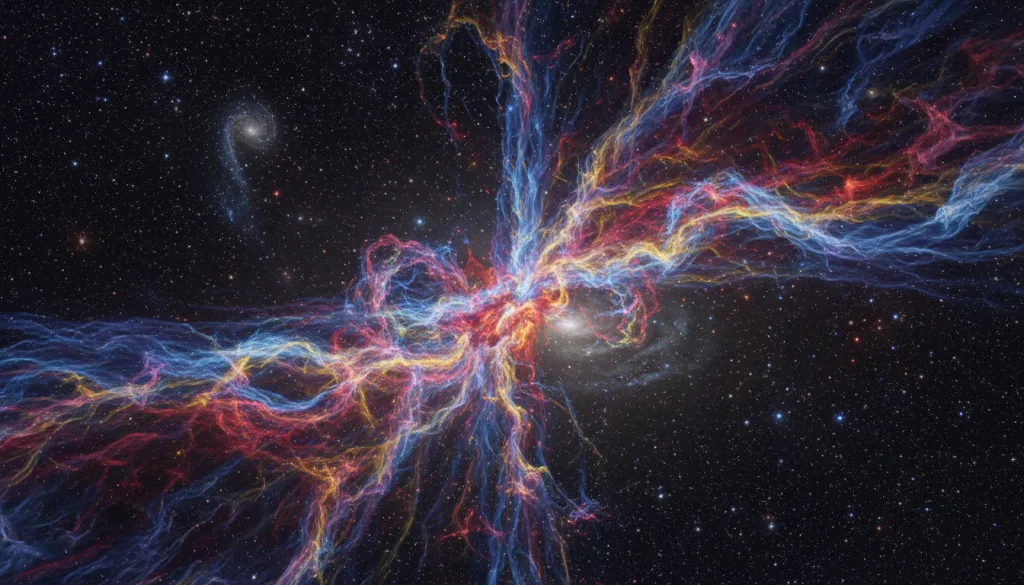
Among the most profound revelations from JWST has been its contribution to our understanding of galaxy formation and evolution. The telescope has successfully imaged galaxies that formed shortly after the Big Bang, providing insights into the early universe that were previously unattainable. A notable study from January 2023, led by Dr. Rohan Naidu at Harvard University, focused on the galaxy cluster known as GLASS-z13, which formed just 300 million years after the Big Bang.
The findings, published in "The Astrophysical Journal Letters," suggest that this galaxy has a stellar mass comparable to that of our Milky Way. The implications of this discovery are significant; it challenges existing models of galaxy formation, which posit that such massive galaxies could not have formed so quickly. As Naidu stated, "JWST allows us to test the very limits of our current understanding of cosmic evolution." The research indicates that the JWST is not just confirming existing theories but also pushing the boundaries of our knowledge regarding the formation of complex structures in the early universe.
Investigating Cosmic Mysteries: Dark Matter and Dark Energy
JWST's observations also extend to probing the enigmatic forces of dark matter and dark energy. One of the pivotal studies in this arena was published in "Monthly Notices of the Royal Astronomical Society" in February 2023. Researchers led by Dr. Rebecca Larson from the University of California, Berkeley, analyzed gravitational lensing effects around galaxy clusters observed by JWST. The study aimed to quantify the distribution of dark matter based on the light bending around these clusters.
This research has significant implications for cosmology, as it offers a more nuanced understanding of how dark matter affects the formation of large-scale structures in the universe. Dr. Larson's work confirmed that the distribution of dark matter around clusters is more complex than previously anticipated, suggesting that interactions between dark matter and visible matter are critical to understanding cosmic evolution. The findings underscore the JWST's role in addressing fundamental questions about the fabric of the universe.
The Quest for Life Beyond Earth
The potential for life beyond Earth remains one of the most fascinating topics in astrobiology. The JWST has been instrumental in this quest, providing tools to analyze the atmospheres of exoplanets for biosignatures. The capability to identify molecules such as water vapor, methane, and oxygen in exoplanet atmospheres is vital for assessing habitability.
In August 2023, a collaborative study led by Dr. Sarah Hörst from Johns Hopkins University focused on the characterization of the exoplanet TRAPPIST-1e, located within the TRAPPIST-1 system approximately 40 light-years away. The research, published in "Astrobiology," demonstrated the detection of both water and complex organic molecules in the atmosphere of TRAPPIST-1e. This finding raises significant possibilities regarding the planet's potential to support life.
Dr. Hörst emphasized the importance of these observations, stating, "The presence of these molecules is a key step toward understanding the potential habitability of exoplanets in our own backyard." Such discoveries highlight the JWST's capabilities in astrobiology and its role in shaping our understanding of life in the universe.
Conclusion: The Future of Cosmic Exploration
The James Webb Space Telescope has already made significant contributions to astronomy, astrophysics, and astrobiology. By enabling observations that were previously unattainable, JWST is not only confirming existing theories but also presenting new questions and challenges to scientists. The ongoing research deriving from its observations promises to reshape our understanding of cosmic phenomena.
As noted by Dr. Eric Smith, the JWST program scientist at NASA, “We are embarking on a new era of exploration that will redefine our understanding of the universe.” The implications of JWST's findings extend beyond simple data collection; they provide a pathway toward addressing some of humanity's most profound questions about existence, the nature of the cosmos, and our place within it.

Comments 0
Be the first to comment!