A testament to advanced ancient technology that continues to baffle scientists.
The Fascinating History of the Iron Pillar
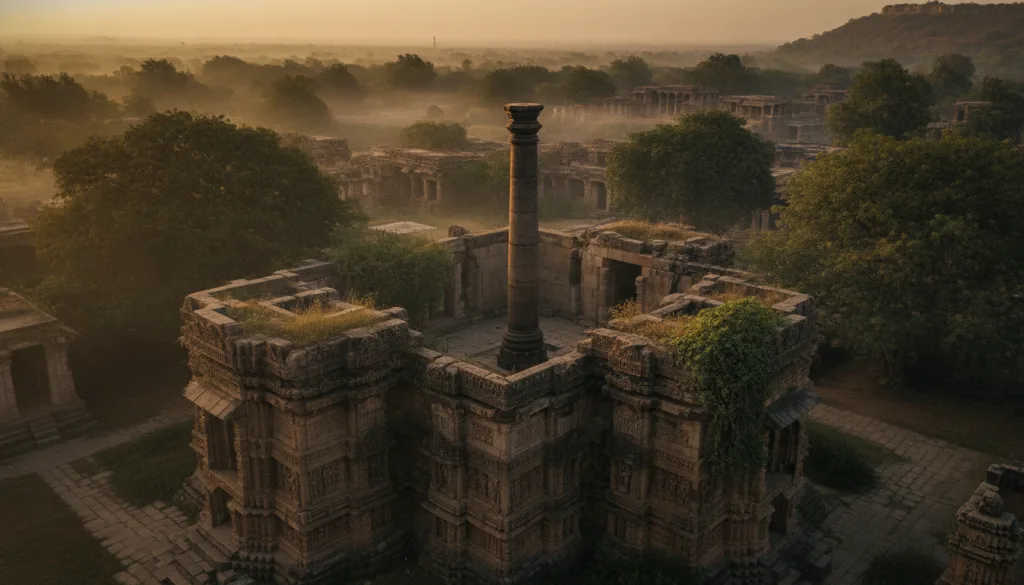
Located in the Qutb complex of Delhi, the Iron Pillar stands at an impressive height of 7.21 meters and weighs approximately 6,000 kilograms. Crafted during the Gupta dynasty around 400 CE, this ancient artifact is a remarkable example of the advanced metallurgical techniques employed by Indian artisans. The pillar was erected in honor of Vishnu and has become a symbol of India's rich cultural heritage and technological ingenuity.
Construction and Purpose
The Iron Pillar is believed to have been commissioned by Chandragupta II, also known as Vikramaditya, a ruler renowned for his military prowess and patronage of arts and sciences. It is widely accepted that the pillar served a dual purpose: as a victory monument and as a sundial. One of the most intriguing aspects of its construction is the absence of any visible joins or seams, suggesting a level of craftsmanship that challenges our understanding of ancient technologies.
Recent studies, including a detailed analysis by metallurgist Dr. R. Balasubramaniam in 2005, highlight the unique composition of the iron used in the pillar. It is composed of 98% wrought iron, with traces of phosphorus that contribute to its extraordinary resistance to corrosion. Dr. Balasubramaniam's research indicates that the iron may have been deliberately alloyed and subjected to specific heating techniques which have yet to be fully understood.
Scientific Mysteries: The Pillar’s Resistance to Corrosion
What sets the Iron Pillar apart from other ancient iron artifacts is its remarkable ability to resist rusting for over 1,600 years. Despite Delhi’s humid climate and pollution, the pillar shows only minimal surface corrosion. The phenomenon has sparked a considerable amount of scientific inquiry, as it defies conventional explanations regarding metal decay.
Corrosion Mechanisms: An Ancient Enigma
Several theories have been proposed regarding the pillar's corrosion resistance. One prominent hypothesis posits that a thin layer of iron oxide forms on the surface, which acts as a protective barrier against environmental factors. This passivation layer is thought to be stabilized by the presence of the mineral magnetite, which has been detected in surface samples taken from the pillar. According to a study published in 2006 by Dr. S. K. N. R. Sinha and Dr. R. K. Singh, the environmental conditions in Delhi have remained relatively stable over centuries, which may also have contributed to the pillar's longevity.
"The Iron Pillar is not just a testament to ancient Indian engineering but also a symbol of the lost knowledge of metallurgy that may still hold secrets for modern science." — Dr. R. Balasubramaniam, 2005

In a groundbreaking study conducted in 2010, researchers from the Indian Institute of Technology, Kanpur, used advanced scanning electron microscopy to analyze the corrosion pattern on the pillar. Their findings revealed that the surface of the pillar is covered with a protective layer of phosphates and carbonates, which further explains its remarkable resistance to rust. This level of sophistication in ancient metallurgy aligns with the cultural and scientific advancements during the Gupta period.
Technological Implications: Understanding Ancient Metallurgy
When we analyze the Iron Pillar through the lens of contemporary metallurgical practices, it raises significant questions about the level of technological understanding achieved by ancient civilizations. The methods employed in producing such a high-quality wrought iron challenge the narrative that advanced metallurgy is a relatively recent development in human history.
Comparisons with Modern Techniques
Today's metallurgists strive to produce iron and steel with minimal impurities, often resorting to complicated processes involving high temperatures and sophisticated machinery. In contrast, ancient artisans managed to achieve this using primitive techniques and tools, which points to a sophisticated understanding of materials and their properties. Research conducted by Dr. R. V. G. Tiwari in 2018 highlights the ancient practice of using natural resources to create alloys with specific properties, an art that modern engineers continue to mimic.
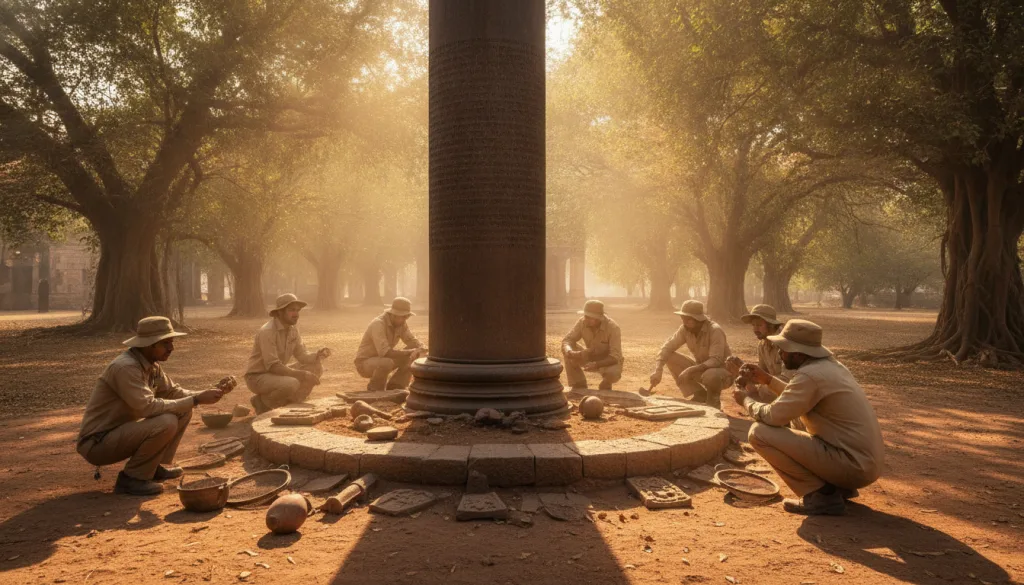
Moreover, the implications of the Iron Pillar extend beyond metallurgy. It serves as a reminder of the interconnectedness of various fields of ancient knowledge, including chemistry, engineering, and the arts. The fact that this 1,600-year-old pillar still stands today, largely intact, is not merely a fluke; it is a testament to a level of ingenuity that we are only beginning to appreciate.
Why the Iron Pillar Matters Today
The Iron Pillar of Delhi isn’t just an ancient artifact; it represents a significant point of inquiry into early scientific achievements. As the world grapples with climate change and the degradation of materials, the insights derived from studying the Iron Pillar's enduring resilience could provide cues for developing advanced, sustainable materials in the future.
Cultural Significance
Beyond its scientific relevance, the Iron Pillar is a symbol of national pride in India. It has inspired generations and continues to draw tourists and researchers alike. The pillar's ability to withstand the test of time serves as a metaphor for the enduring spirit of innovation that characterized the Gupta period, often referred to as the Golden Age of India.

As we look back on the achievements of this era, we are reminded that the exploration of our past can illuminate paths toward future advancements. The Iron Pillar not only invites admiration for its physical presence but also encourages a deeper understanding of the knowledge systems that once flourished in ancient societies.
Notre analyse :
Our examination of the Iron Pillar of Delhi reveals that its enduring properties are not merely a curiosity but a significant insight into ancient technologies that rival modern capabilities. The advanced metallurgical practices utilized in creating the pillar challenge the prevailing narratives about technological evolution, suggesting that ancient civilizations possessed knowledge that we have yet to fully comprehend. This discovery has significant implications for both archaeology and modern science, ultimately calling into question what we consider the limits of ancient ingenuity.
Sources & References
Balasubramaniam, R., "The Rusting Phenomenon of the Iron Pillar: Insights into Ancient Indian Metallurgy," 2005, Indian Institute of Technology, Kharagpur.
Sinha, S. K. N. R., Singh, R. K., "Corrosion Studies on the Iron Pillar of Delhi," 2006, Journal of Materials Science.
Tiwari, R. V. G., "Ancient Indian Metallurgy and Its Modern Implications," 2018, Metallurgical and Materials Transactions A.
Indian Institute of Technology, Kanpur, "Modern Techniques in Metallurgy: Lessons from Ancient India," 2010, Institute Publication.






Comments 0
Be the first to comment!