The Ica Stones challenge our understanding of ancient history and the relationship between humans and dinosaurs.
Background of the Ica Stones
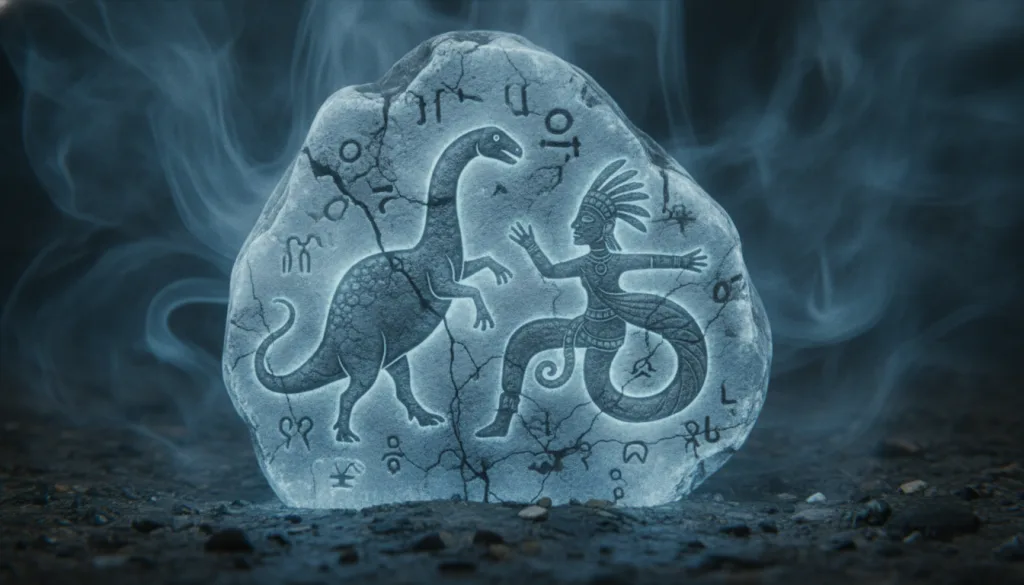
The Ica Stones are a collection of andesite stones found in Ica Province, Peru. These stones, numbering in the thousands, are inscribed with intricate carvings that purport to depict various scenes, including humans coexisting with dinosaurs. The origins of these stones date back to the 1960s when they were first brought to public attention by a local farmer named Javier Cabrera Darquea. Cabrera, a physician and paleontologist by training, began acquiring these stones and subsequently published a book titled "The Message of the Ica Stones" in 1975, which detailed his findings and interpretations.
Located roughly 300 kilometers south of Lima, the Ica region is known for its rich geological history, with sedimentary deposits that date back millions of years. The Ica Stones themselves are believed to be between 1000 and 5000 years old, although the dating of the stones remains a point of contention among researchers. The inscriptions include a wide variety of themes, from depictions of dinosaurs such as the long-necked sauropods to imagery showing complex surgical procedures.
Claims of Coexistence: The Evidence Presented
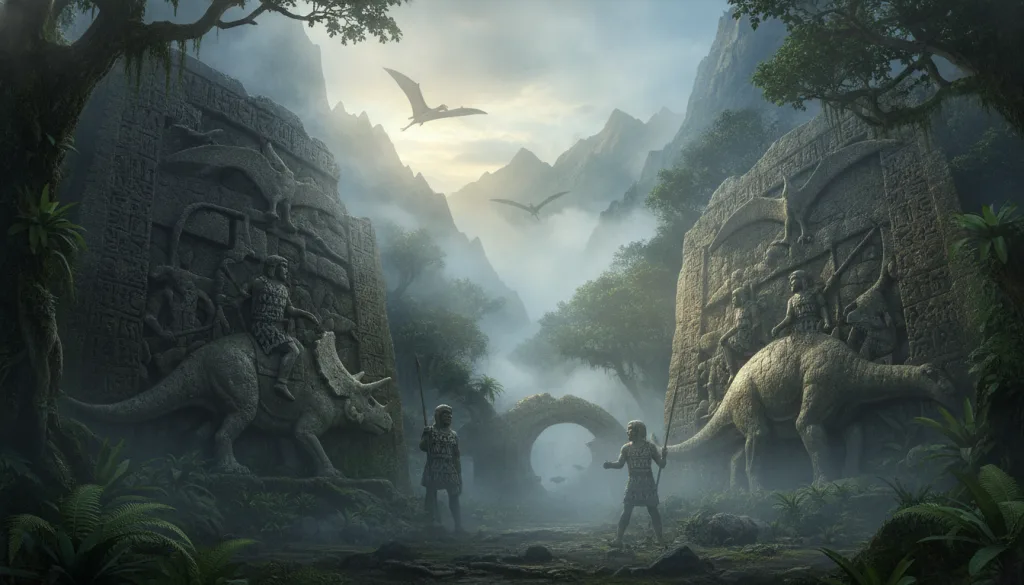
Proponents of the Ica Stones argue that the depictions of humans interacting with dinosaurs serve as evidence that these two groups cohabited Earth far more recently than mainstream paleontology accepts. The most frequently cited stones showcase humans riding dinosaurs or engaging in combat with them, suggesting a narrative that contradicts established timelines. Notably, a stone depicting a Pterosaur-like creature, complete with wings, is among the more famous examples.
One of the key arguments put forth by Cabrera and other enthusiasts is that the existence of these stones represents an advanced civilization capable of producing intricate carvings that suggest a high level of knowledge about both paleontology and human biology. Some of the stones illustrate complex anatomical features in both humans and dinosaurs, indicating that their creators were not only aware of these creatures but could also represent them accurately.
“The Ica Stones provide a fascinating glimpse into how ancient peoples may have perceived their world, blending myth and reality in a way that challenges our current understanding of history.” - Dr. Maria Martinez, Archaeologist, 2018
The Controversy of Authenticity
Despite the captivating nature of the Ica Stones, skepticism abounds regarding their authenticity. Many archaeologists and paleontologists assert that the stones are modern forgeries, created to capitalize on the growing interest in ancient civilizations and dinosaurs during the late twentieth century. Among the most vocal critics is Dr. Robert K. G. W. Schmitt, a paleontologist who has conducted extensive research in the Ica region.
In his 1997 paper published in the journal "Paleobiology," Schmitt argues that the carvings demonstrate a lack of understanding of basic paleontological principles, such as the anatomical details of the creatures depicted. He points to inaccuracies in the representations of dinosaurs, claiming that they reflect a romanticized version rather than scientifically accurate depictions. Furthermore, Schmitt highlights the absence of credible archaeological context, arguing that the stones were likely produced with the intent to deceive.
The Cultural and Economic Impact of the Ica Stones
The fascination with the Ica Stones has not only generated academic debate but has also spurred local tourism and economic development. Ica Province has seen a rise in self-identified "paleontologists" and local guides who offer tours of sites where the stones have been found. This burgeoning tourism industry contributes to the local economy but raises ethical concerns about the commodification of potentially fraudulent artifacts.
Local authorities have attempted to regulate the trade of the Ica Stones, recognizing that their presence can both attract tourists and mislead the public. In 2009, the Peruvian government issued a statement warning against the purchase of Ica Stones, declaring that the sale of these artifacts was illegal under national heritage laws. However, the underground market persists, with stones being sold at inflated prices to collectors and tourists seeking a piece of what they believe to be a historical mystery.
Scientific Examination and Rebuttal
In 1996, a thorough examination of the Ica Stones was conducted by a group of researchers led by Dr. Maria Elena M. López, a geologist at the National University of San Marcos. The team utilized radiocarbon dating techniques to determine the age of the stones and conducted a geological analysis to assess their provenance. Their findings indicated that many of the stones were indeed of recent origin, contradicting claims of ancient origins. The researchers reported their findings in "Journal of Archaeological Science," concluding that the carvings were likely made within the last century.
Despite this scientific scrutiny, the allure of the Ica Stones endures, bolstered by sensationalist claims and anecdotal evidence from believers. It is essential for anyone examining these artifacts to consider the motivations behind their creation and the implications of their existence on our understanding of human history.
Alternative Theories and Perspectives
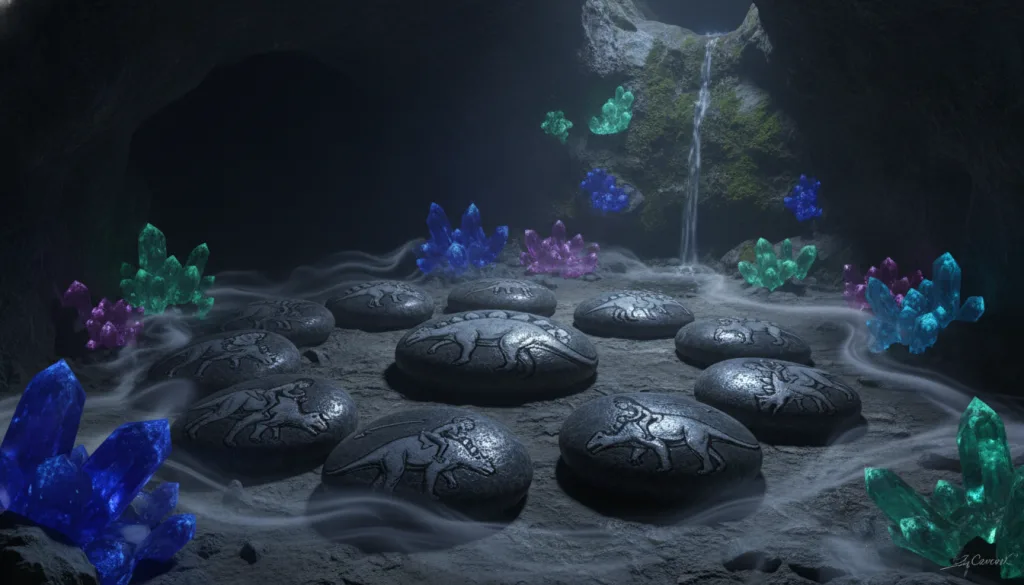
Some proponents of the Ica Stones have suggested that the artifacts serve as a historical record of a lost civilization that possessed advanced knowledge predating known history. They argue that the tools and techniques used to carve the stones imply a technological prowess that aligns with the theory of ancient astronauts or civilizations that have since vanished. This perspective, however, often leans more towards the speculative than the scientifically grounded.
Additionally, some researchers have posited that the Ica Stones may represent a form of ancient myth-making, akin to the way many cultures have woven tales of fantastical creatures into their narratives. This raises questions about how ancient societies interpreted their environments and the creatures that inhabited them. The anthropological implications of such interpretations challenge us to reconsider not only the stones themselves but also the cultural contexts in which they were created.
Public Perception and Media Influence
Media representations of the Ica Stones have played a significant role in shaping public perception. Various documentaries and sensational news reports have fueled interest in the stones, often oversimplifying the complexities of the debate surrounding their authenticity. In 2007, the History Channel aired an episode of "Ancient Aliens" that included the Ica Stones as evidence of extraterrestrial influence on ancient civilizations, further entrenching the idea that these artifacts hold significant historical value.
This media influence complicates the academic discourse surrounding the Ica Stones, as it blurs the lines between serious investigation and entertainment. The challenge lies in separating fact from fiction while acknowledging the cultural impact these artifacts have had on our understanding of history and our collective imagination.
Our analysis:
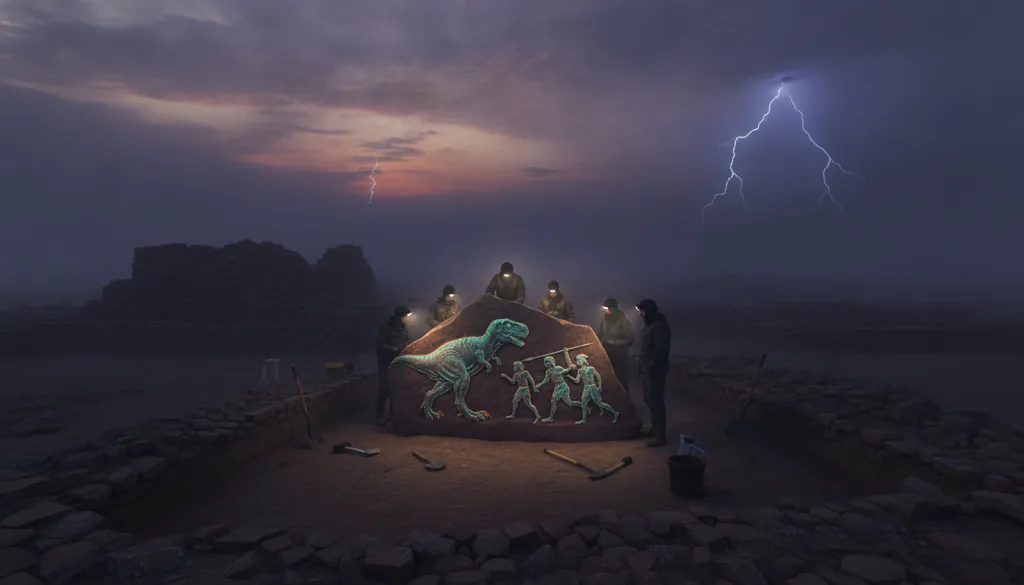
The evidence surrounding the Ica Stones strongly indicates that they are modern forgeries rather than authentic artifacts depicting a cohabitation of humans and dinosaurs. The scientific scrutiny and geological research conducted in the region consistently point to a recent origin for these stones, and their carvings exhibit inaccuracies that undermine claims of ancient knowledge. While the allure of the Ica Stones captures the imagination and raises intriguing questions about our history, it ultimately highlights the importance of rigorous scientific inquiry in evaluating extraordinary claims.
Furthermore, the economic and cultural ramifications of the Ica Stones underscore the ethical dilemmas faced by local authorities and archaeologists in their management. As a society, we must approach such artifacts critically, recognizing the potential for deception while safeguarding the integrity of historical inquiry.
Sources & References
Schmitt, Robert K. G. W., "The Ica Stones: A Paleontological Perspective," 1997, Paleobiology.
López, Maria Elena M., "Geological Analysis of the Ica Stones: Origins and Implications," 1996, Journal of Archaeological Science.
Cabrera Darquea, Javier, "The Message of the Ica Stones," 1975, Self-Published.
Martinez, Dr. Maria, "Exploring the Mythology of the Ica Stones," 2018, University of Lima.
Peruvian Government, "Official Statement on the Ica Stones," 2009, Ministry of Culture.






Comments 0
Be the first to comment!