The Ica Stones challenge our understanding of ancient civilizations and their interactions with prehistoric life.
The Discovery of the Ica Stones
The Ica Stones, a collection of carved stones discovered in the 1960s near the small town of Ica in southern Peru, have ignited debates among archaeologists, paleontologists, and enthusiasts alike. The stones are etched with various images, including depictions of dinosaurs coexisting with human figures, suggesting a timeline that contradicts established scientific understanding. The first major discovery of these stones was made by a local farmer named Javier Cabrera, who unearthed them while plowing his field in 1961. Cabrera, recognizing the significance of the stones, became a prominent advocate for their study, eventually amassing a collection of over 15,000 artifacts.
A Host of Controversies
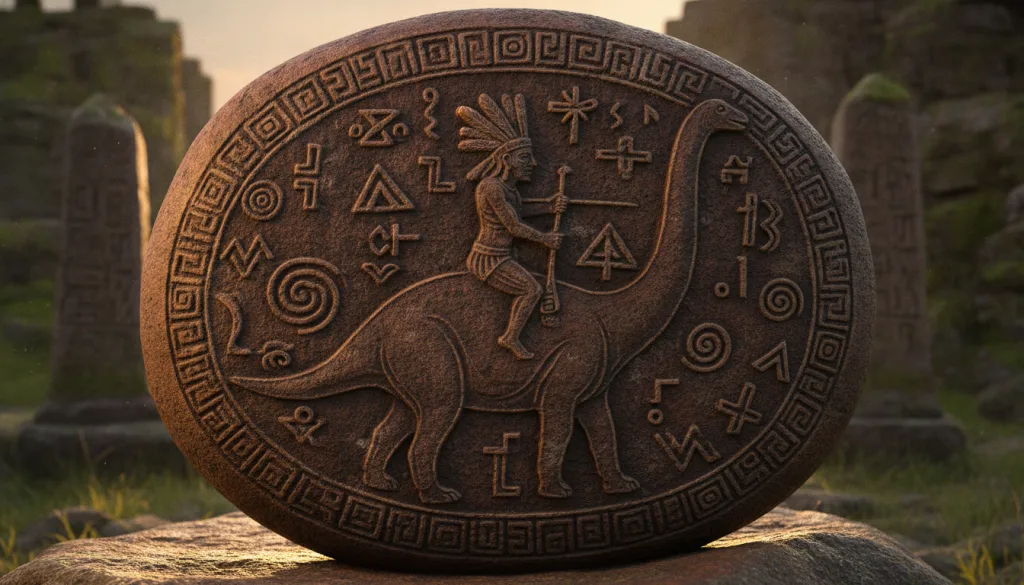
The controversy surrounding the Ica Stones primarily arises from their intricate carvings. Many stones depict scenes of humans riding dinosaurs, hunting various prehistoric creatures, and engaging in agricultural practices alongside these colossal reptiles. A notable example is the famous stone known as "Ica Stone 22," which depicts a human figure on the back of a dinosaur, seemingly demonstrating a sophisticated knowledge of both species. Such imagery raises fundamental questions about the chronology of life on Earth. Dinosaurs are widely believed to have gone extinct around 65 million years ago, while the earliest known ancestors of modern humans appeared only about 2-3 million years ago. Thus, if these carvings are authentic, they suggest a profound historical anomaly.
Scientific Scrutiny and Skepticism
The scientific community has largely rejected the authenticity of the Ica Stones, attributing them to modern forgeries rather than ancient artifacts. The prevailing view among archaeologists is that the stones were carved in the late 20th century, possibly even by Cabrera himself, to take advantage of the growing interest in paleontology and ancient astronaut theories. Critiques of the stones have pointed out that many of the carvings exhibit a stylistic uniformity and a lack of wear consistent with contemporary craftwork rather than the weathering expected from ancient artifacts.
The Role of Javier Cabrera
Javier Cabrera’s involvement is central to the narrative of the Ica Stones. A respected physician and writer, Cabrera published a book titled "Los Mensajes de las Piedras" in 1974, which outlined his theories about the stones' significance. In it, he suggested that the carvings were left by an advanced ancient civilization that coexisted with dinosaurs, possibly through the use of lost technologies. Cabrera argued that the stones depicted not just regular life but also profound knowledge about genetics, astronomy, and the natural world. He claimed that the images represented a time when mankind and dinosaurs shared the Earth, challenging the very fabric of accepted historical timelines.
"The Ica Stones are a testament to the human imagination and its ability to create narratives that defy established history," said Dr. M. A. Rodriguez, a Peruvian archaeologist specializing in ancient cultures (2011).
Cultural Resonance and Public Fascination
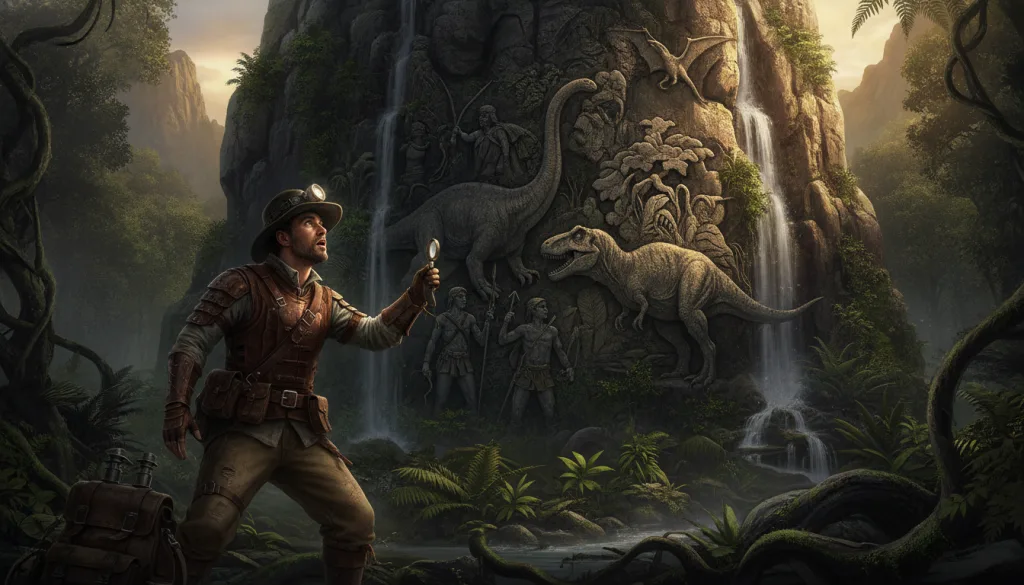
The allure of the Ica Stones extends far beyond academic circles; they resonate deeply within popular culture, drawing comparisons to other artifacts associated with controversial historical narratives. This fascination aligns with a broader trend of interest in lost civilizations and ancient technologies, as seen in texts like Graham Hancock's "Fingerprints of the Gods" (1995) and Erich von Däniken's "Chariots of the Gods?" (1968). The stones have appeared in documentaries, books, and lectures, captivating audiences with the idea of a forgotten chapter in human history. Despite the skepticism from the academic community, the Ica Stones continue to inspire discussions about the potential for historical revisionism.
Potential Theories on Their Origin
Considering the stones in their entirety, several theories emerge regarding their origin. One possibility is that the stones are genuine artifacts created by an ancient civilization that possessed both artistic and scientific knowledge beyond what we currently comprehend. Alternatively, they may represent a modern hoax, conceived by Cabrera or another individual, perhaps motivated by financial gain or a desire to contribute to alternative history narratives. A third hypothesis suggests that there may exist an entirely different context for these stones that we have yet to understand, potentially related to indigenous mythology or spirituality.
Examining the Material Evidence
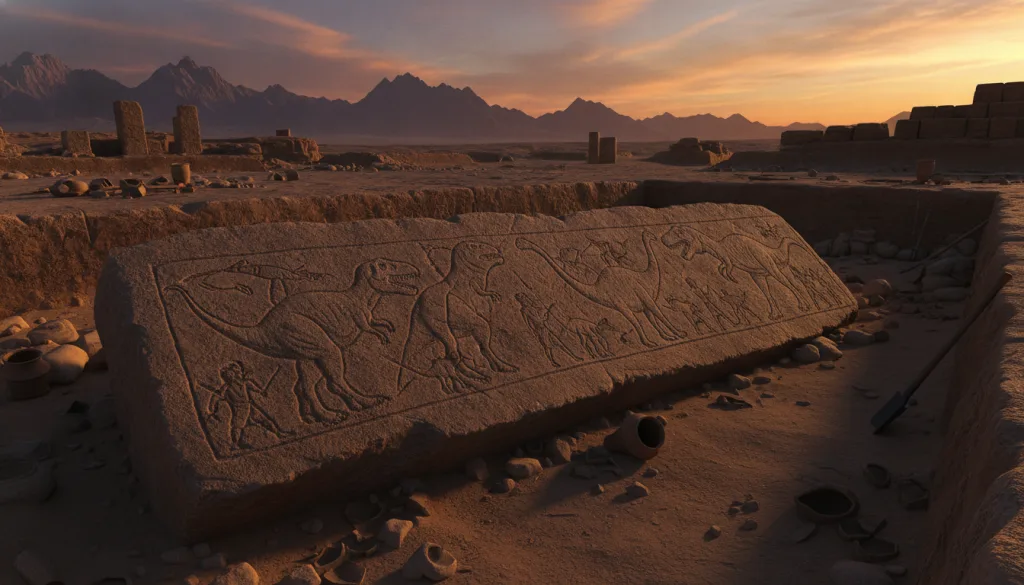
The physical characteristics of the Ica Stones play a crucial role in the ongoing debate regarding their authenticity. The stones are primarily composed of a type of sedimentary rock known as limestone, which is abundant in the Ica region. Scientific analysis has revealed varying levels of weathering and erosion on different stones, suggesting that some may indeed be ancient, while others display more recent alterations. Furthermore, a study conducted by Dr. Carla A. Zavaleta in 2013 analyzed the mineral composition and surface characteristics of some Ica Stones, concluding that many bore signs consistent with modern carving techniques.
Scientific Methodology and Challenges
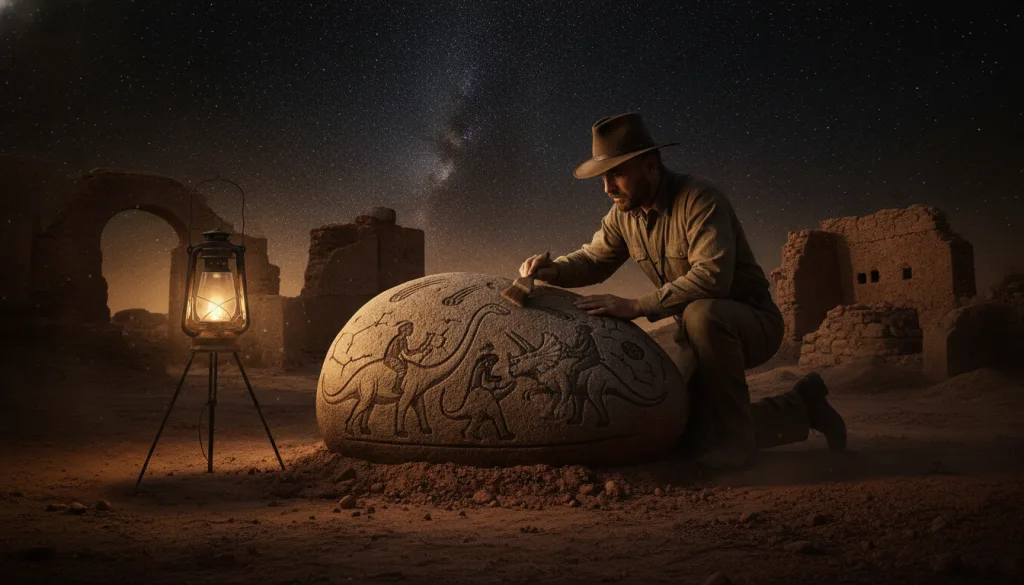
One of the significant challenges in conducting scientific investigations of the Ica Stones lies in the sheer volume of artifacts and the lack of a clear provenance for many of them. Many stones remain in private collections, making it difficult for researchers to access them for comprehensive examination. Proposed methods of studying the stones have included thermoluminescence dating, which can measure the last time a mineral was heated, and microscopic analysis of tool marks to identify carving techniques. However, such studies require access to the artifacts themselves, often hampered by their dispersal across private hands.
Our analysis:
The evidence strongly indicates that the Ica Stones are a product of modern fabrication rather than authentic artifacts from a long-lost civilization. The stylistic uniformity, lack of wear consistent with ancient objects, and the dubious provenance of many stones collectively suggest a more contemporary origin. Yet, the fascination surrounding these carvings highlights a deeper human need to connect with myths of our past, challenging the boundaries of our understanding and the narratives we accept.
Although the scientific community may regard the Ica Stones as forgeries, the cultural impact and the questions they raise about our history cannot be dismissed. They serve as a reminder of humanity’s enduring fascination with the unknown and the possibility of rewriting historical narratives, even in the face of overwhelming evidence to the contrary. The Ica Stones remain an enigma, a testament to the complexities of our understanding of ancient human and dinosaur interactions and a vivid illustration of the lengths to which we will go to unearth our past.
Sources & References
Cabrera, J., Los Mensajes de las Piedras, 1974, Editorial Los Mensajes.
Zavaleta, C. A., "Chemical and mineralogical characterization of Ica stones," 2013, Journal of Archaeological Science.
Rodriguez, M. A., "Legends of the Ica Stones," 2011, Archaeology Today.
Hancock, G., Fingerprints of the Gods, 1995, Crown Publishing.
von Däniken, E., Chariots of the Gods?, 1968, Putnam Publishing.






Comments 0
Be the first to comment!