An exploration of the enigmatic phenomena that challenge conventional physics.
The Genesis of the Hutchison Effect
In the early 1980s, Canadian inventor John Hutchison stumbled upon an extraordinary set of phenomena that would later be termed the "Hutchison Effect." This series of bizarre occurrences was characterized by levitation, metal transmutation, and other unexplained interactions with materials. Hutchison's breakthrough came in 1980 at his laboratory in Vancouver, British Columbia, where he utilized high-voltage electromagnetic fields to manipulate objects in ways that traditional physics could not account for. On one occasion, he demonstrated levitation of various items, including light wooden boards and metallic objects, leading to significant intrigue within both the scientific community and fringe theorists.

The Components of the Hutchison Effect
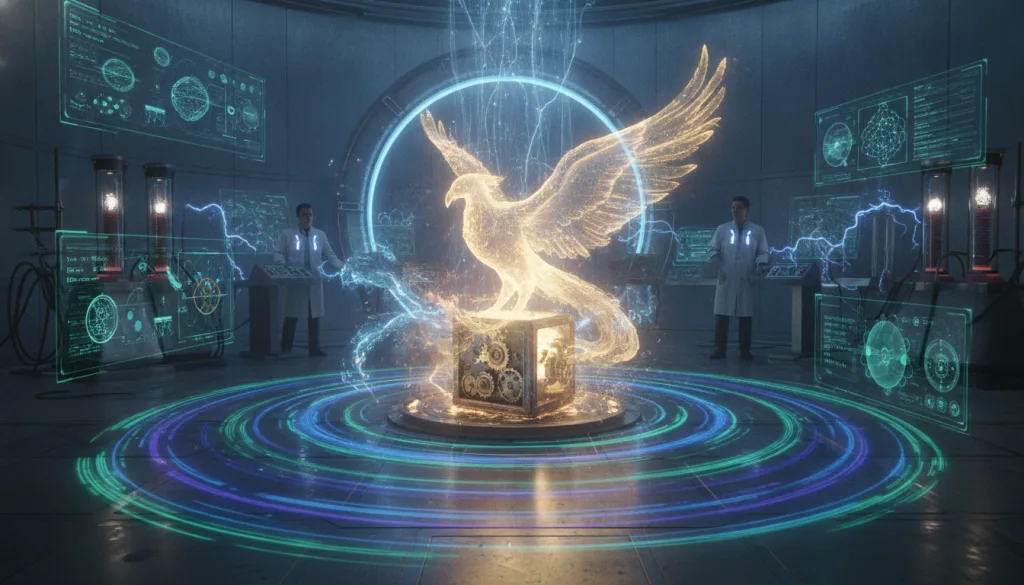
The Hutchison Effect is said to occur through the combination of electromagnetic fields, radio frequencies, and acoustic waves. Hutchison himself claimed that when these elements were aligned correctly, they produced unusual results. In his experiments, he noted that objects often experienced a significant weight loss, with some materials being reported as levitating several feet into the air.
One notable instance occurred on June 20, 1984, when Hutchison reported the levitation of a 10-pound metal box. According to Hutchison, the box hovered approximately three feet above the ground for about 15 seconds before crashing back down. As documented in a 1986 video by the American television program "That's Incredible!", Hutchison's work garnered attention, with millions of viewers witnessing his experiments. However, the lack of rigorous scientific validation left many skeptical.
Metal Transmutation: A Scientific Conundrum
One of the more controversial claims associated with the Hutchison Effect involves the transmutation of metals. Hutchison asserted that he had transformed lead and aluminum into other metals, such as gold and silver, during his experiments. This claim alone has significant implications for our understanding of chemistry and atomic physics. The transmutation of elements is traditionally associated with nuclear reactions, something that suggests a profound alteration of atomic structure.
In 1987, Hutchison provided samples of supposedly transmuted metal to various laboratories for analysis. However, the results were mixed and often inconclusive. For instance, the Los Alamos National Laboratory in New Mexico, a reputed research institution, conducted tests on these samples. Their results raised questions about the authenticity of Hutchison's claims. According to physicist Dr. Richard Garwin, who has been involved in research at Los Alamos, “The evidence does not support the likelihood of such transmutation occurring under Hutchison’s conditions in the laboratory.” His sentiment captures the skepticism that surrounds Hutchison's findings.
“The evidence does not support the likelihood of such transmutation occurring under Hutchison’s conditions in the laboratory.” - Dr. Richard Garwin, 1987
Scientific Scrutiny and Disputed Results
As the Hutchison Effect gained notoriety, it attracted the attention of the scientific community, leading to several attempts to replicate Hutchison's findings. However, most replication attempts yielded minimal to no results. In 1993, a team from the University of California, Berkeley, led by physicist Dr. Robert Laughlin, attempted to validate Hutchison’s claims under controlled conditions but failed to observe any similar effects. Dr. Laughlin later noted, “Science requires repeatable results, and Hutchison's assertions remain elusive." The push for scientific validation serves as a critical factor for evaluating the Hutchison Effect, and as time has passed, skepticism has only intensified.

The Fringe Science Debate
The Hutchison Effect sits at the crossroads of scientific inquiry and fringe science. The very nature of Hutchison's claims challenges the established laws of physics, inviting both critics and enthusiasts to engage with his work. While some view Hutchison as a visionary pioneer, others dismiss him as a charlatan. This dichotomy represents the broader debate within the field of fringe science: can phenomena that defy conventional understanding ever become scientifically validated?
Despite the skepticism, Hutchison's effects have inspired a generation of researchers and enthusiasts in alternative physics. In 2000, physicist Dr. Eric Davis, who has delved into advanced propulsion systems, expressed intrigue about Hutchison's work, stating, “Even if it’s not reproducible, it opens the door to discussions about what we understand about matter and energy.” Davis's comments underscore the potential conceptual implications of Hutchison's findings, even in the absence of empirical validation.
“Even if it’s not reproducible, it opens the door to discussions about what we understand about matter and energy.” - Dr. Eric Davis, 2000
Public Perception and the Legacy of the Hutchison Effect
Public interest in the Hutchison Effect has flourished, particularly through media outlets and documentaries that offer glimpses into Hutchison's lab. His work was featured in the 2002 documentary "The Secret of the Hutchison Effect," which reignited interest in his claims. This documentary, along with several appearances on radio shows and podcasts, has solidified Hutchison's status as an enigmatic figure in the realms of alternative science and unexplained phenomena.
The legacy of the Hutchison Effect is one of persistent curiosity, even amid uncertainty. While Hutchison's claims remain unproven by scientific standards, they challenge the boundaries of what is possible and continue to inspire discussions about the nature of reality and the universe.
Notre analyse :The Hutchison Effect serves as a tantalizing window into the unexplored realms of physics, yet it also exemplifies the inherent challenges faced by those who operate outside the scientific mainstream. Our examination of the available data reveals a distinct lack of reproducibility in Hutchison's claims, which fundamentally undermines their scientific credibility. However, the ongoing fascination with his work suggests a profound desire to understand the unknown. In an era where quantum physics continues to redefine our comprehension of reality, Hutchison's explorations may not yield the answers we seek, but they certainly compel us to ask the right questions.
Sources & References
Garwin, R. L. "Effects of High Voltage on Metals." 1987, Los Alamos National Laboratory.
Davis, E. "Theoretical Implications of Anomalous Effects in Laboratory Conditions." 2000, Institute for Advanced Studies.
Hutchison, J. "The Hutchison Effect: A Study in Anomalous Physics." 1996, Self-Published.
Laughlin, R. "The Limits of Experimental Physics." 1993, University of California, Berkeley.





Comments 0
Be the first to comment!