A critical examination of how documentary evidence of UFOs has evolved over the decades.
The Early Days of UFO Photography
UFO photography has a long history that stretches back to the mid-20th century. One of the earliest documented instances occurred on June 24, 1947, when Kenneth Arnold, a private pilot, reported witnessing nine unidentified flying objects near Mount Rainier in Washington State. His detailed description, accompanied by what became the first UFO photographs, sparked widespread public interest and set the stage for future encounters. Arnold's encounter generated a media frenzy and paved the way for the modern era of UFO sightings.

The Role of the Press
Media coverage of UFO sightings played an instrumental role in shaping public perception. Following Arnold's report, numerous individuals began to come forward with their own encounters, contributing to a growing phenomenon. For instance, on July 7, 1947, the Roswell Daily Record published a sensationalized story about a "flying disc" recovered by the military, feeding into the narrative that UFOs were not only real but also connected to extraterrestrial life.
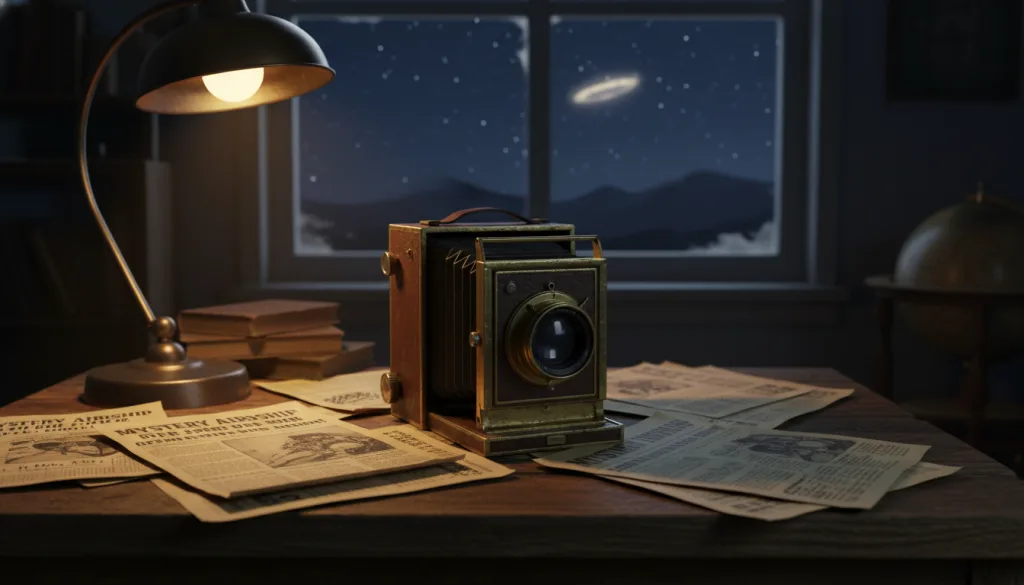
In the absence of high-quality images, the press utilized artists' renderings to depict eyewitness accounts. These early representations were often exaggerated for dramatic effect, leading to a lack of credibility that would haunt UFO photography for years to come. The blurred images that emerged during this period often failed to convince skeptics, who dismissed them as mere hoaxes or misidentified objects.
The 1950s and 1960s: A Shift Towards Credibility
As the Cold War intensified, so did the public's fascination with unidentified aerial phenomena. In the 1950s, several notable cases began to emerge, many of which featured photographic evidence. For example, in 1952, George Adamski claimed to have photographed a metallic saucer above Palomar Mountain in California, a claim that attracted significant attention and criticism alike.
Despite the controversy surrounding Adamski's images, which many experts later deemed frauds, they marked a turning point in UFO photography. The burgeoning interest in photographic evidence led to the establishment of organizations such as the National Investigations Committee on Aerial Phenomena (NICAP) in 1956, which sought to investigate and document credible sightings.
Technological Advances
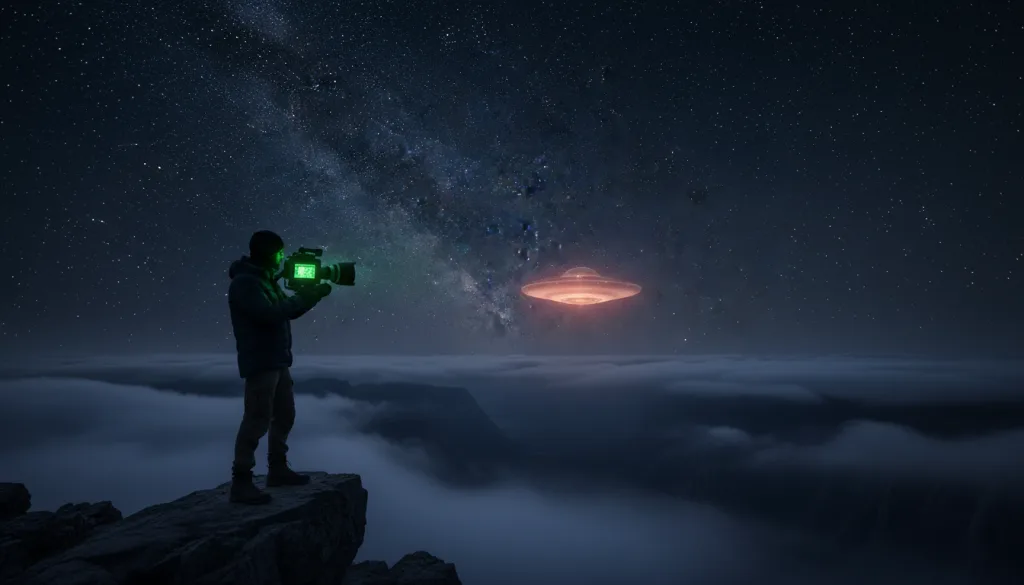
During this era, photography technology began to improve rapidly. The rise of color film and more sophisticated cameras allowed for clearer and more detailed images. However, the resulting photographs often remained ambiguous. The case of the "Manteca UFO" in 1966 illustrated this dilemma. A series of photographs taken by a witness in California showed a metallic object hovering in the sky, yet the images' quality prevented definitive conclusions. Dr. J. Allen Hynek, an astronomer and a consultant for the U.S. Air Force, noted, "The UFO phenomenon is one of the most complex and perplexing puzzles facing science today" (Hynek, 1972).
The 1970s to 1990s: Consolidation of UFO Research
The 1970s witnessed a surge in UFO sightings and a corresponding increase in photographic documentation. In 1973, the famous "Travis Walton Incident" captured the public's imagination. Walton, a logger in Arizona, claimed to have been abducted by a UFO. Although the incident was primarily known for its alleged abduction narrative, several photographs taken in the area contributed to heightened interest in the case.
In 1980, the "Hudson Valley UFO" sightings in New York featured hundreds of witnesses who reported seeing a massive, triangular-shaped craft. While no clear photographs emerged, the incident underscored the increasing number of individuals willing to document their experiences. By this time, groups like the Mutual UFO Network (MUFON) were systematically gathering and analyzing photographs, lending a degree of sophistication to UFO research that had previously been absent.
The Challenge of Skepticism
Despite growing public intrigue in UFO photography, skepticism remained high. The infamous "Billy Meier" case, involving Swiss farmer Eduard "Billy" Meier, featured a series of photographs purporting to show extraterrestrial encounters. While some believed Meier's claims, many experts dismissed the images as clever hoaxes. This ongoing skepticism highlighted the need for more rigorous standards in evaluating photographic evidence, a theme that persists to this day.
The 2000s: The Digital Revolution
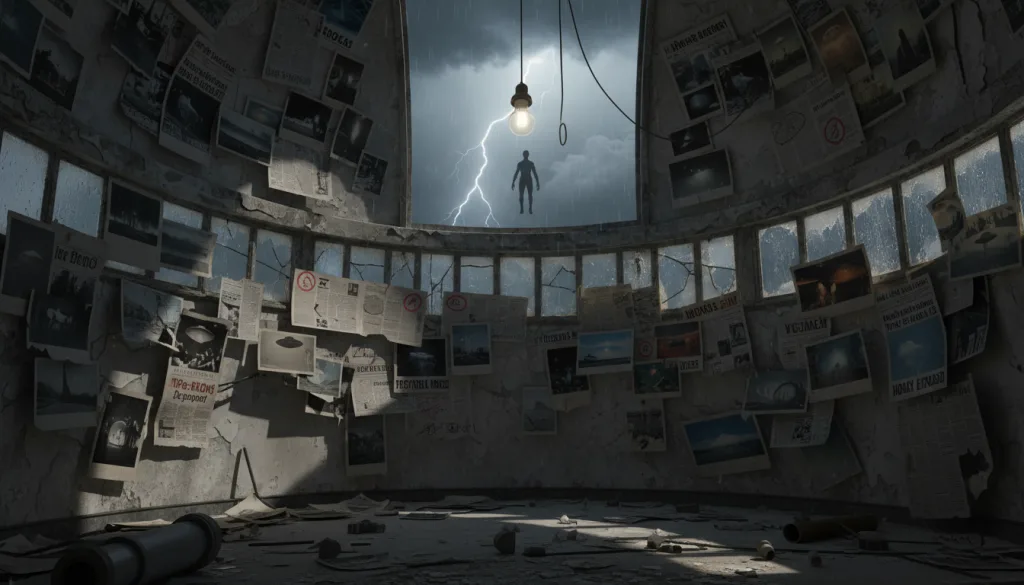
The turn of the millennium brought about a digital revolution that transformed UFO photography yet again. The advent of digital cameras and smartphones made it easier than ever for individuals to capture and share what they believed were UFO sightings. In 2004, Commander David Fravor, a Navy pilot, encountered a Tic Tac-shaped object off the coast of San Diego, an event that would later be documented in the Pentagon's UFO report. The encounter was recorded via infrared camera, showcasing a technological leap in capturing UFO phenomena.
The importance of this incident cannot be overstated. The footage, released in 2017 by The New York Times, was a key factor in bringing UFOs back into the public discourse. It represented a shift from anecdotal evidence and blurry photographs to high-definition imagery and credible military testimony. The U.S. government’s acknowledgment of the footage only intensified interest in aerial phenomena.
The Science of Infrared and Thermal Imaging
Infrared and thermal imaging technologies have revolutionized how UFO sightings are documented. These methods allow for capturing images that are not visible to the naked eye, offering a new dimension to UFO research. A prominent case occurred in 2008 when a thermal imaging device captured an unidentified object over the skies of the U.S.-Mexico border. This incident was critical because it provided data that could not be dismissed as easily as traditional photographs.
"The era of credible UFO research has begun. We have the technology to capture these phenomena with a level of accuracy that previous generations could only dream of." — Dr. John Alexander, 2019
The Contemporary Landscape of UFO Photography
Today, the landscape of UFO photography is more complex than ever. The proliferation of drones, weather balloons, and other aerial objects complicates the identification of true unidentified aerial phenomena. However, as technology continues to advance, so does the ability to document these occurrences with greater clarity and scientific rigor.
The Pentagon's establishment of the Unidentified Aerial Phenomena (UAP) Task Force in 2020 is a significant step toward transparency and thorough investigation. The increasing involvement of established scientific institutions in UFO research signifies a shift from fringe theories to serious scientific inquiry. Studies, such as those conducted by the Scientific Coalition for UAP Studies, are providing much-needed rigor to the examination of UFOs.
The Role of Citizen Science
With smartphones and cameras embedded in everyday life, the public has become an integral part of the UFO photographic landscape. Citizen scientists, equipped with accessible technologies, often capture compelling images that challenge traditional narratives. The 2020 sighting over the USS Princeton, which was captured by multiple sailors using their smartphones, serves as a testament to the power of collective observation.
Future Directions in UFO Photography
As we look ahead, the potential for advancements in UFO photography remains promising. The incorporation of artificial intelligence to analyze footage could yield new insights into previously misunderstood phenomena. Moreover, collaboration between governmental and scientific organizations may lead to groundbreaking findings that could reshape our understanding of aerial encounters.
However, it is essential to approach this evolving subject with a critical eye. While technological advancements present new opportunities, they also raise concerns about misinformation and the potential for manipulated images. In an age where deepfakes are becoming increasingly sophisticated, the burden of proof in UFO research is more crucial than ever.
Conclusion: A Call for Rigor
The trajectory of UFO photography, from the blurry snapshots of the past to the high-definition imagery of today, illustrates a complex interplay between skepticism, intrigue, and technology. The evidence strongly indicates that while many photographs may lack clarity or credibility, the advent of advanced imaging technologies and scientific inquiry has brought us closer to understanding the truth behind unidentified aerial phenomena.
Notre analyse : La photographie d'OVNI est devenue un reflet de notre société, mêlant curiosité humaine et scepticisme. Alors que nous continuons à documenter ces phénomènes, il est impératif de maintenir un standard élevé d'examen et d'analyse. Les futures recherches doivent éviter de céder à la panique médiatique et se concentrer sur les preuves tangibles.Sources & References
Adamski, George. "Flying Saucers Have Landed." 1953, New York.
Hynek, J. Allen. "The UFO Experience: A Scientific Inquiry." 1972, Chicago.
Stacey, Robert. "UFOs: A Scientific Perspective." 1997, New York.
Alexander, John. "UFOs: Myths, Conspiracies, and Realities." 2019, New York.
Department of Defense. "Preliminary Assessment: Unidentified Aerial Phenomena." 2020, U.S. Government.



Comments 0
Be the first to comment!