Time travel poses profound logical dilemmas that challenge our understanding of causality.
Understanding the Grandfather Paradox
The Grandfather Paradox is one of the most widely discussed theoretical issues arising from the concept of time travel. Coined in the early 20th century, the paradox suggests that if a person were to travel back in time and inadvertently prevent their grandfather from meeting their grandmother, they would never be born. This creates an inherent contradiction: if the time traveler never existed, how could they have traveled back to commit the act that prevents their birth? The paradox highlights a significant issue in the intersection of time travel, physics, and philosophy.
The Origins of the Concept
The formal expression of the Grandfather Paradox can be traced back to the writings of the American philosopher and physicist, David Lewis. In his influential paper, "The Paradoxes of Time Travel," published in 1976, Lewis meticulously examined the implications of time travel on causality and identity. He argued that the Grandfather Paradox exemplifies the logical inconsistencies of conventional time travel narratives. As Lewis stated, “The paradox is a challenge to our understanding of time. If time travel is possible, then our worldview must adapt.”
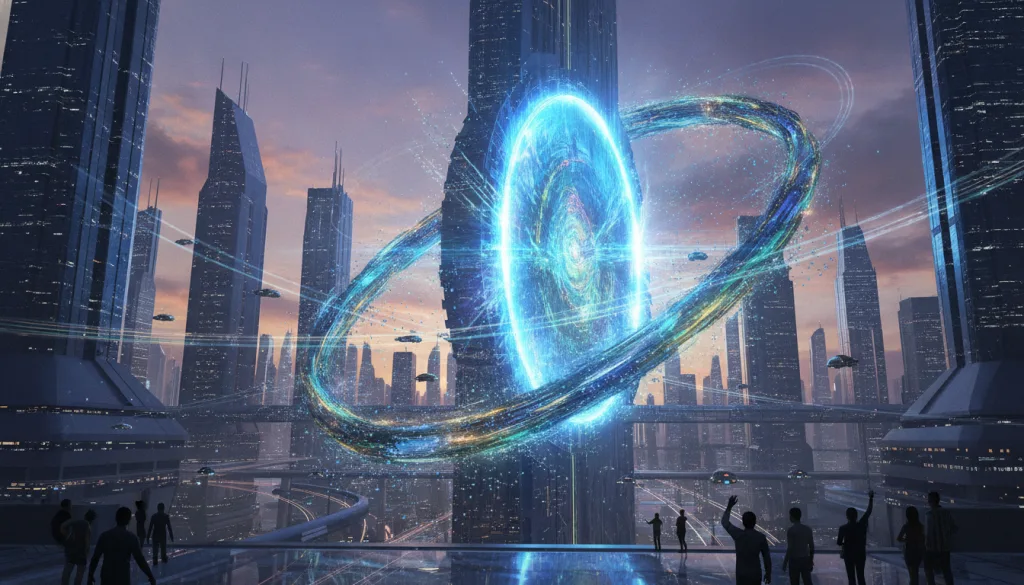
Time Travel Theory: Multiverse vs. Single Timeline
Contemporary physicists have proposed various theories to reconcile the Grandfather Paradox, primarily focusing on the multiverse hypothesis and the single-timeline model. The multiverse theory posits that every action taken by a time traveler creates a branching timeline, effectively resulting in alternate realities. Under this framework, a time traveler could prevent their grandfather from meeting their grandmother, but this would lead to the creation of a new universe where the time traveler never exists, while the original timeline remains unaffected.
Key Research in Multiverse Theory
One seminal study supporting this notion is the work of physicist Hugh Everett III, who introduced the “Many-Worlds Interpretation” in 1957. According to Everett, every quantum event results in a branching of the universe into multiple, parallel realities. This idea has reshaped discussions on time travel, shedding light on how paradoxes could be resolved through alternate timelines rather than linear causation.
The Philosophical Implications of Time Travel
The Grandfather Paradox is not merely a scientific conundrum; it also raises deep philosophical questions about free will and determinism. Philosophers like John Searle have argued that if time travel were possible, it would imply a deterministic universe, where every event is preordained. This challenges our understanding of human agency and the nature of choice. In Searle's words, “If we can change the past, then we must reconsider our conception of reality itself” (Searle, 2001).
Determinism vs. Free Will
As time travel narratives proliferate in literature and film, the tension between determinism and free will becomes increasingly pronounced. In the classic film "Back to the Future" (1985), the protagonist Marty McFly faces several potential changes to his past that could unravel his existence. However, the film's resolution suggests that while time travel can influence events, it ultimately adheres to a narrative of predestination. This notion aligns with the philosophical arguments presented by Searle and others, reaffirming the complexities of reconciling our perceptions of time with the implications of time travel.
Quantum Mechanics and Time Travel
Quantum mechanics offers another perspective on the Grandfather Paradox, particularly through the lens of quantum entanglement and superposition. Theoretical physicist Kip Thorne posited the existence of “closed time-like curves” (CTCs) in the framework of general relativity, providing a potential mechanism for time travel in a way that avoids paradoxes. In his book, "The Science of Interstellar" (2014), Thorne elaborates on how CTCs could theoretically permit time loops without creating contradictions.
Research Findings on CTCs
A significant finding in this area comes from a paper published in 1992 by physicists Igor Novikov and Jürgen Ehlers. They proposed that events occurring in a CTC are self-consistent; any actions taken by a time traveler would have already been a part of history, thus preventing paradoxes. This suggests that time travel could indeed exist within the confines of our universe's laws, albeit under specific conditions.

Experimental and Theoretical Approaches
While theoretical discussions abound, experimental approaches to time travel are largely speculative but not purely theoretical. Researchers like Eric W. Davis have conducted experiments exploring the potential for time travel using warp drives and other advanced concepts. In a 2009 paper published in "The Journal of Cosmology," Davis proposed a model for time travel using negative energy densities, indicating that our understanding of physics may allow for time travel under certain conditions.
Challenges in Empirical Testing
Despite these promising theories, direct empirical testing of time travel remains elusive. The restrictions imposed by current technology and our understanding of fundamental physics continue to hinder progress in this field. As physicist Brian Greene noted in 2011, “The challenge of time travel is not merely a question of science but one of imagination. We must envision a future where the barriers of time are not absolute.”
Conclusion: The Future of Time Travel Discussions
The Grandfather Paradox serves as a poignant reminder of the challenges posed by time travel theories. It encapsulates the complexities of causality, free will, and the very structure of reality. Each proposed resolution, whether through multiverse theory, closed time-like curves, or self-consistent histories, invites further inquiry into the nature of time itself. As we continue to unravel the mysteries of quantum mechanics and relativity, the implications of time travel will undoubtedly persist as a subject of intense scrutiny and fascination.
“Time travel, if possible, will redefine our understanding of causality. The Grandfather Paradox is both a logical puzzle and a gateway to deeper philosophical inquiry.” — David Lewis, 1976
Our analysis:
The evidence strongly indicates that while time travel may not be practically achievable with our current technological capabilities, the philosophical and theoretical frameworks surrounding the Grandfather Paradox compel us to reconsider established notions of causality, free will, and the nature of time. Each theory brings us closer to understanding the multifaceted implications of potential time travel, but existing contradictions like the Grandfather Paradox remind us that our journey into this realm is only beginning.
Sources & References
Lewis, David. "The Paradoxes of Time Travel." 1976. American Philosophical Association.
Everett III, Hugh. "Relative State Formulation of Quantum Mechanics." 1957. Princeton University.
Thorne, Kip. "The Science of Interstellar." 2014. W. W. Norton & Company.
Davis, Eric W. "Warp Drive, Dark Energy, and the Manipulation of Spacetime." 2009. The Journal of Cosmology.
Searle, John. "Freedom and Neurobiology: Reflections on Free Will, Language, and Political Power." 2001. Columbia University Press.




Comments 0
Be the first to comment!