In 1999, a group of high-ranking military officials and scientists in France publicly recognized the reality of UFOs, challenging the paradigm of disbelief.
The Birth of COMETA
The Comité d'Études de Phénomènes Aérospatiaux Non Identifiés, commonly known as COMETA, emerged from an initiative led by influential figures in the French military and scientific community. Established in 1999, this independent group aimed to investigate unidentified aerial phenomena (UAP) seriously. The inception of COMETA can be traced to a meeting held in Paris on July 5, 1998, attended by prominent members, including General Bernard Norlain, who served as the organization’s president, and physicist and aerospace engineer Michel Algrin. Their collective goal was to assess the body of evidence surrounding UFO sightings in France and beyond, and produce a comprehensive report.
An Official Statement
In the final document published in 1999, titled “Les OVNIs et la Défense: Alerte Rouge,” COMETA detailed findings that would reverberate through the international UFO research community. The report comprised an analysis of over 200 UFO incidents, corroborated by radar data, visual sightings, and pilot testimonials. The conclusion was unequivocal: UFOs, or UAPs, were real phenomena deserving of serious consideration and scientific inquiry.
“The evidence is overwhelming; it is time to take this issue seriously.” — General Bernard Norlain, 1999
Historically, France has maintained a unique relationship with the study of UFOs, one that diverges from the skepticism often seen in other nations. The French government established the GEPAN (Groupe d'Étude des Phénomènes Aérospatiaux Non Identifiés) in 1977, which was later restructured as SEPRA (Service d'Études des Phénomènes Rares Aérospatiaux) in 1988. This institution was primarily tasked with investigating UFO phenomena from a scientific perspective. Throughout the years, GEPAN and SEPRA produced various reports, some of which hinted at the need for a broader understanding of these unexplained aerial phenomena.
Key Incidents Leading to COMETA
Several documented incidents precipitated the formation of COMETA. Notably, the 1980 Valensole incident, where a farmer named Maurice Masse claimed to have encountered an unidentified object while tending his lavender fields in southeastern France, garnered significant attention. Masse reported that he experienced time loss and physical effects after the encounter, underscoring the necessity for a structured investigation into such phenomena. Similar cases from the 1980s and early 1990s, including sightings by military pilots and radar operators, added weight to the claims leading up to the establishment of COMETA.
The COMETA report can be divided into several fundamental findings that challenge the conventional understanding of UFOs. Firstly, it highlighted the consistency of credible testimonies from military personnel, civil aviation pilots, and ordinary citizens who reported sightings described as inexplicable. The report emphasized the need for the French military to consider the implications of these sightings on national defense and security.
Military Implications
One of the striking elements of the COMETA report was its candid acknowledgment of the potential military implications associated with UAPs. General Norlain articulated a clear perspective: “If these phenomena are extraterrestrial in origin, it is imperative that we understand their capabilities and intentions.” This statement reflects a fundamental shift in military thinking; UFOs could no longer be dismissed as mere figments of imagination or misidentified aircraft. The COMETA report urged the French military to reevaluate its stance on unidentified aerial phenomena and prioritize further research.
“The COMETA study brings to light an undeniable truth: we are not alone in this universe.” — Michel Algrin, 1999
The publication of the COMETA report was met with a blend of skepticism and intrigue, both within France and internationally. While many researchers celebrated the acknowledgment of UFOs as real phenomena, the military and government institutions remained largely reticent. The report's findings sparked debates in various forums, leading to discussions on how to approach the issue of UFOs at the governmental level.
International Perspectives
The reactions outside of France were equally complex. In the United States, UFO research was largely relegated to fringe groups and conspiracy theories. The U.S. military had its own history of dismissing UFO reports, notably exemplified by Project Blue Book, which ran from 1952 to 1969. The contrast between France’s official stance and the U.S. military's dismissal of similar phenomena highlighted an intriguing dichotomy in governmental approaches to unidentified aerial phenomena.
As the years passed, the legacy of the COMETA report would influence a new generation of researchers and enthusiasts. After its publication, a renewed wave of scientific inquiry into UFOs emerged, culminating in initiatives like the recent U.S. government efforts to study UAPs more seriously. This shift in perspective can partly be traced back to the foundational work laid by COMETA.
Modern Developments and Comparisons
Fast forward to 2020, the U.S. Department of Defense established the Unidentified Aerial Phenomena Task Force (UAPTF), indicating a significant evolution in the approach to UFOs. This initiative sought to investigate UAPs more systematically, marking an acknowledgment of the need to understand these phenomena in the context of national security, similar to the assertions made by COMETA twenty-one years prior. The public release of Pentagon videos showing UAPs in 2020 further ignited global interest, reminiscent of the discussions ignited by the COMETA report decades earlier.
“The emergence of governmental task forces dedicated to studying UAPs is a testament to the growing recognition that these phenomena cannot be ignored any longer.” — Dr. Jacques Vallée, 2020
The COMETA report has played a pivotal role in educating the public about UFOs and their implications. While UFOs were long dismissed by mainstream science, the report’s findings encourage a more nuanced discussion. Educational initiatives and conferences dedicated to the subject have become more frequent, allowing for the dissemination of credible information to the public. Organizations such as the Mutual UFO Network (MUFON) and the Center for the Study of Extraterrestrial Intelligence (CSETI) have taken cues from the report's approach and have worked to promote informed dialogue on the topic.
The Role of Technology in UFO Research
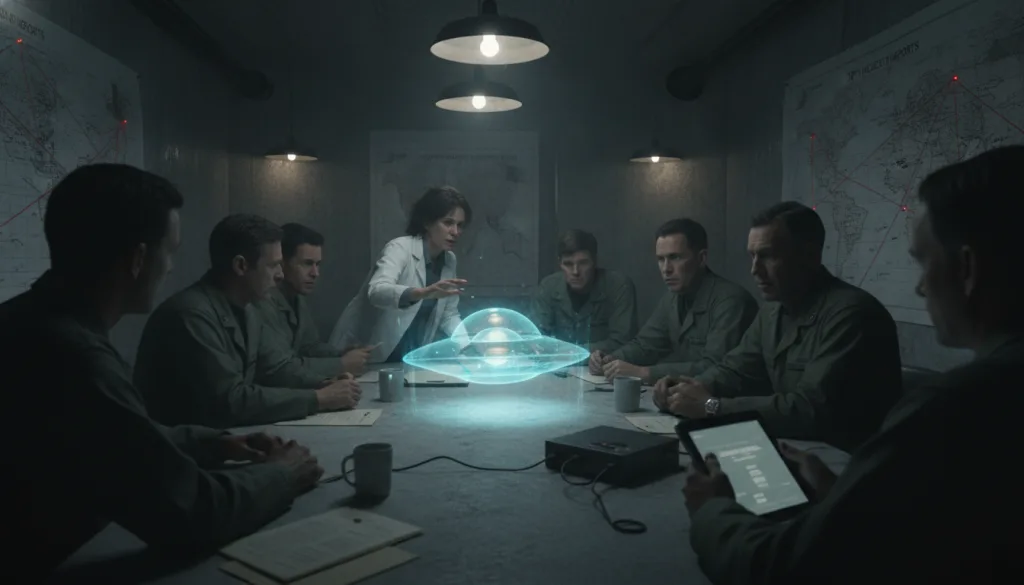
Technological advancements also play a crucial role in contemporary UFO research. The use of sophisticated radar systems, drones, and satellite technology allows researchers to gather more accurate data, fostering a scientific approach to what has often been a contentious field. In this digital age, citizens can readily report sightings and share data, creating a more comprehensive database for future investigations.
The COMETA report stands as a watershed moment in the discourse surrounding UFOs, not only in France but globally. The brave stance taken by military leaders and scientists in 1999, asserting that UFOs are real phenomena, demonstrates the need for ongoing research, collaboration, and open-mindedness in the face of what remains an unexplained mystery. As countries like the United States begin to follow suit, it becomes increasingly clear that a serious, methodical approach to the study of unidentified aerial phenomena is not merely warranted; it is essential. The evidence strongly indicates that we must embrace the unknown rather than shy away from it, as history has shown that knowledge is power.
Notre analyse : La publication du rapport COMETA a provoqué une prise de conscience collective sur les phénomènes aériens non identifiés. Ce rapport, qui a articulé des conclusions basées sur des données et des témoignages concrets, a ouvert la voie à une acceptation plus large de l’idée que les OVNIs pourraient avoir des implications sérieuses non seulement pour la recherche scientifique mais aussi pour la sécurité nationale. La France a pris une position qui, bien que controversée à l’époque, a posé les bases d’un dialogue nécessaire qui émerge aujourd'hui dans le cadre d’initiatives gouvernementales modernes.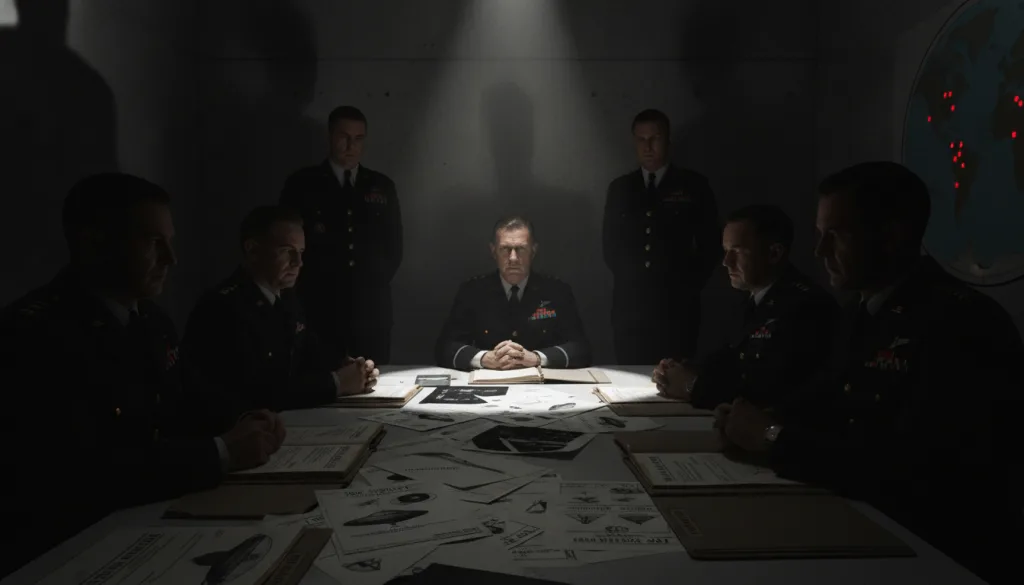

Sources & References
COMETA, Les OVNIs et la Défense: Alerte Rouge, 1999, COMETA.
Vallée, Jacques, Forbidden Science: Journals 1957-1969, 1992, North Atlantic Books.
Norlain, Bernard, et al., Rapport sur les Phénomènes Aérospatiaux Non Identifiés, 2000, Ministère de la Défense, France.
GEPAN, Dossier des Phénomènes Aérospatiaux Non Identifiés, 1977, CNES.
U.S. Department of Defense, Unidentified Aerial Phenomena Task Force Report, 2020, U.S. Government.






Comments 0
Be the first to comment!