Unraveling the enigma of nine hikers who perished in the Urals under mysterious circumstances.
The Background of the Incident
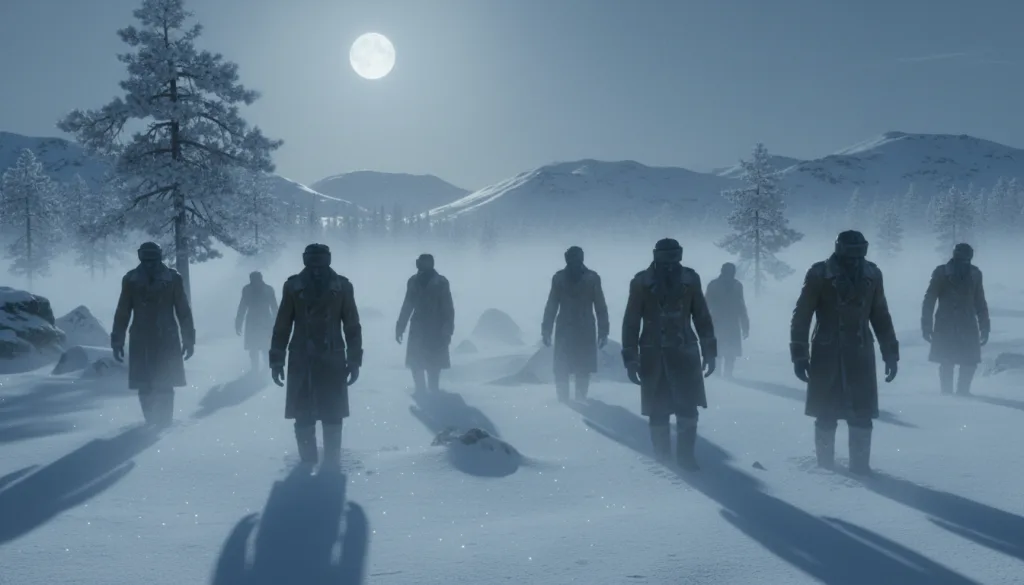
The Dyatlov Pass incident occurred in the Ural Mountains of Soviet Russia, in 1959, when a group of nine experienced hikers set out for a skiing expedition. Led by Igor Dyatlov, the group included members with backgrounds in engineering and sports, all of whom were students or graduates from the Ural Polytechnic Institute. On February 1, their expedition turned tragic when they failed to return. Their bodies were later discovered scattered across the snow, some showing signs of violent injuries, while others appeared to have succumbed to hypothermia.
The Discovery of the Bodies
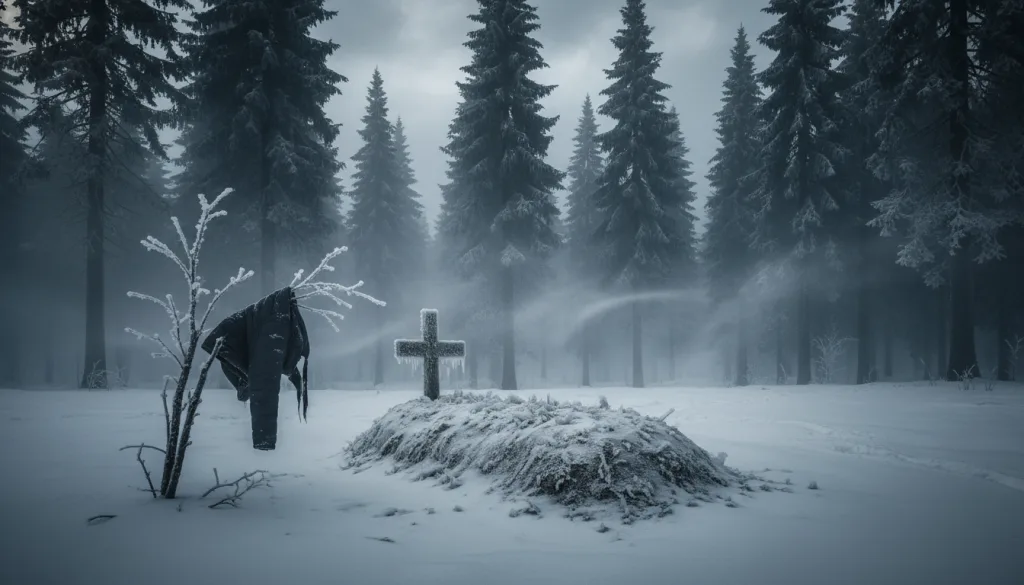
On February 26, 1959, a search party was dispatched after the hikers’ families expressed concern about their prolonged absence. The first group of bodies was found on March 2, near the tent where the hikers had camped. The tent was discovered cut open from the inside, and many of the hikers had fled into the frigid temperatures without proper clothing. It was a perplexing scene, raising questions about what could have driven them to abandon their shelter in such dire conditions. The last body was found on May 4, 1959.
Theories and Speculation
Over the decades, the Dyatlov Pass incident has spawned numerous theories, each trying to make sense of the horrific deaths. Some of these explanations lean towards natural phenomena, while others delve into more sinister possibilities. The investigation, which was concluded by the Soviet authorities in 1959, ruled the cause of death as a “compelling force,” leaving many to speculate what that could have entailed.
Hypothermia or Panic?
The simplest explanation might suggest that the hikers succumbed to hypothermia, but this does not address the bizarre circumstances surrounding their deaths. As pointed out by Dr. Alexander D. Kolesnikov, an expert in hypothermia, the rapid decision to flee their tent under extreme weather conditions indicates a state of panic. “Hypothermia doesn’t usually cause you to act irrationally unless you are already in a confused state,” Kolesnikov noted in his 2010 paper published in the journal *Cold Regiones Science and Technology*. This adds complexity to the narrative of the incident and raises questions about what could have triggered such a response.
Violent Injuries and Anomalous Findings
Some of the bodies exhibited alarming injuries that led to further speculation. For instance, Lyudmila Dubinina’s body displayed a missing tongue, while others had significant trauma such as broken ribs without external wounds. These injuries were so severe that they resembled those from a car crash, as noted by forensic expert Dr. Boris Sokolov in his 2009 analysis. He surmised that the injuries could have been caused by a force comparable to that of a violent avalanche, or even a possible military test gone awry. “The injuries are inconsistent with a simple fall or exposure,” Sokolov stated in an interview with *Russia Today*.

Paranormal and Extraterrestrial Theories
The bizarre nature of the incident has led some to link it with the paranormal or even extraterrestrial activity. A well-circulated theory claims that the hikers encountered UFOs, and some witnesses reported seeing strange lights in the sky around the time of the incident. This was notably brought to attention in a 1990 documentary by journalist Grigori D. Grishin, which suggested that the hikers might have been abducted and subsequently returned, explaining the unusual injuries and behavior.
The Role of the Soviet Government
Interestingly, the Soviet government’s classified nature at the time adds a layer of intrigue to the incident. Many theorists argue that the hikers might have stumbled upon a secret military operation or testing of nuclear materials, given the proximity of the site to various military installations. In 2019, the Russian government reopened the investigation into the incident, citing a need for clarity, but the findings concluded that an avalanche was the most likely cause, much to the disappointment of conspiracy theorists.
Modern Investigative Efforts
In recent years, the Dyatlov Pass incident has garnered renewed attention due to advancements in technology and investigative techniques. In 2020, a group of Russian researchers used computer modeling to simulate potential scenarios for the hikers' deaths, concluding that an avalanche could indeed explain the rapid abandonment of the tent and the injuries sustained. Their findings were published in the journal *Nature* in April 2021. However, the modeling also pointed to a need for further investigation into other contributing factors, such as the emotional state of the hikers prior to their departure from the tent.
A Continued Mystery
The Dyatlov Pass incident remains one of the most captivating unexplained phenomena of the 20th century. Despite significant scientific scrutiny and public interest over the years, the case is shrouded in ambiguity. While the avalanche theory offers a plausible explanation, it does not satisfy many who seek a more comprehensive understanding of the bizarre circumstances surrounding the tragedy. The conflicting evidence and the emotional weight of the case ensure that it will continue to spark debate and speculation for years to come.
Conclusion: A Legacy of Enigma
The legacy of the Dyatlov Pass incident extends beyond the tragic loss of nine lives; it serves as a reflection of humanity's quest to understand the unknown. With each new theory and every investigative effort, the memory of the hikers lives on, underlining our collective fascination with mysteries that remain unsolved. The evidence strongly suggests that while we may never fully understand what transpired on that fateful night in February 1959, the pursuit for answers is as compelling as the story itself.






Comments 0
Be the first to comment!