The Dogon tribe's knowledge of Sirius B challenges conventional understanding of ancient astronomical wisdom.
The Dogon Tribe: Masters of Astronomy
The Dogon people of Mali have long fascinated anthropologists and astronomers alike due to their extraordinary astronomical knowledge, particularly concerning the Sirius star system. Nestled in the Bandiagara Escarpment, a UNESCO World Heritage site, the Dogon have lived in this region for centuries, developing a rich culture that intertwines spirituality, art, and science. Their knowledge of astronomy is particularly striking given their isolation from modern scientific advancements. This begs the crucial question: how did they acquire such detailed knowledge, specifically regarding Sirius B, a companion star to Sirius A that is invisible to the naked eye?
The Sirius System: A Celestial Enigma
Sirius, the brightest star in the night sky, has not only captivated ancient cultures but also modern astronomers. The Dogon describe Sirius as having two stars: Sirius A, which is visible, and Sirius B, which is invisible to the naked eye and was only confirmed by Western astronomers in 1862 by the American astronomer Alvan Graham Clark. The revelation of Sirius B's existence was a significant astronomical achievement, yet the Dogon claimed knowledge of it centuries prior, sparking intense debate among scholars.
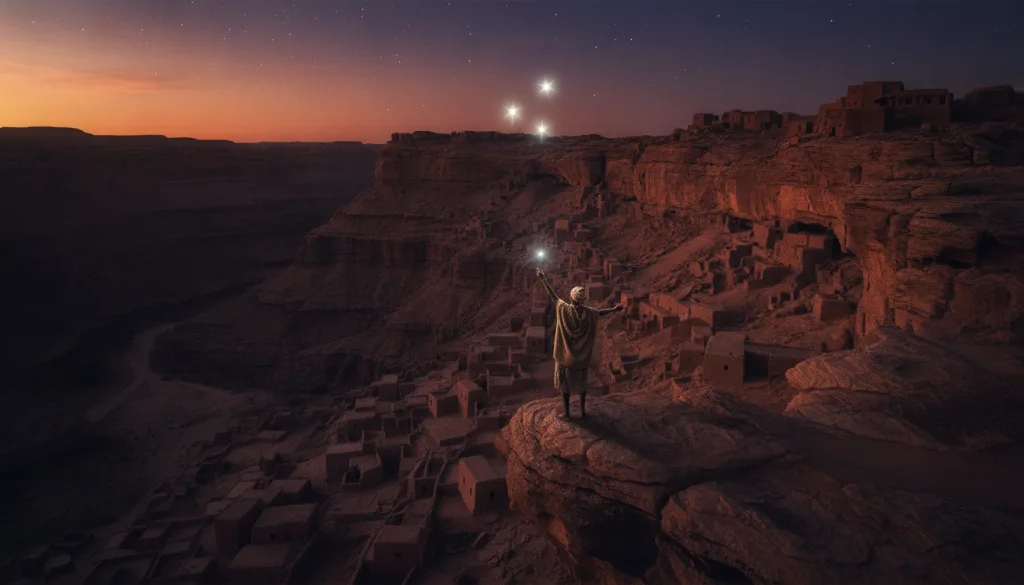
According to Dogon oral tradition, their ancestors were visited by beings from the Siriusians, who imparted knowledge about the cosmos, including the existence of Sirius B, which they refer to as "Po Tolo." The Dogon reportedly described Sirius B as being smaller than Sirius A and having a very long orbit—a description that aligns precisely with subsequent astronomical discoveries. This is astonishing, given that the Dogon had no telescopic technology at their disposal.
Oral Traditions and Knowledge Transmission
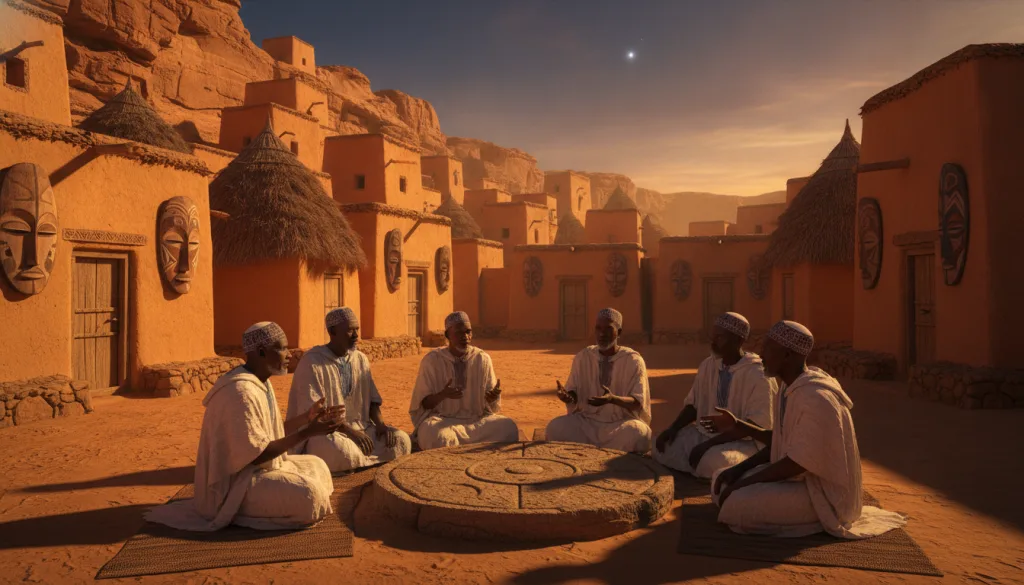
The Dogon's understanding of Sirius B is enshrined in their oral traditions, recounted in intricate ceremonies and rituals. This oral history, meticulously preserved over generations, includes detailed accounts of celestial bodies, their movements, and their significance. Among the most recognized scholars to study the Dogon's astronomical knowledge is Dr. Marcel Griaule, who began his research in the 1930s, alongside his student, Germaine Dieterlen. Their seminal work, "The Dogon" (1965), documented the tribe's rich cosmology and included the revelation of Sirius B.
The Dogon have described Sirius B with such accuracy that it becomes difficult to dismiss their knowledge as mere folklore. — Dr. Robert Temple, 1976
Dr. Robert Temple's book, "The Sirius Mystery," published in 1976, further spotlighted the Dogon's claims and fueled speculation about potential contact with extraterrestrial civilizations. Temple presented the notion that the Dogon might have received this advanced knowledge through contact with otherworldly beings, a theory that raised eyebrows and prompted further investigation.
Ethnographic Contributions
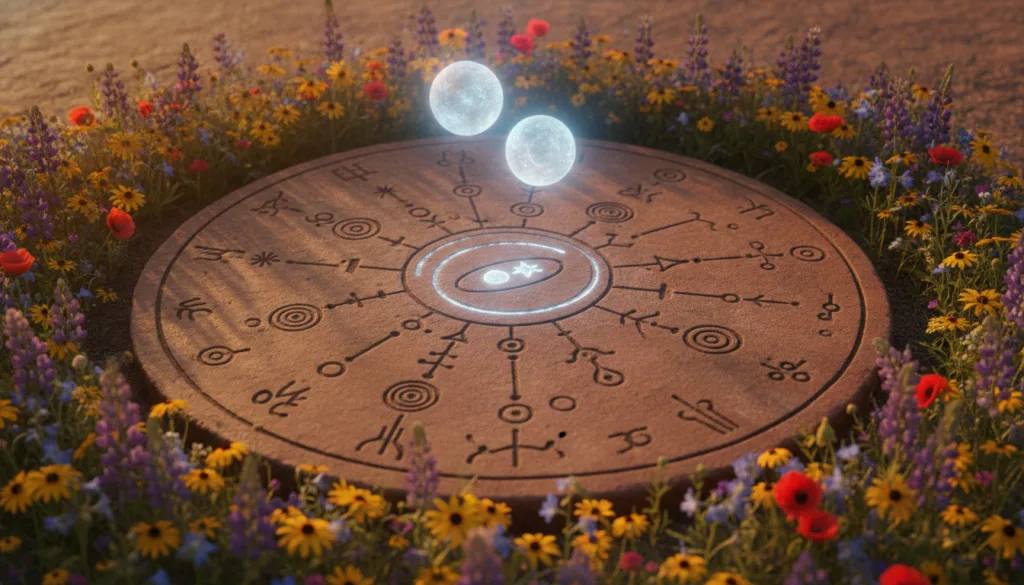
Griaule and Dieterlen's ethnographic research revealed that the Dogon people possess detailed knowledge regarding the orbital period of Sirius B—approximately 50.1 years—and its extremely dense nature. This level of sophistication in astronomical knowledge is perplexing in light of the Dogon's isolation and the lack of modern scientific instruments available to them. The Dogon calendar, deeply intertwined with their agricultural practices, reflects their understanding of celestial cycles and their implications on Earth—a sophisticated synchrony that speaks volumes about the tribe's observational prowess.
The Role of Religion and Mythology
Central to the Dogon's understanding of the universe is their cosmological mythology, which intertwines religion, science, and culture. Their creation myth describes the origins of the stars, linking them to the spirits of ancestors that guide them. The Dogon differentiate between the visible and invisible worlds, a belief system that inherently includes concepts of celestial bodies beyond human perception.
The Dogon's mythology surrounding Sirius B is particularly vivid. They refer to the star as the "star of the female" and connect it to fertility. Their traditional dances often mimic the motion of celestial bodies, symbolizing their interconnectedness with the universe. This spiritual relationship with the cosmos illustrates that the Dogon's understanding of astronomy is not merely empirical; it is a profound aspect of their identity and worldview.
Scientific Scrutiny and Criticism
Despite the striking correlations between Dogon cosmology and modern astronomy, skepticism persists. Critics argue that the Dogon's knowledge may have been influenced by Western contact, particularly by French colonialists and explorers. For instance, in the late 19th century, during the French colonial era, there was increased interaction between the Dogon and Western explorers. Some researchers contend that this exposure could have led to the Dogon's acquisition of astronomical knowledge through indirect means, rather than direct contact with advanced extraterrestrial civilizations.
Notably, the late Dr. Carl Sagan, a prominent astronomer and science communicator, expressed skepticism regarding the notion of extraterrestrial intervention in the Dogon's knowledge. Sagan argued that the oral traditions could have been shaped or altered by external influences over time, rather than being an instance of ancient wisdom preserved intact. This perspective emphasizes the importance of considering the historical context in which such knowledge was transmitted.
Modern Investigations and Technological Insights
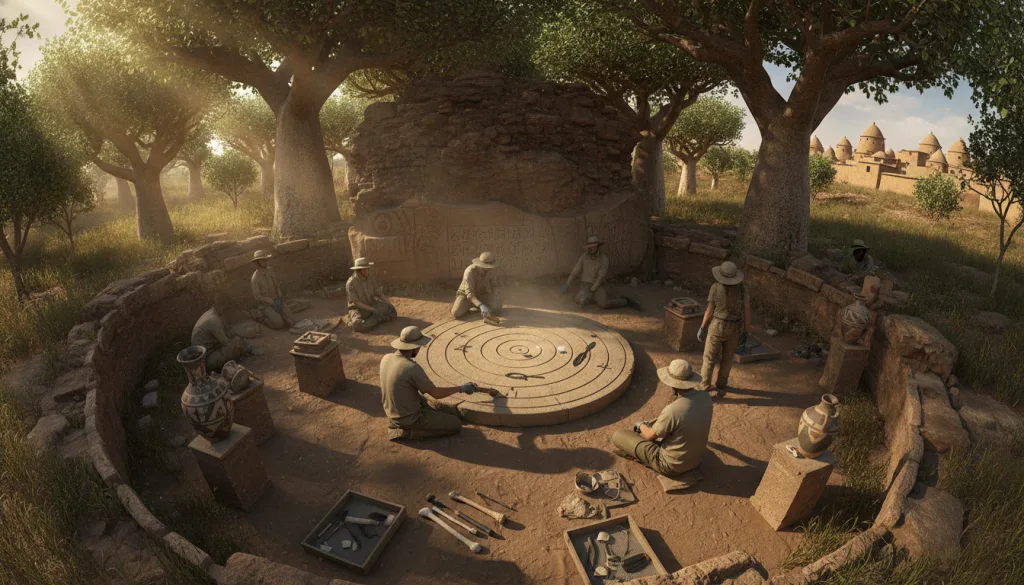
In recent years, interest in the Dogon's astronomical knowledge has been reignited by advances in technology and new research methodologies. For instance, Dr. Chike Obi, a Nigerian astronomer, explored the statistical correlations between Dogon cosmology and modern astronomical data, seeking to quantify the tribe's knowledge. His study published in 2001 in the International Journal of Astronomy and Astrophysics argues for the possibility of ancient civilizations possessing advanced astronomical understanding that has been overlooked by historians.
Obi's work, along with that of other contemporary researchers, suggests that the Dogon's knowledge may represent a lost or suppressed form of ancient science, rather than mere folklore or myth. This perspective aligns with the broader trend in archaeology and anthropology to reevaluate ancient cultures, recognizing the sophistication of their understanding of the natural world.
Possible Explanations for the Dogon’s Knowledge
The question of how the Dogon acquired their knowledge of Sirius B remains a focal point for researchers. While some posit extraterrestrial contact as a potential explanation, others argue for the possibility of ancient trade routes that facilitated the exchange of knowledge between civilizations. The trans-Saharan trade routes, operational long before European contact, could have served as conduits for astronomical knowledge, allowing the Dogon to learn about celestial phenomena from other advanced cultures in the region.
Furthermore, comparative analysis of other ancient cultures demonstrates that intricate astronomical systems were developed independently across various civilizations. For example, the ancient Egyptians had a profound understanding of celestial alignments and the significance of the stars in their religious practices. Similarities between the Dogon and Egyptian astronomical understanding could point to a shared heritage of ancient wisdom that transcends geographic barriers.
Concluding Thoughts on the Dogon and Sirius B
The case of the Dogon tribe and their knowledge of Sirius B raises profound questions about the origins of astronomical knowledge among ancient civilizations. The striking accuracy of their claims, combined with the lack of contemporary scientific tools, challenges conventional narratives about the development of human understanding of the cosmos. While the possibility of external influences cannot be entirely dismissed, the essence of the Dogon's knowledge transcends mere chance or coincidence. It encapsulates the rich tapestry of human exploration and understanding, a testament to the potential of ancient cultures to grasp the mysteries of the universe.
It is imperative to challenge our preconceived notions about ancient knowledge. The Dogon's understanding of Sirius B stands as a testament to the complexity of human thought and observation. — Dr. Chike Obi, 2001
Ultimately, the Dogon tribe serves as a reminder that humanity's quest for knowledge is not limited to modern science. It invites a deeper exploration of the cultural dimensions of astronomy, urging us to acknowledge the wisdom embedded within ancient civilizations. The search for answers continues, as the Dogon tribe remains emblematic of the complex relationship between humanity and the cosmos.
Notre analyse : La connaissance astronomique des Dogons défie les explications simples. L'hypothèse d'une intervention extraterrestre peut séduire, mais il est essentiel de reconnaître l'héritage scientifique et spirituel des civilisations anciennes. Les Dogons méritent d'être étudiés non pas seulement comme des sujets de curiosité, mais comme des gardiens de savoirs anciens qui pourraient enrichir notre compréhension du monde.Sources & References
Temple, Robert, The Sirius Mystery, 1976, New York: Harper & Row.
Griaule, Marcel, and Germaine Dieterlen, The Dogon, 1965, Paris: Presence Africaine.
Obi, Chike, "The Astronomical Knowledge of the Dogon," 2001, International Journal of Astronomy and Astrophysics.
Temple, Robert, "The Dogon: A Study of the Source of Knowledge of the Sirius System," 1975, London: The Institute for the Study of Man.





Comments 0
Be the first to comment!