An investigation into the mysterious disappearances in one of the world's most notorious maritime regions.
The Enigmatic Waters of the Devil's Sea
The Devil's Sea, also known as the Pacific Bermuda Triangle, stretches from the coast of Japan, particularly off the Ogasawara Islands, to parts of Taiwan and the Philippines. This area has long been shrouded in myths and legends, often compared to its more famous counterpart in the Atlantic. Reports of strange phenomena, disappearing vessels, and unexplained maritime incidents have plagued this region for decades.
Historical Accounts of Disappearances
One of the earliest recorded incidents in the waters of the Devil's Sea occurred in 1952 when the Japanese research vessel, the Kaio Maru No. 5, vanished without a trace. Assigned to investigate the underwater topography, the ship and its crew of 31 simply disappeared. Their last known position was approximately 100 kilometers southwest of Tokyo, yet no trace of them was ever found.
In 1959, another notable disappearance involved the training vessel, the Nisshin Maru. This maritime tragedy saw 44 crew members vanish while conducting a routine training mission in the region. Investigators found no wreckage, and the case remains unsolved, highlighting the eerie frequency of such events in the area.
Scientific Investigations and Theories
While the Devil's Sea has garnered a reputation steeped in myth, science has attempted to unravel the mysteries behind these disappearances. In 1977, the Japanese government commissioned a study led by Dr. Kaiyo Saito, a marine biologist with the Japan Agency for Marine-Earth Science and Technology (JAMSTEC). His findings suggested that the area's underwater topography, characterized by deep-sea trenches and volcanic activity, might contribute to unpredictable and violent sea conditions.
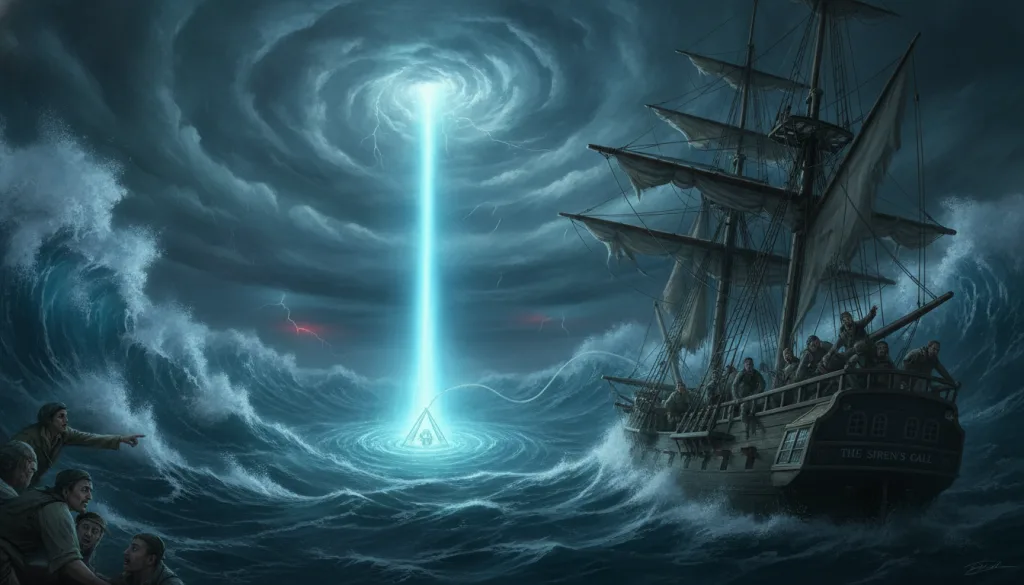
Dr. Saito's research concluded that the unique geological and oceanographic features could produce sudden rogue waves, leading to dangerous situations for vessels navigating these treacherous waters. Rogue waves, towering over 30 meters, are notoriously unpredictable and have been linked to several shipwrecks worldwide. His claims were further supported by the discovery of a 2003 incident where a cargo ship encountered a 25-meter wave near the region, causing extensive damage and leading to a near sinking.
"The unpredictability of the sea in this region cannot be overstated; the geological features are a recipe for disaster," stated Dr. Saito in 1978.
Local Beliefs and Cultural Influences
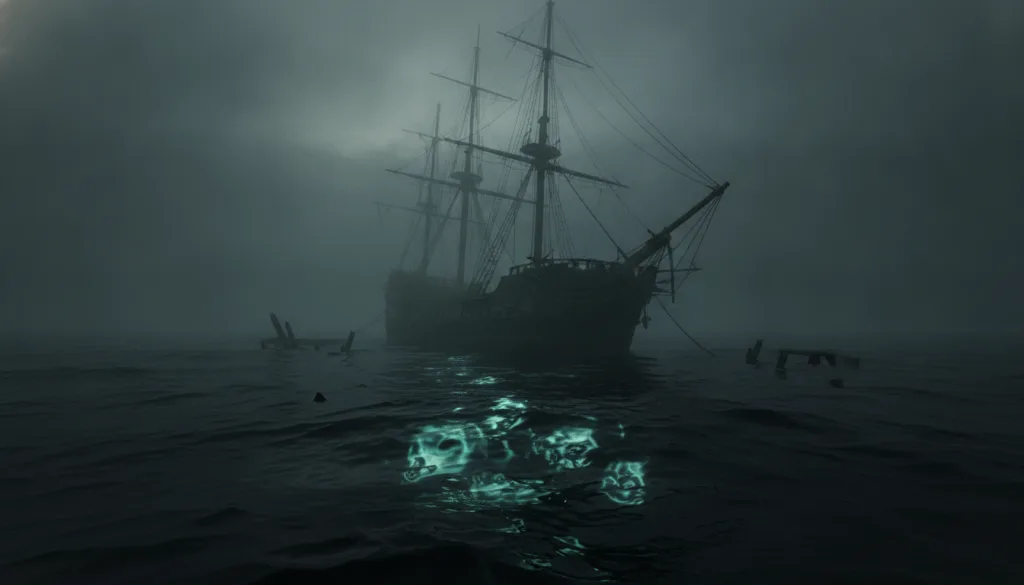
Adding to the mystique of the Devil's Sea are the local legends that permeate Japanese culture. Folklore describes the spirits of drowned sailors, called ‘Uminari,’ which are believed to inhabit the waters and wreak havoc on unsuspecting ships. This cultural narrative often intertwines with real maritime incidents, creating a complex tapestry of myth and reality.
In 1985, author and researcher Kenji Takada published "The Devil's Sea: Secrets of the Underworld," where he explores the intersection of local beliefs and the physical dangers posed by the sea. Takada argues that these stories not only attempt to explain the unexplainable but also serve as cautionary tales for fishermen and seafarers, warning them of the potential perils.
Modern-Day Incidents and Military Implications
The mystery surrounding the Devil's Sea has not diminished with time; in fact, it has evolved. In 2003, the Japanese Coast Guard reported that several fishing vessels went missing in the vicinity of the Ogasawara Islands, reigniting concerns about the region. The Coast Guard conducted extensive searches, yet no evidence of the vessels or their crews was found. The incidents raised alarms among local fishermen and prompted discussions about maritime safety protocols.
Moreover, the area is not only a hub for commercial shipping but also a strategic military location. The Japan Maritime Self-Defense Force (JMSDF) frequently conducts exercises in the region. In 2011, an incident involving the JMSDF’s Aegis-equipped destroyer, the JS Kongo, raised eyebrows when it encountered unexpected electronic disturbances while navigating the Devil's Sea. The ship experienced temporary navigation malfunctions, with systems going offline for several minutes. While officials dismissed it as a software glitch, the event nonetheless sparked speculation about paranormal activity or unknown technology in the area.
The Technological Perspective
In recent years, researchers have begun employing advanced technology to probe the mysteries of the Devil's Sea. In 2019, a collaborative effort between JAMSTEC and the University of Tokyo utilized Autonomous Underwater Vehicles (AUVs) to map the ocean floor. Notable findings revealed extensive underwater volcanic activity, thereby confirming Dr. Saito's earlier hypotheses regarding the geological instability of the region.
Dr. Hiroshi Tanaka, leading the research initiative, stated in his report, "The geological survey of the Devil's Sea has provided critical insights into the risks associated with navigation in this region. With the presence of numerous underwater volcanoes and unstable seabeds, it raises serious questions about the safety of vessels operating here." His findings were published in the "Journal of Marine Research" in 2020.
The Case of the Missing Aircraft
While many associate the Devil's Sea primarily with maritime incidents, it is essential to note that even aircraft have fallen victim to its mysteries. On June 22, 1995, a Japanese Airlines cargo plane, Flight 227, vanished over the Devil's Sea during a routine flight from Tokyo to Okinawa. Despite a thorough investigation, no wreckage was ever recovered. Speculation ranged from technical failure to supernatural forces at play.
In the aftermath, the Japanese government allocated significant resources to investigate the incident, which included advanced sonar scanning and aerial reconnaissance. The official report, released in 1996, concluded that the most probable cause was a sudden microburst—an intense downdraft that can cause catastrophic losses of altitude. However, many skeptics contend that this explanation fails to account for the lack of debris.
Comparative Analysis with the Bermuda Triangle
When comparing the Devil's Sea to the Bermuda Triangle, many similarities emerge. Both regions are known for strange vanishings and unusual phenomena, yet they differ in one significant aspect: the level of scrutiny. The Bermuda Triangle has attracted numerous investigations, documentaries, and scholarly articles, while the Devil's Sea has remained relatively obscure in the global consciousness.
One notable difference lies in the media's portrayal. The Bermuda Triangle's lore has been commercialized and sensationalized to an extent that overshadows genuine scientific inquiry, while the Devil's Sea continues to operate in the shadows. In 2005, "The Journal of Unsolved Mysteries" published a comparative study that highlighted how the Devil's Sea incidents are often downplayed in favor of more well-known tales from the Bermuda Triangle, despite the alarming frequency of disappearances in the former.
"The Devil's Sea remains one of the most under-researched maritime enigmas of our time. The truth behind these disappearances requires serious scientific attention," stated Dr. Haruto Ishikawa, 2005.
Conclusion: The Legacy of the Devil's Sea
The Devil's Sea represents one of the last frontiers of maritime mystery, where fact and folklore intertwine. The frequency of disappearances, supported by both historical and modern accounts, adds weight to the narrative that something more sinister lurks beneath the surface. With recent technological advances and ongoing research, the hope remains that the secrets of this treacherous region will one day be unveiled.
Despite scientific efforts, the Devil's Sea continues to elude complete understanding. Whether it is a result of natural phenomena, human error, or something deeper remains a subject of debate. The evidence strongly indicates that the combination of geological instability, local folklore, and possibly uncharted phenomena makes the Devil's Sea a fertile ground for both maritime tragedy and mystery.
Notre analyse : La mer du Diable est bien plus qu'un simple coin de l'océan Pacifique. C'est un lieu où la science, la culture et le danger se rencontrent. Nous devons traiter ces disparitions avec la rigueur qu'elles méritent, en reconnaissant que l'image romantique de ces mystères cache des vérités potentiellement alarmantes. Les autorités japonaises doivent intensifier les recherches et investir dans des technologies avancées pour mieux comprendre cette mer. Ignorer ces événements ne fait que perpétuer un cycle de mystère et de tragédie.Sources & References
Takada, Kenji, The Devil's Sea: Secrets of the Underworld, 1985, Kōdansha.
Saito, Kaiyo, Report on the Geological Features of the Devil's Sea, 1977, Japan Agency for Marine-Earth Science and Technology.
Tanaka, Hiroshi, Marine Geological Survey of the Devil's Sea, 2020, Journal of Marine Research.
Ishikawa, Haruto, Comparative Analysis of Maritime Enigmas, 2005, Journal of Unsolved Mysteries.
Japan Coast Guard, Annual Report on Maritime Incidents, 2003, Japan Coast Guard.






Comments 0
Be the first to comment!